
Glossary entry
Elderly Care Cost Per Hour in 2026: A State-by-State Guide for Family Caregivers
What Is the National Median Cost of Home Care in 2026?
If you are starting to research home care costs for a parent or spouse, the first number you will encounter is the national median hourly rate. In 2026, that figure sits between $34 and $35 per hour for nonmedical home care, depending on which survey you reference. A Place for Mom's 2026 survey reports a national median of $34 per hour, while CareScout's 2025 Cost of Care Survey (published in 2026) puts the median at $35 per hour. The slight difference reflects variations in survey methodology and data collection timing, but both point to the same reality: the national average has risen roughly 3% year over year from $34 in 2024.
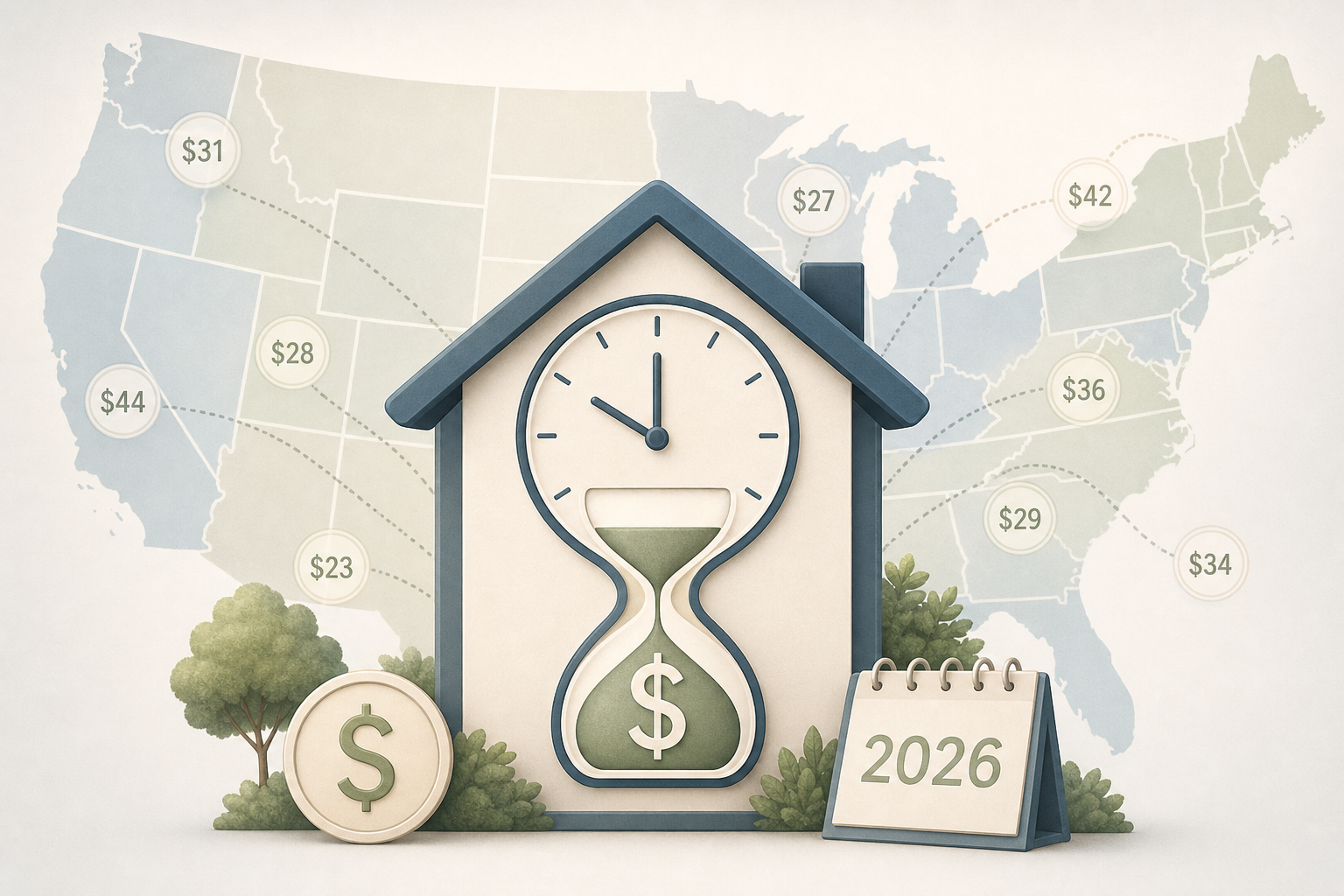
While the national median is a useful starting point, it can be misleading for budget planning. The cost of home care varies dramatically by state — from as low as $23 per hour in Louisiana to as high as $44 per hour in South Dakota, according to data from SeniorLiving.org and A Place for Mom. That is nearly a 2x difference between the lowest- and highest-cost states, which means your local market rate — not the national average — is what matters for your family's budget.
Home Care Costs by State: The Full 2026 Table
The table below presents median hourly rates for nonmedical home care in all 50 states and the District of Columbia. The primary source is A Place for Mom's detailed state-by-state survey (updated June 3, 2026), cross-referenced with SeniorLiving.org/CareScout figures where available. Rates reflect what you would pay a licensed home care agency, not an independent caregiver hired directly.
| State | Median Hourly Rate | State | Median Hourly Rate |
|---|---|---|---|
| Alabama | $28 | Montana | $36 |
| Alaska | $40 | Nebraska | $34 |
| Arizona | $35 | Nevada | $36 |
| Arkansas | $27 | New Hampshire | $36 |
| California | $37 | New Jersey | $37 |
| Colorado | $37 | New Mexico | $32 |
| Connecticut | $37 | New York | $37 |
| Delaware | $33 | North Carolina | $30 |
| District of Columbia | $37 | North Dakota | $38 |
| Florida | $33 | Ohio | $32 |
| Georgia | $30 | Oklahoma | $30 |
| Hawaii | $38 | Oregon | $40 |
| Idaho | $32 | Pennsylvania | $33 |
| Illinois | $34 | Rhode Island | $36 |
| Indiana | $32 | South Carolina | $29 |
| Iowa | $33 | South Dakota | $44 |
| Kansas | $32 | Tennessee | $30 |
| Kentucky | $29 | Texas | $31 |
| Louisiana | $25 | Utah | $33 |
| Maine | $36 | Vermont | $36 |
| Maryland | $35 | Virginia | $33 |
| Massachusetts | $39 | Washington | $42 |
| Michigan | $32 | West Virginia | $28 |
| Minnesota | $37 | Wisconsin | $35 |
| Mississippi | $25 | Wyoming | $36 |
| Missouri | $31 | — | — |
Browse more in the Glossary.