
Can Dance Therapy Actually Boost Brain Health in Seniors?
Dance therapy is not just gentle exercise — research shows it can improve memory, attention, and executive function in older adults with mild cognitive impairment. This article examines the evidence, explains why dance uniquely triggers neuroplastic change, and what dosage and duration produce the best results.
When a parent is diagnosed with mild cognitive impairment, the advice often arrives in a blur: keep moving, stay social, eat well, sleep better, manage blood pressure. None of that is wrong. It is also not very satisfying when you are trying to decide what is worth adding to an already fragile week.
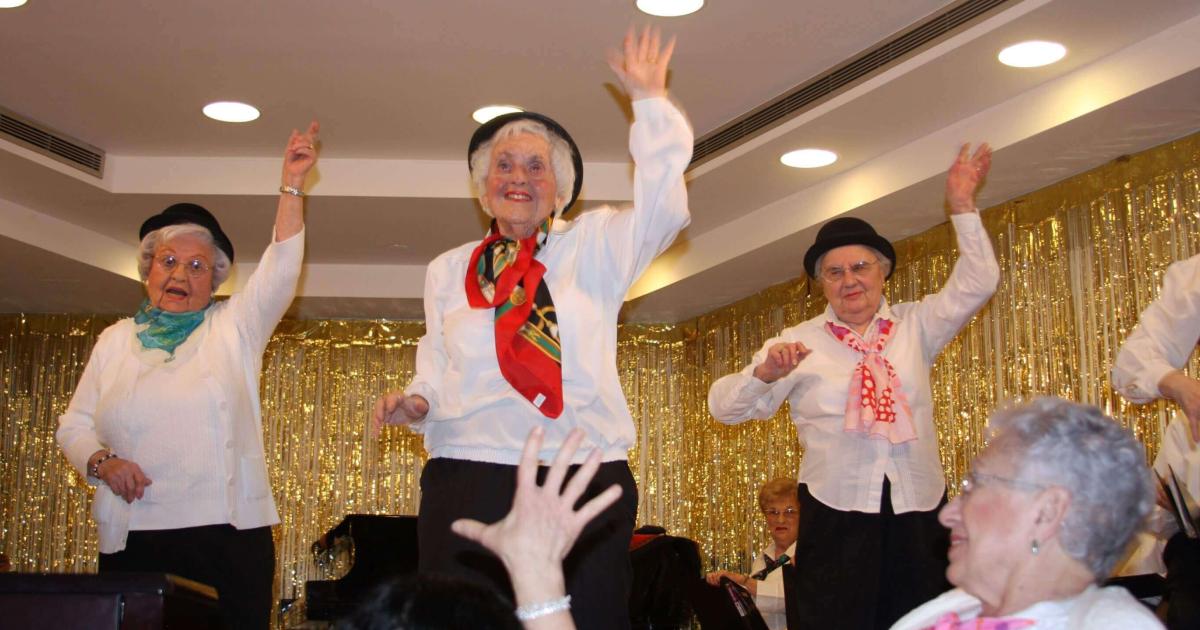
Dance therapy for seniors’ brain health sits in a more interesting place than generic “exercise is good” advice. The best evidence does not prove that dancing prevents dementia. It does suggest that structured dance can improve several cognitive functions in older adults with mild cognitive impairment, including global cognition, memory, executive function, attention, and language. That is a narrower claim, but it is also a useful one.
The reason dance deserves separate attention is that it asks the brain to do several things at once. A person has to hear rhythm, remember a sequence, shift weight, plan the next movement, coordinate with another person or group, adjust balance, and keep going when the music changes. That is not the same cognitive task as walking on a treadmill while watching a wall.
The Evidence Is Promising, Especially for Mild Cognitive Impairment
The strongest starting point is a 2023 systematic review and meta-analysis of 10 randomized controlled trials involving 984 adults aged 55 and older with mild cognitive impairment. Across those trials, dance therapy significantly improved global cognition, memory, executive function, attention, and language compared with control conditions.[1]
That matters because randomized controlled trials are a different kind of evidence from stories about someone becoming sharper after joining a dance class. They do not eliminate every uncertainty, and this review still had limitations, including small study samples and heterogeneity across interventions. But it moves the conversation from “dance seems nice” to “dance has been tested against comparison conditions in people with MCI.”
The review’s cognitive domains are also worth spelling out. Global cognition is the broad score families often hear about in clinic. Memory is the domain everyone worries about first. Executive function is the quieter one that affects planning, switching tasks, following instructions, and recovering from a mistake. Attention and language influence whether a person can track conversation, participate in a class, and stay oriented to what is happening around them.
So the practical reading is this: for older adults with mild cognitive impairment, dance therapy has evidence of cognitive benefit across more than one mental skill. It is not simply a mood activity being dressed up as neurology. It is also not a guarantee against decline.
Why the Treadmill Comparison Matters
The question families usually need answered is not whether dance is better than doing nothing. It is whether dance is meaningfully different from the exercise they have already been told to encourage. That is why the Dancing Mind randomized controlled trial is one of the more useful studies in this area.
In that trial, older adults were assigned to ballroom dancing or treadmill walking. The dance program ran for 90 minutes, twice a week, for 6 months. Compared with treadmill walking, ballroom dancing led to better executive function and memory outcomes, and it was associated with reduced hippocampal volume loss.[2]
That comparison is unusually helpful because both groups were moving. The dance group did not win merely because they got attention while the other group sat at home. The difference points toward the added cognitive and social demands of dance: learning steps, responding to music, adjusting to a partner, and staying oriented in space.
The hippocampus is not just a decorative brain word here. It is involved in memory and is one of the structures families often encounter when reading about cognitive decline. A finding about reduced hippocampal volume loss does not mean dancing rebuilds the brain in a simple or permanent way. It does suggest that, in this study, the brain changed differently under ballroom dance than under treadmill walking.
A separate 18-month study in seniors around age 68 reported that weekly dancing increased hippocampal volume, while endurance training did not. Only the dance group also improved behaviorally in balance.[3] This is the kind of result that makes dance hard to dismiss as just cardio with music.
The 76% Dementia-Risk Number Is Important, but It Is Not a Promise
One landmark study still shows up in many conversations about dance and dementia. In a 2003 New England Journal of Medicine study following older adults over 21 years, frequent dancing was associated with a 76% lower risk of dementia; among the physical activities studied, dancing was the only one associated with that effect.[4]
That number is striking. It is also observational. It cannot prove that dancing caused the lower dementia risk. People who danced frequently may have differed from non-dancers in health, education, social connection, mobility, or other factors that also influence dementia risk. The study is best read as an early signal that complex leisure activities may matter, not as a dementia-prevention guarantee.
Families deserve that distinction. False hope is not harmless; it changes how people spend money, time, guilt, and trust. The stronger claim is that dance is associated with lower dementia risk in long-term observational research and improves cognition in randomized trials of older adults with MCI. Those two facts support a serious conversation, not a sales pitch.
What Dance Asks the Aging Brain to Do
A simple exercise prescription can be biologically valuable and mentally dull. Dance has a different profile because it stacks physical, cognitive, emotional, and social demands into the same activity.
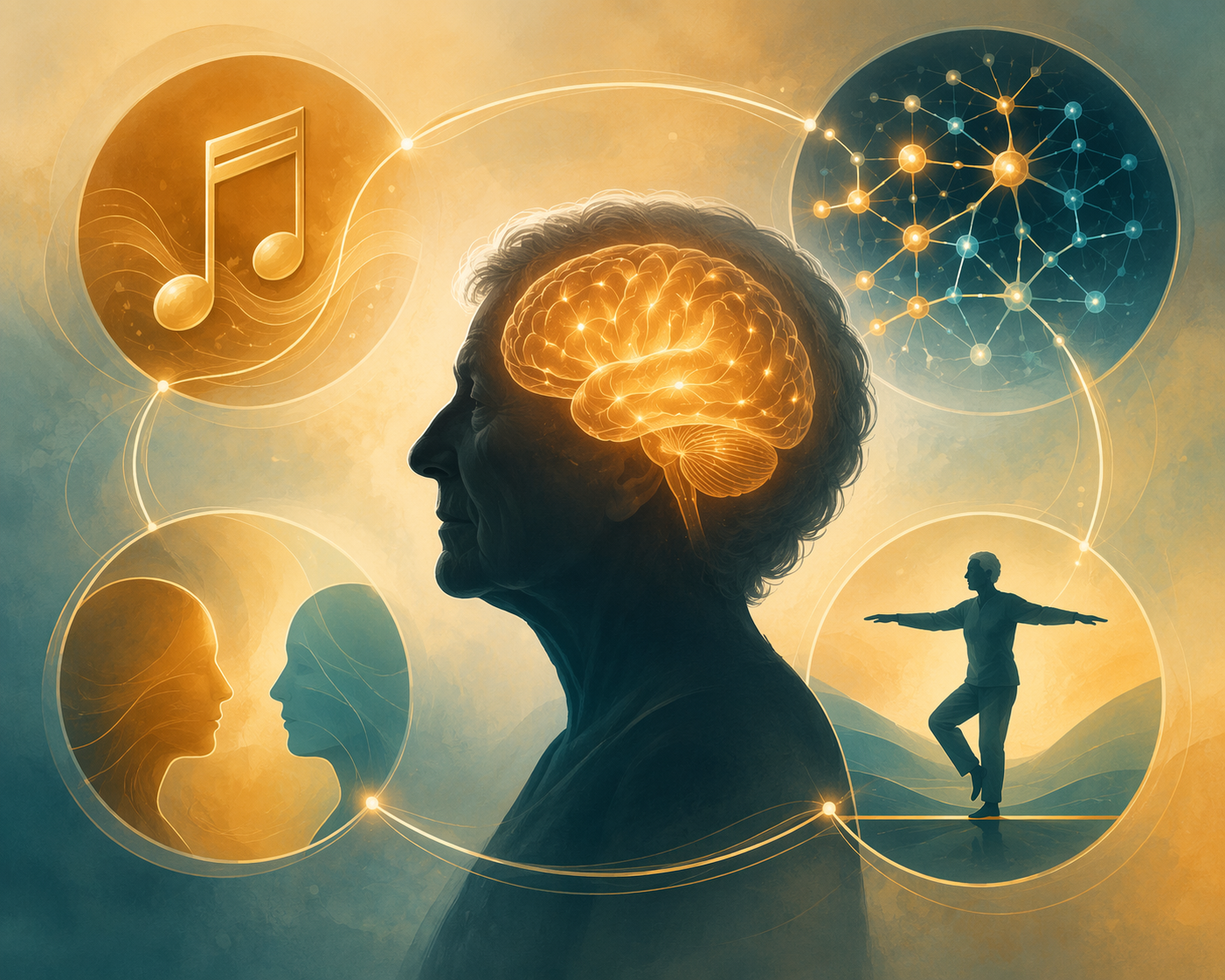
Rhythm gives the brain an external timing cue. Sequencing requires working memory: first this step, then the turn, then the return. Motor planning asks the person to translate an instruction or musical cue into movement. Balance and coordination require constant adjustment. Partner or group dancing adds another layer because the person has to respond to someone else, not just perform a private movement pattern.
This helps explain why dance may affect executive function. Executive function is what lets someone start, stop, switch, inhibit the wrong movement, recover after losing the sequence, and keep participating without freezing. In ordinary life, that can look like following a recipe, managing a medication routine, or finding the thread of a conversation after an interruption.
The emotional piece is not soft extra credit. Music can cue memory and motivation. Social presence can increase attention and adherence. A class can make repetition tolerable because the repetition is embedded in a song, a partner, a pattern, or a shared laugh. For an older adult who is tired of being corrected, measured, and reminded, that dignity may be part of why the intervention can actually be sustained.
Brain-derived neurotrophic factor, or BDNF, is one proposed biological mechanism. BDNF supports neuronal growth and plasticity, and dance has been discussed as an activity that can promote BDNF release in ways relevant to brain health.[6] That mechanism is plausible, but it should not be used as a shortcut to claim every dance class produces measurable neuroprotection. The human trial results are still the more important evidence.
Dance Is Multimodal, but Style Still Matters Less Than Structure
The studies do not all use the same dance style. Some use ballroom or partner dance. Others use aerobic dance. That makes the evidence messier, but it also reflects real life: not every senior will accept the same class, music, pace, or social format.
A 3-month aerobic dance study in people with amnestic mild cognitive impairment reported improvements in hippocampal volume and episodic memory.[5] That supports the idea that even non-partner dance can have cognitive relevance. At the same time, partner and ballroom formats may add social coordination, responsiveness, and spatial navigation that a solo aerobic class does not always require.
For a family comparing options, the more useful question is not “Which dance style is neurologically perfect?” It is whether the class is structured enough to involve learning, repetition, rhythm, balance, and progression, while still being safe and emotionally acceptable to the person who has to attend.
A Practical Dose: Enough Frequency to Become Training, Not Just Entertainment
The research does not support the idea that one cheerful dance afternoon is a brain-health intervention. The more convincing programs repeat often enough and long enough for learning to accumulate.
| Practical factor | What the evidence suggests |
|---|---|
| Session length | About 60 minutes is a common practical target across dance-therapy findings. |
| Weekly frequency | Two to three sessions per week appears to produce the largest cognitive gains. |
| Minimum duration | At least 12 weeks is a reasonable lower threshold before expecting meaningful change. |
| Longer studied programs | The Dancing Mind RCT used 90-minute sessions twice weekly for 6 months. |
| Adherence and safety | Reported adherence across studies ranged from 80% to 95%, with no adverse events reported. |
These figures come from the research summarized in the 2023 review, where programs using 60-minute sessions, 2 to 3 times weekly, for at least 12 weeks were associated with the largest cognitive gains.[1] The Dancing Mind trial used a somewhat heavier schedule: 90 minutes, twice a week, for 6 months.[2]
Those details matter for expectations. If a parent attends once every few weeks, the class may still be joyful and socially valuable, but it is not the same exposure tested in the stronger intervention studies. A brain-health conversation should treat dance as training: repeated, progressive, and matched to ability.
Who This Evidence Applies To
The cleanest evidence applies to adults aged 55 and older with mild cognitive impairment. That is not the same as saying the same benefits have been proven for people with moderate or severe dementia. A person with more advanced impairment may still enjoy music, movement, and social contact, but the cognitive-outcome evidence is less robust.
Safety also changes by person. Balance problems, falls history, neuropathy, vision impairment, medications, cardiac disease, joint pain, and wandering risk all affect what kind of dance setting is reasonable. The fact that trials reported no adverse events does not mean every community class is automatically safe for every older adult.
There is also a difference between dance therapy and a recreational dance class. Dance therapy is typically delivered or designed with therapeutic goals, adaptation, and monitoring. A regular senior dance class may still provide rhythm, movement, memory, and social engagement, but it may not screen participants, adjust for cognitive impairment, or document outcomes in the same way.
What to Bring to the Doctor Conversation
The most reasonable next step is not to ask a clinician, “Will dancing prevent dementia?” A better question is: “Given my parent’s mild cognitive impairment, balance, medications, and heart health, is a structured dance program a safe non-pharmacological intervention to add?”
It helps to be specific. Ask whether the parent needs a falls-risk assessment first. Ask whether partner dancing, seated dance, supervised group dance, or a lower-intensity class fits their mobility. Ask what symptoms should stop participation. Ask whether dance can be part of a broader care plan that still includes medical follow-up, cognitive monitoring, medication review, sleep evaluation, hearing and vision care, and planning for future support.
The evidence is strong enough to justify that conversation. It is not strong enough to replace diagnosis, dementia care planning, or individualized safety guidance. Dance therapy is credible as a structured brain-health intervention for seniors with mild cognitive impairment because it combines movement, rhythm, memory, executive function, balance, and social engagement in one activity. Its value is partly scientific and partly human: it asks an older adult to practice the brain’s hardest work while still being treated like a person who can learn, move, listen, choose, and belong.
References
- Effects of dance therapy on cognitive and mental health in adults aged 55 years and older with mild cognitive impairment: a systematic review and meta-analysis, PMC
- The Dancing Mind randomized controlled trial, PMC
- Dancing can reverse the signs of aging in the brain, ScienceDaily
- Leisure Activities and the Risk of Dementia in the Elderly, New England Journal of Medicine, 2003
- Aerobic dance improves hippocampal volume and episodic memory in amnestic mild cognitive impairment, PMC
- How Dance Promotes Brain Health, Brain & Life
Related reading
- Dementia Behavior Quick-Reference Cards: What to Do When Wandering, Sundowning, and Aggression Happen
- The Caregiver Sleep Crisis: Why 94% of Dementia Caregivers Are Sleep-Deprived and a Practical Recovery Plan
- After a Fall: A Step-by-Step Guide to Activating Senior Health Services for Recovery and Prevention
Noticed something outdated or inaccurate on this page? Flag a correction. We review every report against CDC, NIA, and AARP HomeFit guidance before updating a page.
Part of the Fall Prevention section.