
Common leukemia types in elderly adults and fall risk
Two types of leukemia — acute myeloid leukemia (AML) and chronic lymphocytic leukemia (CLL) — account for most cases in older adults. This guide explains how their symptoms, especially anemia and fatigue, directly increase fall risk and how caregivers can take targeted safety steps at home.
When a parent is diagnosed with leukemia, the type matters at home before it matters in a textbook. It changes what you watch for on the walk from the recliner to the bathroom, whether fatigue may come on hard and fast, and whether a parent who “looks fine” at breakfast may be unsteady by bedtime.
Leukemia is not rare enough in older adults for families to treat fall risk as an afterthought. SEER data show leukemia is most often diagnosed in people ages 65 to 74, who account for 26.3% of all cases, and the median age at diagnosis is 68.[1] That age range is also when ordinary hazards — a dark hallway, a loose rug, a low toilet, a missed meal, a new medication — begin to matter more.
For most families asking about the types of leukemia common in elderly adults, the two names to get straight first are AML and CLL. Acute myeloid leukemia, or AML, tends to be aggressive and treatment-intensive. Chronic lymphocytic leukemia, or CLL, is usually slower and may be found on routine bloodwork before it causes obvious trouble. Both can raise fall risk, but they often do it in different ways.
| Leukemia type | What it often means for an older adult at home | Fall-risk pattern to watch |
|---|---|---|
| AML | Often faster onset, median age 69, lower 5-year relative survival in SEER data | Sudden fatigue, anemia-related weakness, dizziness, treatment-related deconditioning, possible neuropathy |
| CLL | Often slower progression, median age 70, higher 5-year relative survival in SEER data | Gradual fatigue, weakness that gets normalized, delayed home safety changes, unsteadiness during infections or treatment |
| CML | Median age is in the mid-60s; often linked to the Philadelphia chromosome and treated with targeted oral therapies | Fall risk depends more on symptoms, treatment side effects, stamina, and medication effects than on the diagnosis name alone |
| ALL | More often discussed as a childhood leukemia, though it can occur in adults | Important when diagnosed, but not the main older-adult pattern for this guide |
Why AML and CLL deserve most of the attention
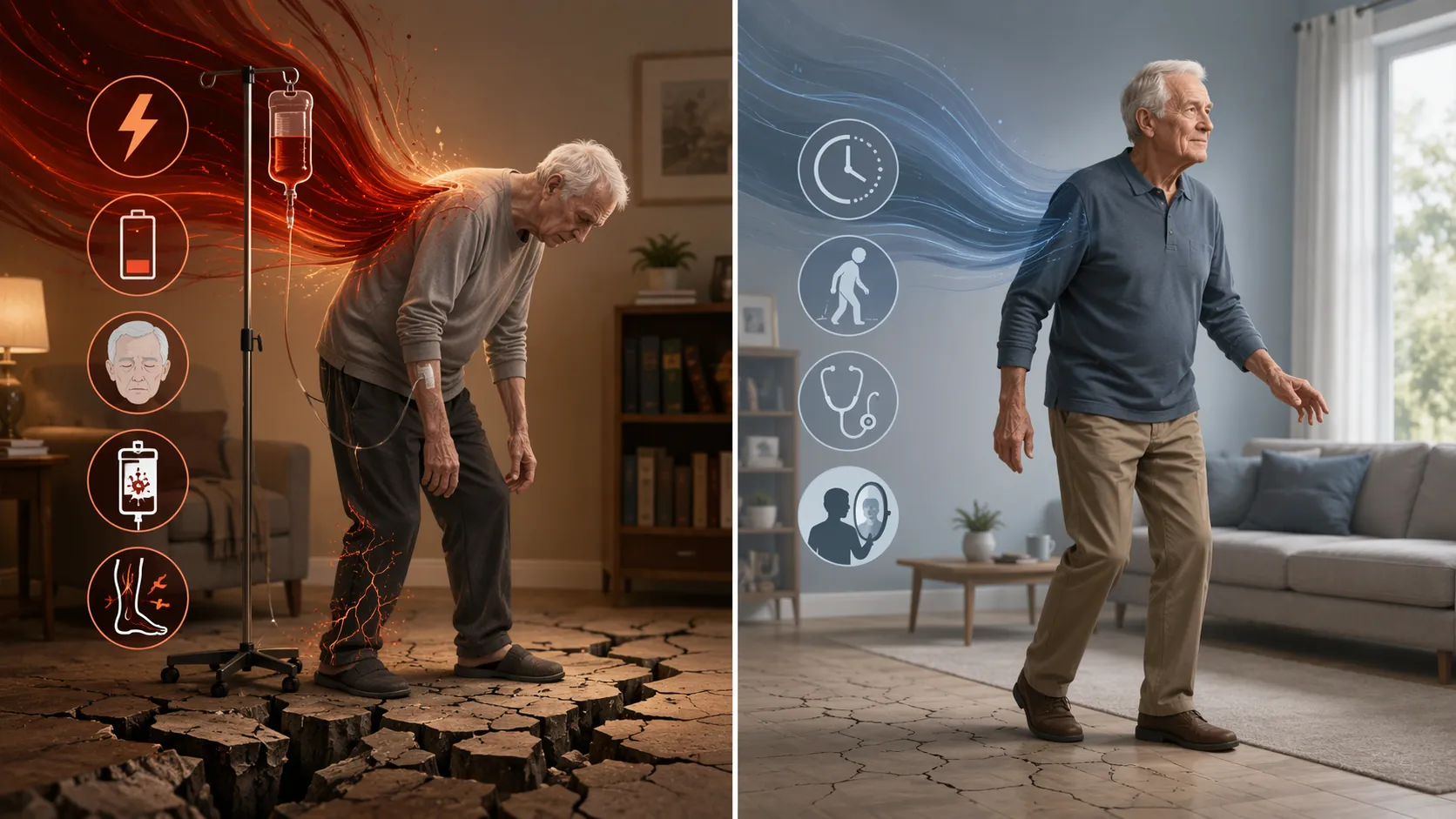
Leukemia begins in blood-forming tissues, including the bone marrow, and affects the production or function of blood cells. The major names — AML, CLL, CML, and ALL — are useful because they point to different disease courses. But for a caregiver trying to make tonight safer, the urgent question is simpler: will this parent become weak quickly, or will the danger creep in slowly enough that everyone excuses it?
AML is one of the leukemia types that most clearly belongs on an older-adult fall-prevention radar. SEER lists a median age at diagnosis of 69 for AML and a 5-year relative survival of 29.5% for cases from 2016 to 2022.[1] Those survival numbers should not be used to predict one person’s future at the kitchen table; they come from a recent historical treatment period, and leukemia care continues to change. They do, however, tell families something practical: AML is usually not a slow background condition.
CLL has a different home pattern. SEER and Leukemia Research Foundation materials place the median age at diagnosis around 70 and report much higher 5-year survival than AML, with CLL often described as slow-growing and sometimes discovered through routine bloodwork.[1][2] MD Anderson and Memorial Sloan Kettering also describe CLL as the most common leukemia in adults, accounting for about 25% to 30% of all leukemias.[3][4] That slower course is not the same as “no risk.” It can mean the fall-prevention conversation gets postponed because nobody feels an emergency.
CML deserves a short mention because it also appears in older adults, with a median diagnosis age in the mid-60s, and because oral targeted therapies changed its treatment story. But CML does not need to take over this discussion. For most families newly trying to understand leukemia and falls in an older parent, AML and CLL create the clearest contrast: fast weakness versus gradual decline, intensive treatment versus watchful monitoring or staged treatment, and obvious crisis versus easy-to-miss erosion.
AML: the fall risk can arrive before the house is ready
With AML, families often do not get a long runway. A parent may move from “more tired than usual” to needing help across the room in a short period. The reason is not mysterious: when leukemia crowds the bone marrow and normal blood production is disrupted, anemia can reduce oxygen delivery, platelets can drop, infection risk can rise, and the body’s reserve can shrink quickly. Cleveland Clinic and Mayo Clinic both list fatigue, weakness, pale skin, infections, easy bleeding or bruising, fever, and bone pain among leukemia symptoms.[7][8]
At home, anemia rarely announces itself as a lab value. It shows up as a parent stopping halfway down the hall, sitting on the bed after a shower, leaning on the sink longer than usual, or saying they feel “washed out.” A caregiver may notice the pattern first because they see the walking, not just the blood count.
This is where fall risk becomes concrete. A weak parent may rush to the bathroom because they waited too long. They may stand up from the toilet and feel lightheaded. They may step over a bath mat they handled easily last month and catch a toe because their legs no longer lift as high. If they are going back and forth for appointments, transfusions, admissions, or treatment, the usual home rhythm gets broken, and every transition becomes harder.
AML treatment can add another layer. Intensive therapy, hospitalization, infections, reduced appetite, sleep disruption, steroid exposure, and time in bed can all reduce strength. Some cancer treatments can also contribute to peripheral neuropathy — tingling, numbness, burning, or altered sensation in the feet and hands — which matters because the feet are how an older adult reads the floor. A parent with numb toes may not feel the edge of a throw rug, a wet tile, or the change from bedroom carpet to bathroom flooring.
The practical move with AML is to assume the home may need changes before the parent asks for them. That does not mean treating the parent as helpless. It means recognizing that AML can change stamina faster than pride can adjust.
- Put a nightlight on the bedroom-to-bathroom route before the first frightening nighttime walk.
- Clear cords, shoes, baskets, and loose rugs from the path between bed, bathroom, kitchen, and favorite chair.
- Ask whether showering should be seated, supervised, or shortened on treatment days or after transfusions.
- Watch the first few steps after standing; lightheadedness often shows there before anyone names it.
- Check feet and footwear daily if numbness, tingling, or pain appears.
CLL: slower does not mean safer
CLL can feel less urgent because it is often chronic and may be watched before it is treated. Some older adults learn they have CLL after routine bloodwork, not after a dramatic collapse. That can be reassuring, and sometimes appropriately so. But it can also train the household to ignore small changes.
A CLL fall-risk pattern may look like this: the parent takes longer to recover from errands, stops walking the driveway, cancels a weekly outing, naps more, and begins touching furniture while crossing the room. Nobody calls it a fall risk because it does not look like an emergency. It looks like aging, winter, poor sleep, or “just being tired.”
That is the trap. CLL’s slower pace can delay basic safety decisions: a shower chair, a grab bar, a cane assessment, brighter hallway lighting, better footwear, or a conversation about driving after dizzy spells. A parent with CLL may go months being independent enough that the family hesitates to interfere, while the bathroom and stairs quietly become less forgiving.
CLL can also become more complicated during infections, anemia, medication changes, or active treatment. The diagnosis may be chronic, but the bad day may still be sudden. A parent who was steady last week may be unsafe today after poor sleep, reduced fluids, fever, or a new medication that lowers blood pressure or causes dizziness.
For CLL, the better habit is trend-watching. Do not wait for the first fall to prove the house needs attention. Notice whether walking speed changes, whether the parent avoids stairs, whether they sit to dress, whether they hold the wall in the hallway, and whether fatigue changes after appointments or medication adjustments.
What the fall-risk evidence can and cannot prove
The connection between cancer and falls is not just a caregiver hunch. A systematic review by Wildes and colleagues found that older adults with cancer had a 16% to 17% increased risk of falls compared with age-matched peers without cancer, and that 20% to 30% of older adults with cancer fall each year.[5] Those numbers are broad; they are not leukemia-only numbers. Still, they match what families often see once fatigue, weakness, appointments, medications, and treatment effects start stacking up.
Anemia deserves careful wording. It is common in active leukemia and makes practical sense as a fall concern because weakness, shortness of breath, dizziness, and poor stamina can all affect walking. But the research is not perfectly clean. In a Tromsø Study replication, anemia was not significantly associated with falls among community-dwelling older adults.[6] In cancer settings, the concern appears stronger when patients are hospitalized, actively treated, frailer, or sick enough to need transfusion support.[5]
That distinction matters. A mildly anemic older adult living steadily at home is not automatically about to fall. A parent with leukemia who is newly weak, dizzy after treatment, recovering from hospitalization, needing transfusions, fighting infection, or walking less each week is a different situation. The lab value is one clue. The hallway test — how they actually move through the home — is another.
The American Cancer Society advises people with cancer and caregivers to take weakness, balance problems, and falls seriously, including reporting falls, dizziness, new weakness, and trouble walking to the care team.[9] That advice is basic, but basic is often what prevents the 2 a.m. injury: tell the team, change the route, add the support, and stop pretending the bathroom is safe just because it was safe last month.
How to turn the diagnosis into a home safety plan
A leukemia diagnosis does not tell you every fall hazard. It does tell you where to start looking. AML should make you move quickly around fatigue, anemia, treatment days, transfusion days, hospitalization recovery, and neuropathy. CLL should make you watch for gradual stamina loss, subtle balance changes, infections, and delayed safety planning.
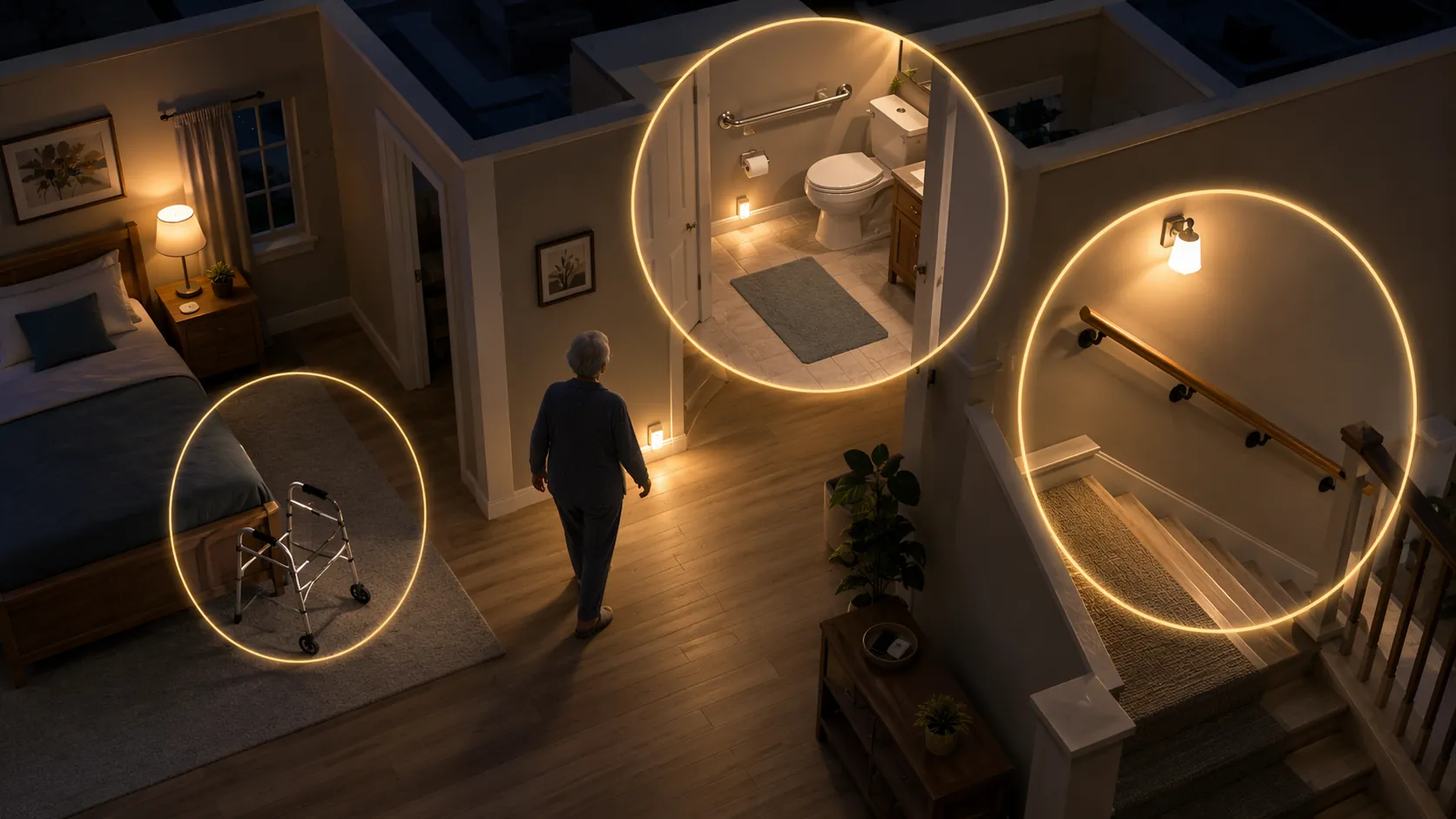
Start with the routes that matter most, not the whole house at once. Most serious caregiver discoveries happen in predictable places: the bathroom, the bedroom edge, the hallway at night, the stairs, the kitchen sink, and the chair where the parent pushes up to stand.
| Home area | What to check | Why leukemia changes the priority |
|---|---|---|
| Bathroom | Grab bars, non-slip surface, shower chair, raised toilet seat if needed | Weakness and dizziness often show up during bathing, toileting, and standing from low surfaces |
| Bedroom | Clear path from bed, stable bedside table, reachable phone, good footwear | Nighttime urgency plus anemia-related fatigue can make the first steps unsafe |
| Hallway | Nightlights, no cords or loose rugs, enough width for a walker if used | A parent may furniture-walk when stamina drops |
| Stairs | Working lights, sturdy handrail, no carried laundry baskets during weak periods | Treatment fatigue and neuropathy can reduce foot clearance and balance |
| Transfers | Chair height, bed height, toilet height, armrests | Many falls happen while standing up, turning, or sitting down |
Questions to ask the oncology team
Families do not need to guess their way through this. At the next visit, bring the fall question out in plain language. Oncology teams are used to discussing blood counts and treatment plans; they may not know the parent is nearly falling on the way to the bathroom unless someone says it.
- “Is anemia contributing to this weakness or dizziness?”
- “Are there days after treatment, transfusion, or medication changes when walking should be supervised?”
- “Could any current medicines increase dizziness, sleepiness, low blood pressure, or confusion?”
- “Are the tingling or numb feet signs of neuropathy, and should we request physical therapy or an assistive-device assessment?”
- “Are there activity limits right now, or is gentle walking encouraged?”
- “What symptoms should make us call the clinic before the next appointment?”
The answer may differ by treatment phase. A parent newly diagnosed with AML and heading into intensive therapy needs a different safety plan from a parent with stable CLL being monitored. A parent coming home after hospitalization needs a different plan from the one they used before admission. The safest question is not “Can Dad still do everything?” It is “What has changed since the last time he crossed this room safely?”
What to watch between appointments
A caregiver’s notes do not have to be elaborate. Write down the pattern that affects safety: new fatigue, dizziness when standing, shortness of breath with walking, leg weakness, numb or painful feet, near-falls, actual falls, confusion, fever, poor intake, and changes after treatment days. Include where it happened. “Nearly fell after standing from toilet at 3 a.m.” is more useful than “seems weak.”
If a parent falls, nearly falls, or starts avoiding normal walking, tell the care team. Do not wait for bruising to prove it mattered. In leukemia, a fall can carry extra consequences if platelet counts are low, infection risk is high, or the parent is already depleted. The goal is not to frighten the household. It is to make the next walk safer than the last one.
The useful difference between AML and CLL
The word “leukemia” is too broad to guide a family through the bedroom, bathroom, and stairs. AML usually asks for faster action because weakness, anemia, treatment intensity, and hospitalization can change mobility quickly. CLL asks for steadier observation because fatigue and balance changes may build slowly and be explained away.
Knowing the type will not let you predict every bad day. It will give you a better map. Watch the walking. Watch the standing. Watch the feet. Make the nighttime route safer before it becomes the place where everyone learns the risk was real.
References
- Cancer Stat Facts: Leukemia — National Cancer Institute SEER, https://seer.cancer.gov/statfacts/html/leuks.html
- Leukemia Statistics — Leukemia Research Foundation, https://leukemiarf.org/leukemia/statistics/
- What are the types of leukemia? 5 things to know — MD Anderson Cancer Center, https://www.mdanderson.org/cancerwise/what-are-the-types-of-leukemia--5-things-to-know.h00-159542112.html
- Types of Leukemia — Memorial Sloan Kettering Cancer Center, https://www.mskcc.org/cancer-care/types/leukemias/types
- Systematic Review of Falls in Older Adults With Cancer — PMC, https://pmc.ncbi.nlm.nih.gov/articles/PMC4297689/
- The association of anemia and falls in community-dwelling older people: cross-sectional results from the Tromsø Study — PMC, https://pmc.ncbi.nlm.nih.gov/articles/PMC5745627/
- Leukemia — Cleveland Clinic, https://my.clevelandclinic.org/health/diseases/4365-leukemia
- Leukemia - Symptoms and causes — Mayo Clinic, https://www.mayoclinic.org/diseases-conditions/leukemia/symptoms-causes/syc-20374373
- Weakness and Balance Problems — American Cancer Society, https://www.cancer.org/cancer/side-effects/fatigue-weakness-sleep/weakness-balance-falls.html
Related reading
Noticed something outdated or inaccurate on this page? Flag a correction. We review every report against CDC, NIA, and AARP HomeFit guidance before updating a page.
Part of the Fall Prevention section.