
Clinical term
Can seniors combine acetaminophen and naproxen?
Last verified 2026-07-25
Yes, many older adults can take acetaminophen and naproxen together, or alternate them, for short-term mild-to-moderate pain. The important part is the sentence after “yes”: keep acetaminophen at or below the geriatric daily limit, use naproxen only at the labeled short-term dose, and check the medication list and health conditions first. General sources describe the combination as allowable because acetaminophen and naproxen are different medicines and do not directly duplicate each other’s action.[1]
For an older adult, the working limits are usually: acetaminophen no more than 3,000 mg in 24 hours, counting every product that contains it; naproxen sodium 220 mg every 8 to 12 hours, for no more than 10 days for pain unless a clinician says otherwise. Acetaminophen is mainly a liver concern, while naproxen, an NSAID, raises kidney, stomach bleeding, blood pressure, and fall-risk concerns that become more important with age.[2][3][4]
The senior-specific safety picture is based on general combination guidance plus older-adult warnings for each medicine; there are not strong elderly-only studies proving the combination is risk-free. This article is not a substitute for medical advice. If the older adult has kidney disease, liver disease, a history of stomach bleeding or ulcers, recent falls, dizziness, uncontrolled blood pressure, heavy alcohol use, or takes a blood thinner, blood pressure medicine, steroid, antidepressant, or several daily prescriptions, ask a doctor or pharmacist before combining these medicines.
The dose rules matter more than the word “together”
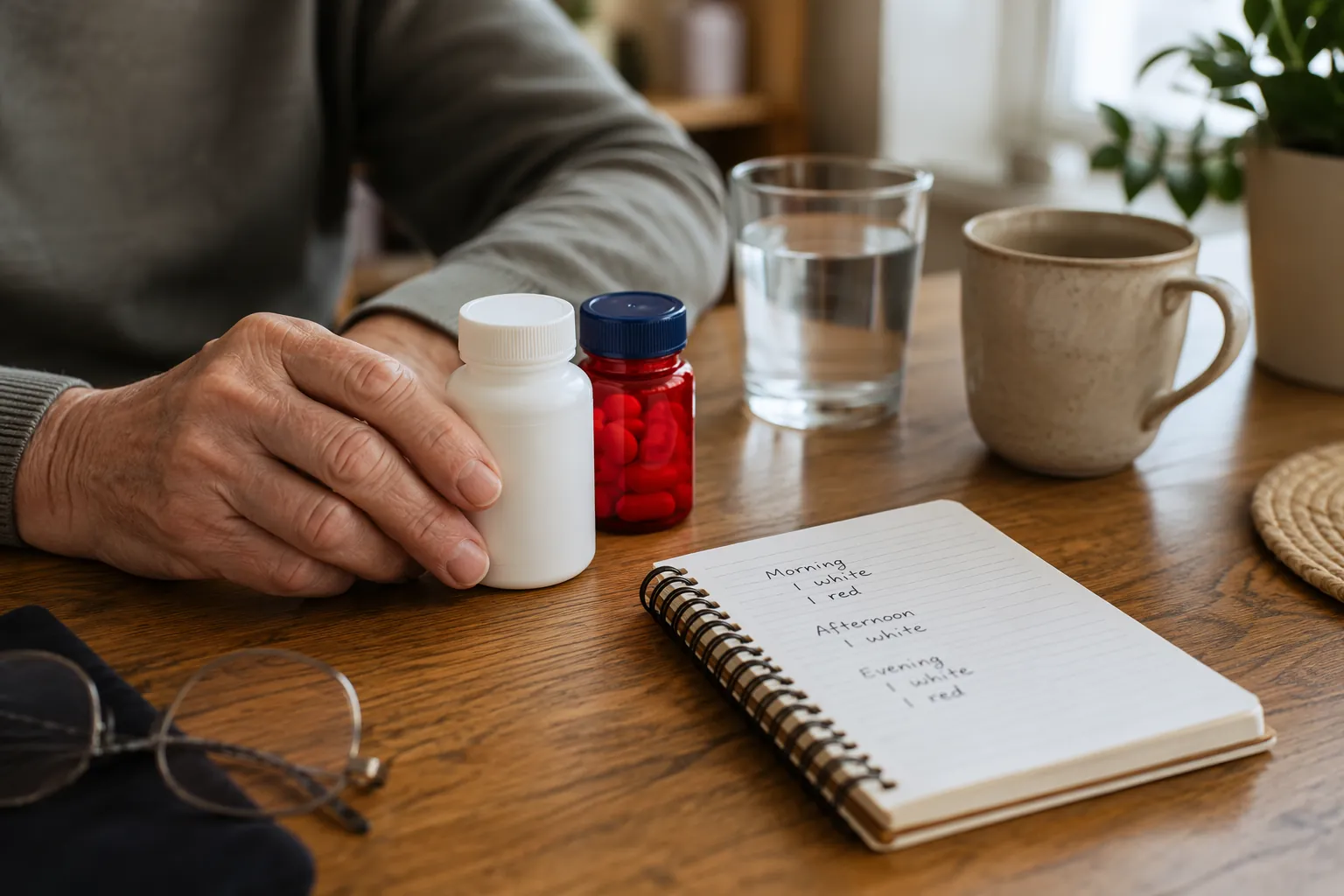
“Together” can mean several different things at home. It might mean taking Tylenol and Aleve at the same breakfast. It might mean taking acetaminophen at noon and naproxen at bedtime. It might mean a caregiver is trying to stretch pain coverage through the day without giving too much of either medicine. Those are not identical decisions.
The safer way to think about an acetaminophen and naproxen combination for elderly pain management is not “Can these bottles sit next to each other?” It is: how much acetaminophen will be in the body over 24 hours, how often naproxen is being used, and whether this person’s kidneys, stomach, blood pressure, balance, and medication list can tolerate that plan.
| Medicine | Common brand name | Senior-focused limit to check | Main concern in older adults |
|---|---|---|---|
| Acetaminophen | Tylenol | Usually no more than 3,000 mg total per 24 hours | Liver injury, especially with duplicate products or alcohol use |
| Naproxen sodium | Aleve | 220 mg every 8 to 12 hours; no longer than 10 days for pain unless a clinician says otherwise | Stomach bleeding, kidney strain, blood pressure effects, dizziness, and falls |
The 3,000 mg acetaminophen ceiling is worth saying plainly because many adult articles still repeat the 4,000 mg maximum. Geriatric pain guidance commonly uses the more conservative 3,000 mg daily ceiling for older adults, especially because liver reserve, frailty, alcohol exposure, and medication complexity vary widely from one person to another.[2][3]
Before giving both, do a five-minute bottle check
The most preventable acetaminophen mistake is not usually someone swallowing a handful of Tylenol on purpose. It is a person taking “one Tylenol,” then also taking a prescription pain pill, sleep medicine, cough medicine, or cold product that quietly contains acetaminophen. Acetaminophen appears in more than 600 over-the-counter and prescription products, which makes duplicate dosing a real household risk.[4]
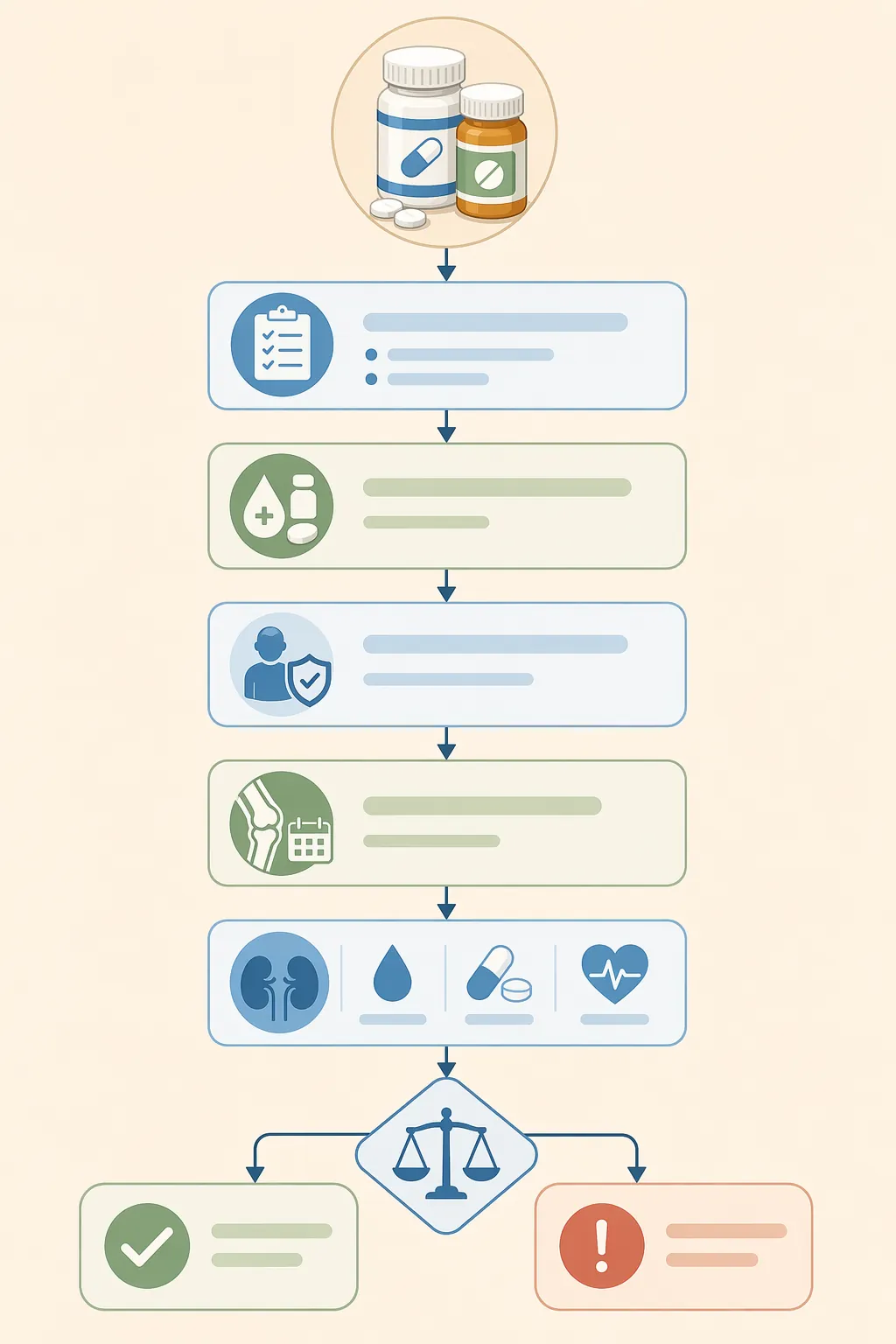
- Identify the generic name on every bottle. Tylenol is acetaminophen. Aleve is naproxen sodium. Do not rely only on brand names.
- Add up total acetaminophen for the next 24 hours from all sources, including prescription pain medicines and cold, flu, or sleep products.
- Keep the acetaminophen total at or below 3,000 mg per day unless the person’s clinician has given a different limit.
- Use naproxen only at the labeled short-term dose: 220 mg every 8 to 12 hours, and not beyond 10 days for pain unless a clinician says to continue.
- Screen for kidney disease, stomach bleeding history, blood thinners, blood pressure medicines, dizziness, and any recent fall before using naproxen routinely.
- If the pain is localized, ask whether a topical NSAID, physical support, ice or heat, or a clinician-guided plan would be safer than oral naproxen.
This is also where long-term NSAID caution belongs. The American Geriatrics Society’s Beers Criteria materials advise older adults to avoid regular or long-term NSAID use unless there is a specific reason and monitoring plan.[5] A short course after a strain is one kind of decision. A bottle of Aleve becoming part of the morning routine is another.
Who should call first, even if the doses look right
Dose math does not answer every safety question. Naproxen can be the wrong choice even when the label is followed.
- Kidney disease or dehydration: naproxen is processed through the kidneys and can worsen kidney stress in vulnerable older adults.[2]
- Blood thinners or a history of ulcers or GI bleeding: naproxen carries a severe stomach bleeding warning, and people age 60 and older are specifically at higher risk on FDA-labeled OTC NSAID warnings.[4]
- Blood pressure medicines or heart-related concerns: NSAIDs can affect blood pressure and fluid balance, which can complicate existing treatment plans.[2]
- Recent dizziness, near-falls, or a fall: the pain medicine plan should be part of a fall-risk review, not separate from it.
- Unclear medication history: if nobody can confidently say what was taken today, pause and ask a pharmacist before adding another dose.
The last point is not overcautious. After a fall, even a simple pain plan can change the next few days: the person may sleep more, eat and drink less, move less steadily, or take medicines at unusual times. That is exactly when duplicate acetaminophen and poorly timed naproxen become easier to miss.
Naproxen is also a fall-risk medication question
Stomach bleeding and kidney strain get most of the attention with naproxen. They should. But for an older adult, fall risk deserves the same practical attention, especially when pain is already changing how someone walks, sleeps, and gets to the bathroom at night.
Mayo Clinic’s fall-risk medication guidance states that NSAIDs increase fall risk in older adults because of their effect on blood pressure.[6] The CDC’s STEADI-Rx pharmacy care materials also include NSAIDs among medication classes to consider during fall-risk screening and medication review.[7]
That does not mean one naproxen tablet will make every older adult fall. It means naproxen belongs in the same conversation as dizziness, blood pressure readings, hydration, nighttime bathroom trips, and whether the person has already fallen this month. Pain relief matters because untreated pain can also reduce movement and confidence. The safety question is whether the chosen relief makes standing, walking, and toileting safer or shakier.
A useful home check is simple: after starting naproxen, watch for new lightheadedness, swelling, unusual fatigue, black or bloody stools, stomach pain, reduced urination, confusion, or a new unsteady gait. Those are stop-and-call signs, not symptoms to wait out.
Same time or alternating: what spacing can look like
Acetaminophen and naproxen can be taken on the same day because they are different medicines. Some people take them at the same time; others alternate them so pain coverage is spread out. General guidance describes acetaminophen spacing every 4 to 6 hours and naproxen spacing every 8 to 12 hours.[8][9]
A sample spacing plan might look like this, only as an illustration:
| Time | Example action | Safety note |
|---|---|---|
| 7:00 a.m. | Naproxen sodium 220 mg with food | Do not repeat naproxen before the 8- to 12-hour interval |
| 11:00 a.m. | Acetaminophen dose, if still needed | Count this toward the 3,000 mg daily acetaminophen total |
| 3:00 p.m. | Acetaminophen dose, if still needed | Avoid if another product already added acetaminophen |
| 7:00 p.m. | Naproxen sodium 220 mg, if still appropriate | Skip and call first if dizziness, stomach symptoms, kidney concerns, or blood pressure concerns appear |
| Bedtime | No automatic extra dose | Recheck the 24-hour acetaminophen total before any nighttime medicine |
This is not a universal prescription. The right schedule depends on the person’s pain pattern, other medicines, kidney and liver function, fall history, and clinician instructions. The main point is to avoid accidental stacking: naproxen too close to naproxen, acetaminophen hidden inside multiple products, or a nighttime dose added when nobody is fully awake enough to check the list.
When a topical NSAID may be the better first question
If the pain is in one knee, one hand, one shoulder, or another specific area, oral naproxen may not need to be the first NSAID choice. Topical NSAIDs such as diclofenac gel can provide local pain relief with much lower systemic exposure than oral NSAIDs, which may make them safer for some older adults.[2][10]
That does not make topical NSAIDs risk-free, and they still need to be checked against the person’s health conditions and medication list. But they are worth asking about when the pain is localized and the main worry is avoiding kidney, stomach, blood pressure, or fall-related complications from an oral NSAID.
The narrow answer
For short-term mild-to-moderate pain, an older adult may be able to use acetaminophen and naproxen together or alternate them. The safer version keeps acetaminophen at or below 3,000 mg per day from all sources, uses naproxen sodium 220 mg every 8 to 12 hours for no more than 10 days for pain unless a clinician says otherwise, and treats naproxen as a fall-risk and kidney-stomach-blood-pressure medication, not just a pain pill.
Before this becomes a routine plan, especially after a fall, dizziness, kidney concern, blood thinner use, or blood pressure medication use, ask a clinician or pharmacist to review the full medication list. For a broader look at medicines that can affect balance and falls, see “What Medications Increase Fall Risk in Older Adults?”
References
- Can You Safely Mix Naproxen and Acetaminophen? Healthline. https://www.healthline.com/health/pain-relief/naproxen-acetaminophen
- How to Choose the Safest OTC Pain Reliever for Older Adults Better Health While Aging. https://betterhealthwhileaging.net/safest-otc-painkiller-aging-risks-of-nsaids/
- Acute Pain Management in Older Adults SAEM. https://www.saem.org/about-saem/academies-interest-groups-affiliates2/cdem/for-students/online-education/m4-curriculum/group-m4-geriatrics/acute-pain-management-in-older-adults
- Safety Concerns for Pain Medicines for Older Adults BeMedWise. https://www.bemedwise.org/health-research-and-reports/health-resources-and-toolkits/acetaminophen/acetaminophen-seniors/safety-concerns-for-pain-medicines-for-older-adults/
- Ten Medications Older Adults Should Avoid or Use with Caution HealthInAging.org / AGS Foundation. https://www.healthinaging.org/tools-and-tips/learn-more-ten-medications-older-adults-avoid-or-use-caution
- Medicines That Increase Fall Risk in Older Adults Mayo Clinic. Jan 2025. https://www.mayoclinic.org/healthy-lifestyle/healthy-aging/in-depth/fall-risk/art-20572713
- Pharmacy Care (STEADI-Rx) CDC STEADI. https://www.cdc.gov/steadi/hcp/clinical-resources/pharmacy-care.html
- How to Use Aleve and Tylenol Together to Manage Pain Verywell Health. 2026. https://www.verywellhealth.com/can-acetaminophen-and-nsaids-be-taken-together-189126
- Aleve and Tylenol: Is It Safe to Take Them at the Same Time? Medical News Today. https://www.medicalnewstoday.com/articles/322833
- Where to Turn for Pain Relief — Acetaminophen or NSAIDs? Harvard Health. https://www.health.harvard.edu/pain/where-to-turn-for-pain-relief-acetaminophen-or-nsaids
Browse more in the Glossary.