
Glossary entry
5 Evidence-Backed Anti-Aging Secrets for Seniors
Anti-aging, defined the useful way
If you came here searching for “anti-aging secrets for seniors,” you may have expected creams, procedures, or a list of supplements with glossy promises. That is not where the best evidence points. For older adults, the more useful meaning of anti-aging is functional longevity: being able to get out of a chair, walk across a room without fear, recover from a stumble, carry a light bag of groceries, sleep well enough to stay alert, and remain socially connected enough that someone notices when daily life starts to change.
That does not mean appearance is silly. Wanting to look rested or feel attractive is human. But a smoother forehead will not help anyone reach the bathroom safely at 2 a.m. Strong legs, steadier balance, enough protein, regular sleep, calmer stress responses, and ordinary human connection have more to do with whether a person can age in place.
Harvard Health has summarized evidence suggesting that about 75% of lifespan variation is attributable to lifestyle, with genetics accounting for the remaining share.[1] That number is hopeful, not magical. Lifestyle does not erase illness, income, caregiving barriers, pain, or genetics. It does mean the daily habits that sound unglamorous are not minor details.
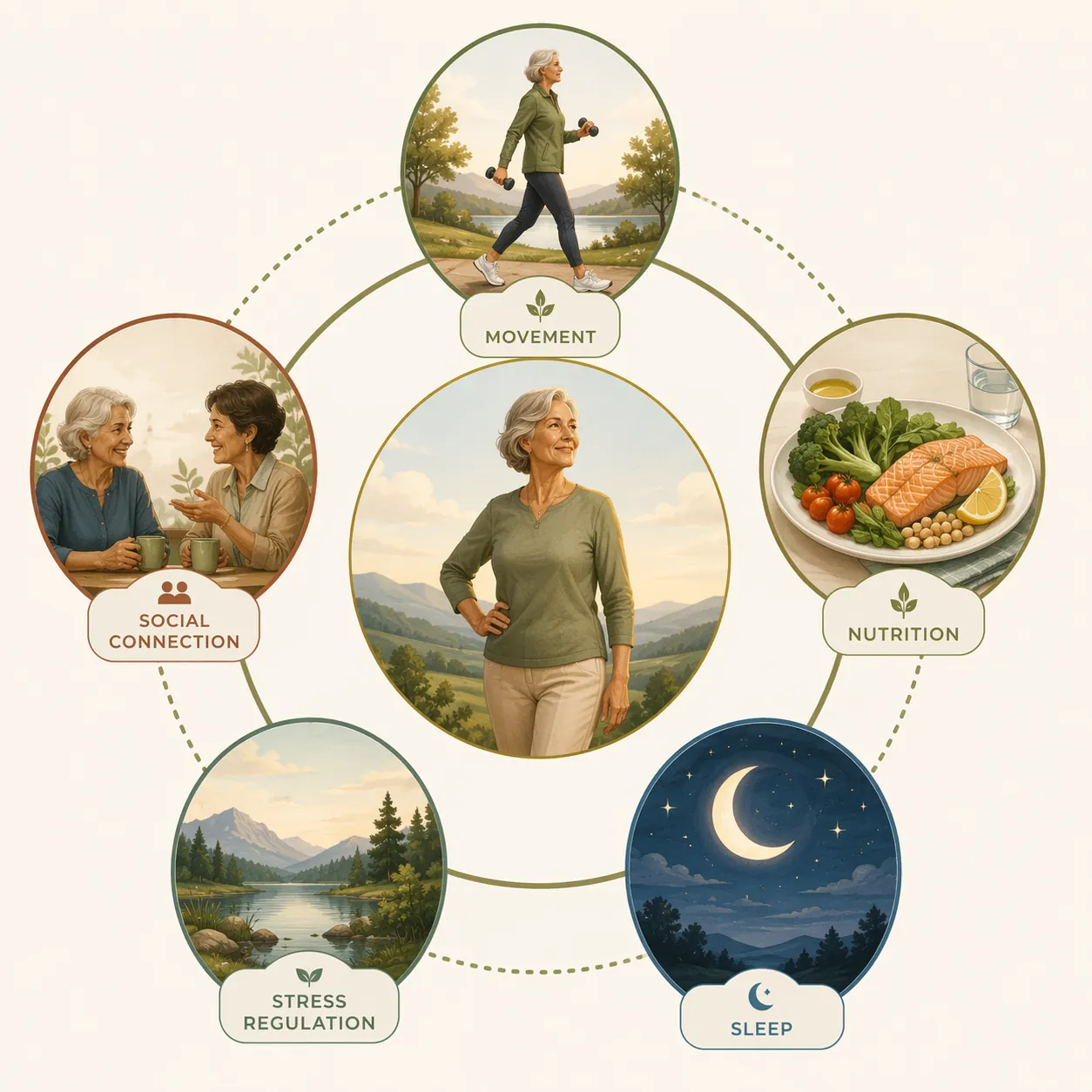
The five habits that matter most line up in a practical order: how the body moves, what it is fed, how it recovers, how stress is regulated, and whether the person remains socially anchored. Harvard’s healthy-aging framework uses the same five-pillar approach and recommends starting with the weakest pillar rather than trying to overhaul life all at once.[2]
| Pillar | What it protects in daily life |
|---|---|
| Movement | Leg strength, balance, walking confidence, recovery from a stumble |
| Nutrition | Muscle, bone, energy, and the reserves needed after illness or injury |
| Sleep | Alertness, coordination, hormone regulation, and daytime decision-making |
| Stress regulation | Inflammation control, steadier routines, and less physical wear from chronic strain |
| Social connection | Longevity, emotional support, and the informal safety net that catches decline early |
This article focuses on habits, but aging in place also depends on the home itself. If the stairs, bathroom, lighting, or entryway are becoming the weak link, pair these habits with practical home-safety planning such as choosing home modifications over downsizing.
Movement is the pillar that shows up first
Movement deserves the most attention because it is where independence becomes visible. A person can look terrific in a family photo and still struggle to rise from a dining chair without pushing hard through both arms. That is not a cosmetic problem. It is a warning light.
For older adults, the CDC recommends at least 150 minutes a week of moderate-intensity aerobic activity, muscle-strengthening activity on two or more days a week, and balance activities as part of the weekly routine.[3] The balance piece is not decorative. Falls often happen during ordinary transitions: turning too fast, stepping over a threshold, reaching for a towel, or getting up when sleepy.
- Strength protects the sit-to-stand motion, stair climbing, carrying groceries, and getting up after a low seat or soft couch.
- Balance protects the split second after a misstep, when the body either corrects itself or keeps falling.
- Aerobic capacity protects walking endurance, heart and lung reserve, and the ability to keep doing errands without turning every trip into a recovery event.
A practical movement plan does not need to look athletic. For many seniors, the first useful exercises are repeated sit-to-stands from a firm chair, heel raises at a counter, short walks broken into manageable pieces, and light resistance work with bands or household objects. The point is not to impress anyone. The point is to make daily transfers and walking less fragile.
If strength is the obvious gap, go deeper with The Anti-Aging Secret for Seniors Isn’t Surgery – It’s Strength. If dizziness, vertigo, or balance episodes are part of the picture, exercise advice needs to be more specific; the fall-prevention guide to Meniere’s vertigo fall prevention is a better next stop than a generic workout list.
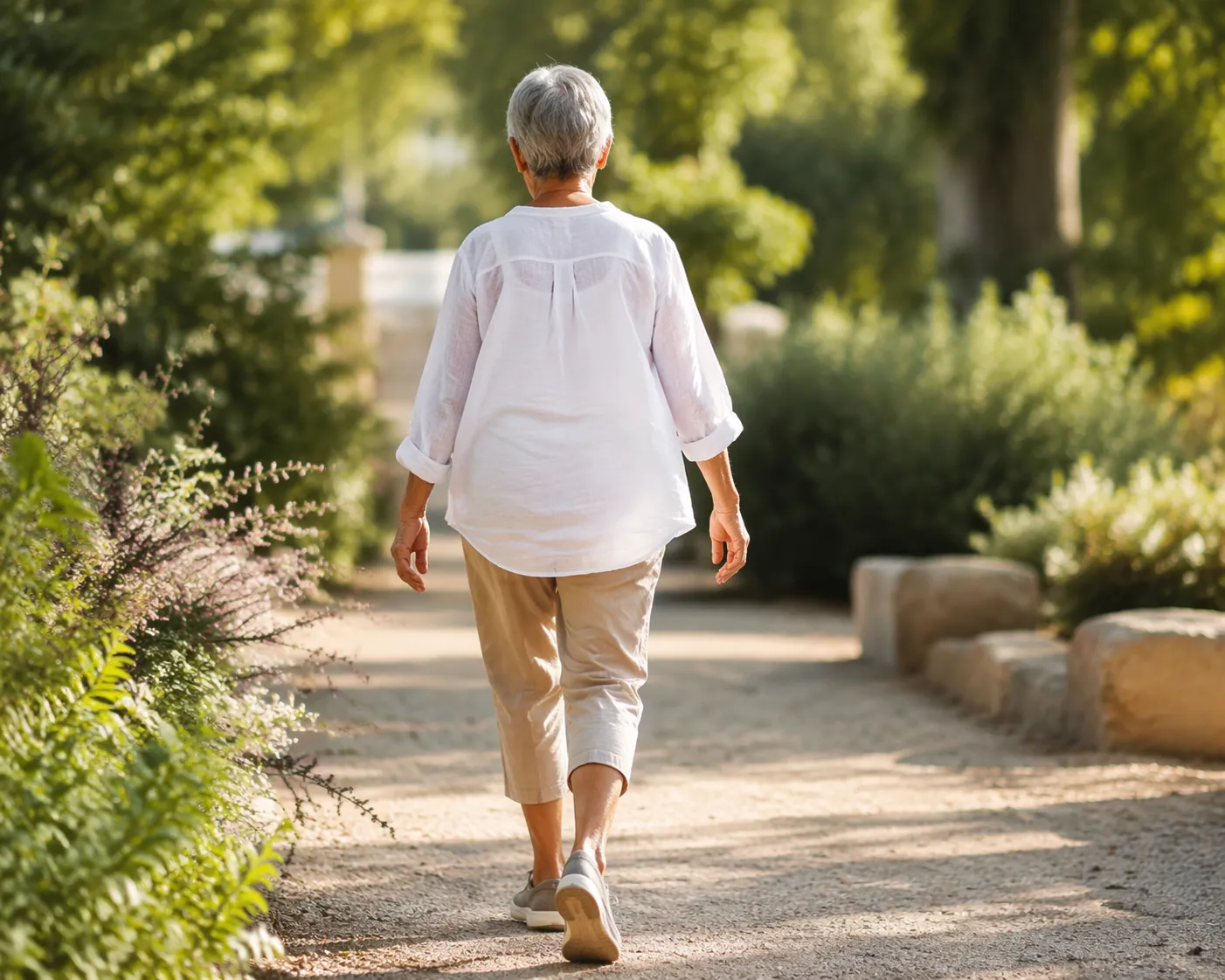
The clearest test is ordinary life. Can the person stand without rocking several times first? Can they pause and turn without grabbing furniture? Can they walk to the mailbox and back without feeling wiped out? Those answers say more about functional age than most anti-aging products ever will.
Nutrition should protect muscle and bone, not chase diet purity
Nutrition in later life has a different job than it did at 35. It is not mainly about restriction. It is about protecting the tissue that keeps a person upright: muscle, bone, connective tissue, and the energy reserve needed to recover after illness, grief, surgery, or a bad week.
A Mediterranean-style pattern remains one of the more sensible starting points: vegetables, fruit, beans, whole grains, nuts, olive oil, fish, and fewer highly processed foods. In a JAMA Network Open study of women summarized by Harvard, closer adherence to a Mediterranean-style diet was associated with 23% lower all-cause mortality.[2] Associated is the key word. It does not prove one meal pattern single-handedly causes longer life for every person, but it is strong enough to be worth taking seriously.
For seniors, that pattern also needs a protein-forward frame. Protein is not just for bodybuilders; it is the raw material for maintaining muscle. A plate with lovely vegetables but too little protein may still leave an older adult losing strength over time. Eggs, fish, poultry, dairy, tofu, beans, lentils, and other familiar foods can all play a role depending on culture, budget, chewing ability, kidney health, and medical advice.
Bone health deserves the same plain treatment. Mayo Clinic lists daily calcium needs for older adults in the 1,000–1,200 mg range and vitamin D needs in the 600–800 IU range, depending on age and sex.[4] That does not mean everyone should start grabbing bottles. Food, medical history, kidney disease, medications, and lab results matter. But it does mean calcium and vitamin D should not be treated as cosmetic wellness extras when fractures can change a person’s living situation overnight.
- Put a recognizable protein source at meals instead of leaving it to chance.
- Keep easy calcium-containing foods available if they fit the person’s diet, such as dairy foods, fortified foods, or other clinician-approved options.
- Favor meals that an older adult will actually eat. A perfect plan left untouched in the refrigerator protects nothing.
- Watch for quiet red flags: shrinking appetite, unexplained weight loss, new trouble chewing, or fatigue that makes cooking feel impossible.
Sleep is a fall-prevention habit hiding in plain sight
Sleep advice often gets filed under mood or memory, but it belongs in a safety conversation too. A tired older adult is more likely to move slowly, react late, misjudge a step, or rush through a nighttime bathroom trip while half awake.
Harvard’s healthy-aging framework points to 7–9 hours of sleep with consistent sleep duration and timing, noting sleep’s role in metabolic waste clearance from the brain and hormone regulation.[2] For everyday caregiving, the practical issue is consistency. Erratic sleep can make mornings foggy, medications harder to manage, and balance less reliable.
- Keep the wake time as steady as possible, even if bedtime is still a work in progress.
- Treat nighttime bathroom safety as part of sleep planning: clear the route, improve lighting, and avoid loose rugs.
- Notice sleep changes after new medications, pain flares, grief, illness, or reduced daytime activity.
- Bring persistent insomnia, loud snoring, breathing pauses, or excessive daytime sleepiness to a clinician rather than normalizing it as “just age.”
Stress regulation has to be boring enough to repeat
Chronic stress is not just a feeling to be endured. Harvard’s healthy-aging review describes chronic stress as a driver of cellular aging and identifies physical activity and structured social routines as the most evidence-backed countermeasures.[2] That is useful because it moves stress management out of the realm of vague advice and into the calendar.
For many seniors, the reliable stress habit is not an elaborate meditation practice. It may be a morning walk, a standing phone call, a weekly class, a church group, a breathing routine before bed, or ten minutes outside at the same time each day. The best stress-regulation habit is often the one that is plain enough to survive a difficult week.
Caregivers should watch for stress that shows up as function: skipped meals, new clutter, missed medications, cancelled plans, shallow sleep, or less walking. Older adults do not always announce distress. Sometimes the first sign is that the routines holding daily life together begin to loosen.
Social connection is not a nice extra
Social connection is too often treated as pleasant but optional, as if it belongs somewhere below diet and exercise. That is a mistake. Harvard’s healthy-aging framework says “survival data on relationships rival measured metrics,” placing relationships beside the more familiar numbers people track in the name of health.[2]
The aging-in-place reason is painfully practical. A socially connected person has more chances for someone to notice a slower gait, a new bruise, unopened mail, missed appointments, poor appetite, or confusion that was not there last month. Isolation removes witnesses. It also removes the small obligations that keep people dressed, fed, walking, and oriented to time.
If loneliness or withdrawal is already visible, treat it as a safety issue, not a personality quirk. CareWise Guide covers this more directly in Holiday Loneliness Raises Fall Risk, but the point applies beyond holidays: fewer routines and fewer observers can make decline easier to miss.
- Set one standing weekly contact that does not depend on anyone “remembering to call.”
- Favor activities that include movement when possible: walking groups, gentle classes, gardening clubs, volunteer shifts, or errands done with another person.
- Make check-ins specific. “Did you eat lunch?” and “Any dizziness today?” catch more than “How are you?”
- Respect autonomy. The goal is not to turn an older adult into a project; it is to keep support close enough that problems are not discovered only after a fall.
Where to start this month
Trying to optimize all five pillars at once is a good way to quit by next Tuesday. Harvard’s recommended approach is more sensible: identify the weakest pillar and start there.[2] For fall prevention and aging in place, “weakest” means the habit most likely to threaten independence soonest.
- If getting up from chairs, climbing stairs, or walking outdoors is becoming harder, start with movement.
- If appetite is low, meals are sparse, or weight is dropping, start with nutrition.
- If mornings are foggy or nighttime bathroom trips feel risky, start with sleep and home safety.
- If daily routines are unraveling under worry, grief, or caregiving strain, start with stress regulation.
- If days pass without meaningful contact, start with social connection.
Choose the pillar most likely to protect mobility and independence this month, then use the fall-prevention and mobility resources when the next step becomes specific.
References
- Want to live longer? Influence your genes — Harvard Health Publishing, June 2024
- The 5 pillars of healthy aging — Harvard Health Publishing, July 2026
- How much physical activity do older adults need? — Centers for Disease Control and Prevention
- Calcium and calcium supplements: Achieving the right balance — Mayo Clinic, November 2024
Browse more in the Glossary.