
Glossary entry
Best Affordable Places for Seniors to Retire Abroad in 2026
Last verified 2026-08-01
This is not financial or legal advice. Medicare/Medicaid and benefits rules vary by state and change over time — verify current rules with your state Medicaid office or Area Agency on Aging.
Last verified: August 1, 2026. This is a screening guide for U.S. seniors and families, not financial, tax, legal, immigration, or medical advice. Visa rules, income thresholds, insurance availability, and tax treatment can change; verify directly with the relevant consulate and qualified professionals before making a move.
The short answer: the best affordable places to retire abroad for seniors in 2026 are not simply the countries with the cheapest rent. Start with Greece, Panama, Costa Rica, Portugal, Mexico, Italy, France, Spain, Thailand, and Malaysia because that is International Living’s 2026 Global Retirement Index order, with Greece at No. 1 for the first time in the index’s 35th year.[1] Then test each place against a real monthly couple budget, such as April International’s 2026 expat budget ranges where available.[2] Forbes’ July 31, 2026 analysis adds a wider editorial screen of 24 countries and 96 locations, including cost comparisons and climate-risk exclusions.[3] Numbeo’s mid-year 2026 cost-of-living index is useful as a directional crowd-sourced check, not a verdict.[4] Retiree and passive-income visa bars from WhereNext show why a cheap country can still be out of reach on paper.[5] And for U.S. seniors, the healthcare screen starts with one blunt fact: Medicare generally does not cover care outside the United States except in narrow situations.[6]

The 2026 affordability scorecard
Read this table as a first-pass screen, not a final ranking. The order follows International Living’s 2026 index. The budget column uses April International where the research materials provide a couple-budget range; otherwise it uses only the sourced directional cost evidence available here. The visa column is deliberately conservative: if the income bar is not in the sourced material, the table says so instead of guessing.
| Screen order | Destination | 2026 affordability picture | Retiree/passive-income visa bar in sourced material | Healthcare note for U.S. seniors |
|---|---|---|---|---|
| 1 | Greece | International Living’s 2026 No. 1, for the first time.[1] Forbes says Greece is a third or more below the U.S. on costs, and Numbeo lists Greece at 53.3 versus the U.S. at 69.7.[3][4] | Greece FIP: about €3,500/month.[5] | European access is attractive, but private coverage and local eligibility need checking. Medicare generally does not follow you abroad.[6] |
| 2 | Panama | April International places Panama at about $2,000–$3,000/month for a couple; Numbeo lists Panama at 46.5.[2][4] | Pensionado: about $1,000/month.[5] | Often screens well because the visa bar and budget can clear together, but insurance and prescription access still need local quotes. |
| 3 | Costa Rica | April International places Costa Rica at about $2,000–$3,000/month for a couple; Numbeo lists Costa Rica at 56.8.[2][4] | Pensionado: about $1,000/month.[5] | Not the cheapest Latin American option in the cost index, but it remains a practical screen if healthcare access and housing fit the budget. |
| 4 | Portugal | April International gives Portugal a couple-budget range of about $2,200–$2,800/month; Numbeo lists Portugal at 48.7.[2][4] | D7: about €920/month.[5] | Paperwork may look manageable, but tax treatment and private insurance should be checked before assuming Portugal is still the old bargain. |
| 5 | Mexico | International Living ranks Mexico No. 5; Numbeo lists Mexico at 44.4.[1][4] | No precise 2026 income bar is provided in the sourced material used here; verify with a Mexican consulate. | The big practical advantage for many U.S. seniors is proximity to family and U.S. medical follow-up, but that does not replace an in-country healthcare plan. |
| 6 | Italy | International Living ranks Italy No. 6; Forbes says Italy is a third or more below the U.S. on costs, while Numbeo lists Italy at 61.3.[1][3][4] | No precise 2026 income bar is provided in the sourced material used here; verify the Elective Residence Visa requirements with the consulate. | Italy may appeal to seniors who want Europe without choosing the lowest-cost country, but it needs careful screening on residency, insurance, and local access. |
| 7 | France | International Living ranks France No. 7.[1] The sourced cost set here does not provide a France couple-budget range. | No precise 2026 income bar is provided in the sourced material used here; verify visitor/residence requirements with the consulate. | Do not treat France as interchangeable with Portugal, Spain, Greece, or Italy. Healthcare systems, residency paperwork, and local prices vary sharply by place. |
| 8 | Spain | International Living ranks Spain No. 8; April International places Spain at the high end of its cited range, about $3,500/month for a couple, and Numbeo lists Spain at 51.4.[1][2][4] | Non-Lucrative Visa: about €2,400/month.[5] | Spain can still be workable, but it is not a low-threshold European fallback. Spain’s Golden Visa ended in 2025, so retirement screening should focus on ordinary residency routes.[5] |
| 9 | Thailand | April International cites about $1,500/month for Thailand; Forbes says Thailand is about two-thirds less than the U.S.; Numbeo lists Thailand at 36.8.[2][3][4] | Thailand LTR: up to $80,000/year.[5] | Low living costs do not automatically solve visa fit or insurance access, especially for seniors with chronic conditions. |
| 10 | Malaysia | International Living ranks Malaysia No. 10; Numbeo lists Malaysia at 34.0, the lowest among the International Living top 10 countries shown in the sourced Numbeo set.[1][4] | No precise 2026 income bar is provided in the sourced material used here; verify current retirement/passive-income options directly. | Malaysia deserves a cost screen, but the decision turns on current residency rules, private insurance, and preferred medical city. |
What “affordable” has to include
A retirement-abroad budget that starts and ends with rent is unfinished. The month has to include housing, utilities, groceries, transportation, insurance premiums, out-of-pocket care, prescriptions, visa renewals, flights back to the United States, and enough cushion for exchange-rate swings. The cheapest country on paper may become expensive if one spouse needs a specialist, a brand-name medication, or a residence permit with a high income requirement.
The sources used here answer different questions. International Living’s index is a correspondent-survey-based retirement ranking across seven scored categories, so it is broader than affordability alone.[1] April International gives practical expat couple-budget ranges for selected countries, which is closer to the monthly checkbook question.[2] Forbes uses editorial analysis across countries and locations, including cost differences and climate-risk concerns, but it is not a mechanical scorecard.[3] Numbeo’s index is crowd-sourced and directional; it is useful for seeing broad spreads, not for deciding whether your actual pharmacy bill will be lower.[4] WhereNext’s visa data belongs in the same conversation because a retiree who cannot qualify for legal residence does not have an affordable plan, no matter how low the grocery prices look.[5]
The Medicare issue is the part that gets softened too often. Medicare.gov says Medicare generally does not cover healthcare or supplies outside the U.S., except for limited exceptions.[6] That means the retiree-abroad budget needs a private insurance quote, a plan for routine care, a prescription strategy, and a fallback for serious illness. If you are still sorting out U.S. coverage, review basics such as Medicare wellness visits and fall-prevention planning before assuming an overseas move will simplify healthcare.

Country notes for the 2026 shortlist
Greece: the European surprise with a real income bar
Greece is the 2026 standout because International Living put it at No. 1 for the first time.[1] That deserves attention, especially for seniors who want Europe but have found Portugal, Spain, France, or Italy too crowded in the retirement conversation. Forbes also places Greece a third or more below the U.S. on costs, and Numbeo’s 53.3 reading sits well below the U.S. 69.7 benchmark.[3][4]
The catch is eligibility. The WhereNext dataset lists Greece’s FIP income bar at about €3,500/month.[5] That is a different retiree than the one trying to make a single modest Social Security check stretch. Greece may be a value pick for a couple with stronger guaranteed income and the ability to buy private health coverage; it is not automatically the cheapest realistic choice for every senior.
Panama, Costa Rica, and Mexico: the Latin America value cluster
Panama is the cleanest first screen in this cluster. April International’s couple budget range of about $2,000–$3,000/month lines up with a pensionado income bar of about $1,000/month, and Numbeo’s 46.5 index reading is far below the U.S. benchmark.[2][4][5] A couple still needs to price private insurance and local care, but at least the early numbers do not fight each other.
Costa Rica asks for a little more caution. It has the same April International couple-budget range as Panama, about $2,000–$3,000/month, and the same sourced pensionado bar of about $1,000/month.[2][5] But Numbeo places Costa Rica at 56.8, higher than Panama and Mexico in the sourced cost set.[4] That does not make Costa Rica unaffordable; it means the household budget should be built from the town level upward, not from the country’s reputation.
Mexico is attractive for a different practical reason: it can keep a retiree closer to adult children, U.S. flights, and possible stateside medical follow-up. International Living ranks Mexico No. 5, and Numbeo lists it at 44.4.[1][4] The sourced material here does not provide a precise 2026 visa-income threshold for Mexico, so that number must be checked with a Mexican consulate before anyone falls in love with a monthly rental listing.
Portugal and Spain: both popular, not the same screen
Portugal still screens well on the numbers in these materials. April International gives a couple-budget range of about $2,200–$2,800/month, Numbeo lists Portugal at 48.7, and WhereNext lists the D7 income bar at about €920/month.[2][4][5] That combination is why Portugal remains on a serious shortlist.
But Portugal is not frozen in its old expat-blog version. The research materials flag that Portugal’s NHR regime has been replaced by IFICI, described as a 20% flat regime.[5] Tax treatment should be checked before a move, especially for retirees with pensions, investments, or part-time consulting income. The visa may be the first gate; taxes can be the second.
Spain is a more expensive screen in the sourced budget data. April International places Spain at about $3,500/month for a couple, and WhereNext lists the Non-Lucrative Visa threshold at about €2,400/month.[2][5] Numbeo’s 51.4 index reading is still below the U.S. benchmark, but the monthly and visa numbers are not small.[4] Spain’s Golden Visa ended in 2025, so seniors should not rely on outdated residency summaries when building a 2026 plan.[5]
Italy and France: Europe, but not bargain-bin Europe
Italy ranks No. 6 in International Living’s 2026 list, and Forbes describes Italy as a third or more below the U.S. on costs.[1][3] Numbeo lists Italy at 61.3, which is lower than the U.S. but higher than Greece, Spain, Portugal, Panama, Mexico, Thailand, and Malaysia in the sourced set.[4] That suggests Italy may be a quality-of-life choice with some savings, not the strongest pure affordability play.
France needs the same discipline. International Living ranks it No. 7, but the materials used here do not provide a couple-budget range or a precise visa-income bar for France.[1] That is a reason to slow down, not a reason to remove it automatically. A senior considering France should get local rent, insurance, and residency figures for the exact region under consideration before comparing it with Portugal or Greece.
Thailand and Malaysia: low costs, more paperwork homework
Thailand has one of the strongest affordability signals in the materials. April International cites about $1,500/month, Forbes says Thailand is about two-thirds less than the U.S., and Numbeo lists Thailand at 36.8.[2][3][4] Those numbers explain why Thailand keeps showing up in senior retirement-abroad searches.
The visa screen is the counterweight. WhereNext lists Thailand’s LTR threshold as up to $80,000/year.[5] That does not mean every retiree route has the same economics, but it does mean the visa conversation cannot wait until after a scouting trip. A couple with medical needs should also price private insurance before assuming low local costs will carry the whole plan.
Malaysia is also compelling on directional cost. International Living ranks it No. 10, and Numbeo lists Malaysia at 34.0, lower than Thailand’s 36.8 and far below the U.S. 69.7 benchmark.[1][4] The sourced material here does not provide a precise current retiree-income bar for Malaysia, so it belongs on the shortlist only with a fresh residency check.
A few tempting places that need extra caution
Some countries can look extremely inexpensive in cost indexes or anecdotal budgets but still fail a senior-specific screen. Forbes reported that it dropped the Philippines and Indonesia over World Risk Report climate-hazard concerns in its 2026 analysis.[3] That is not the same as saying no one should live there. It means climate exposure belongs in the first round of screening, especially for retirees who may have less flexibility during floods, heat events, evacuation problems, or insurance disruptions.
The Philippines is also a reminder that visa programs are not static. The research materials flag that the SRRV “Smile” tier was abolished on September 1, 2025, while WhereNext lists an SRRV figure of about $800/month.[5] Anyone using an older retirement forum post could be working from a rule that no longer exists.
FAQ for U.S. seniors screening retirement abroad in 2026
Can I retire abroad on Social Security?
Possibly, but receiving Social Security abroad is not the same as qualifying for residency or affording healthcare. Forbes reported that 712,000 Americans were collecting Social Security abroad at the end of 2024, up 20% over 13 years.[3] That shows the pattern is real. It does not prove that any one destination will accept your income, cover your medical needs, or keep your monthly budget stable.
Does Medicare cover me if I move overseas?
Generally, no. Medicare.gov says Medicare usually does not cover healthcare or supplies outside the U.S., except for limited exceptions.[6] Seniors who depend on regular prescriptions should price local medication access and also make sure their U.S. Part D decisions still make sense if they keep coverage at home; this Medicare Part D premium guide is a useful home-base planning companion, even though it does not replace country-specific prescription research.
Are cost-of-living indexes enough to pick a country?
No. Numbeo’s 2026 mid-year index shows a wide spread, from the U.S. at 69.7 to Portugal at 48.7, Thailand at 36.8, Malaysia at 34.0, and Vietnam at 26.9.[4] That is helpful for orientation. It does not answer whether your preferred town has accessible doctors, whether your medication is available, whether you can get insured, or whether your income clears the visa threshold.
How often should I verify visa-income requirements?
Verify before every serious decision point: before a scouting trip, before selling a home, before signing a long lease, and again before filing. The research materials specifically warn that visa bars are volatile, that some minimum-wage-indexed bars reset each January, and that certain figures are consular benchmarks rather than fixed legal minimums.[5]
Should I compare retiring abroad with staying near family?
Yes, and not as a mood question. Compare monthly cash flow, caregiving backup, emergency response, housing safety, transportation, and who will step in after a hospital visit or fall. If the real alternative is staying near adult children, pair this abroad screen with an honest look at what makes aging in place succeed or fail. The cheaper country is not always the safer plan.
The practical 2026 screen
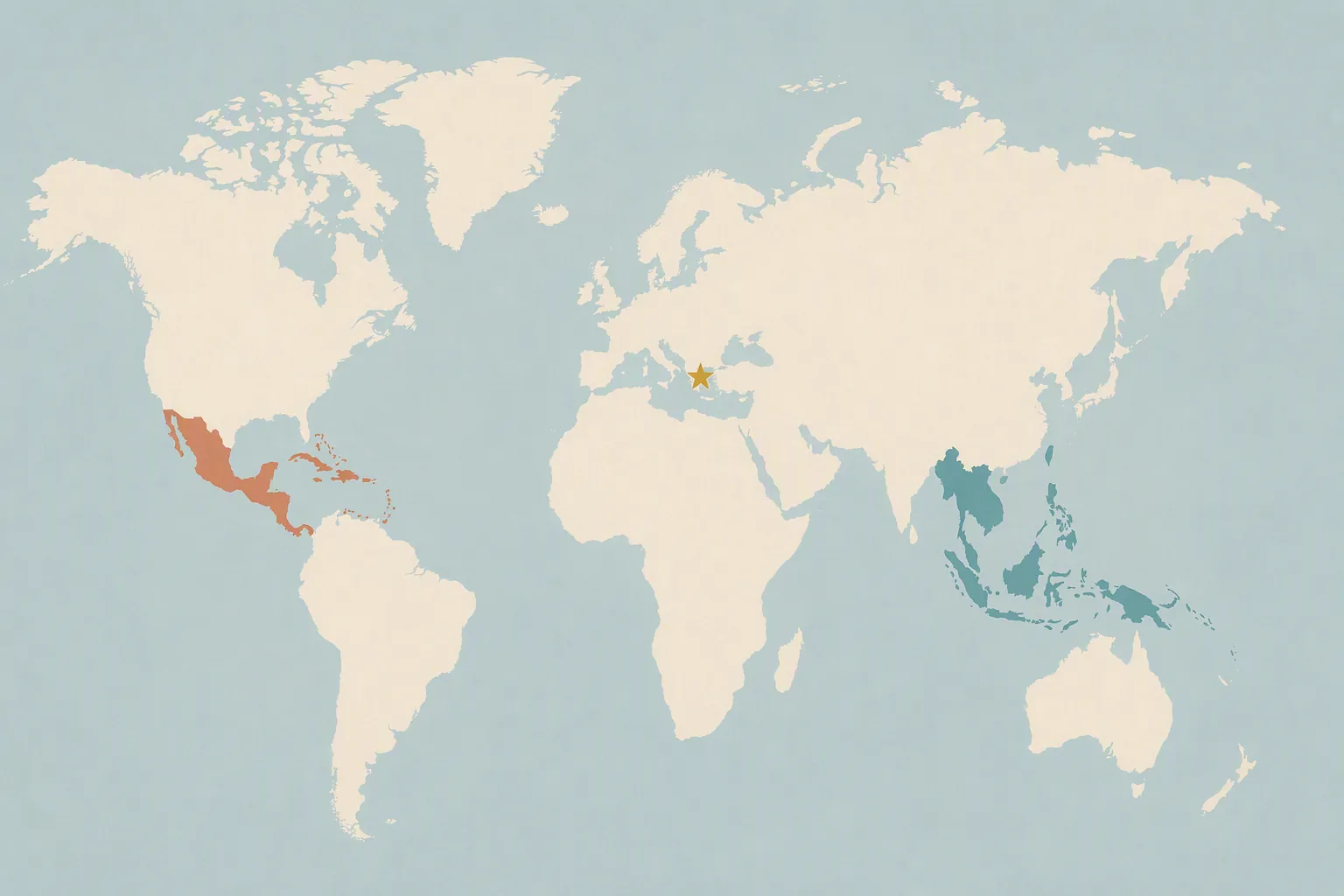
For U.S. seniors on fixed incomes, the strongest first screens in 2026 are in Latin America and Southeast Asia, especially Panama, Costa Rica, Mexico, Thailand, and Malaysia. Greece deserves special attention because it topped International Living’s index for the first time, but its income threshold can change who it works for. Portugal remains practical on the sourced budget and D7 figures, while Spain, Italy, and France require a more careful Europe-specific comparison rather than a general assumption that “Europe” is affordable or unaffordable.
A destination belongs on the final shortlist only when three numbers clear together: the monthly couple budget, the healthcare and insurance plan, and the visa-income requirement. If one of those fails, the beach-town rent number is just a pleasant distraction.
References
- The Best Places to Retire — International Living
- Best Countries to Retire — April International
- The Best Places To Retire Abroad In 2026 — Forbes, July 31, 2026
- Cost of Living Index by Country 2026 Mid-Year — Numbeo
- Retirement Visa Requirements 2026 — WhereNext
- Travel outside the U.S. — Medicare.gov
Browse more in the Glossary.