
Product term
Best Robot Vacuums for Seniors Still Available After the FCC Ban
Last verified 2026-07-31
If you were ready to buy a robot vacuum for a parent and then saw the late-July FCC ban headlines, the important practical answer is this: previously authorized robot vacuums are not suddenly illegal, and existing inventory is not wiped off the shelf. USA TODAY reported on July 30, 2026, that the new FCC action does not affect existing vacuums already in use or models that had already received authorization before the rule took effect.[1]
That does not make the FCC news irrelevant. It means the buying question gets narrower and more useful: can you still buy a model this week that removes bending, avoids becoming another thing to rescue from under the bed, and has a reasonable support path after the ban?
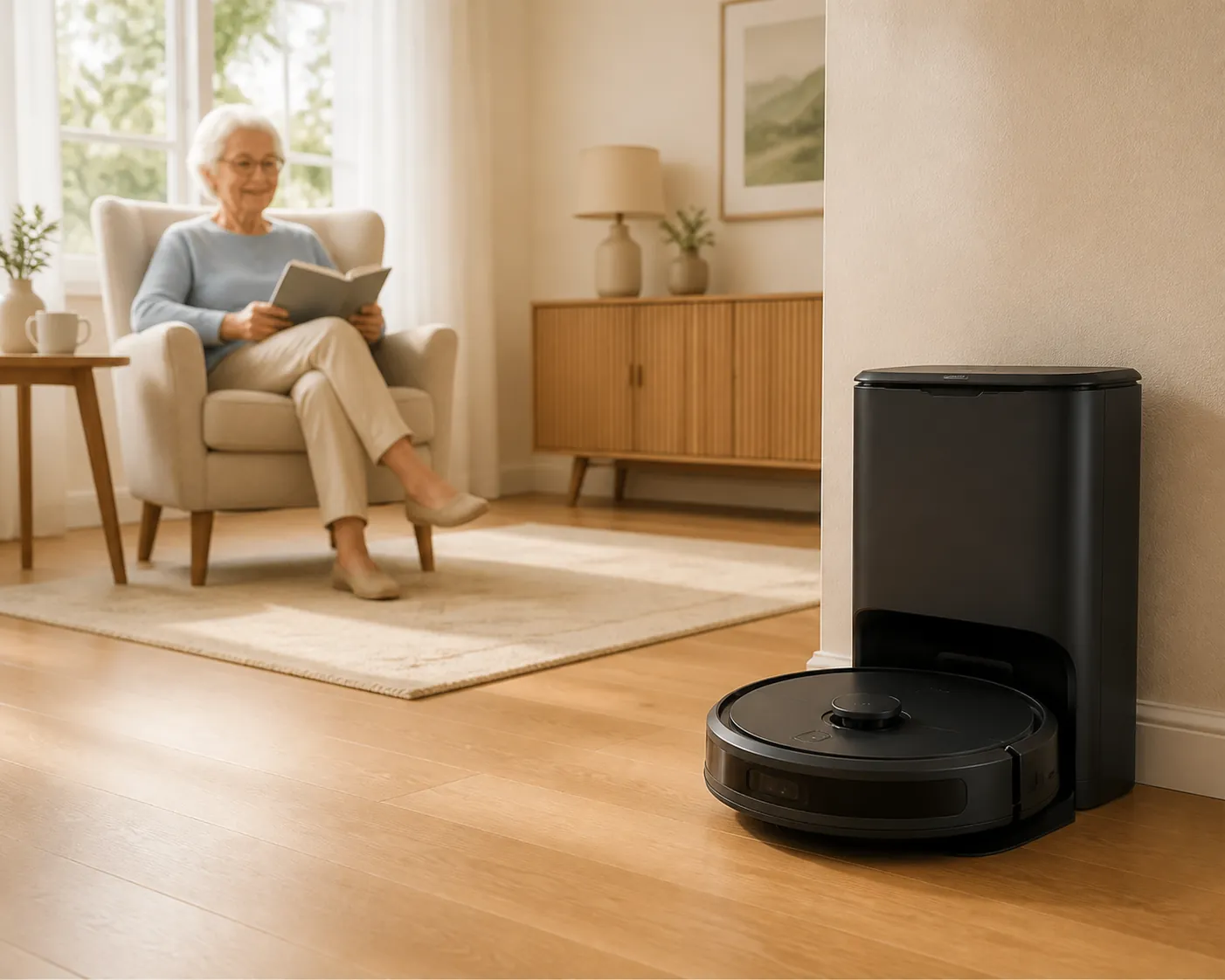
What the FCC ban changes, and what it does not
The rule applies to authorization for new foreign-made connected ground robots over the relevant threshold, not to every robot vacuum already sitting in a warehouse, store, or home. Tom’s Hardware described the covered category as ground robots over 4.4 pounds with a 200 kbps connection, and also noted that a conditional-approval pathway exists.[2]
For a caregiver, that distinction matters more than the politics of the rule. A model that was already authorized can still be a real option. A future model from the same brand may need a different regulatory path. That is why post-ban shopping should favor current, clearly available models over preorders, vague “coming soon” versions, or listings that do not identify the exact product.
There is also one unresolved point worth keeping in view: CNET reported that iRobot did not immediately respond to requests for comment about how its Picea acquisition status fits under the ban, while noting that current models such as the Roomba Combo 10 Max and Roomba 205 DustCompactor were already authorized.[3] That is not a reason to panic-buy or avoid the brand entirely. It is a reason to check the exact model and seller before you spend premium money.
The senior-friendly features that matter first
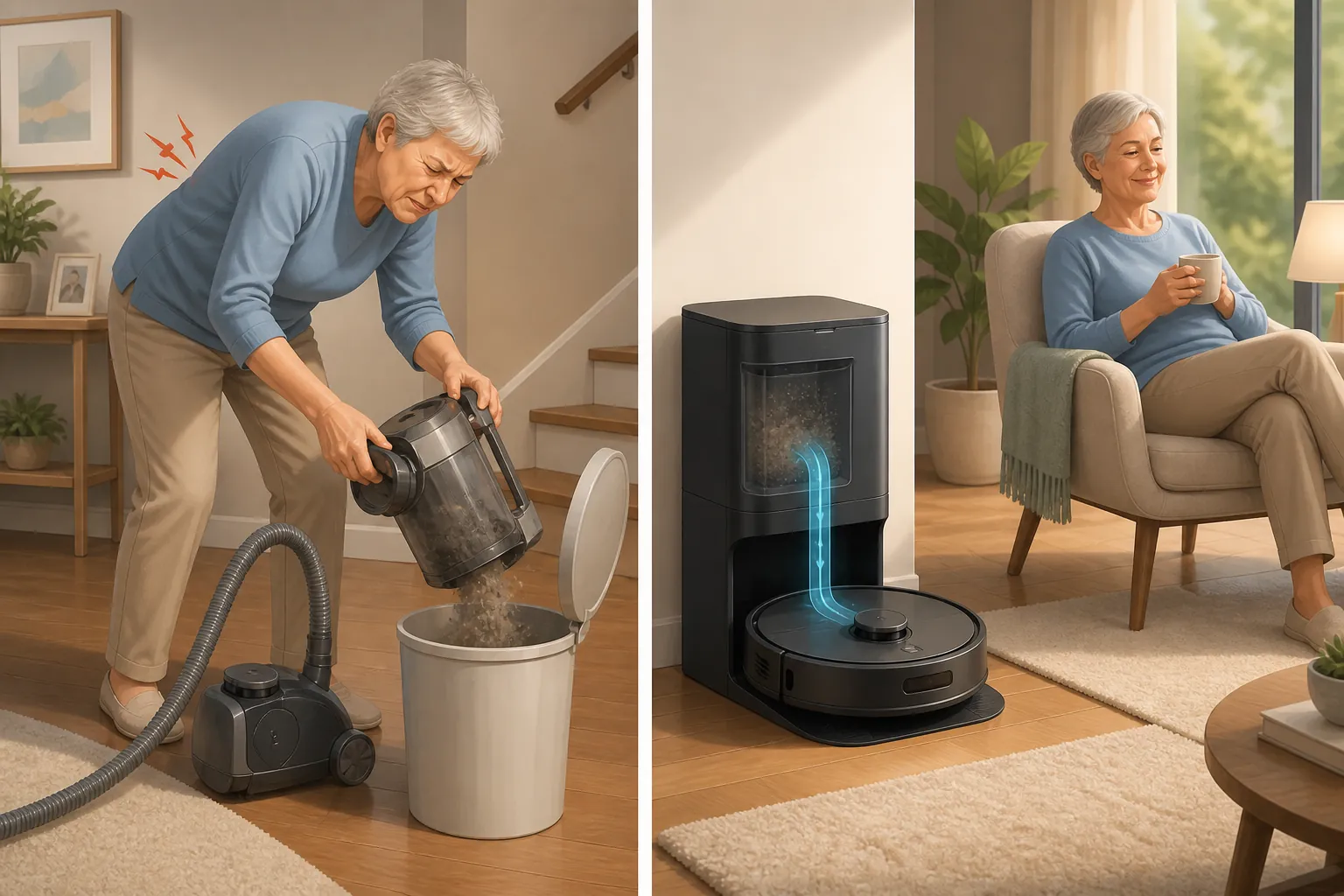
A robot vacuum is not a medical device, and it should not be sold as one. The useful safety case is more ordinary: it can take away floor-cleaning jobs that require bending, dragging a heavy upright vacuum, stepping around cords, or crouching to collect dust and hair. That is where the best robot vacuums for seniors after the FCC ban separate themselves from the clever-looking ones.
- Self-emptying or self-washing dock: the top priority because it reduces how often an older adult has to bend over a dustbin.
- Strong obstacle avoidance: important because a stuck robot creates a new bending, reaching, or caregiver-rescue task.
- Simple controls: useful when the older adult wants clean floors without managing a complicated app.
- Low-profile cleaning: helpful under beds, sofas, and chairs where dust gathers and upright vacuums are awkward.
- Quiet operation: not the first safety feature, but important if the vacuum will run while someone is home.
Older senior-focused robot-vacuum roundups still point to some sensible feature ideas, especially automatic docking and easy controls, but they are not enough for 2026 purchasing decisions when models, support status, and FCC authorization questions have changed. Current lab data matters more here than a comfortable old “best for seniors” label.
Three models that still make sense for different households
CNET’s July 2026 robot-vacuum testing gives the cleanest comparison point because it reports measured performance, including sand pickup, obstacle avoidance, and room coverage, rather than only retailer claims.[4] For senior households, those numbers are not abstract. Sand pickup tells you whether the machine is likely to collect grit that makes floors feel dirty. Obstacle avoidance tells you whether it can work around common household hazards instead of turning them into a chore.
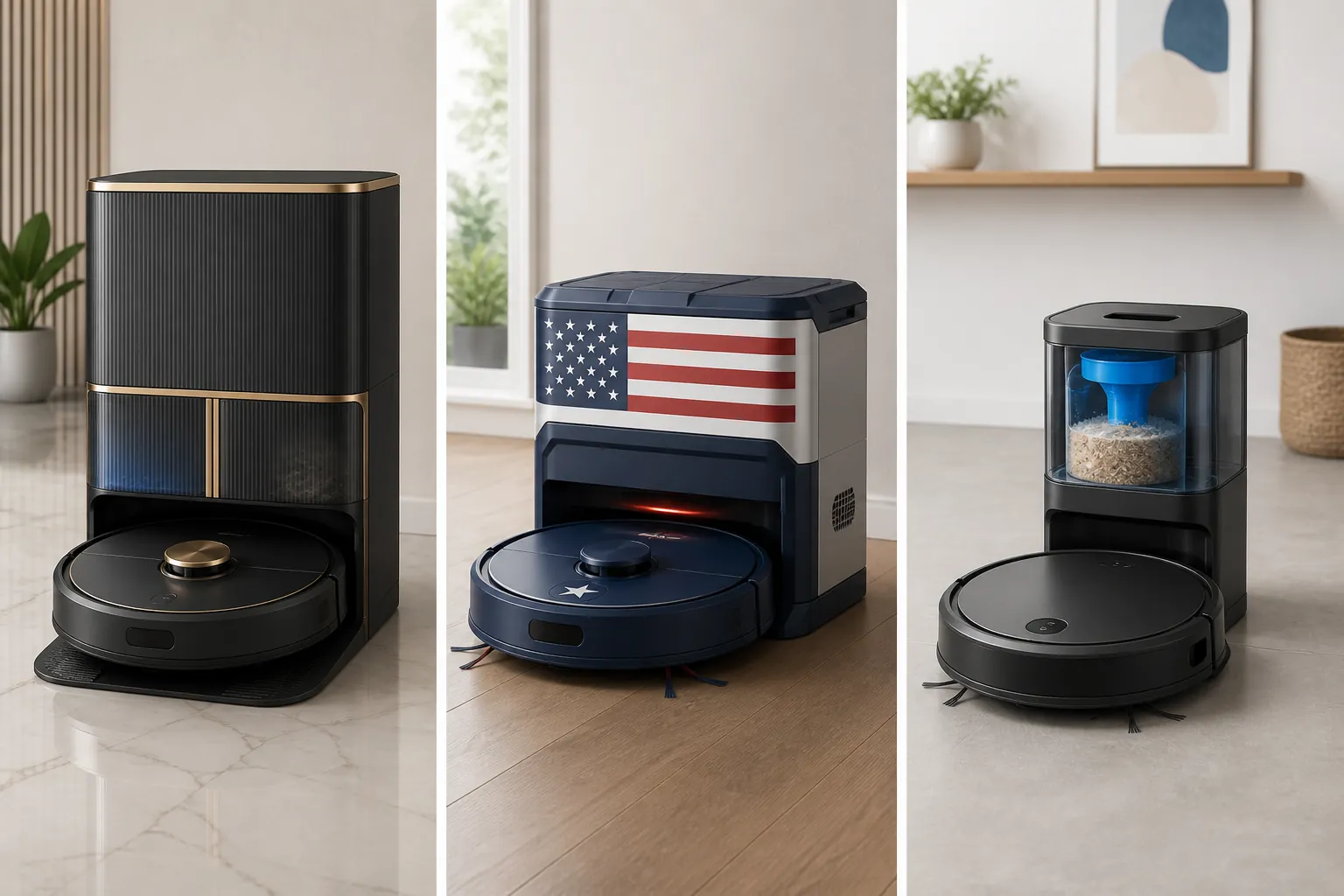
| Model | Best fit | Key tested data | Caregiver caution |
|---|---|---|---|
| iRobot Roomba Combo 10 Max | Maximum hands-off cleaning | 67.04% sand pickup; 6/6 obstacle avoidance | Premium price and iRobot’s future post-ban status should be checked if buying later in 2026 |
| Shark PowerDetect ThermaCharged | Best post-ban reassurance among major brands | 60.12% sand pickup; 6/6 obstacle avoidance | US assembly lowers concern, but exact per-model supply chains are not fully public |
| 3i G10 Plus | Fixed-income value | 94.16% hardwood sand extraction; 86.53% room coverage | Does not carry the same obstacle-avoidance or support reassurance as the premium picks |
Roomba Combo 10 Max: the premium burden-removal pick
The Roomba Combo 10 Max is the strongest fit when the household can afford to pay for the fewest follow-up chores. CNET named it the best overall robot vacuum in its 2026 testing, with 67.04% sand pickup across all floor types and a perfect 6/6 obstacle-avoidance score.[4]
The self-washing dock is the feature that earns attention for an older adult. A dock that handles dirty mop maintenance and debris is not just convenience dressed up as technology. It means fewer moments when someone has to stoop, pull out a bin, shake dust into the trash, rinse parts, or ask a daughter or son to come over because the vacuum is full again.
At $1,400 in CNET’s listing, this is not a casual purchase.[4] It makes the most sense where the older adult still lives independently, the caregiver cannot be there every few days, and the home has mixed floors or enough daily debris that a cheaper robot would keep demanding attention.
Shark PowerDetect ThermaCharged: the regulation-resilient pick
The Shark PowerDetect ThermaCharged is the model that looks most reassuring after the FCC news, as long as the listing and seller are current. CNET reported a perfect 6/6 obstacle-avoidance score and 60.12% average sand pickup, and separately noted that Shark is the only major brand assembling in the US.[3][4]
That US assembly point should be treated carefully. It does not reveal every component in every model’s supply chain, and it does not guarantee permanent availability. What it does give caregivers is a better starting position under a rule aimed at authorization for certain foreign-made connected ground robots.
The Shark’s obstacle score is the practical reason it belongs near the top of a senior-focused list. A robot that avoids cords, shoes, and floor clutter is less likely to strand itself in a place where an older adult has to kneel, reach under furniture, or step around a half-cleaned mess. The slightly lower sand-pickup score than the Roomba may matter less than the support reassurance if the family’s main concern is whether the product line remains stable after the ban.
3i G10 Plus: the value pick with boundaries
The 3i G10 Plus deserves more than a throwaway “budget” mention. At $250 in CNET’s testing, it posted 94.16% hardwood sand extraction and 86.53% room coverage, and its bagless dirt-compression bin avoids the ongoing cost of disposable bags.[4]
That combination is compelling for a fixed-income household with mostly hard flooring and a caregiver who can check on the machine occasionally. If the goal is to keep grit, crumbs, and everyday dust from building up between deeper cleanings, the value is obvious.
The boundary is just as important. The 3i G10 Plus should not be treated as equal to the premium picks on obstacle avoidance or support reassurance. If the parent’s home has cords near recliners, pet toys, laundry baskets, threshold clutter, or furniture that traps devices, saving money up front can shift work back to the caregiver.
How to choose without overbuying
The right choice depends less on brand loyalty than on which job is currently putting strain on the older adult or the caregiver.
- Choose the Roomba Combo 10 Max if bending, bin-emptying, and mop maintenance are the main problems and the budget can handle a premium model.
- Choose the Shark PowerDetect ThermaCharged if obstacle avoidance and post-ban supply-chain reassurance matter most.
- Choose the 3i G10 Plus if the home has mostly hard floors, the budget is tight, and a caregiver can still handle occasional setup or troubleshooting.
- Skip models that require frequent manual bin emptying if the whole point is to reduce bending.
- Be cautious with flashy mapping or app features if the older adult will not use them and the caregiver will become the default technician.
Before checkout, confirm the exact model name, current seller availability, return window, replacement-part availability, and whether the listing is for a new unit rather than a third-party resale. The FCC issue is a current-status check, not a reason to treat every robot vacuum as unsafe or unavailable.
If you are buying later in 2026, revisit the post-ban status, especially for brands whose future authorization path is still being clarified. If you are buying now, prioritize the features that remove real household strain: a dock that reduces bending, obstacle avoidance that prevents rescue tasks, and controls simple enough that the person using the home does not feel managed by another screen.
References
- FCC ban on Chinese robot vacuums doesn’t mean yours will stop working, USA TODAY, July 30, 2026.
- FCC bans Chinese connected cars, drones, cameras, and other devices over national security fears, Tom’s Hardware.
- The FCC Is Banning Some Chinese Robot Vacuums. Here’s What It Means, CNET, July 2026.
- Best Robot Vacuums We’ve Tested in 2026, CNET, updated July 2026.
Browse more in the Glossary.