
Clinical term
What are the treatment options for Bourbon virus in seniors?
Last verified 2026-07-31
This article is for general education, not a diagnosis or a substitute for medical care. If an older adult develops fever, unusual fatigue, headache, nausea, rash, confusion, shortness of breath, low blood pressure symptoms, or worsening weakness after possible tick exposure, call a healthcare professional promptly or seek urgent care.
The short answer is hard but clear: there is no approved antiviral treatment for Bourbon virus, and there is no vaccine. If a senior becomes seriously ill, the medical option is hospital supportive care. That does not mean “nothing is done.” In the published severe cases, supportive care has meant active monitoring and, when needed, intensive interventions to keep the body functioning while clinicians evaluate the illness and manage complications.[1]
What treatment is available if a senior gets Bourbon virus?
Treatment is supportive care in a medical setting. For a mildly ill person, that phrase may sound small. For a seriously ill older adult, it can mean IV fluids, frequent lab testing, cardiac monitoring, oxygen support, blood pressure medications, kidney support, mechanical ventilation, and intensive care. The point is not to kill the virus directly with a proven Bourbon-virus drug; no such approved drug exists. The point is to support organs, treat complications, and keep other possible diagnoses in view.
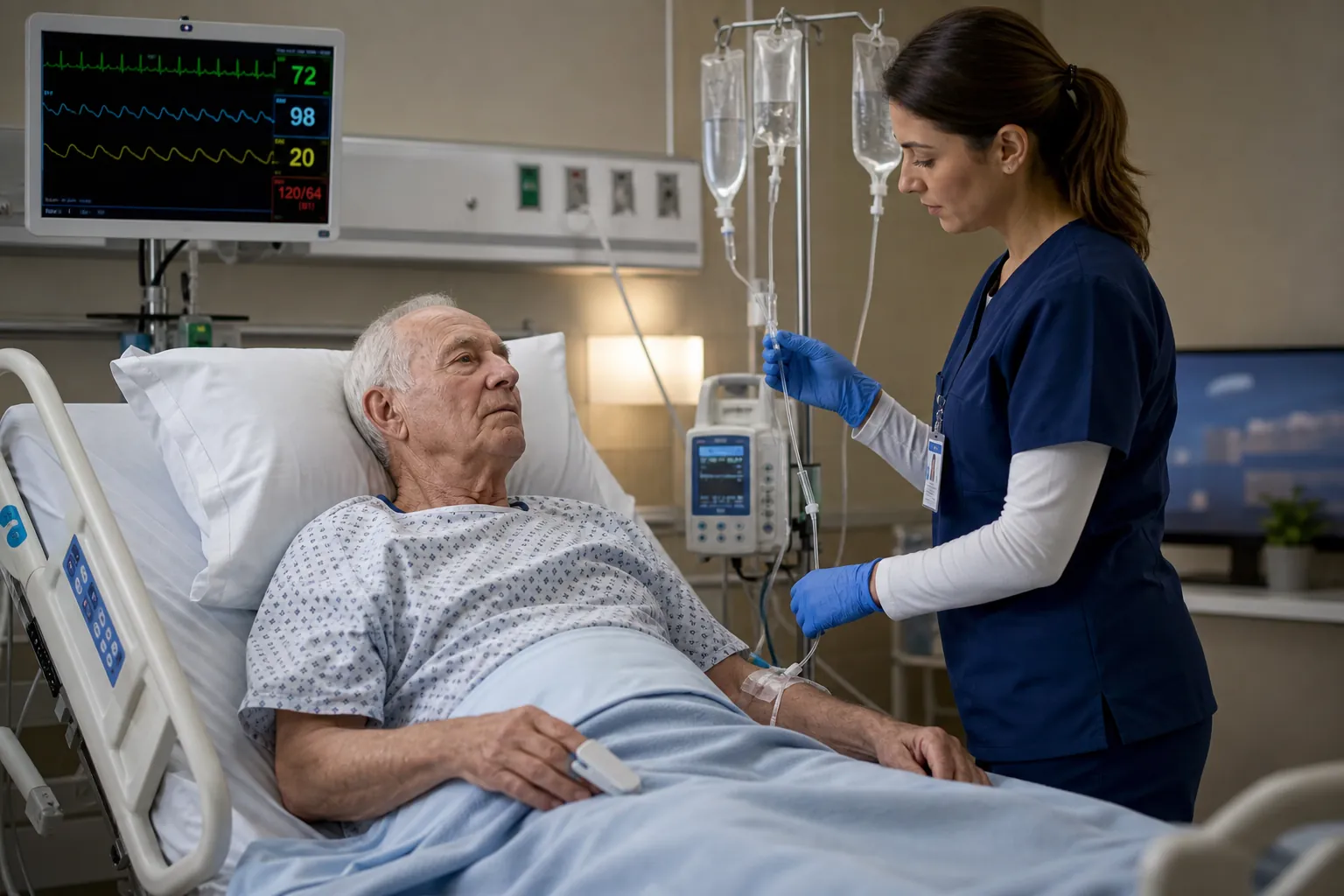
That distinction matters for caregivers. “Supportive” is sometimes heard as “comfort only” or “wait and see.” In a 2026 case report, a 63-year-old man with diabetes developed rapidly worsening heart function, with left ventricular ejection fraction reported to fall from 55% to 5% within hours. He went into shock, required extracorporeal membrane oxygenation, developed severe infections including multidrug-resistant Pseudomonas pneumonia and pulmonary mucormycosis, and died on hospital day 21 despite maximal support.[1]
One case should not be turned into a neat prediction for every older adult. It does, however, show what the words “supportive care” can include when Bourbon virus is severe. A family member in the emergency department may hear fluids, pressors, dialysis, ventilator, or ECMO discussed. Those are not Bourbon-virus cures. They are ways to support circulation, breathing, kidney function, and oxygen delivery while the illness declares itself and while clinicians rule in or rule out other treatable conditions.
What should families expect doctors to do?
A clinician will usually start with the immediate problem, not with a rare-virus label. Is the patient dehydrated? Is blood pressure falling? Is oxygen low? Are platelets, white blood cells, liver enzymes, kidney function, or heart markers abnormal? Is there evidence of sepsis, pneumonia, COVID, flu, ehrlichiosis, anaplasmosis, Rocky Mountain spotted fever, or another tick-borne illness that has a specific treatment?
For a caregiver, the useful job is not to announce a diagnosis. It is to give a clean timeline: when the tick exposure may have happened, when fever or fatigue began, whether there was a rash, what medications the person takes, whether they have diabetes, heart disease, kidney disease, immune suppression, or recent chemotherapy, and whether symptoms are worsening despite treatment.
- Bring a current medication list, including diabetes medications, blood thinners, immune-suppressing drugs, and recent antibiotics.
- Mention known tick bites, outdoor work, gardening, hunting, hiking, pets that bring ticks indoors, or time spent near wooded edges.
- Ask whether tick-borne diseases are being considered, especially if fever follows possible tick exposure.
- Do not delay urgent evaluation while trying to decide whether the illness is Bourbon virus, flu, COVID, or something else.
Do antibiotics such as doxycycline treat Bourbon virus?
No. Antibiotics do not treat viruses, and doxycycline is not a treatment for Bourbon virus. That does not mean doxycycline is irrelevant in the emergency room. Several tick-borne bacterial infections can look similar early on, and some are treated with doxycycline. A patient who does not improve on doxycycline may prompt clinicians to widen the investigation, but that is a diagnostic clue, not proof that the patient has Bourbon virus.
This is where self-diagnosis becomes risky. Fever, fatigue, headache, nausea, low appetite, body aches, and abnormal blood counts can overlap with common respiratory infections and with other tick-borne illnesses. Some of those illnesses do have time-sensitive treatments. A family should not decide at home that “it must be Bourbon virus” and skip care, and it should not decide that a negative home COVID test makes the situation harmless.
Are seniors at higher risk from Bourbon virus?
Probably, but the evidence has to be stated carefully. There is no large Bourbon-virus-specific geriatric cohort that tells us exactly how a 75-year-old with diabetes compares with a 35-year-old without chronic illness. The confirmed human case count is still very small: six confirmed cases had been reported as of mid-2026, and all published confirmed cases required hospitalization.[1][2]
The concern for older adults comes from several narrower facts. Aging immune systems often respond less efficiently to new infections, a process commonly described as immunosenescence. Many seniors also carry conditions that reduce physiologic reserve: diabetes, heart disease, chronic kidney disease, lung disease, cancer treatment, steroid use, or other immune-suppressing medications. The 2026 fatal case involved a 63-year-old man with diabetes, making the concern concrete without proving a general mortality rate for all seniors.[1]
A practical way to use that information is to lower the threshold for calling a clinician. A healthy younger adult with a one-day fever after yardwork still deserves attention if symptoms worsen. An older adult with diabetes, confusion, dizziness, low intake, shortness of breath, chest discomfort, or weakness that prevents normal walking deserves faster evaluation.
How rare is Bourbon virus, really?
Confirmed diagnoses are rare. Exposure may be less rare than diagnoses suggest. A 2024 Emerging Infectious Diseases report found 0.7% to 0.77% seroprevalence in two North Carolina and southern U.S. cohorts, suggesting that some people had evidence of prior Bourbon virus infection that never appeared as confirmed clinical cases.[2]
That finding should calm down one kind of fear and sharpen another. It suggests that a confirmed diagnosis is not the same thing as the full footprint of the virus. It does not mean every fever after mowing the lawn is Bourbon virus, and it does not tell a family which individual patient will become critically ill. For now, the honest position is narrow: the virus appears underdetected, confirmed severe cases have been hospitalized, and the evidence base is too small for confident personal risk estimates.
Are favipiravir or molnupiravir treatment options?
They are research findings, not ordinary treatment options for a senior with suspected Bourbon virus. Favipiravir has shown strong results in a mouse model, including 100% survival in infected mice in a 2019 PLOS Pathogens study.[3] Molnupiravir has also shown activity against Bourbon virus in cell culture and mice in a 2025 Journal of Virology study.[4]
Those studies matter because researchers and clinicians need leads. They do not mean a family should ask an urgent care clinic for these drugs after a tick bite. No human clinical trial has established that either drug safely and effectively treats Bourbon virus in people, and animal survival data should not be converted into bedside instructions for an older adult with multiple medications and chronic conditions.
| Intervention | What it means for a senior now |
|---|---|
| Hospital supportive care | The current medical approach when illness is serious; may include fluids, monitoring, oxygen, blood pressure support, kidney support, ventilation, or ECMO. |
| Doxycycline or other antibiotics | May treat other tick-borne bacterial diseases, but does not treat Bourbon virus itself. |
| Favipiravir | Experimental Bourbon-virus evidence comes from mice; not an approved human treatment for Bourbon virus. |
| Molnupiravir | Experimental evidence includes cell-culture and mouse findings; not an approved human treatment for Bourbon virus. |
| Vaccination | No Bourbon virus vaccine is available. |
What can families do before anyone gets sick?
Prevention is unsatisfying when the question was about treatment, but it is the only defense a family can use today. The goal is not to make an older adult afraid of the yard. It is to make tick exposure less likely and make missed ticks less likely after exposure.
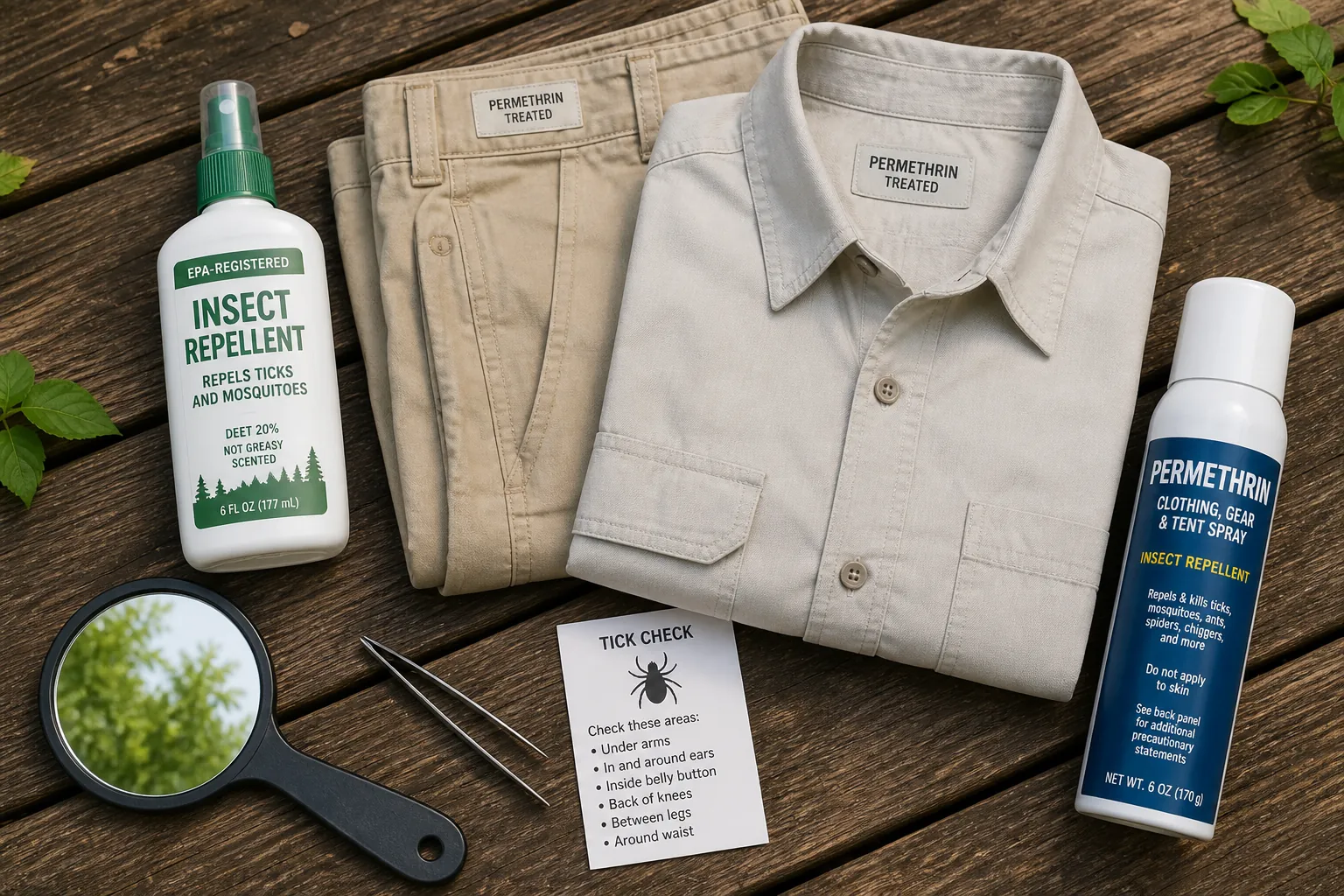
The CDC advises using EPA-registered insect repellents, including products with DEET, picaridin, or oil of lemon eucalyptus; treating clothing and gear with products containing 0.5% permethrin; showering within two hours after coming indoors; and doing full-body tick checks after time in tick habitat.[5]
- Choose light-colored long pants and long sleeves for gardening, brush clearing, hiking, or sitting near wooded edges.
- Use an EPA-registered repellent as directed on the label, especially on shoes, socks, lower legs, waistbands, and exposed skin.
- Consider permethrin-treated clothing or treat clothing and gear according to product directions; permethrin should not be applied directly to skin.
- Shower soon after coming indoors and check the scalp, behind ears, armpits, waistband, groin, behind knees, and between toes.
- For a parent with limited mobility or vision, make tick checks a routine caregiving task after outdoor time, not an emergency project after symptoms begin.
Lone star ticks are often discussed in connection with Bourbon virus, and surveillance-based analysis has described their presence in more than 33 states with northward expansion into areas including Minnesota, Michigan, Iowa, and coastal New England.[6] That does not mean every tick carries Bourbon virus. It does mean older adults in much of the eastern, southeastern, and midwestern United States should treat tick checks as normal outdoor hygiene.

When should an older adult seek medical care after a tick bite?
A tick bite alone is not a reason to assume Bourbon virus. Most tick bites do not lead to Bourbon virus, and testing decisions belong with clinicians. The reason to seek care is illness after possible exposure, especially if the person is older or medically vulnerable.
- Call a healthcare professional for fever, marked fatigue, headache, nausea, poor appetite, rash, or body aches after possible tick exposure.
- Seek urgent care or emergency care for confusion, fainting, low blood pressure symptoms, chest pain, shortness of breath, severe weakness, dehydration, or rapidly worsening symptoms.
- Be more cautious when the patient has diabetes, heart disease, kidney disease, cancer treatment, immune suppression, or frailty.
- Do not use leftover antibiotics, online antivirals, or supplements as home treatment for suspected Bourbon virus.
For Bourbon virus in seniors, treatment means hospital support after infection. The useful plan happens earlier: prevent tick bites, check skin promptly, and get medical evaluation quickly when concerning symptoms appear. Home treatment, antibiotics aimed at bacteria, and experimental antivirals are not substitutes for clinical care.
References
- Lethal Case of Bourbon Virus Leading to Shock and ECMO Utilization, PMC, 2026.
- Evidence of Human Bourbon Virus Infections, North Carolina, USA, Emerging Infectious Diseases, 2024.
- Therapeutic Efficacy of Favipiravir Against Bourbon Virus in Mice, PLOS Pathogens, 2019.
- Molnupiravir Inhibits Bourbon Virus Infection and Disease-Associated Pathology in Mice, Journal of Virology, 2025.
- Preventing Tick Bites, CDC, 2024.
- BiteBack Defense analysis of CDC 2025 surveillance data, BiteBack Defense, 2026.
Browse more in the Glossary.