
Clinical term
Can Cannabis Improve Sleep Quality in Seniors?
Last verified 2026-07-24
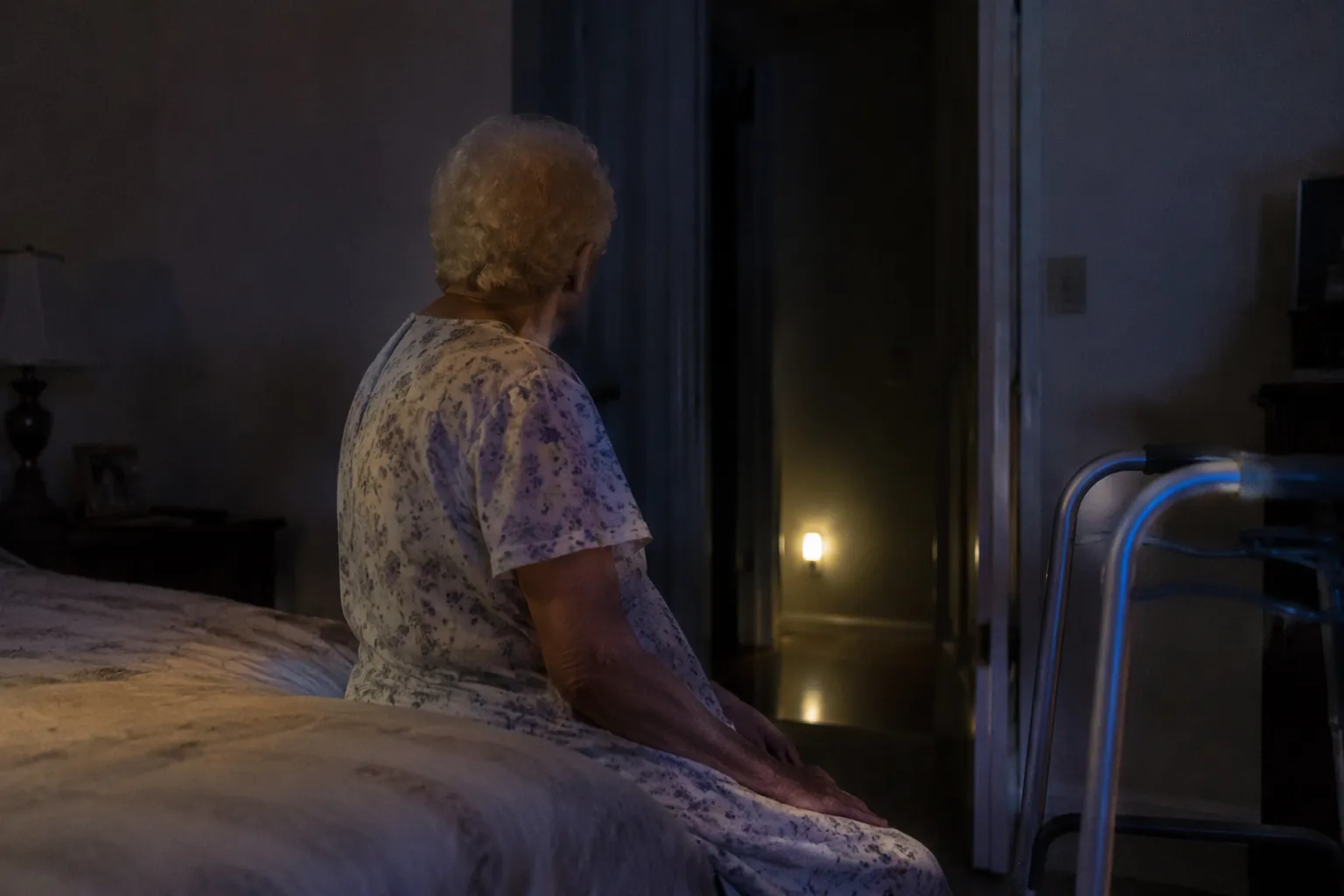
An older adult who has been awake since 2 a.m. is not usually looking for a trend. She is looking at the clock, calculating how many hours are left before morning, and wondering whether a gummy, CBD oil, or a small THC product might be gentler than another sleeping pill. The honest answer is narrow: cannabis may help some seniors fall asleep faster or sleep a bit longer for a short period, but it is not a simple, low-risk sleep aid for older adults.
That question is no longer fringe. Cannabis use among adults 65 and older rose from 1.4% in 2012 to 7% in 2023, and 68% of older cannabis users cite sleep as a reason for use.[1] Those numbers do not prove cannabis works for sleep. They show why families are now having this conversation at the kitchen table, in the pharmacy aisle, and sometimes only after a parent has already tried it without telling anyone.
What the sleep evidence can and cannot say
The sleep signal is real enough to take seriously, but not strong enough to turn into a promise. One study of middle-aged and older adults found that short-term cannabis use was associated with about 30 minutes more total sleep time. The same research also found a less reassuring pattern: long-term daily use was linked to more objective wakefulness during the night.[2]
That matters because “I slept more” and “I had a safer night” are not the same outcome. A product that adds a little total sleep time but leaves someone groggy, unsteady, or awake later in the night can still make the hardest part of the night more dangerous: getting out of bed, finding the bathroom, and getting back without falling.
Self-reports are mixed as well. In an American Academy of Sleep Medicine survey, one-third of U.S. adults said marijuana improved their sleep quality, but the same survey found that some users reported worsened sleep.[3] That is a useful reminder that cannabis and sleep quality in seniors cannot be judged by satisfaction stories alone. Reports of feeling helped are important, but they do not answer whether sleep architecture, nighttime awakenings, balance, medication effects, or next-day alertness improved.
The senior-specific evidence is also thinner than many product labels make it sound. Much of the sleep research is observational, survey-based, or includes middle-aged adults along with older adults. That does not make it useless. It does mean the results should be handled with more care for an 82-year-old with neuropathy and a walker than for a healthy 58-year-old in a sleep study.
The fall-risk finding should change the conversation
The most important safety evidence is not abstract. In a study comparing older chronic cannabis users with non-users, chronic users had a 91% probability of higher fall risk. They also had significantly slower gait speed, 0.96 meters per second compared with 1.26 meters per second among non-users, and significantly worse one-leg standing balance.[4]
Gait speed and one-leg balance are not minor lab measurements. They are close to the real work of nighttime safety. They show up when someone pivots around a bed frame, steps over a rug edge, reaches for a wall instead of a grab bar, or turns too quickly after using the bathroom.
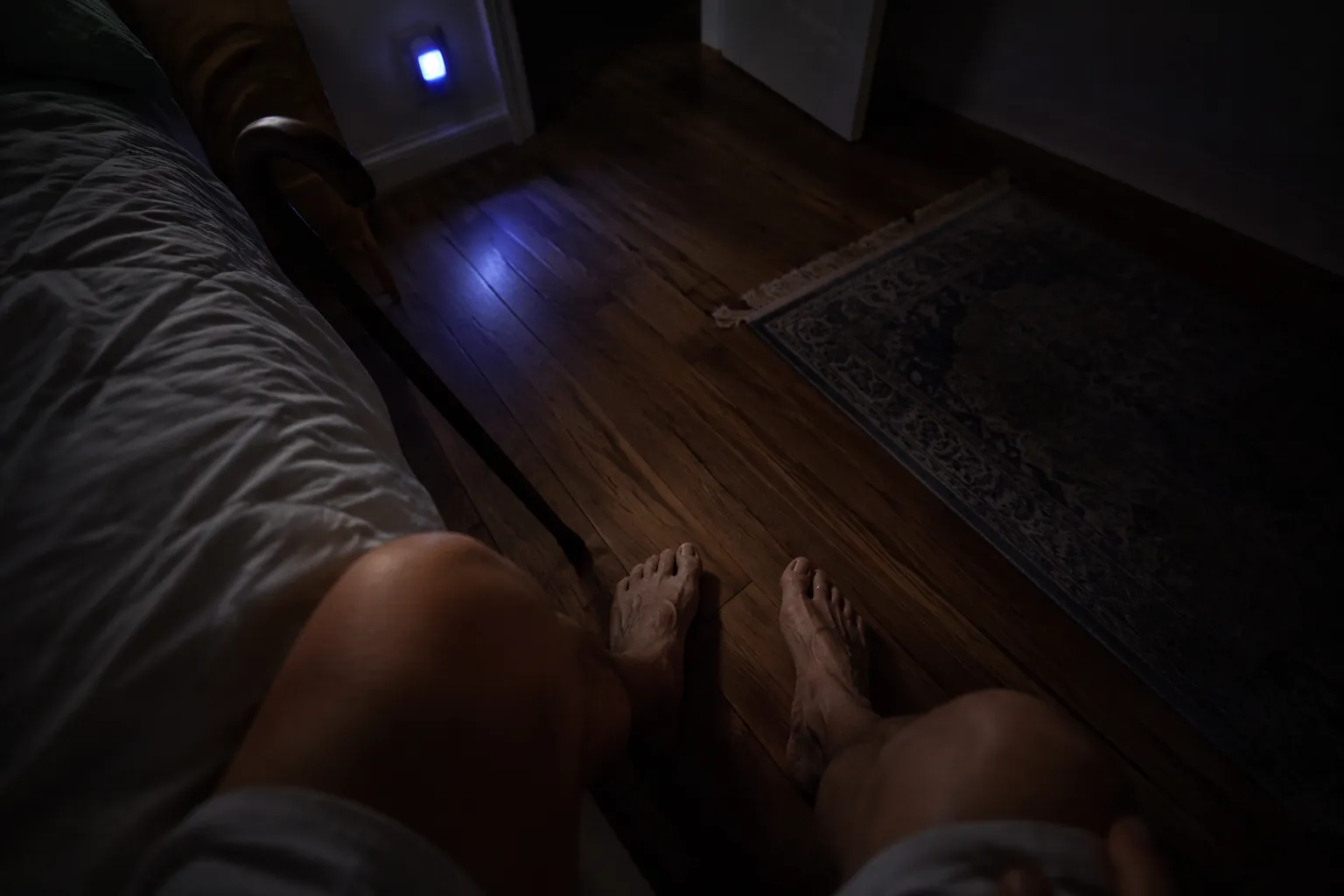
This does not prove that cannabis caused every bit of the higher fall risk in that study. Chronic users may differ from non-users in other ways. But the combination of slower walking, poorer balance, and higher fall-risk probability is too relevant to dismiss when the proposed use is a nighttime sleep aid.
For a senior who already has dizziness, neuropathy, low blood pressure on standing, Parkinsonian symptoms, recent falls, a cane, a walker, poor vision, or nighttime urgency, the question changes. It is no longer only “Will cannabis make me sleepy?” It becomes “What happens during the first trip out of bed after it takes effect?”
Why older bodies make the same product riskier
Older adults often process cannabis differently than younger adults. Slower metabolism, greater sensitivity to psychoactive effects, and more coexisting medical conditions can turn a dose that seems modest on a package into a longer, stronger effect than expected. That is especially important with edible products, which may be taken in the evening and still affect balance or alertness during the night.
There is also a memory problem. Many older adults who last encountered cannabis decades ago may be judging today’s products by yesterday’s potency. Stanford Medicine notes that cannabis now averages about 20% THC, compared with 1% to 4% in the 1970s.[5] A person who says, “I handled it fine when I was younger,” may be remembering a very different drug exposure.
The consequences are not only theoretical. Emergency department visits for cannabis poisoning among adults 65 and older nearly tripled after Canadian legalization, according to Stanford Medicine.[5] That does not mean every older adult who uses cannabis will have an emergency. It does show that access, potency, delayed edible effects, and older physiology can combine in ways families may not anticipate.
CBD deserves caution too
CBD is often treated as the harmless side of cannabis because it is not intoxicating in the same way as THC. That shortcut is unsafe for many seniors. CBD can inhibit CYP450 liver enzymes, which can raise blood levels of medications including warfarin, certain statins, and benzodiazepines.[5]
Those interactions matter most when the medication list is already doing delicate work. A senior on warfarin does not just need to avoid a bad night of sleep; she needs stable anticoagulation. A senior taking a benzodiazepine is already carrying sedation and fall risk. Adding CBD without coordination may change the risk without anyone noticing until there is confusion, bleeding concern, oversedation, or a fall.
THC can add heart and balance concerns
THC is the cannabinoid most associated with intoxication, impaired coordination, and psychoactive effects. Medical experts also warn that THC can cause tachycardia, which is a concern for older adults with heart conditions.[5][6] For someone with atrial fibrillation, coronary disease, unexplained fainting, or episodes of lightheadedness, that concern belongs in the first conversation, not after an experiment goes badly.
| Product issue | Why it matters more at night |
|---|---|
| THC dose | Can impair coordination, judgment, and balance during bathroom trips |
| CBD interaction potential | May affect medication levels, including blood thinners, benzodiazepines, and certain statins |
| Edible timing | Effects may arrive later or last longer than expected |
| Modern potency | Past experience with lower-potency cannabis may not predict current response |
| Existing fall risk | Slower gait, poor balance, rugs, darkness, and urgency can magnify consequences |
Short-term help is not the same as daily use
A careful discussion has to separate occasional, short-term use from nightly use. The sleep-time study’s more favorable signal was tied to short-term cannabis use, while long-term daily use was associated with more wakefulness during the night.[2] That distinction is easy to lose when a product seems to work the first few nights.
The pattern families often need to watch is not dramatic. It may begin with a smaller dose that seems helpful, followed by more regular use, a stronger product, or an extra amount after a bad night. If the senior is also waking to urinate, taking blood pressure medication, using a sedative, or already unsteady, the risk accumulates quietly.
There is also a caregiver trap here. Exhaustion makes everyone more willing to accept a fix. If cannabis appears to buy an extra half hour of sleep, it can feel unreasonable to raise concerns. But older-adult sleep decisions cannot stop at minutes slept. They have to include what happens on the floor, in the hallway, and the next morning.
The doctor cannot help with a product no one mentions
The disclosure gap is one of the clearest fixable safety problems. In an anonymous UC San Diego geriatrics clinic survey cited by Stanford Medicine, only 41% of older cannabis users had told their doctor about their use.[5] That leaves clinicians managing dizziness, falls, confusion, anticoagulation, sleep problems, or heart symptoms without a full medication picture.
This is not about asking permission in a moral sense. It is about giving the person who knows the medication list a chance to spot conflicts. A clinician needs the exact product, the THC and CBD amount if known, the dose, the timing, how often it is used, whether it is inhaled or edible, and what happened after use. “A little CBD” is not enough information.
- Bring the package or a photo of the label, including THC and CBD amounts.
- List all prescriptions, over-the-counter sleep aids, supplements, and alcohol use.
- Mention blood thinners, benzodiazepines, statins, heart rhythm problems, fainting, and low blood pressure.
- Describe fall history, balance problems, cane or walker use, nighttime bathroom trips, and wandering.
- Track whether cannabis changes sleep onset, total sleep, awakenings, morning grogginess, dizziness, or near-falls.
That conversation should happen before use when possible, and quickly after use if cannabis has already entered the routine. The higher-risk situations are not hard to name: recent falls, anticoagulants, sedatives, memory impairment, heart disease, dizziness, frailty, living alone, or a bedroom path that already requires furniture-walking.
Legal access is not medical clearance
State cannabis laws may determine what someone can buy, but legality does not answer whether a product is safe for a particular 79-year-old with a medication list and a fall history. In the United States, cannabis remains federally illegal, which has limited large-scale randomized trials, especially in older adults. The evidence base for seniors is therefore less complete than the retail market can make it appear.
The FDA boundary is also narrower than many people assume. The FDA has approved one CBD medication for seizure disorders, not for sleep.[5] That does not mean every nonapproved product is useless or dangerous. It means most CBD and cannabis sleep products have not gone through the kind of review older adults and caregivers may imagine when they see health-related claims.
A safer decision starts with the night itself
Before cannabis is treated as a sleep solution, the practical question is specific: for this person, in this bedroom, with this medication list, does the possible sleep benefit survive contact with the dark hallway?
For some seniors, a clinician may decide that a limited, carefully monitored cannabis trial is reasonable. For others, the combination of blood thinners, sedatives, heart concerns, confusion, imbalance, or prior falls may make the risk too high. The deciding factor should not be whether cannabis can make someone drowsy. It should be whether the whole night becomes safer or more dangerous.
References
- Marijuana Use Among Older Adults Climbs to New High, AARP
- Cannabis use is associated with greater total sleep time in middle-aged and older adults…, NIH/PMC
- Marijuana and Sleep: Survey Finds Mixed Impact, American Academy of Sleep Medicine
- Increased Likelihood of Falling in Older Cannabis Users vs. Non-Users, NIH/PMC
- Cannabis and older adults: Five things medical experts want you to know, Stanford Medicine
- Cannabis side effects for senior and older adult patients with Alison Moore, MD, MPH, AMA
Browse more in the Glossary.