
Clinical term
How to Treat Cyclospora Diarrhea in Older Adults
Last verified 2026-07-30
Cyclospora diarrhea is usually treated with trimethoprim-sulfamethoxazole, often shortened to TMP-SMX. The CDC’s standard adult treatment is one double-strength tablet, 160 mg trimethoprim/800 mg sulfamethoxazole, taken twice daily for 7 to 10 days. [1]
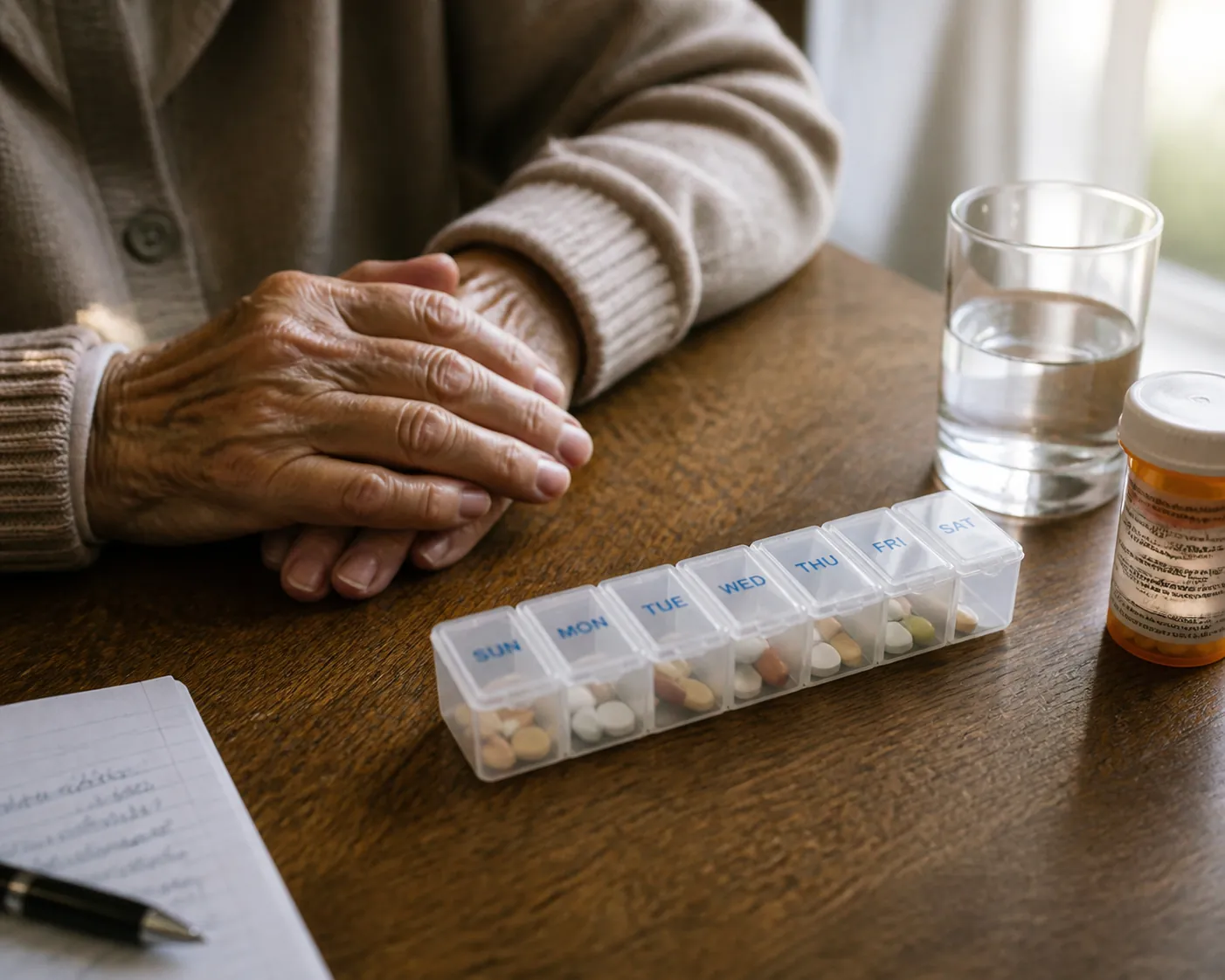
For an older adult, that dose is the starting point, not the whole plan. Before the first dose, the prescriber needs to know the person’s current medication list, kidney history, diabetes medicines, blood thinners, blood pressure medicines, and whether they have ever had a sulfa allergy. During treatment, caregivers should watch hydration, urination, dizziness, weakness, blood sugar changes if relevant, and any signs of bleeding.
This article is informational and is not a substitute for medical care. Cyclospora diarrhea can last long enough to make an older adult weak even when the infection itself is treatable, so treatment decisions should be made with the clinician who knows the person’s medical history.
What changes when the patient is 65 or older
Cyclospora is an intestinal parasite that can cause watery diarrhea, loss of appetite, cramping, bloating, nausea, fatigue, and weight loss. [2] The practical problem in older adults is that the diarrhea does not happen in an empty room. It lands on top of blood pressure pills, diabetes pills, anticoagulants, kidney function that may already be reduced, and a body that may not signal thirst reliably.
AARP’s senior-focused reporting on cyclospora, citing Dr. Luis Marcos, highlights two issues that are easy to underestimate: TMP-SMX can interact with several common chronic-condition medications, and persistent diarrhea can push older adults toward dehydration, dizziness, weakness, falls, acute kidney injury, and worsening of chronic conditions. [3]
That is why the treatment question is not just “Which antibiotic?” It is also “Can this person safely take this antibiotic with the medicines already in the pill organizer, and are they staying ahead of fluid loss?”
The medication review should happen before or when TMP-SMX is prescribed
The most useful thing a caregiver can bring to the appointment is not a vague memory of “heart pills” or “sugar pills.” Bring the actual medication list, including prescription drugs, over-the-counter medicines, supplements, and potassium products. If the older adult uses more than one pharmacy or has recent hospital discharge medications, say that clearly.
| Medication or condition to flag | Why it matters with TMP-SMX |
|---|---|
| Warfarin | TMP-SMX can increase INR and bleeding risk. |
| Sulfonylurea diabetes medicines | TMP-SMX can increase the risk of hypoglycemia. |
| ACE inhibitors | TMP-SMX can contribute to high potassium risk. |
| Potassium-sparing diuretics or other potassium-affecting drugs | TMP-SMX can increase concern for hyperkalemia. |
| Reduced kidney function | The standard CDC adult dose may not be the right dose for every older adult with impaired kidney function. |
AARP’s cyclospora guidance, citing Dr. Marcos, specifically calls out warfarin, sulfonylureas, ACE inhibitors, and potassium-sparing diuretics as interaction concerns with TMP-SMX. [3] These are not rare edge cases in older households. They are the kinds of medicines that often sit in the same weekly organizer as the new antibiotic.

The CDC clinical page gives the standard adult TMP-SMX regimen, but it does not provide a geriatric kidney-dose table. [1] That gap matters. If the patient has chronic kidney disease, a history of abnormal creatinine, recent dehydration, or a recent hospitalization, ask the prescriber whether kidney function should be checked and whether the dose or monitoring plan needs adjustment.
Hydration is part of treatment, not a side note
Watery diarrhea removes fluid faster than many older adults can replace it. The tricky part is that thirst is a poor alarm bell in later life. AARP’s dehydration guidance, citing Dr. Ardeshir Hashmi of Cleveland Clinic, notes that adults over 65 have a blunted thirst mechanism, especially after age 80, so they may not feel thirsty until they are already significantly dehydrated. [4]
That is the part that changes the home plan. If an older adult says, “I’m not thirsty,” but is urinating less, getting lightheaded when standing, or moving more slowly to the bathroom, the safer reading is not “they’re fine.” It is “the body may be behind on fluids already.”
Watch for excessive thirst, dry mouth or dry skin, little or no urination, weakness, dizziness, lightheadedness, fatigue, and dark-colored urine. [4] In an older adult with diarrhea, those signs deserve prompt attention because dehydration can become life-threatening if untreated. [4]
A simple home monitoring rhythm
- Track diarrhea frequency, especially if episodes are increasing or reaching severe levels.
- Notice urine: less frequent, very dark, or absent urination is a warning sign.
- Watch standing and walking: dizziness, wobbliness, new weakness, or near-falls should lower the threshold for calling.
- If the person has diabetes, ask the clinician whether blood sugar should be checked more often while diarrhea and TMP-SMX are both in the picture.
- If the person takes warfarin, ask specifically about INR monitoring and bleeding symptoms to watch for.
The fall risk is not abstract. Diarrhea leads to hurry, nighttime bathroom trips, fluid loss, and lightheadedness. Add a walker left across the room or a blood pressure medicine that already makes standing harder, and a “stomach bug” can become a broken-hip emergency.
If there is a sulfa allergy, the alternatives are not as strong
TMP-SMX contains a sulfonamide antibiotic, so a true sulfa allergy changes the discussion. This is the moment to be careful with wording. The CDC states that “no highly effective alternatives have been identified yet” for people who cannot take TMP-SMX. [1]
The Merck Manual lists nitazoxanide as an alternative in sulfonamide-intolerant patients, reporting 71% to 87% efficacy, but that evidence is limited. [5] Merck also notes that ciprofloxacin showed modest activity in one HIV study but is considered ineffective based on substantial anecdotal evidence in immunocompetent people. [5]
For an older adult with a sulfa allergy, it is reasonable to ask whether the prescribing clinician wants infectious-disease input. That is not because cyclospora is untreatable. It is because the best-supported drug may be off the table, and weaker evidence should not be dressed up as certainty.
When to call the doctor sooner rather than waiting it out
Older adults should use a lower threshold for calling the clinician during cyclospora diarrhea, especially if they live alone, have kidney disease, diabetes, heart disease, take warfarin, or are already unsteady on their feet.
- Call if diarrhea lasts more than 2 to 3 days without improvement.
- Call urgently for severe diarrhea, such as more than 6 to 8 episodes in a day.
- Call for blood in the stool, high fever, severe abdominal pain, persistent vomiting, or inability to keep fluids down.
- Call for dehydration signs: dizziness, confusion, reduced urination, rapid heartbeat, marked weakness, or lightheadedness.
- Call if a new TMP-SMX prescription appears to conflict with warfarin, diabetes medicine, ACE inhibitors, potassium-sparing diuretics, or known kidney problems.
If the person seems confused, cannot stand safely, has very little urination, cannot keep fluids down, or has symptoms that feel rapidly worse, do not wait for the next routine appointment.
Where the 2026 outbreak fits into the treatment decision
During an outbreak, more people hear the word cyclospora before they ever see a test result. That can be useful if it gets prolonged watery diarrhea taken seriously, but it should not turn into self-treatment. The CDC notes that cyclosporiasis is diagnosed by testing stool specimens, and patients may need to submit more than one specimen because the parasite can be difficult to detect. [2]
For treatment, the immediate job is still the same: confirm the diagnosis and prescription plan with a clinician, check the medication list before TMP-SMX is started, keep watching hydration and walking safety, and call sooner when dehydration or drug-interaction concerns appear.
Last verified: July 30, 2026. Outbreak reporting can change quickly, but the treatment points above are tied to the CDC clinical-care page and senior-specific medication and dehydration cautions cited here.
References
- Clinical Care of Cyclosporiasis — CDC
- About Cyclosporiasis — CDC
- What Older Adults Should Know About Cyclospora — AARP
- 8 Signs of Dehydration You Shouldn't Ignore — AARP
- Cyclosporiasis — Merck Manual Professional Edition
Browse more in the Glossary.