
Clinical term
Why Cyclospora Dehydration Puts Seniors at Fall Risk
Last verified 2026-07-28
Last reviewed: July 28, 2026. Outbreak counts, implicated foods, and recall details can change quickly; check the CDC and FDA outbreak pages before making decisions based on a specific product or restaurant.
For an older adult, Cyclospora can become a fall problem before anyone in the house has even said the word “parasite.” The sequence is ordinary enough to miss: diarrhea continues, fluids and electrolytes drop, the person feels weak or dizzy, then stands up to get to the bathroom. AARP’s warning to older adults is direct: dehydration from Cyclospora can lead to “electrolyte problems, acute kidney injury, weakness, dizziness, falls and worsening of chronic conditions.”[1]
That is why food safety advice for older adults during a Cyclospora outbreak needs to include more than produce handling. It also needs to include what changes in the house while someone is ill: who is watching for confusion, whether the route to the bathroom is clear, whether the person is drinking enough, and whether a clinician has been asked about Cyclospora-specific testing.
The current outbreak is not theoretical. In a July 14, 2026 Health Alert Network advisory, the CDC reported 1,947 confirmed cyclosporiasis cases across 9 states, with patient ages ranging from 2 to 95, a median age of 44, and 9% hospitalized.[2] The CDC and FDA have also maintained outbreak and investigation pages for the 2026 multistate outbreak linked to iceberg lettuce, but those pages should be treated as the live source for current foods, locations, and recall details.[3][4]
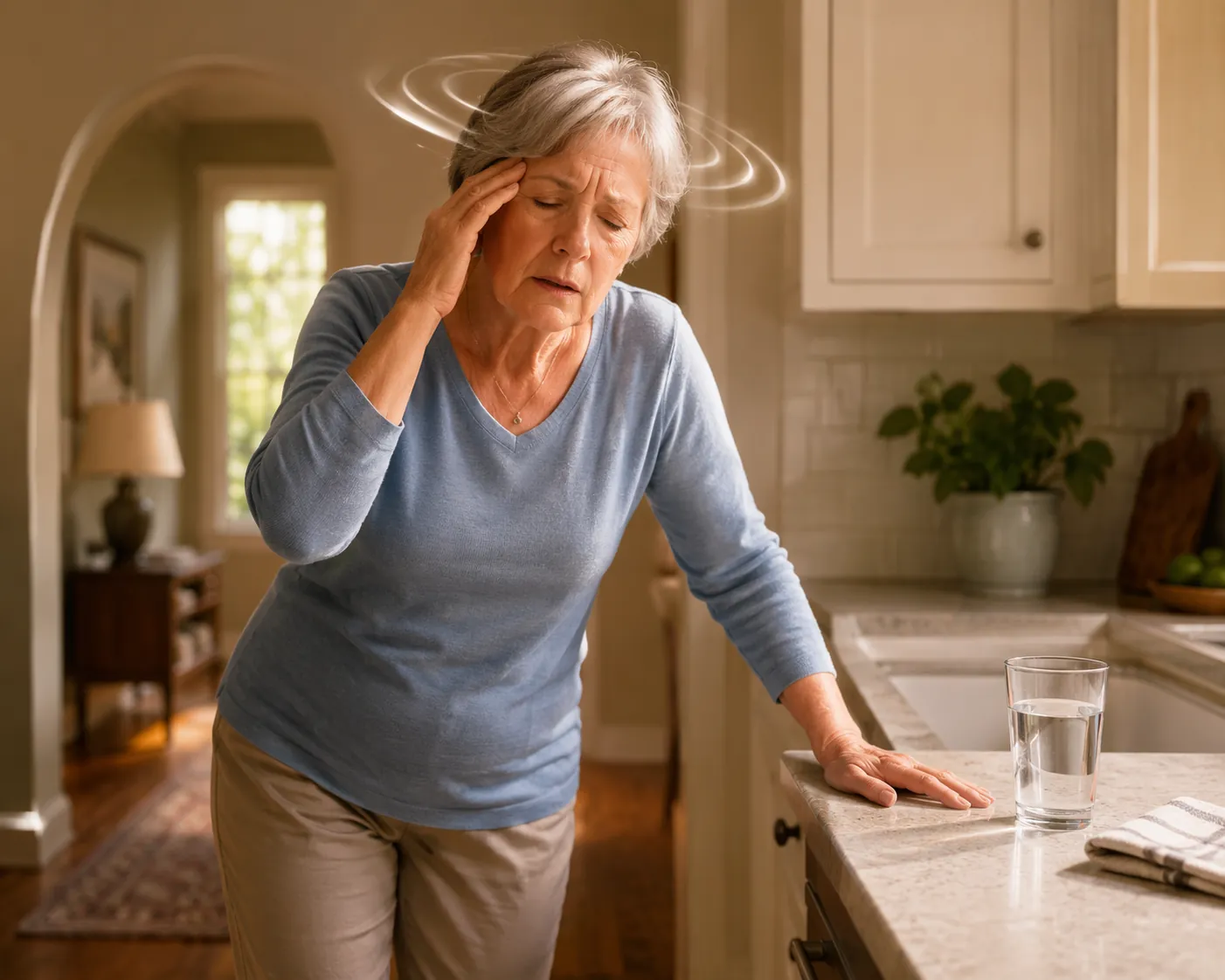
How diarrhea turns into a fall risk
Cyclospora infection usually announces itself through the gut. For fall prevention, the important part is what prolonged diarrhea takes with it: water, salts, steadiness, and reserve. A younger adult may feel miserable and still compensate. An older adult may have less margin before dehydration affects blood pressure, balance, kidney function, and thinking.
Age makes that margin thinner. The FDA notes that adults 65 and older are at higher risk from foodborne illness because of age-related changes, including immune system decline.[5] For Cyclospora specifically, the FDA says older adults and people with weakened immune systems may have more severe illness or complications from severe dehydration and may need longer treatment.[6]
Several everyday factors can speed the dehydration cascade in seniors. Thirst may be less reliable. Kidneys may not conserve fluid as well. Chronic conditions can reduce reserve. Common medication classes, including diuretics, ACE inhibitors, metformin, and NSAIDs, can complicate hydration or kidney stress during an illness. Those details matter because a caregiver may otherwise wait for a dramatic symptom that never comes.
The danger moment is often standing. After fluid loss, blood pressure can drop when a person rises from a chair, bed, or toilet. The room may tilt, vision may dim, and the person may reach for a towel bar, sink edge, or door frame that was never meant to hold body weight. A foodborne infection has then become a fracture or head-injury risk.
Warning signs a caregiver can actually see
The signs worth watching are not exotic. They are the changes that happen in a kitchen, hallway, bedroom, or bathroom while everyone is deciding whether this is “just a stomach bug.” Cleveland Clinic and Michigan health officials identify dehydration concerns that include confusion, dark urine or reduced urination, dry mouth, weakness, dizziness when standing, and rapid heartbeat.[7][8]
- Confusion or unusual sleepiness, especially if it is new or worse than the person’s usual baseline.
- Dark urine, very little urine, or long stretches without urinating.
- Dry mouth, cracked lips, or trouble keeping up with fluids.
- Weakness that changes how the person walks, transfers, or gets up from the toilet.
- Dizziness, lightheadedness, or unsteadiness after standing.
- A rapid heartbeat, fainting, or near-fainting.
Confusion deserves special attention because it is easy to misread in an older adult. A spouse may think dementia is worsening. An adult child may assume poor sleep is the cause. During diarrhea, new confusion should also raise the possibility of dehydration and should lower the threshold for medical help.

Before infection: make the kitchen decision more specific
“Wash produce well” is useful advice for many germs, but it is not enough to carry the whole Cyclospora plan. The FDA says Cyclospora can contaminate fresh produce, and outbreak guidance has emphasized that washing does not reliably remove it. The organism is also resistant to chlorine-based sanitizers, which means a clean-looking salad is not automatically a low-risk salad.[6][8]
The clearest kill step is heat. Michigan health officials advise that cooking produce to an internal temperature of 158°F, or 70°C, kills Cyclospora.[8] That does not mean every older adult must stop eating fresh produce indefinitely. It does mean that during an active outbreak, especially when a food has been implicated, cooked options are safer than relying on rinsing alone.

| Kitchen question | Safer choice during an active Cyclospora outbreak |
|---|---|
| Is this item named in a current CDC or FDA outbreak notice? | Do not serve it to an older adult unless current official guidance says it is safe. |
| Will the produce be eaten raw? | Consider a cooked substitute when risk is a concern, especially for adults 65+ or anyone immunocompromised. |
| Can the produce be cooked? | Cook to an internal temperature of 158°F when the goal is to kill Cyclospora. |
| Has it been washed or treated with a produce sanitizer? | Do not treat washing or chlorine-based sanitizers as a guarantee against Cyclospora. |
A blanket rule to avoid all fresh produce is broader than CDC and FDA outbreak materials support. The more defensible approach is narrower and more useful: follow current CDC and FDA outbreak notices, avoid recalled or implicated foods, use cooked alternatives when risk is high, and do not let rinsing create false confidence.
If symptoms start, treat the path to the bathroom as part of care
Once diarrhea begins, the home needs a temporary fall-prevention setup. This is not a renovation project. It is a same-day adjustment for a person who may be getting up urgently, more often than usual, and sometimes in the dark.
- Clear the route from bed or chair to the bathroom: shoes, cords, laundry baskets, pet bowls, throw rugs, and low stools should be moved.
- Turn on night lights before they are needed, especially between the bedroom and bathroom.
- Encourage the person to sit at the edge of the bed or chair before standing, then pause again before walking.
- Keep fluids within reach, but watch whether the person is actually drinking and urinating.
- If the person already uses a cane, walker, or bedside commode, make sure it is positioned where they can reach it before urgency starts.
- Do not let a weak or dizzy person rush to the bathroom alone if help is available.
Hydration monitoring should start early, not after collapse. The practical question is not only “Did they drink a glass of water?” It is also “Are they urinating normally? Are they more confused? Are they steady when they stand? Are they getting weaker with each trip to the bathroom?”
Emergency help is appropriate when dehydration signs are severe, when confusion appears, when the person faints or nearly faints, or when weakness makes safe walking doubtful. Cleveland Clinic and Michigan health officials both flag symptoms such as confusion, rapid heartbeat, dizziness, and reduced urination as serious dehydration concerns.[7][8]
Ask specifically about Cyclospora testing
Cyclospora can be missed if no one asks the right testing question. The CDC advises that diagnosis requires specific laboratory testing; routine stool ova and parasite exams may not include Cyclospora unless it is specifically requested.[2]
That matters for fall prevention because delay lets the dehydration cycle keep going. If an older adult has ongoing diarrhea during this outbreak, especially after possible exposure to implicated produce or a location named in current public health notices, the caregiver’s job is not to diagnose the illness. It is to tell the clinician about the outbreak concern and ask whether Cyclospora-specific stool testing is needed.
Treatment decisions belong with a clinician, particularly for older adults who take blood thinners, diabetes medications, kidney-related medications, diuretics, or other drugs that can complicate illness and dehydration. Cleveland Clinic notes that cyclosporiasis can be treated, but this is not a condition where dosing or drug-interaction decisions should be improvised at home.[7]
The fall-prevention plan starts before the stumble
During this outbreak, preventing a fall may begin with the refrigerator, the stove, and the bathroom path. Cook higher-risk produce when appropriate. Do not rely on washing alone. Watch for dehydration before the person becomes visibly unsteady. Ask for Cyclospora-specific testing when symptoms and exposure make it plausible. Grab bars and clear floors still matter, but for an older adult with days of diarrhea, the first fall-prevention step may be stopping the dehydration-dizziness cascade before the next trip to the bathroom.
References
- What Older Adults Should Know About Cyclospora — AARP
- Domestically Acquired Cyclosporiasis Cases in Multiple U.S. States, 2026 — CDC HAN Advisory, July 14, 2026
- Cyclospora Outbreak Linked to Iceberg Lettuce in 9 States — CDC
- Investigation of 9-State Outbreak of Cyclospora Illnesses: Iceberg Lettuce (July 2026) — FDA
- Food Safety for Older Adults and People with Cancer, Diabetes, HIV/AIDS, Organ Transplants, and Autoimmune Diseases — FDA
- Cyclospora — FDA
- Cyclosporiasis: Transmission, Symptoms & Treatment — Cleveland Clinic
- MDHHS makes recommendations on preventing foodborne illness amid growing cyclosporiasis outbreak — Michigan Department of Health, July 4, 2026
Browse more in the Glossary.