
Glossary entry
Does Your Disabled Adult Brother Need Conservatorship?
Last verified 2026-07-29
This is not financial or legal advice. Medicare/Medicaid and benefits rules vary by state and change over time — verify current rules with your state Medicaid office or Area Agency on Aging.
Short answer: maybe, but full conservatorship is usually not the first move
If you are searching because your disabled adult brother may need conservatorship, the immediate answer is: he may need court-appointed help, but full conservatorship should not be treated as the default form of help. It can remove an adult’s legal authority to make decisions for himself, and state law controls what a court can grant, what alternatives must be considered, and even which word your state uses for the arrangement.
This article is informational only, not legal or financial advice. Before you file anything, a local elder law, disability rights, or special needs attorney should verify your state’s terms, capacity rules, court standards, and benefits consequences. That is not a formality. A plan that works in one state can be unavailable, incomplete, or named differently in another.
The basic legal idea is that a court appoints someone to make decisions for an adult who cannot make some or all decisions independently, but states use “guardianship” and “conservatorship” differently, and some use one term for personal decisions and another for financial decisions.[1] Disability Rights California states the concern plainly: conservatorships “remove people’s rights to decision making and autonomy” and “must be used sparingly and in the least restrictive way possible.”[2]
That is the safest starting point for a sibling: not “How do I get control?” but “Which exact decision is failing, who has authority now, and is there a narrower way to solve it?”
First, separate the emergency from the legal remedy
Families often arrive at conservatorship after a practical failure: a bill goes unpaid, a doctor will not discuss treatment, a benefits notice is missed, or aging parents can no longer quietly handle everything. Those problems are real. They also do not all require the same legal answer.
Before anyone talks about “taking over,” write down the decisions your brother needs help with. Keep the list concrete. “He needs help with money” is too broad. “He cannot track rent and utility payments even with reminders” is more useful. “He needs medical help” is too broad. “He understands routine appointments but cannot weigh the risks of surgery” points to a different tool.
| Question to answer | Why it matters |
|---|---|
| Can he understand the decision when it is explained in accessible language? | If yes, support may be enough. If no, substituted decision-making may be necessary for that decision. |
| Can he choose trusted supporters and say no to someone? | Supported decision-making depends on the adult retaining authority and choosing help. |
| Can he legally sign documents such as a power of attorney or health care directive? | If he lacks the required capacity, those documents may not work. |
| Is the main problem benefits, savings, or supplemental expenses? | A special needs trust or ABLE account may solve part of the financial problem without conservatorship of the estate. |
| Is there immediate danger, exploitation, or repeated inability to consent to necessary care? | A court process may be appropriate, but the requested powers should still be limited to the actual need. |
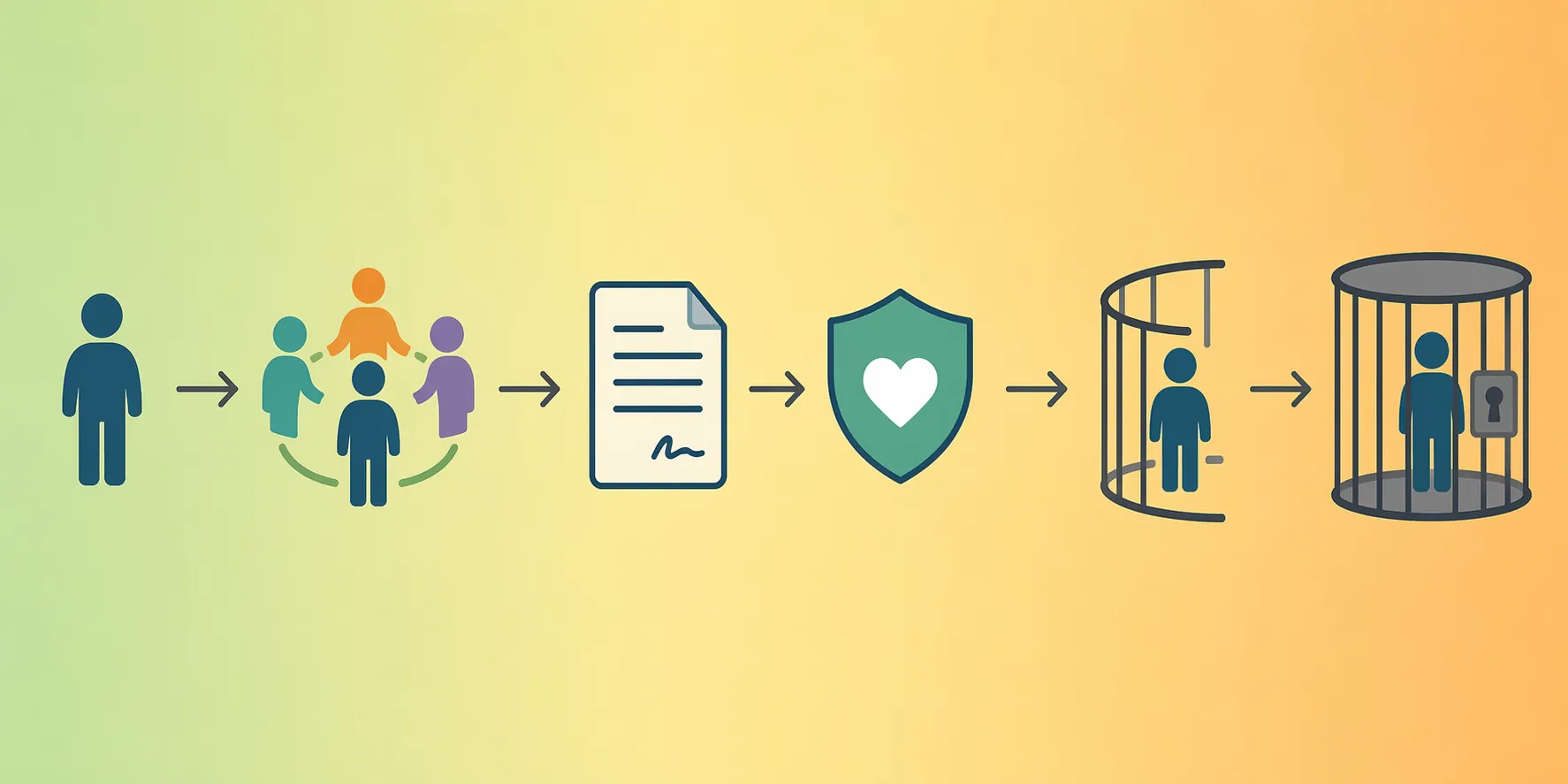
Some states make this sequence more than good practice. Washington’s state-sponsored family resource says alternatives to guardianship or conservatorship should be considered before pursuing court authority.[3] Even where your state’s wording differs, the practical lesson holds: courts are usually being asked to remove rights, so the family should be ready to explain why a less restrictive tool is not enough.
Supported decision-making starts with what your brother can still do
Supported decision-making, often shortened to SDM, allows a disabled adult to keep legal decision-making authority while getting help from people he chooses. Supporters might explain forms, attend appointments, compare options, help communicate a decision, or make sure information is not hidden from him. The decision remains his.
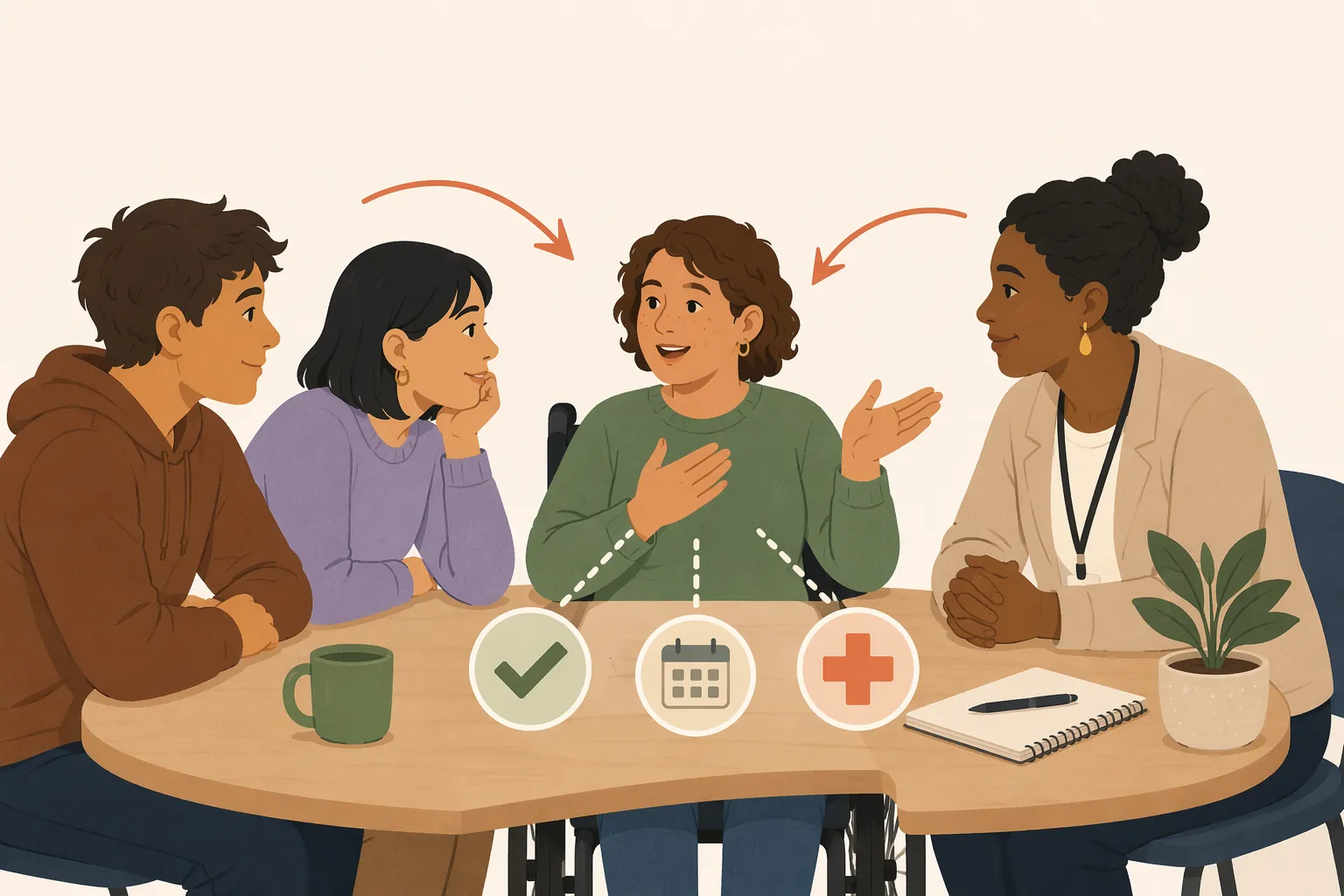
The Center for Public Representation describes supported decision-making as a way for people with disabilities to use a chosen Circle of Support while retaining full legal capacity, and it reports that an independent evaluation found SDM to be an effective alternative to guardianship.[4] That matters because it changes the family’s first question. Instead of beginning with incapacity, SDM asks whether your brother can make a decision with explanations, reminders, communication help, and trusted people around him.
SDM is most promising when your brother can identify who he trusts, show preferences, tolerate discussion, and communicate a final choice in some reliable way. Speech is not the only route. The issue is whether he can participate meaningfully and whether supporters are helping him decide rather than quietly substituting their own preferences.
It is also not magic paper. If a hospital, bank, school program, landlord, or benefits office will not accept an SDM agreement without a state-recognized form or separate authorization, the family may still need other documents. The Administration for Community Living treats alternatives to guardianship as an important rights-preserving area, but families still have to verify what their own state and institutions recognize.[5]
A good SDM plan names the supporters, the kinds of decisions they help with, how information may be shared, and how your brother can change or end the arrangement. That last part is not decoration. If he cannot refuse a supporter, the arrangement begins to look less like support and more like control.
Power of attorney and health care proxy: useful only if he can validly sign
A durable power of attorney can allow someone to handle financial matters, and a health care proxy or advance directive can allow someone to help with medical decisions without an ongoing court case. These tools can be very helpful when they are signed at the right time by someone who understands what authority he is giving away.[6]
The catch is capacity. Your brother must have the legal capacity required in your state to sign the document. If he cannot understand, even with appropriate explanation, that he is authorizing another person to act for him, a power of attorney may be invalid or vulnerable to challenge. This is where casual advice to “just get a POA” can waste precious time.
Capacity is also decision-specific in real life, even when legal standards are written broadly. A person may understand that a trusted sister can help pay rent, but not understand investment authority, real estate transactions, or medical consent for high-risk treatment. A lawyer may be able to narrow the document, use plain-language explanations, or recommend a capacity assessment. If the answer is still no, the family has to stop pretending that a signature will fix the problem.
If your brother can sign valid documents, consider whether separate, narrower authorizations solve the immediate barrier: a HIPAA release for medical information, representative payee arrangements for certain benefits, a limited financial power of attorney, or a health care directive. The right package depends on the institution refusing access, the decision at stake, and your state’s rules.
Money tools may reduce the need for conservatorship of the estate
Sometimes the family’s fear is not personal decision-making. It is money: preserving SSI or Medicaid eligibility, paying for extras, preventing misuse of a settlement, or managing funds after parents die. A conservatorship of the estate may be one answer, but it is not the only tool families should examine.
A special needs trust can hold funds for supplemental needs without simply handing assets to the disabled person, and an ABLE account can allow eligible disabled people to save and pay for qualified disability-related expenses while protecting important benefits, subject to program rules and limits.[7][8] These tools do not decide where your brother lives, whether he consents to medical care, or who he spends time with. They are financial and benefits-planning tools, which is exactly why they can be useful: they may solve the estate-management problem without reaching for broader personal control.
They also require careful setup. The trustee, account owner, spending rules, tax consequences, and benefits reporting can all matter. If your brother receives needs-based benefits, do not move money into or out of his name casually. A special needs planning attorney or benefits specialist can often prevent a well-meant transfer from becoming an eligibility problem.
When conservatorship may still be necessary
There are situations where less restrictive tools do not reach far enough. If your brother cannot understand and sign legal authorizations, cannot consistently participate even with support, is being exploited, refuses necessary care without understanding the consequences, or has no workable way to manage essential finances, a court-appointed decision-maker may be the safer and more honest option.
That does not make conservatorship a family punishment or a sibling failure. It means the legal system is being asked to give someone else authority because support has not been enough. The important move is to request only the authority the facts justify.
Court procedures, filing fees, investigator requirements, medical declarations, and notice rules vary too much by state to treat as a national checklist. What matters before filing is narrower and more durable: document the decisions that are failing, list the alternatives already tried or considered, identify why each alternative is insufficient, and be ready to show why the proposed conservator is appropriate.
If court involvement is needed, ask whether it can be limited
California’s limited conservatorship model is a useful example of how narrow court authority can be. California courts describe limited conservatorships as arrangements for adults with developmental disabilities who need help in specific areas, while preserving as much independence as possible.[9] Orange County Superior Court explains that a limited conservatorship may grant up to 7 specific powers, and the court evaluates each power individually rather than handing over every right automatically.[10]
Those powers can involve areas such as residence, education, medical consent, access to confidential records, contracts, and social or sexual relationships, but the court does not have to grant all of them. Orange County also notes that powers over marriage, social relationships, and sexual relationships are rarely granted.[10]
Your state may not use California’s exact structure. Still, the question travels well: if your brother needs substituted decision-making for medical consent, does anyone need authority over his friendships? If he needs help managing benefits, does anyone need authority over where he lives? If the problem is contracts, does the family need control over personal relationships? A petition that asks for everything may feel safer to a worried sibling, but it can also remove rights that are not connected to the actual risk.
A practical way to choose the next step
Start with the least restrictive tool that actually solves the problem, not the one that sounds most reassuring in a crisis. A workable order is:
- Write down the exact decisions your brother cannot manage safely right now.
- Ask whether he can make those decisions with supported decision-making.
- If documents are needed, confirm whether he has capacity to sign a power of attorney, health care proxy, releases, or other authorizations.
- If the problem is money or benefits protection, review special needs trust and ABLE options before seeking conservatorship of the estate.
- If court authority is necessary, ask for limited powers tied to specific decisions and verified under your state’s law.
If your brother can choose supporters and understand enough to authorize help, begin with tools that preserve his legal capacity. If he cannot sign valid documents or remains unsafe without substituted decision-making, conservatorship may be appropriate. The line is not whether the family loves him or whether independence sounds better. The line is which legal authority is truly needed, and which rights he can safely keep.
References
- Conservatorship and Guardianship — Family Caregiver Alliance
- Principles: Conservatorship of Persons with Disabilities — Disability Rights California
- Guardianship/Conservatorship Overview — Informing Families Washington
- About Supported Decision-Making — Center for Public Representation / Supported Decisions
- Alternatives to Guardianship — Administration for Community Living
- A Caregiver’s Guide to Guardianship and Conservatorship — AARP
- Caregiving for Siblings: 5 Key Ways to Prepare — AARP
- Guardianship and Conservatorship of People with Disabilities — NODCC
- Conservatorships — California Courts Self-Help Guide
- Limited Conservatorship — Orange County Superior Court
Browse more in the Glossary.