
Clinical term
Donna Mills at 85: Social Connection Key to Healthy Aging
Last verified 2026-07-31
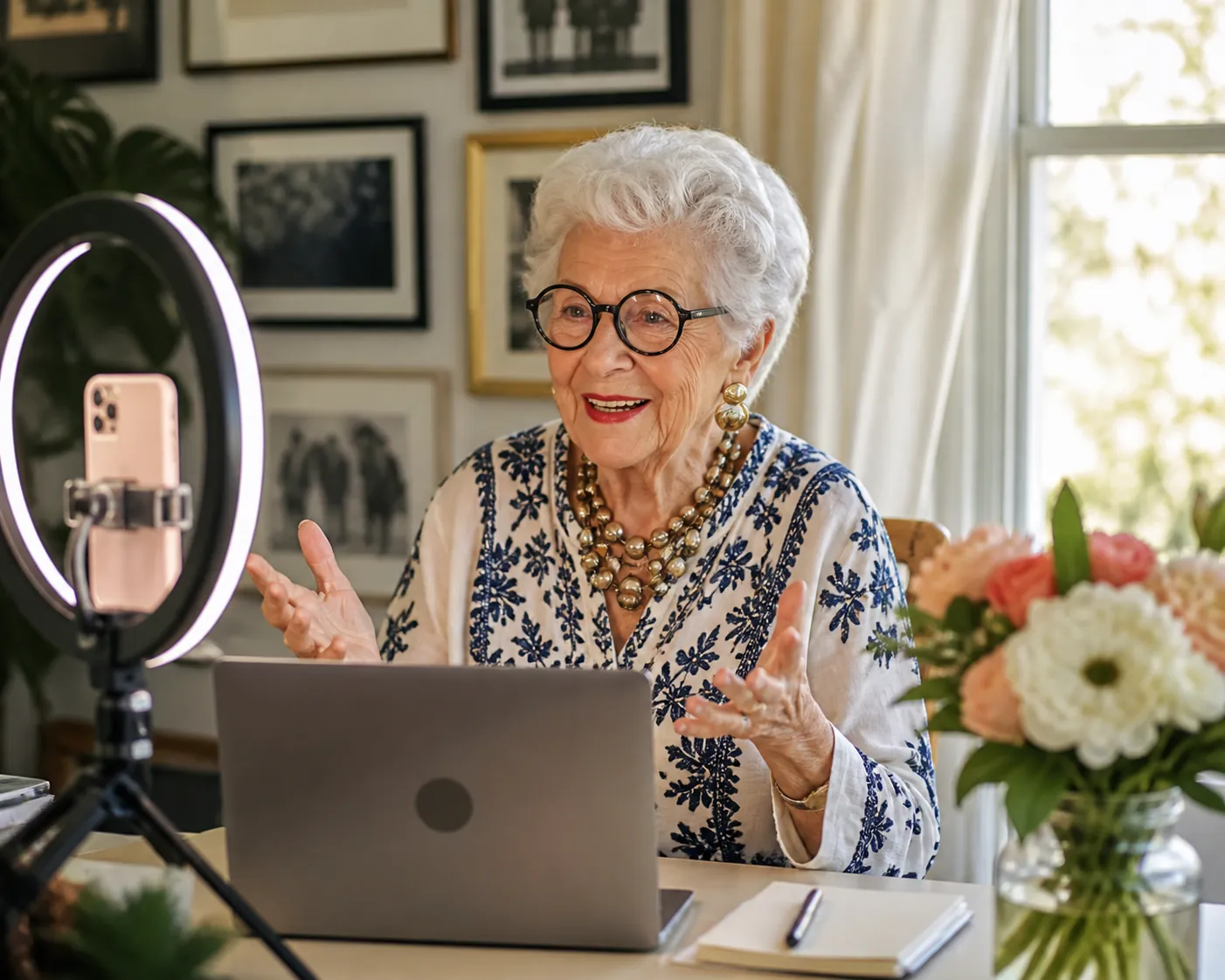
Donna Mills’ new OnlyFans account is easy to misread if the headline is all anyone sees. The 85-year-old actress was covered on July 30, 2026, for launching an account that she described as a way to have “a more personal and direct connection” with fans. Her agent, Andy Bachman, framed the decision with a “YOLO — let’s do it” attitude, and the planned material was described as daily-life and behind-the-scenes content, not adult content.[1]
That boundary matters. OnlyFans has an adult-content reputation, and pretending otherwise would be coy. But the health question raised by this story is not whether every older adult should open an account on a subscription platform. It is whether an older adult who is still initiating contact, choosing an audience, creating a routine, and inviting response is doing something that healthy-aging research already takes seriously.
What Mills’ launch does—and does not—show
The announcement is new. At the time of writing, the public story is only about the launch, Mills’ stated purpose, and the kind of content she expects to share. There is no evidence yet about subscriber response, how often she will post, or whether the account will change anything about her well-being.
Media reports covering the launch also described Mills as OnlyFans’ oldest creator, but that is best treated as an attributed claim, not an independently verified fact about the full creator database.[1] The more reliable lesson is narrower and more useful: an 85-year-old woman in public life is choosing a new form of contact instead of accepting the idea that later life should become smaller by default.
Entertainment coverage also noted Mills’ existing health habits, including daily workouts, tennis, and no hip or knee replacements.[1] Those details are interesting, but they should not turn her into a template. Many older adults cannot or do not want to live the same way. The more transferable behavior is not celebrity-level visibility or athleticism; it is the decision to keep making social bids.
Social connection is not a soft extra
For families trying to help an older parent age safely at home, social contact can sound secondary beside medications, fall hazards, blood pressure, exercise, and transportation. The evidence says it belongs closer to the center. Henry Ford Health has described social isolation as carrying a health burden comparable to smoking 15 cigarettes a day, and reports that socially connected seniors show faster recovery after falls, lower blood pressure, and reduced risk of depression and anxiety.[2]
Those findings matter because they connect “staying in touch” to the practical problems caregivers already worry about. After a fall, recovery is not only a medical event. Someone has to notice changes, encourage follow-up, help with appointments, reinforce safe movement, and keep discouragement from becoming withdrawal. A person with regular contact has more points where help can enter. A person who is socially cut off has fewer.
The scale of the problem is large enough that it cannot be dismissed as a private sadness. The National Academies of Sciences, Engineering, and Medicine has reported that about 1 in 4 adults over 65 is socially isolated.[3] That figure does not mean every isolated person is neglected, and it certainly does not mean loneliness is a personal failure. It means many older adults are living with fewer routine connections than health and safety may require.
The World Health Organization has also tied social connection to physical health, including reduced inflammation, lower risk of serious health problems, and reduced risk of early death.[4] This is where the subject moves out of the realm of niceness. Contact, belonging, and participation are not merely pleasant when they happen. They are part of the environment in which an older body and mind either have support or are left to absorb strain alone.
Why falls make the issue concrete
Fall prevention often begins with visible fixes: remove loose rugs, improve lighting, add grab bars, review medications, strengthen legs and balance. Those steps still matter. But the period after a fall can expose whether an older adult’s life has enough human structure around it. Is someone checking in? Does anyone know the person has become afraid of the stairs? Is there a reason to keep practicing safe movement instead of retreating to one chair?
That is why the Henry Ford Health finding on faster recovery after falls is so important for aging-at-home conversations.[2] Recovery is rarely just a matter of tissue healing. It can include confidence, transportation, therapy follow-through, meal support, mood, sleep, and the quiet reassurance that someone will notice if things get worse.
Digital contact is most useful when it becomes participation
Mills’ OnlyFans choice is not meaningful because of the platform’s brand. It is meaningful, if at all, because she is not only consuming content. She is setting up a channel where she intends to share parts of daily life and receive a response. That is different from sitting alone while a screen runs for hours.
The distinction matters for caregivers. Passive screen time may fill silence without adding much support. Proactive digital engagement can create a schedule, an audience, a conversation, or a reason to prepare and show up. A video call with grandchildren, a moderated online class, a hobby group that shares photos, or a message thread with old friends can all function differently from endless scrolling.
A 2026 study in Frontiers in Public Health found that digital engagement was positively associated with older adults’ offline activity participation.[5] That is an association, not proof that using digital tools causes people to become more active outside the home. Still, it supports a modest and practical point: online connection does not have to compete with real-world life. In some circumstances, it may sit beside it.
The caution is just as important. Digital platforms are not right for every older adult. Some people dislike them. Some have vision, hearing, dexterity, privacy, or scam concerns. Some need help setting boundaries. Some are already getting richer connection through neighbors, faith communities, clubs, senior centers, or family routines. The goal is not to move everyone online. The goal is to keep connection from disappearing when mobility, geography, bereavement, or caregiving demands change the shape of daily life.
What families can plan for
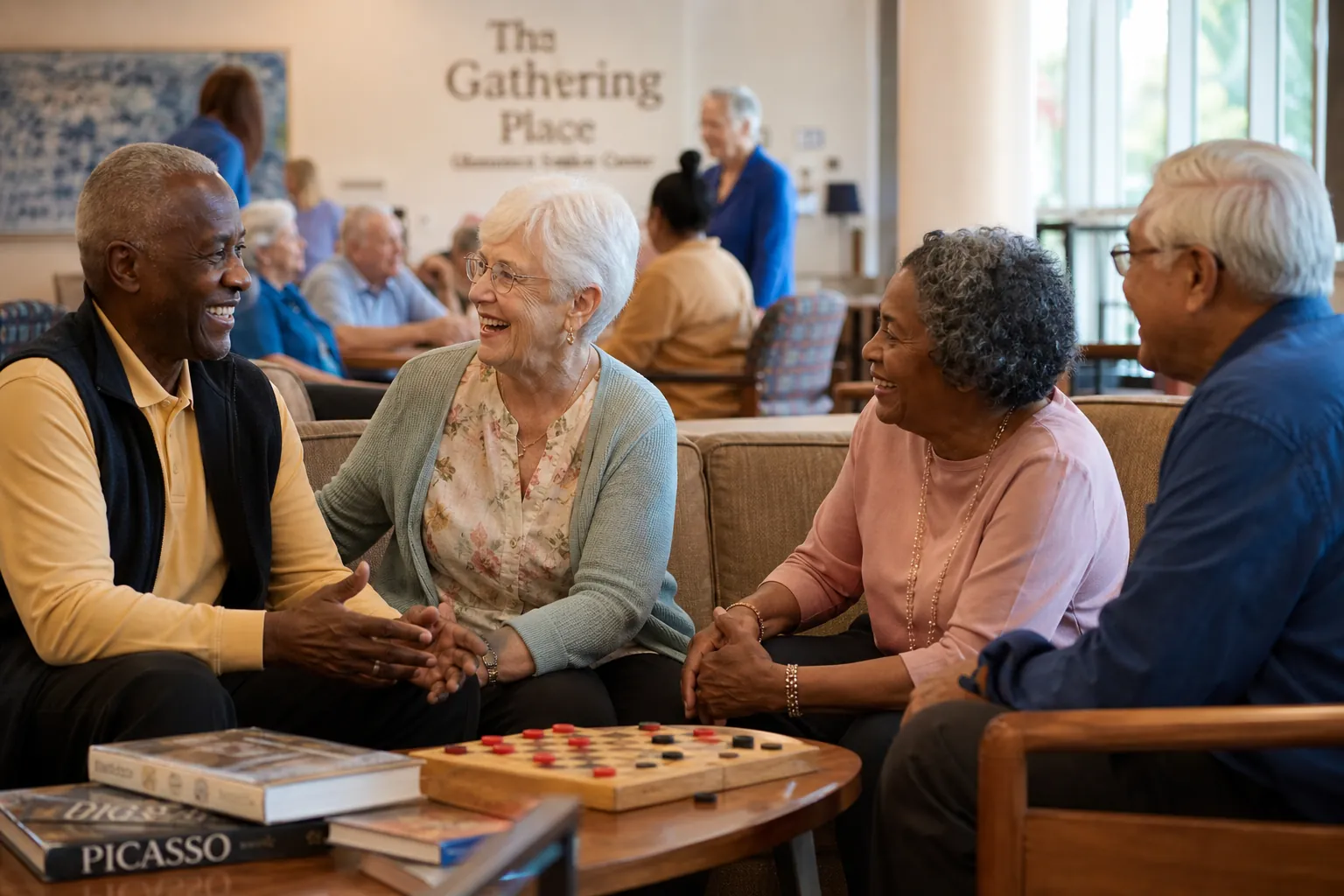
A useful connection plan does not have to be elaborate. It should fit the person’s temperament, energy, health, transportation, hearing, confidence, and history. Some older adults want a busy calendar. Others want two dependable touchpoints a week and one place where they are known by name.
- For someone who likes structure, a senior center class, library group, walking club, or recurring volunteer shift may work better than vague encouragement to “get out more.”
- For someone with limited mobility, a regular phone call, video chat, online discussion group, or faith-community check-in may preserve contact without requiring difficult travel.
- For someone recovering from a fall or illness, short visits tied to meals, therapy exercises, medication routines, or safe walks can make connection part of recovery instead of a separate social obligation.
- For someone who resists being “managed,” shared projects—sorting photos, planning a garden, following a sports season, helping with family recipes—may feel more respectful than wellness monitoring.
The caregiver’s role is not to manufacture a social life from the outside. It is to notice where contact has thinned and help protect the connections that still have meaning. That may mean arranging transportation, troubleshooting a tablet, asking a neighbor to knock after bad weather, or making standing visits less dependent on everyone’s good intentions.
It also means watching for the quiet losses that do not look medical at first: a person stops going to lunch after a friend dies, drops a class after a hearing problem worsens, stops answering calls because the phone is confusing, or gives up church because getting dressed and transported has become too tiring. These are not small lifestyle details. They are often the places where isolation begins to harden.
The useful lesson in an odd headline
Donna Mills’ OnlyFans launch should not be inflated into medical evidence. It does not prove that OnlyFans improves health. It does not prove that subscribers will provide meaningful support. It does not make digital platforms appropriate for every older adult.
But it does dramatize something worth defending: later life is healthier when people can keep initiating, choosing, performing, responding, and being responded to. For older adults aging at home, social engagement belongs in the same serious conversation as fall prevention, exercise, medication review, sleep, nutrition, and safe housing. Connection is a health-supporting behavior worth planning for, protecting, and adapting as life changes.
References
- Donna Mills OnlyFans launch coverage — Variety, Fox News, Page Six, news.com.au, July 30, 2026.
- Social isolation and healthy aging coverage — Henry Ford Health, November 2024.
- Social Isolation and Loneliness in Older Adults: Opportunities for the Health Care System — National Academies of Sciences, Engineering, and Medicine.
- Social connection and health materials — World Health Organization, June 2025.
- Digital engagement and older adults’ offline activity participation — Frontiers in Public Health, 2026.
Browse more in the Glossary.