
Clinical term
Egg Recall Safety Checklist for Seniors
Last verified 2026-07-27
If the recalled eggs are already out of the refrigerator, the next job is quieter and more useful: make the next carton safer to buy, store, cook, and serve. The July 2026 Salmonella investigation is still active as of July 27, 2026, and federal updates have connected the outbreak to 1.59 million dozen recalled eggs, 98 illnesses, 26 hospitalizations, and 17 states.[1][2] If you still need to check carton codes or affected brands, use the site’s recall guide first. If the refrigerator has been cleared, this egg recall safety checklist for seniors is the part that should stay on the kitchen table.
The reason to keep this practical is simple. A bout of Salmonella that is miserable for a younger adult can be dangerous for an older one. Nearly half of adults 65 and older with lab-confirmed Salmonella may be hospitalized, according to CDC data reported by AARP.[3] That does not mean eggs have to disappear from breakfast. It means the safety habits need to be visible enough that a caregiver, spouse, neighbor, or older adult living alone can check them without guessing.
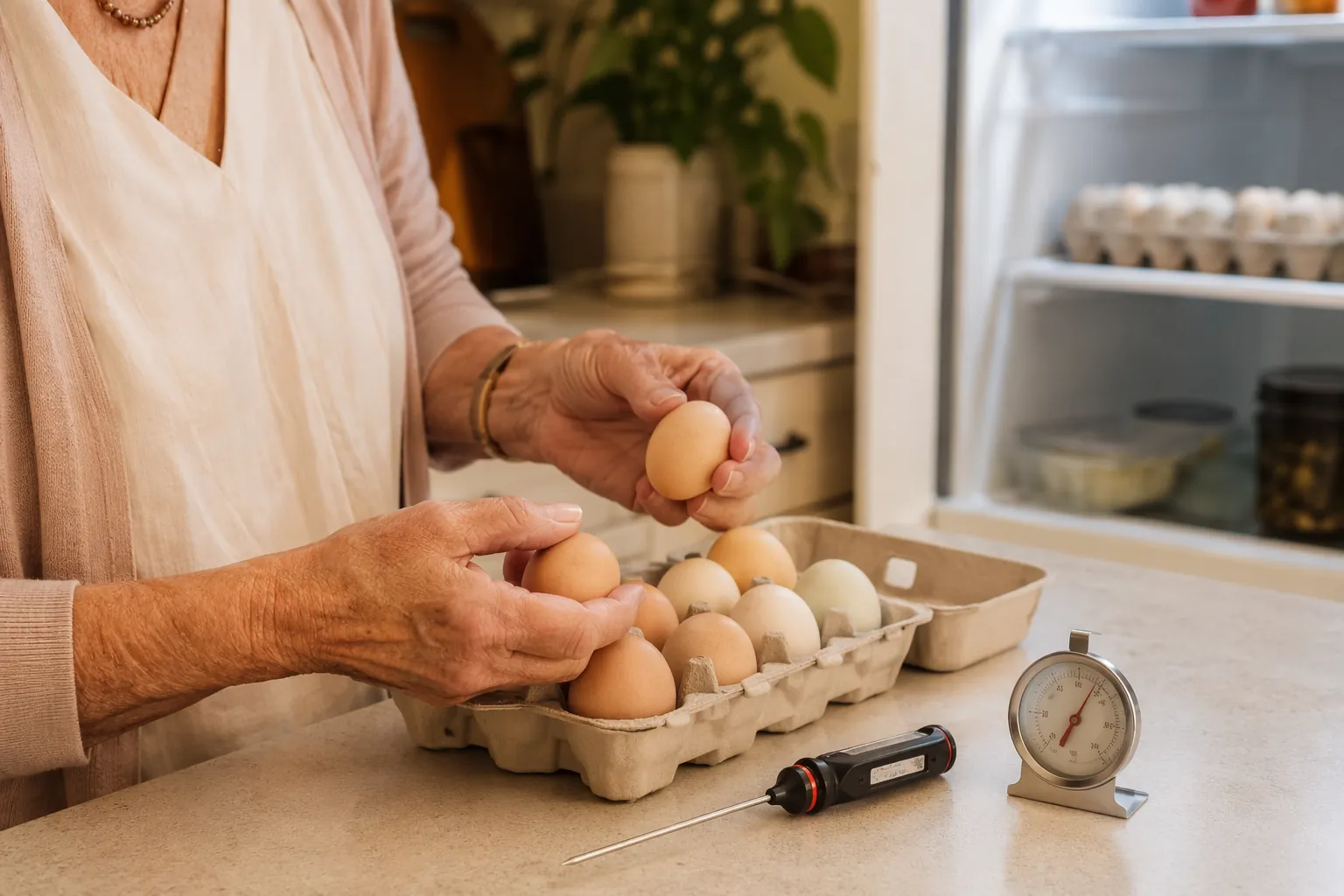
Start With The Label Most People Skip
Every carton of untreated shell eggs carries an FDA-required safe-handling instruction: “To prevent illness from bacteria: keep eggs refrigerated, cook eggs until yolks are firm, and cook foods containing eggs thoroughly.”[4] It is easy to read that as boilerplate. For a senior kitchen, it is better treated as a short warning label written for everyday use.
The label gives the direction, but it does not give enough measurement. “Refrigerated” needs to become 40°F or below. “Thoroughly” needs to become 160°F for egg dishes without meat or poultry. “Firm” needs to mean no runny yolk or white unless pasteurized eggs are being used for a lightly cooked recipe.[4]
The Four Habits To Keep After The Recall
| Habit | What To Check |
|---|---|
| Buy refrigerated, clean eggs | Choose eggs from a refrigerated case and open the carton to avoid cracked or dirty shells. |
| Store at 40°F or below | Keep eggs in the original carton on a refrigerator shelf, not in the door, and use them within 3 weeks of purchase. |
| Cook to 160°F | Use a food thermometer for egg dishes; cook until yolks and whites are firm when preparing regular shell eggs. |
| Use pasteurized eggs for raw or lightly cooked recipes | Look for pasteurized shell eggs or pasteurized liquid egg products when making Caesar dressing, eggnog, raw cookie dough, soft-cooked eggs, or similar recipes. |
That is the whole checklist. The rest of the work is making each item ordinary enough that it happens on a Tuesday morning, not only during a recall week.
Buy Eggs That Stayed Cold And Arrived Intact
At the store, eggs should come from a refrigerated case. Before putting a carton in the cart, open it. Look for clean shells and no cracks. A cracked egg is not a bargain to save for baking; it is a shell that may have let bacteria reach the part people eat. The FDA advises buying eggs only if they are sold from a refrigerator or refrigerated case, and choosing clean, uncracked eggs.[4]
For caregivers shopping for someone else, this is one of the easiest safety habits to take over without taking away independence. The older adult can still choose the size, brand, or price. The shopper simply does the cold-case and crack check before checkout.
Store Eggs Where The Refrigerator Is Actually 40°F Or Below
The refrigerator door is convenient, and that is why eggs so often end up there. It is also the part of the refrigerator that warms up every time the door opens. Eggs belong in their original carton on an interior shelf, where the temperature is steadier. The FDA advises storing eggs at 40°F or below, keeping them in their original carton, and using them within 3 weeks for best quality.[4]
A refrigerator dial set to “3” or “cold” is not the same as knowing the temperature. Put an appliance thermometer on the shelf near the eggs and check it after the refrigerator has been closed for a while. If it reads above 40°F, lower the setting and check again. This is not fussy housekeeping; it is the only way to know whether the cold-storage habit is working.
The original carton matters for more than neatness. It protects the eggs, keeps the safe-handling label nearby, and gives the purchase date or store label a place to stay visible. If memory is a concern, write the purchase date on the carton in large marker. That is easier than trying to remember whether “these are the newer eggs” two weeks later.
Cooked egg dishes need the same attention after serving. Do not leave cooked eggs or egg dishes at room temperature for more than 2 hours, or more than 1 hour when the temperature is above 90°F.[4] That rule matters at brunches, church breakfasts, potlucks, and family visits where food sits out while people talk.
Cook Egg Dishes To 160°F, Not Just Until They Look Done
Soft scrambled eggs can look finished before they are safely cooked. A casserole can brown on top while the center is still below temperature. A custard can seem set around the edges and still be undercooked in the middle. For egg dishes without meat or poultry, the safe internal temperature is 160°F; egg dishes that include meat or poultry should reach 165°F.[4]
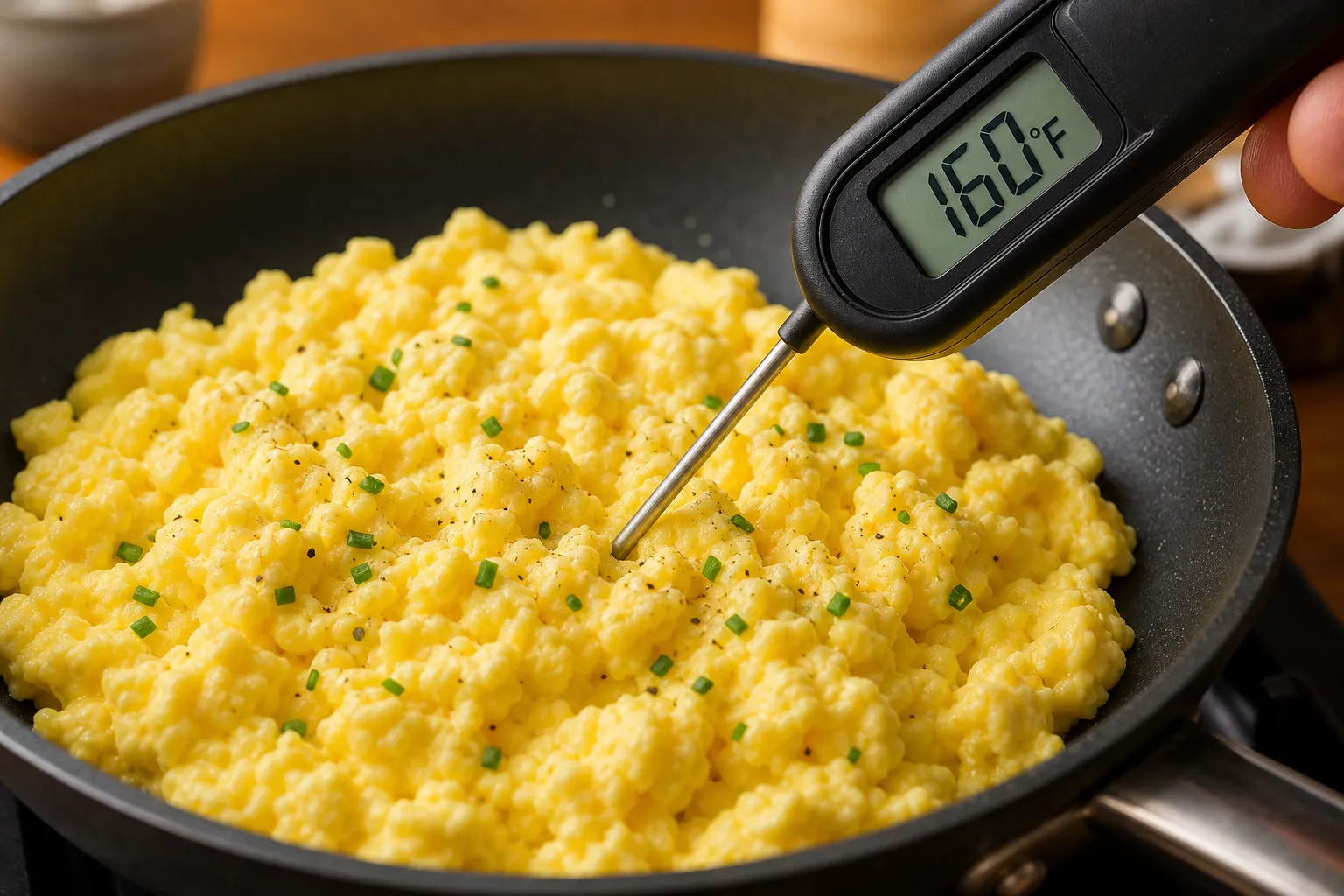
A food thermometer is the plainest answer to the old kitchen argument about “done enough.” Insert it into the thickest part of a casserole, strata, quiche, or pan of scrambled eggs. Avoid touching the pan, because the pan can be hotter than the food. If the reading is under 160°F, keep cooking and check again.
For fried, poached, boiled, or scrambled eggs made with regular shell eggs, the FDA’s carton label points to a visible standard: cook until both yolks and whites are firm.[4] That means a runny yolk is not the safer choice for a high-risk older adult unless pasteurized eggs are being used.
If a thermometer is not already in the kitchen, this is one of the few tools worth buying before the next carton. It does not have to be fancy. It has to be readable, kept clean, and used before the dish goes to the table.
Use Pasteurized Eggs Where Regular Eggs Stay Raw Or Soft
Pasteurized eggs are heat-treated to destroy Salmonella and are recommended by the FDA for recipes that call for raw or lightly cooked eggs.[4] This is where they are especially useful: Caesar dressing, eggnog, homemade mayonnaise, raw cookie dough, soft-cooked eggs, and desserts or sauces where the egg never reaches a safe cooking temperature.
Look for wording such as “pasteurized shell eggs” on the carton, or choose pasteurized liquid egg products or egg substitutes when the recipe allows. Do not assume “organic,” “cage-free,” “brown,” or “farm fresh” means pasteurized. Those labels describe other qualities; they do not replace the pasteurization statement.
Pasteurized eggs can cost more, and some small or rural stores may not carry them. That matters. If they are hard to find or too expensive for everyday use, treat them as a targeted safety choice rather than a failed ideal. Buy them for the recipes that cannot be made safe by cooking to 160°F. Use regular refrigerated, uncracked eggs for fully cooked dishes.
Clean Up Raw Egg Contact Without Turning The Kitchen Upside Down
Egg safety is not only about the egg that gets eaten. Raw egg on a counter, cutting board, refrigerator drawer, or hand can move to toast, fruit, pill organizers, cabinet handles, or a dish towel. When raw shell eggs or raw egg contents touch a surface, wash the surface, utensil, or drawer with hot soapy water. For sanitizing, FDA safe-food-handling guidance gives a bleach solution of 1 tablespoon unscented liquid chlorine bleach per gallon of water.[5]
This cleanup does not need to become a whole-refrigerator project every time someone makes breakfast. Save the full drawer wash for a cracked egg, spilled raw egg, or recalled carton that leaked. For routine cooking, focus on the contact points: hands, counter, bowl, whisk, pan handle, and thermometer probe.
Where Seniors And Caregivers Should Be More Careful
The same checklist applies to every kitchen, but some situations deserve less wiggle room. Be stricter with egg safety when the older adult lives alone, has had recent dehydration, takes medicines that make dizziness more likely, has a weakened immune system, or has trouble getting to medical care quickly. The concern is not only the infection. It is what vomiting, diarrhea, fever, and poor fluid intake can do afterward.
After a suspected exposure or any Salmonella-like illness, prevention turns into monitoring. Watch for diarrhea, fever, stomach cramps, vomiting, dizziness, low urine output, confusion, or weakness. For a deeper symptom guide, see Salmonella symptoms in seniors after the 2026 egg recall. For a practical check-in plan after possible exposure, use how to check on a senior after the 2026 egg recall.
That is the point where the kitchen checklist has done its job and the question changes. If symptoms appear, especially in an older adult who is weak, dizzy, not drinking well, or at risk of falling, do not wait for the next meal to see whether things improve.
References
Browse more in the Glossary.