
Clinical term
5 Egg Recall Safety Steps for Seniors
Last verified 2026-07-26
Last updated: July 26, 2026. The July 2026 egg recall information is current as of this date, but the FDA listed the outbreak investigation as ongoing as of July 24, 2026, so affected states, case counts, or recall details may change.[1]
If you are 65 or older, or you are checking the refrigerator for someone who is, start with the carton in your hand. Do not cook with the eggs while you are “still checking.” The current FDA outbreak notice reports 98 illnesses across 17 states and 26 hospitalizations tied to Salmonella and eggs from Midwest Poultry Services, L.P.[1] That is enough reason to slow down, turn on a brighter light, and compare the carton carefully.
This guide is practical safety information, not medical advice. For an older adult, especially one with diabetes, heart disease, cancer treatment, kidney disease, immune suppression, or frailty, stomach symptoms after possible Salmonella exposure deserve a lower threshold for calling a clinician.
The Five-Step Kitchen Check
| Step | What to do before using the eggs |
|---|---|
| 1 | Check the carton for the recalled plant codes, Julian dates, sell-by dates, brands, stores, and states. |
| 2 | Stop using any carton that matches the recall. |
| 3 | Discard the eggs safely or return them if the store instructs you to do so. |
| 4 | Wash and sanitize the refrigerator shelf, counter, hands, and anything the eggs touched. |
| 5 | Watch symptoms for up to 6 days after exposure and call for medical help sooner in older adults. |
1. Check the Carton Before You Decide Anything Else
Put the carton on a dry counter or hold it under the refrigerator light. If the print is small, use a phone flashlight or magnifier. The decision depends on several details matching at the same time, not on memory or a quick glance.
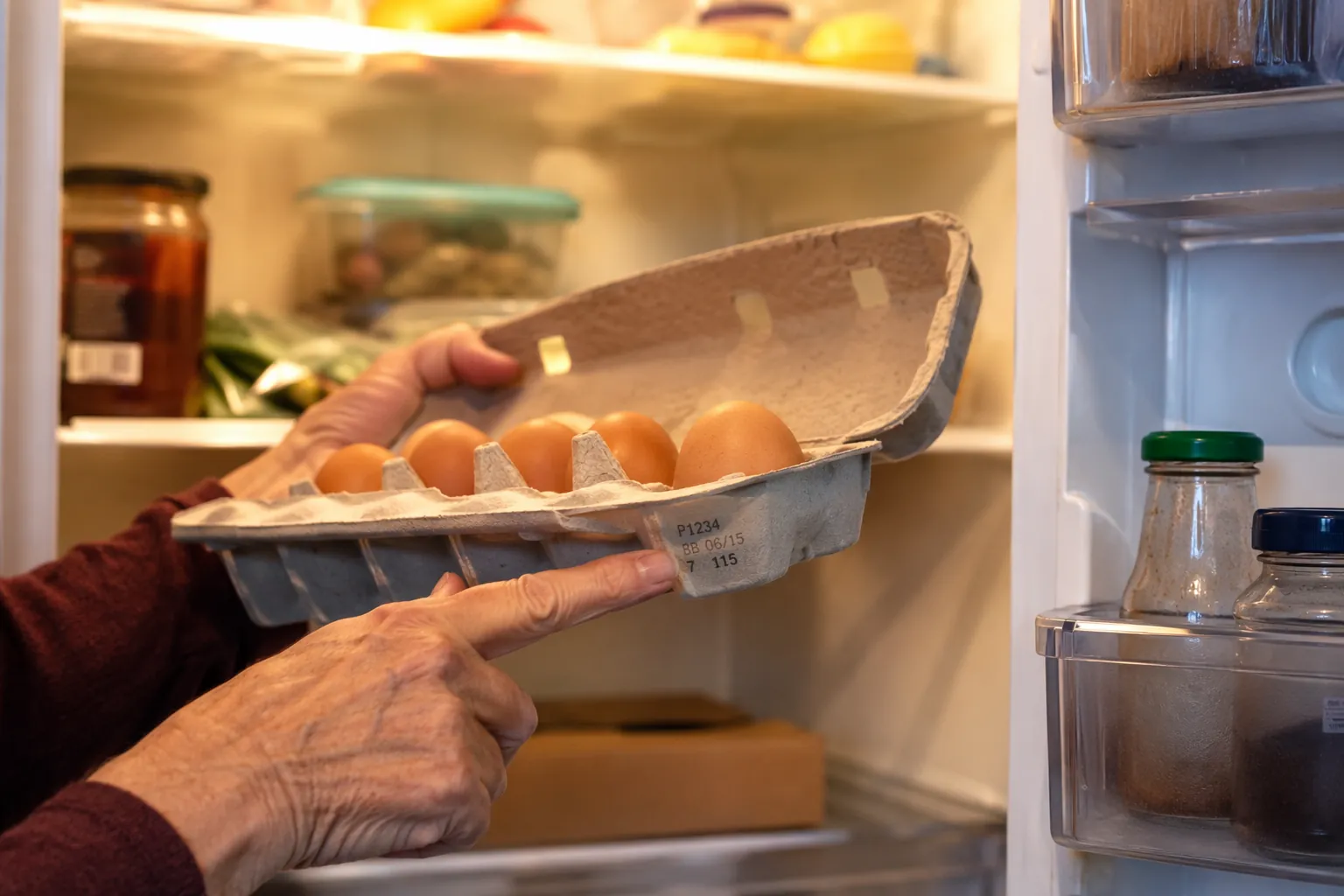
The FDA recall covers 1,589,577 dozen eggs from Midwest Poultry Services, L.P. sold at Kroger stores in Texas and Louisiana and Brookshire’s stores in Texas, Oklahoma, Arkansas, Louisiana, Mississippi, and New Mexico.[1]
| Carton detail | Recall information to compare |
|---|---|
| Producer | Midwest Poultry Services, L.P. |
| Plant codes | P-1950 or 0840962 |
| Julian dates | 157 through 184 |
| Sell-by dates | July 20 through August 17, 2026 |
| Stores | Kroger in TX and LA; Brookshire’s in TX, OK, AR, LA, MS, and NM |
| Brands named in the FDA notice | Kroger, Simple Truth, Brookshire’s, Country Morning, Cal-Maine Sunups |
Look first for the plant code. It may be printed on the short end of the carton near other production information. Then look for the three-digit Julian date. Julian dates count the day of the year, so the recalled range is 157–184. Finally, check the sell-by date. For this recall, the sell-by dates run from July 20 through August 17, 2026.[1]
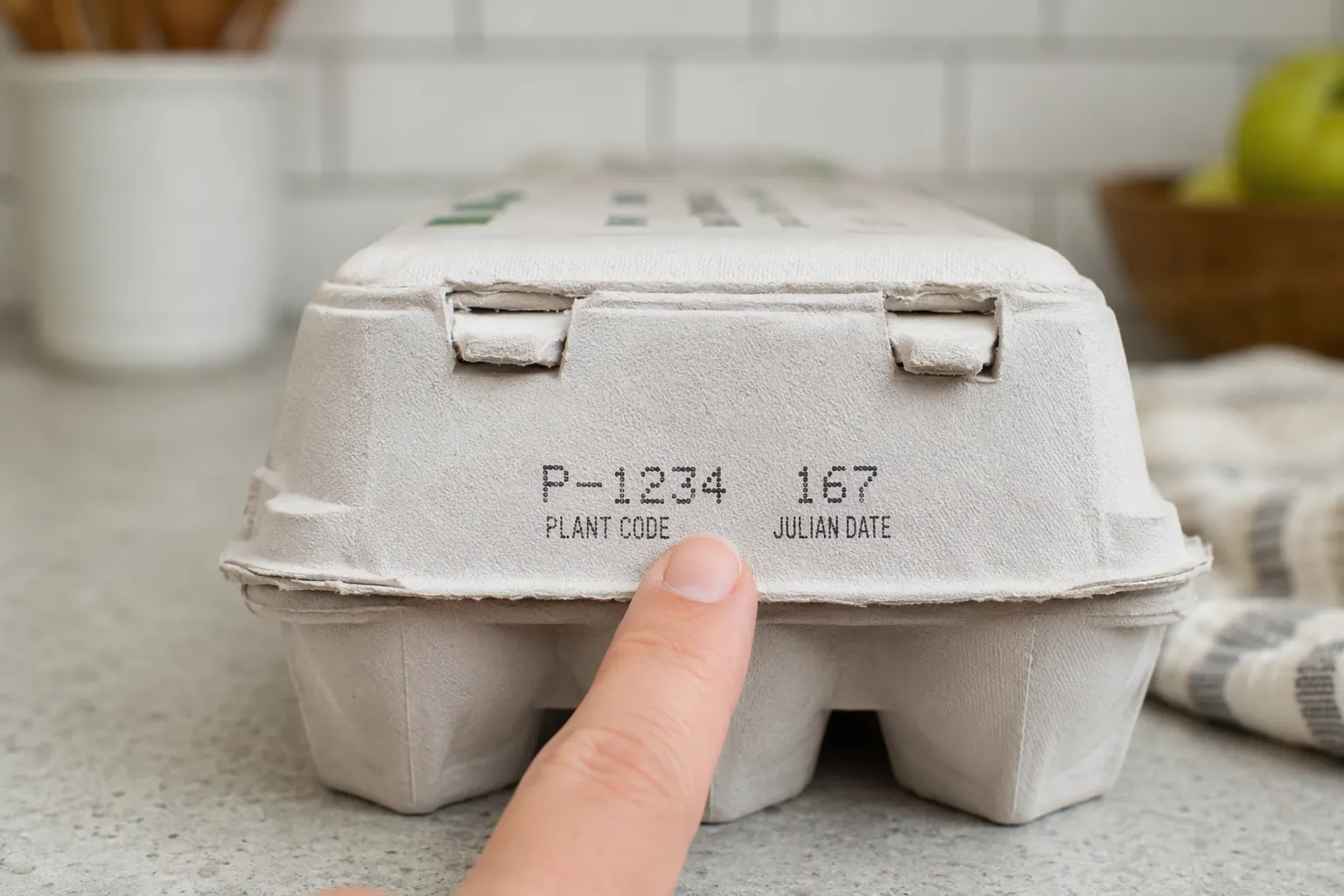
If the carton has one of the recalled plant codes, a Julian date from 157 through 184, and a sell-by date in the listed range, treat it as recalled. If the carton is from one of the listed stores or brands but the code is unreadable, do not guess. For an older adult or medically fragile person, the safer choice is to stop using the eggs until the store, FDA notice, or a caregiver can confirm the carton.
2. Stop Using a Matching Carton
Once a carton matches the recall, do not crack one more egg to “use it up,” even if it looks clean and smells normal. Salmonella is not something you can reliably see or smell. Set the carton aside from other food, close it if possible, and keep it away from ready-to-eat items such as fruit, salad greens, lunch meat, or cooked leftovers.
If you already used eggs from a recalled carton, write down the last date they were eaten. That date matters because Salmonella symptoms can begin 6 hours to 6 days after exposure, and illness often lasts 4 to 7 days.[1]
3. Throw Them Away Carefully, or Return Them Without Spreading Drips
If the store or recall notice says the eggs may be returned, place the closed carton in a plastic bag before carrying it. If the carton is wet, cracked, or leaking, disposal is usually the safer kitchen choice for a senior household. Put the carton into a bag, tie it closed, place it in the trash, and take the trash out if there is any chance of leakage.
Do not rinse eggs in the sink before throwing them away. That only gives splashes and drips more places to go. Do not move them from carton to bowl or carton to another container. The fewer surfaces touched, the easier the cleanup.
4. Clean the Places the Carton and Eggs Touched
After the carton is out of the refrigerator, wash your hands with soap and water. Then clean the refrigerator shelf or drawer where the carton sat, the counter where you checked the code, and any handle, bowl, or utensil touched during the process. If raw egg leaked, treat the area as contaminated, not merely messy.
- Remove nearby food packages if they are sitting in egg drips.
- Wash hard surfaces with hot, soapy water first.
- Use a kitchen-safe sanitizer or disinfectant according to its label.
- Use paper towels or a washable cloth that goes straight into the laundry.
- Wash hands again after the trash is tied and surfaces are cleaned.
A caregiver may be tempted to hurry this part because the eggs are already gone. Do not skip the shelf and handle check. In real kitchens, contamination often travels by fingers: carton to refrigerator handle, handle to faucet, faucet to towel.
5. Watch Symptoms With Senior-Specific Caution
For a healthy younger adult, mild stomach illness may be watched at home for a short time. For a senior, especially one living alone or managing chronic illness, “wait and see” can become risky quickly. Salmonella symptoms can start anywhere from 6 hours to 6 days after exposure and commonly include diarrhea, fever, stomach cramps, nausea, vomiting, and headache.[1]
Call a doctor, urgent care clinic, or other medical professional if an older adult has diarrhea lasting more than 3 days, a fever above 102°F, bloody diarrhea, repeated vomiting, or signs of dehydration such as dry mouth, reduced urination, dizziness, unusual weakness, or confusion.[1]
Confusion deserves special respect in seniors. It may look like sleepiness, agitation, not making sense on the phone, forgetting where they are, or suddenly being unable to manage ordinary tasks. If dehydration or infection is possible, that is not a character change or “just aging.” It is a reason to seek help promptly.
| What you notice | Why it matters for an older adult |
|---|---|
| Diarrhea for more than 3 days | Fluid loss can become harder to correct at home. |
| Fever above 102°F | Higher fever can signal more serious infection. |
| Bloody diarrhea | This needs medical guidance rather than home guessing. |
| Dry mouth or reduced urination | These are dehydration warnings. |
| Confusion, faintness, or marked weakness | These can be urgent in seniors, even if stomach symptoms seem mild. |
Why the Threshold Is Lower After 65
Older adults are more likely to have severe outcomes from foodborne illness. FoodSafety.gov explains that immune function begins to decline around age 60, while reduced stomach acid and slower movement through the gastrointestinal tract can make it easier for harmful bacteria to survive and grow.[3][4]
A Canadian study of adult Salmonella cases found that seniors accounted for 50% of Salmonella hospitalizations and 82% of deaths, even though they were a smaller share of the population; the authors noted that this pattern was consistent with U.S. FoodNet findings.[2] The same study reported that 60% of seniors hospitalized for Salmonella had at least one chronic condition, 36% had two or more, and the median hospital stay was 7 days for seniors compared with 4 days for younger adults; among adults 80 and older, the median stay rose to 9 days.[2]
Those numbers do not mean every older adult with diarrhea has Salmonella or will need a hospital. They do mean that after a known recalled-egg exposure, symptoms should be taken seriously earlier, especially when the person is 80 or older, frail, immune-compromised, or already dealing with a chronic condition.
If Your Eggs Are Not Recalled
If the carton does not match the recall, keep ordinary egg safety habits in place. The FDA advises refrigerating eggs at 40°F or below, cooking eggs until the yolks are firm and the whites are set, and cooking egg dishes to an internal temperature of 160°F.[5]
For a senior household, it is also sensible to avoid tasting raw batter, using cracked eggs, or leaving egg dishes on the counter. These habits are not special to this recall, but they matter more when the person eating the food has less reserve to handle dehydration or infection.
The safest response is plain and practical: verify the carton, remove affected eggs, clean what they touched, and treat symptoms in seniors as time-sensitive rather than something to wait out.
References
- Outbreak Investigation of Salmonella: Eggs, FDA, July 2026, link
- The burden of salmonellosis among older adults in Canada, National Library of Medicine, link
- Older Adults, FoodSafety.gov, last reviewed September 2023, link
- The Importance of Food Safety for Older Adults, FoodSafety.gov, link
- What You Need to Know About Egg Safety, FDA, link
Browse more in the Glossary.