
Product term
Eye Drop Recall? Here's Your Step-by-Step Safety Checklist
Last verified 2026-07-30
If you just heard about an eye drop recall, the safest first move is a quiet one: put every bottle and box on the counter before you decide what to throw away. Do not keep using drops blindly, but do not assume a familiar brand name means every bottle in the house is unsafe. In eye drop recalls, the lot number is usually the detail that decides whether your bottle is actually included.
This checklist is written for the person standing at the sink with a tiny label, a magnifying glass, and maybe an adult child on the phone. Work through it in order. The goal is not to scare anyone into tossing every drop. The goal is to find the exact bottle that matches a recall, stop using it, and know what symptoms deserve prompt medical attention.
The quick checklist: what to do right now
- Gather every eye drop bottle and any outer boxes. Include dry-eye lubricating drops, allergy drops, redness relievers, prescription drops, opened bottles, unopened bottles, travel-size bottles, and anything kept in a purse, nightstand, car, or medicine cabinet.
- If it helps, separate prescription drops from over-the-counter drops. A recall can involve either type, so separation is only for organization, not for deciding safety.
- Find the product name, lot number, expiration date, and 10-digit NDC, short for National Drug Code. The lot number and NDC are printed on the outer package and often on the bottle itself, and they are the details used to match a product to an FDA recall. [1]
- Use the Dry Eye Foundation’s Eye Drop Safety database as a fast first lookup. It is a third-party safety database, not the official FDA record, but it can help you search by product name and narrow what to check next. [2]
- Confirm the recall in the FDA recalls and safety alerts system. The FDA Enforcement Report and recall pages are the official source to verify whether the product, lot, and recall details match. [3]
- Compare the lot number exactly. If the product name appears in recall news but your lot number is different, that bottle is not affected by that recall and is considered safe to use, assuming it is not expired or otherwise contaminated. [4]
- Stop using and set aside only the bottle that matches the recalled product and lot. Do not take one more dose from a matched recalled bottle while you wait to ask someone.
- Watch for infection warning signs after recalled-drop use: redness, discharge or goo, pus, eyelids stuck together on waking, vision changes, eyelid swelling, eye pain, or light sensitivity. If these appear after using a recalled drop, seek an eye doctor promptly and report the problem to FDA MedWatch. [5]
- Before replacing the drop, ask a pharmacist or eye doctor what to use instead, especially if the drop was prescription, used after surgery, or used for glaucoma, inflammation, infection, or another diagnosed eye condition.
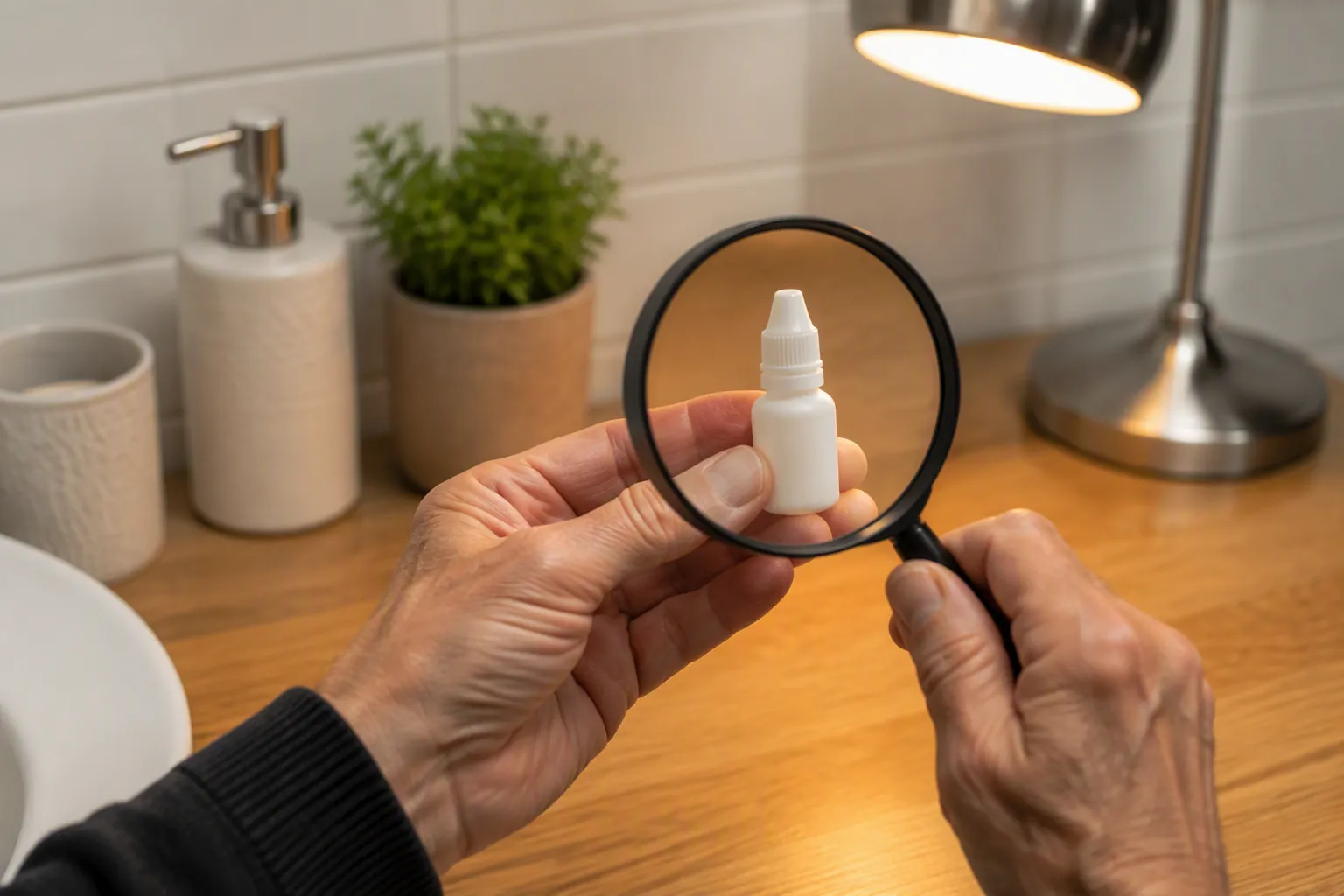
Do not stop at the brand name
The brand or store name is only the beginning of the check. Recalls usually apply to specific lots, not every bottle with the same front label. This is where many people get into trouble: one person throws away every eye drop in the house after seeing a TV segment, while another keeps using a recalled bottle because the label “looks close” but nobody checked the lot number.
A lot number is a manufacturing batch identifier. If there was a sterility problem, a labeling problem, or contamination concern, the recall notice uses that number to identify the affected batch. The NDC is a 10-digit code used to identify the drug product and package. Both may be on the box, and both may also be printed in very small type on the bottle. [1]
| What to look for | Why it matters | Where it may appear |
|---|---|---|
| Product name | Helps you start the search, but does not prove your bottle is recalled | Front of box and bottle |
| Lot number | The key detail for matching your bottle to a specific recall | Box flap, bottom edge, side label, or bottle label |
| NDC | Helps identify the exact drug product and package | Outer package and often the bottle |
| Expiration date | Expired drops may no longer be sterile, even if they were never recalled | Box, bottle, crimp, bottom edge, or side label |
The outer box is worth keeping when possible because it often has more readable information than the bottle. If the box is gone, look slowly around the bottle: near the bottom edge of the label, on the side of the label, around the crimped area, or printed in faint ink directly on the plastic. If your hands shake or your eyes are tired, use a desk lamp, a magnifying glass, or a phone camera zoom. If you are helping by phone, ask the person at home to read one line at a time and repeat it back.
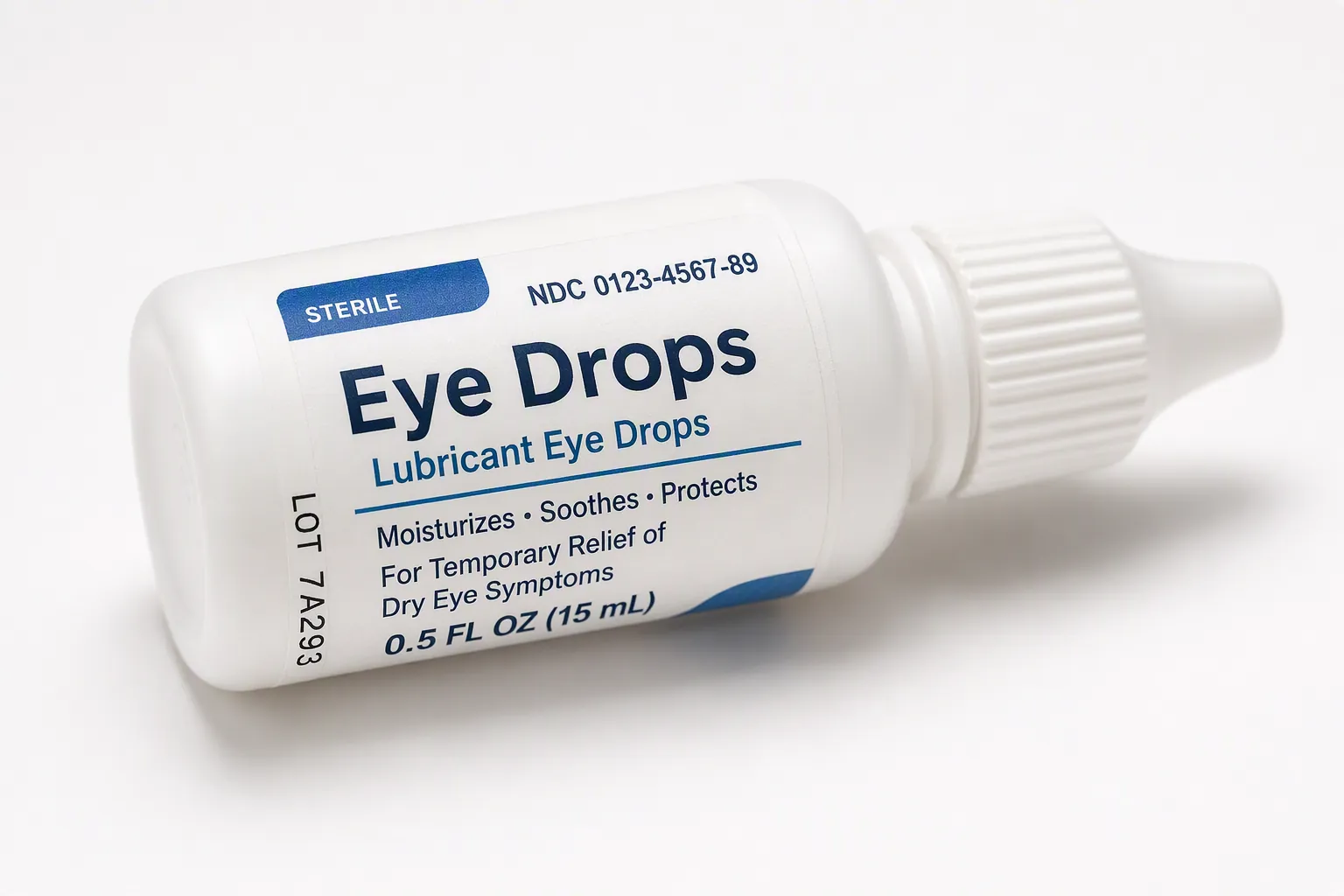
A careful matching rule
Match all the important details before you discard a bottle as recalled: product name, manufacturer or distributor when listed, NDC when available, and lot number. The lot number must match exactly. Similar is not enough. One missing letter, number, or suffix can mean it is a different batch.
If the product name matches a recall but the lot number does not, the bottle is not part of that recall. That distinction matters because recall news is often reported by brand or store name first, while the official recall record narrows the affected products by lot. [4]
How to look up a bottle without getting lost
Start with the easiest search, then confirm with the official source. The Dry Eye Foundation’s Eye Drop Safety database reports that since 2023, more than 340 over-the-counter eye drops have been recalled across 17 manufacturers. That database can be a useful first stop because it is built around eye drop safety, but it is still a third-party aggregator. [2]
After that first search, check the FDA recall page or Enforcement Report for the official record. The FDA source is where you confirm the affected product, lot, recall class, reason for recall, and company information. [3]
- Search the product name first. If nothing appears, try the manufacturer or distributor name from the back of the bottle or box.
- If you find a possible recall, write down the recalled lot numbers on paper. Do not rely on memory while switching between a screen and a tiny bottle.
- Compare your bottle’s lot number character by character.
- If the NDC is listed in the recall, compare that too.
- Mark the bottle with a sticky note: “checked — not recalled,” “matched recall — do not use,” or “uncertain — ask pharmacist.”
The “uncertain” pile is important. A person should not have to guess because the print is too small or the box is missing. If you cannot find the lot number, or if the bottle label is damaged, call the pharmacy, the manufacturer’s customer service line listed on the packaging, or the eye doctor’s office. For prescription drops, the dispensing pharmacy may also have records that help identify what was filled.
Why the checklist is worth the trouble
Most eye drop recalls will not lead to a disaster in a particular household. Still, eye drops deserve respect because they go directly onto the eye, and sterility failures can matter. The 2023 EzriCare Artificial Tears outbreak is the case that explains why a recall notice should not be ignored: FDA-cited reporting linked the outbreak to 81 infections across 18 states, 14 cases of vision loss, 4 enucleations, and 4 deaths. [4]
That does not mean every current recall carries the same level of danger. In March 2026, K.C. Pharmaceuticals recalled 3.1 million bottles across 28 brand names. UC Davis Health reported that the recall was Class II, meaning a remote probability of serious harm, and that no infections had been reported from that recall as of early April 2026. [5]
The issue also has not gone away. In July 2026, the Dry Eye Foundation database listed a Rohto Mentholatum recall involving 12 million units of cooling eye drops and a Lupin recall involving 2.5 million bottles of prednisolone acetate due to foreign substance contamination. Those examples matter because they show that recall checking is not only for one brand, one year, or only over-the-counter products. [2]
If your bottle matches a recall
If the product and lot number match the recall notice, stop using the bottle. Put it where nobody will accidentally reach for it, especially if more than one person uses drops in the home. A bright sticky note with “DO NOT USE” is often clearer than moving it to a drawer and hoping everyone remembers.
- Do not use another dose from the matched bottle.
- Do not share it with someone else.
- Do not pour the bottle into another container.
- If it is a prescription drop, call the prescriber or pharmacy before simply stopping long-term treatment.
- Ask the pharmacist how to dispose of the recalled bottle if the recall notice does not give clear instructions.
Prescription drops need special care. A recalled bottle should not be used, but some eye medicines treat conditions where missed doses can matter. If the drop is for glaucoma, inflammation, infection, surgery recovery, or another diagnosed condition, call the pharmacy or eye doctor the same day for a replacement plan.
Symptoms to watch for after using recalled drops
A matched recalled bottle does not mean an infection has happened. It means the exposure deserves attention. For the next several days, watch the eye and the eyelids, and do not brush off new symptoms as “just dry eye” if they started after recalled-drop use.
- New or worsening redness
- Discharge, goo, or pus
- Eyelids stuck together when waking
- Vision changes
- Eyelid swelling
- Eye pain
- Light sensitivity
If any of these symptoms appear after using recalled drops, seek an eye doctor promptly and report the problem to FDA MedWatch. UC Davis Health’s recall guidance highlights these symptoms as warning signs that should be taken seriously after recalled-drop exposure. [5]
If you are helping an older parent from a distance, ask concrete questions: “Are your eyelids stuck together in the morning?” is easier to answer than “Do your eyes seem infected?” “Can you read the clock or TV captions as usual?” may catch a vision change that the person would not describe medically.
If the lot does not match
If the product name matches recall news but the lot number does not match the recall notice, do not label that bottle as recalled. Keep it only if it is in date, the label is readable enough for future checks, the bottle has not been contaminated, and your clinician or pharmacist has not told you otherwise.
Now check the expiration date. The FDA advises checking eye drop expiration dates and discarding expired products because expired drops may not be sterile, even if they were never part of a recall. [6]
This is a good place to make a small “checked” group. Put a rubber band around the bottles that were verified, or place them in a clean container separate from anything uncertain. That way the same anxious search does not have to happen again tomorrow morning before the first dose.
Choosing a replacement or safer routine
For ordinary lubricating drops, ask a pharmacist or eye doctor whether preservative-free single-use vials are a good option. UC Davis ophthalmologists and Cleveland Clinic guidance both point to preservative-free single-use drops as a way to reduce contamination risk from multi-dose bottles. [5][7]
Single-use vials are not a universal answer for every person or every diagnosis. They can be harder to open for arthritic hands, and prescription conditions may require a specific medication. The practical rule is simple: replace a recalled or expired product with guidance, not with the nearest bottle that looks similar on the store shelf.
- For dry-eye comfort drops: ask about preservative-free single-use vials.
- For prescription drops: call the pharmacy or prescriber before substituting.
- For expired drops: discard and replace rather than “finishing the bottle.”
- For bottles with unreadable labels: treat them as uncertain and ask a pharmacist.
Why recalls keep showing up in the news
A little context can keep the situation in proportion. Over-the-counter eye drops do not require FDA pre-market approval before they are sold, and reporting from UConn/The Conversation and UC Davis notes that FDA inspections of over-the-counter eye drop manufacturers were historically limited before 2023. [8][5]
That context explains why recall checking has become a useful household habit. It does not mean every eye drop is unsafe. It means the label details matter, especially the lot number, and the official recall record should settle the question when a headline is vague.
A simple household routine for seniors and caregivers
Once today’s bottles are checked, make the next recall easier. Keep the outer box when you can, at least until the bottle is finished. Write the opening date on the box or label if that helps your household track use. Keep prescription and over-the-counter drops in a way that makes sense to the person using them, not in a system so complicated nobody follows it.
- Once a month, check expiration dates.
- When recall news breaks, check the product name first, then the lot number.
- Keep a magnifying glass or phone flashlight near the medicine area.
- Do not throw away every bottle just because one brand name appeared in a news report.
- Do not keep using a matched recalled bottle because symptoms have not appeared.
- Ask a pharmacist before replacing a recalled, expired, or unreadable bottle.
The calmest response to an eye drop recall is not guesswork. It is the same small routine every time: gather the bottles, find the lot number and NDC, check a fast database, confirm with the FDA, discard only the matched recalled product, watch for symptoms, and ask for help before replacing what you use on your eyes.
References
- Eye Drop Recalls: What You Need to Know — Geisinger Health, January 22, 2024.
- Eye Drop Safety — Dry Eye Foundation.
- Recalls, Market Withdrawals, & Safety Alerts — U.S. Food and Drug Administration.
- Massive Eye Drop Recall Reflects Ongoing Issues with Manufacturing and FDA Inspections — UConn Today, April 2026.
- Eye drop recall 2026: FDA flags over 3 million bottles. Eye doctors explain what you should know — UC Davis Health, April 2026.
- What You Should Know About Eye Drops — U.S. Food and Drug Administration.
- Eye Drops — Cleveland Clinic.
- Massive eye drop recall reflects ongoing issues with manufacturing and FDA inspection — The Conversation.
Browse more in the Glossary.