
Clinical term
What the 2025 FDA Peptide Compounding List Means for Seniors
Last verified 2026-07-27
There is no single FDA peptide compounding list for seniors 2025. That phrase usually points to several different things at once: FDA’s drug compounding framework, the 503A and 503B Bulks Lists, interim categories used while substances are reviewed, and a 2025–2026 dispute over whether certain unapproved peptide ingredients should be allowed for compounding.
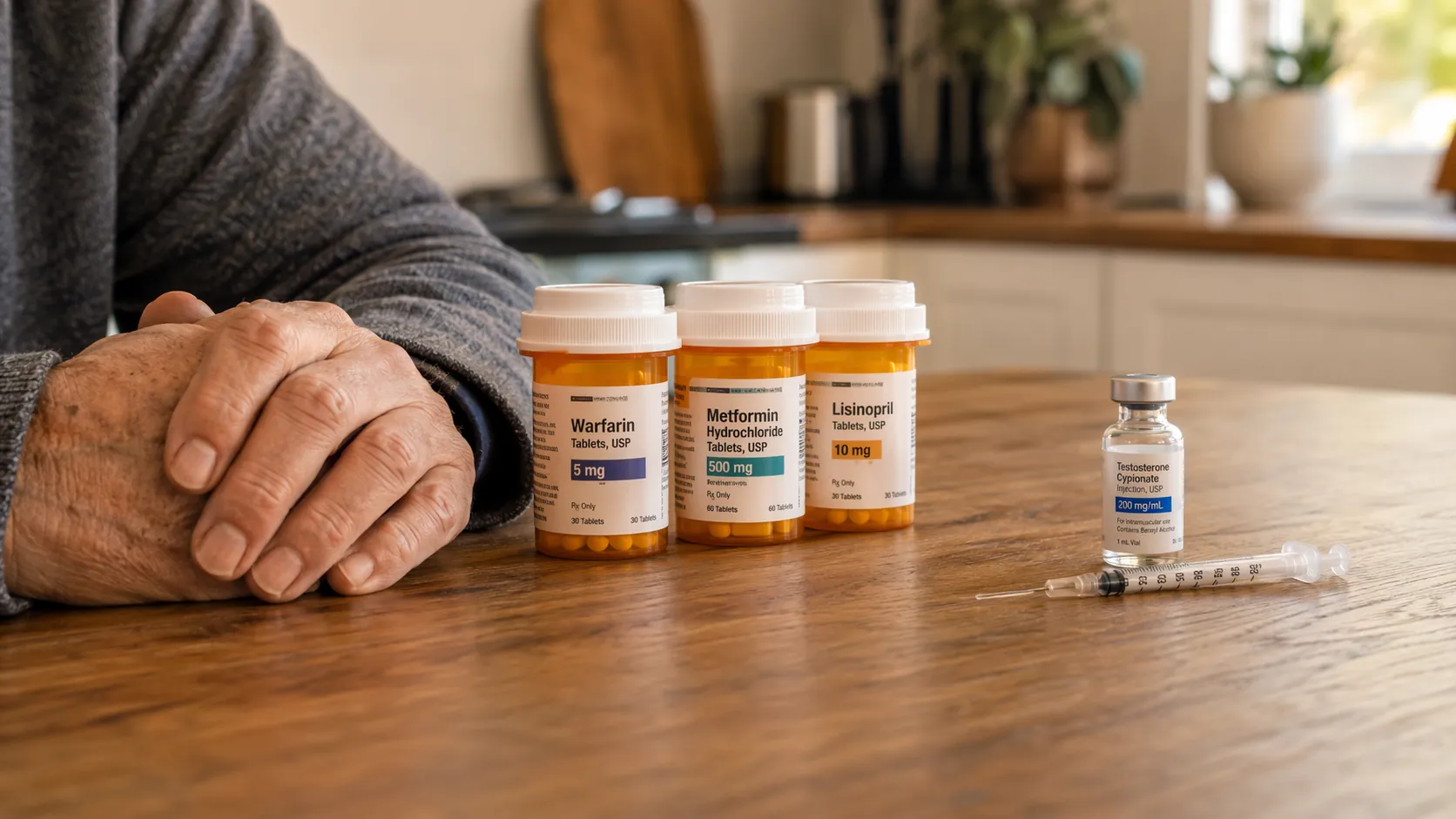
For an older adult, the important translation is simpler: being discussed for a compounding list is not the same as being FDA-approved, studied in seniors, or checked against Mom’s blood thinner. A compounded peptide can be prepared by a pharmacy without going through FDA’s drug-approval review for safety, effectiveness, dose, labeling, and drug interactions.
What changed in 2025, and what did not
In January 2025, FDA changed the handling of nominations for certain bulk drug substances used in compounding. New nominations were frozen while substances already in the pipeline moved through a contested review and reclassification process. Depending on how withdrawn nominations and route-specific substances are counted, coverage of the process has described roughly 14, 17, or 19 affected peptides rather than one clean master list.
The relevant buckets are not “safe for seniors” and “unsafe for seniors.” They are regulatory compounding categories. Section 503A generally refers to traditional pharmacy compounding for individual patients; 503B refers to outsourcing facilities. A substance’s possible placement on a Bulks List concerns whether it may be used as a bulk ingredient under that compounding pathway. It does not convert the finished compounded product into an FDA-approved drug.
In July 2026, FDA advisers on the Pharmacy Compounding Advisory Committee narrowly recommended six peptides for Category 1 by 6–1 and 5–2 votes, but those recommendations were non-binding. FDA staff scientists unanimously recommended against adding all seven reviewed peptides to the Bulks List, citing lack of human clinical data, including for geriatric and other populations.[1]
As of July 27, 2026, the final status remains unsettled. No final Federal Register action has resolved the review, and the rulemaking process could take 12 to 18 months. That matters at the kitchen-table level because a clinic may describe a peptide as “under review,” “recommended,” or “eligible,” while the caregiver hears “cleared.” Those are not the same thing.
The list does not answer the medication question
The hardest safety question for seniors is not whether a peptide sounds biologically interesting. It is what happens when an unapproved compounded injection is added to a medication list that already includes anticoagulants, blood pressure drugs, diabetes medications, antidepressants, sleep aids, pain medicines, or supplements.
Compounding pharmacies are not required to run rigorous drug-interaction studies before dispensing a compounded peptide. A prescriber may have a theory, experience with other patients, or conference material. That is not the same as controlled interaction data in older adults with atrial fibrillation, kidney disease, diabetes, hypertension, prior falls, or cognitive impairment.
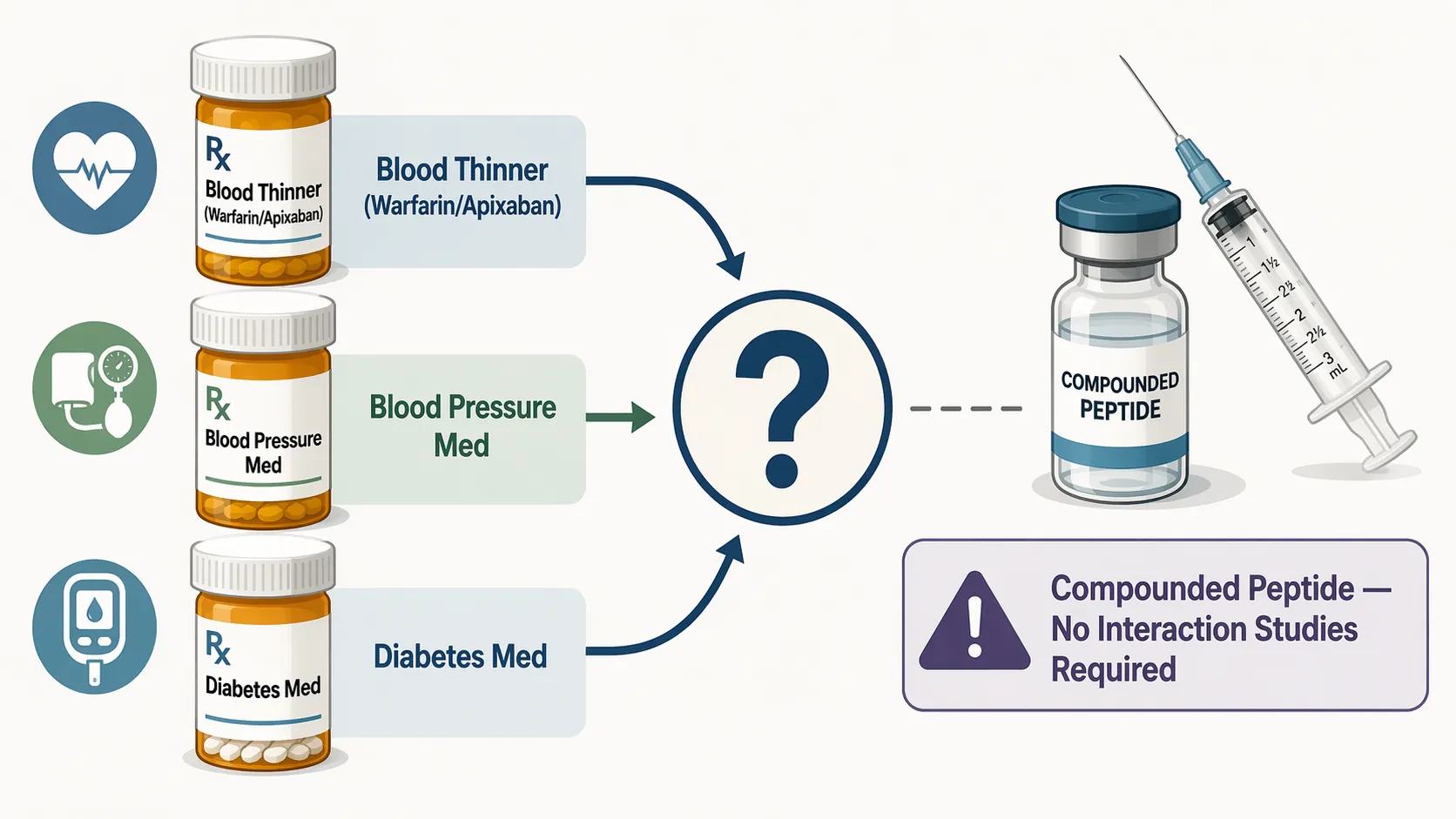
Semax shows why this is not a theoretical concern. FDA safety material cited in reporting flagged nonclinical evidence that Semax may have anticoagulant or antithrombotic activity.[2] That does not prove Semax will cause bleeding in every patient. It does mean the signal lands directly on one of the most delicate medication categories in older adult care: blood thinners such as warfarin, apixaban, and other anticoagulants used for atrial fibrillation or stroke prevention.
A small change in bleeding tendency can become a large practical problem for a person who already bruises easily, has a fall history, needs dental work, or takes other drugs that affect bleeding risk. If nosebleeds, black stools, dizziness, weakness, or a fall occur after a new injection starts, the primary care doctor and pharmacist have to reconstruct what changed. The compounded peptide may not appear in the electronic medication list unless someone adds it.
The same logic applies beyond blood thinners. If a peptide affects appetite, fluid balance, inflammation, sleep, energy, blood pressure, or glucose regulation, the consequence may show up as lightheadedness, a low glucose episode, a blood pressure swing, confusion, or a fall. Caregivers already track these issues with common prescriptions; an unstudied compounded peptide can become another unknown in the same safety picture covered in A Caregiver’s Guide to Medications That Increase Fall Risk in Older Adults.
Professional-looking care can still leave evidence gaps
The peptide market often reaches older adults through reassuring language: recovery, energy, cognition, sleep, tissue repair, anti-aging, vitality. Those goals are not foolish. Many older adults are trying to keep walking, travel, play with grandchildren, heal after surgery, or feel less diminished by chronic illness. The problem begins when the sales language makes the evidence sound cleaner than it is.
AARP, citing ProPublica reporting, described two women who were hospitalized in 2025 after receiving peptide injections at an anti-aging conference. They developed swollen tongues and trouble breathing; one was placed on a ventilator.[2] That case does not tell us how often severe reactions occur. It does show that an adverse event can happen in a setting that appears organized and medically adjacent, not only in an obviously shady online marketplace.
The quality issue is separate from the biological question. NPR reported that traditional 503A compounding pharmacies are not subject to current good manufacturing practice requirements in the same way drug manufacturers are, and that peptide certificates of analysis may lack impurity, aggregate, and endotoxin testing.[3] For a younger, healthy person, that may already be a serious concern. For a senior with multiple diagnoses, the margin for unexplained contamination, dosing variability, or immune reaction is smaller.
Epitalon is another example of why “interesting mechanism” is not enough. FDA review materials reported during the PCAC process flagged nonclinical data that epitalon activates telomerase; longer telomeres have been associated with increased cancer risk, and long-term human safety data were not available. The point is not that every older adult who uses epitalon will develop cancer. The point is that a peptide can be biologically plausible and still leave the long-term safety question unanswered.
Do not mix this up with GLP-1 shortage compounding
Semaglutide and tirzepatide are often discussed in the same breath as peptides, but they are a different regulatory case. They are FDA-approved drugs that were involved in shortage-driven compounding debates. Tirzepatide’s shortage was resolved in late 2024, and semaglutide’s shortage was resolved in February 2025. That history should not be used to imply that the unapproved peptides reviewed through the PCAC process have the same evidence base or approval status.
| Phrase a caregiver may hear | What it does and does not mean |
|---|---|
| “Compounded” | Prepared by a pharmacy or outsourcing facility for a patient or clinical need; not FDA-approved as a finished drug. |
| “On a Bulks List” | Concerns whether a bulk ingredient may be used under a compounding pathway; not proof of safety or effectiveness in seniors. |
| “Recommended by PCAC” | A non-binding advisory recommendation; not a final FDA rule or drug approval. |
| “Peptide” | A broad biological category; it does not tell you whether the product has interaction studies, geriatric data, or reliable quality testing. |
| “Anti-aging” | A marketing frame, not a medical indication with automatic evidence of benefit or safety. |
What to verify before an older adult uses a compounded peptide
This is regulatory and medication-safety information, not personal medical advice. For a specific patient, the decision belongs with the clinician who knows the diagnosis list, kidney function, fall history, bleeding risk, and current prescriptions. Still, there are basic facts a caregiver can insist on before a new injection, nasal spray, capsule, or cream enters the medication routine.
- Exact substance: get the peptide name, salt form if listed, dose, route, frequency, and intended duration.
- Compounding source: identify whether it comes from a 503A pharmacy, 503B outsourcing facility, clinic stock, or another supplier.
- Current FDA status: verify the status at the time of care, because the 2025–2026 process remains in flux.
- Full medication list: include prescriptions, over-the-counter drugs, supplements, injections, patches, and as-needed medicines.
- Specific interaction review: ask directly about blood thinners, antihypertensives, diabetes drugs, antidepressants, sedatives, pain medicines, and fall-risk medications.
- Monitoring plan: clarify who should be called for bruising, bleeding, dizziness, fainting, glucose swings, rash, breathing symptoms, confusion, or a fall.
The strongest medical caution in the current debate is not coming from people who think science should stop. It is coming from clinicians and FDA scientists looking at the absence of ordinary safeguards. Northwestern Medicine geriatrician Dr. Rachel Amdur told AARP, “I don’t want my patients to be the guinea pigs in an uncontrolled scientific experiment.”[2]
That is the practical meaning of the 2025 FDA peptide compounding list question for seniors. The regulatory process may eventually decide which bulk substances can be compounded under certain conditions. It has not answered the bedside question of what happens when an unapproved compounded peptide is added to an older adult’s already complicated medication profile.
References
- FDA advisers narrowly vote to add 6 peptides to drug compounding list, ABC News.
- Are Peptides Safe for Older Adults?, AARP.
- FDA peptides compounding pharmacies, NPR, July 8, 2026.
Browse more in the Glossary.