
Clinical term
What Foods Should Seniors Avoid During the Cyclospora Outbreak?
Last verified 2026-07-30
Last reviewed: July 30, 2026.
For anyone trying to make lunch for an older adult during the July 2026 cyclospora outbreak, the working rule is simple: avoid the recalled shredded iceberg products and be cautious with raw produce most associated with cyclospora risk. Use cooked vegetables, canned or commercially frozen produce, peeled fruit, and other foods with a clear safety step until the source picture is settled.
As of July 24, CDC reported 1,947 confirmed outbreak-associated cases in 9 states — Illinois, Indiana, Kansas, Kentucky, Michigan, Ohio, Oklahoma, Pennsylvania, and West Virginia — with 98 hospitalizations and no deaths.[1][2] The recalled lettuce distribution is a separate issue: FDA says the Taylor Farms de Mexico shredded iceberg recall involved Walmart Marketside products distributed to 27 states, so a household outside the 9 outbreak states should still check the bag in the refrigerator.[3]
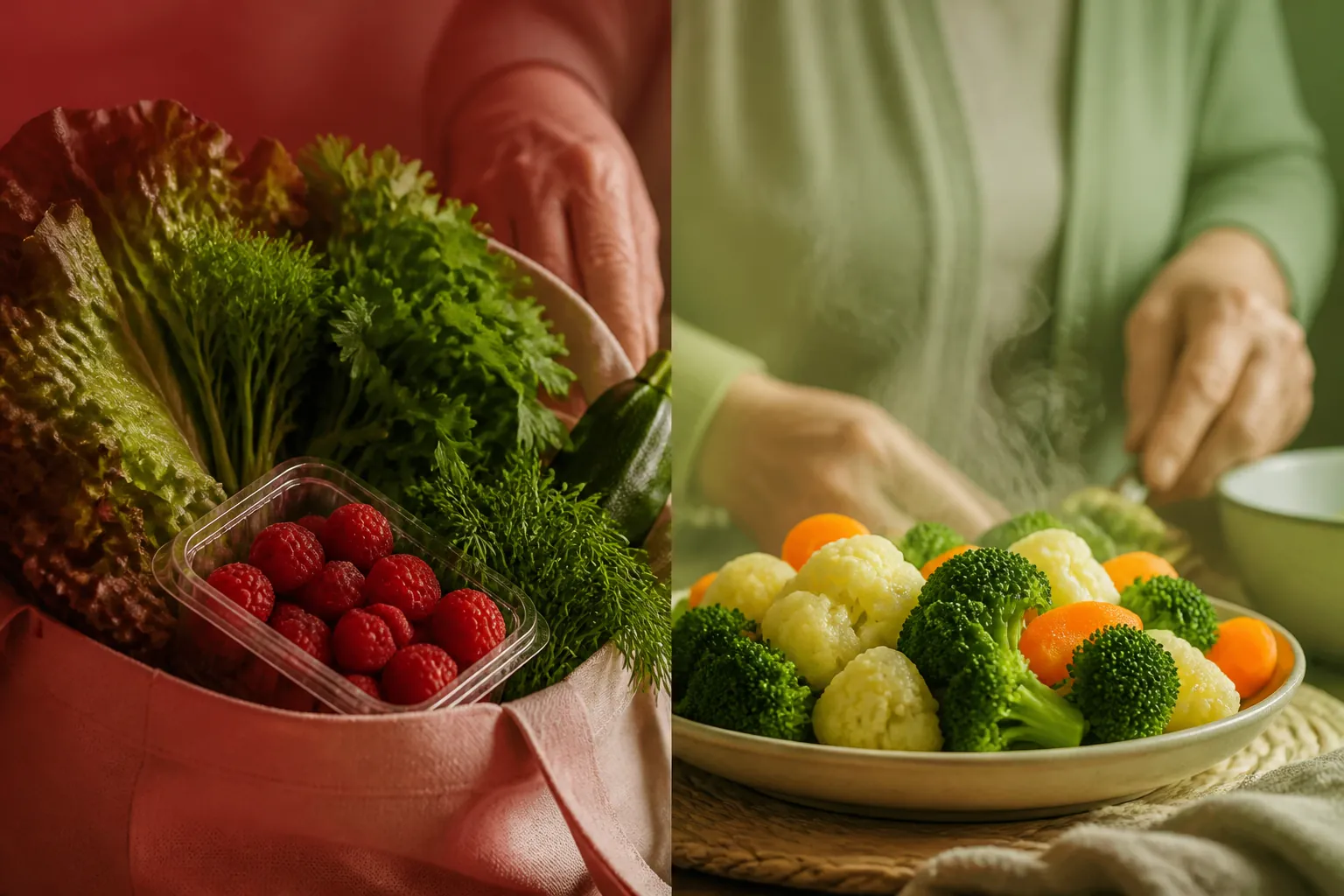
Quick Table: Foods To Avoid And What To Serve Instead
| Avoid for now | Choose instead | How to handle it safely |
|---|---|---|
| Recalled Marketside Iceberg Salad 12-oz or 24-oz and Marketside Shredded Lettuce 8-oz or 16-oz with Best if Used By dates 7/18/2026 through 8/3/2026.[3] | Do not serve a substitute from the same recalled bag. Use cooked vegetables, canned vegetables, or a non-produce side until you can shop again. | Throw the recalled product away. Do not taste it to check freshness, and do not try to rescue it by rinsing. |
| Any Taylor Farms de Mexico shredded iceberg lettuce product matching the recall description, especially if bought at Walmart under the Marketside label.[3] | Whole-head lettuce only if the household is not avoiding all raw produce; otherwise choose cooked or canned produce. | If using whole-head lettuce, remove outer leaves and rinse under running water with friction. This reduces contamination but is not a guaranteed cyclospora kill step.[6][9] |
| Bagged salad mixes and pre-cut raw salad ingredients while the outbreak is active, especially when the source or supplier is unclear. Cyclospora has been linked in past reporting to salad mixes and lettuces.[4][5] | Cooked greens, steamed vegetables, roasted vegetables, soups with vegetables, or canned vegetables. | Cook produce to 158°F / 70°C when the goal is reliable cyclospora control.[9] |
| Raw herbs that are hard to scrub well, including cilantro and basil, which have been cited among foods historically linked to cyclospora concerns.[4][5] | Dried herbs added during cooking, cooked herb sauces, or herbs from a source that official recall guidance or local health authorities consider unaffected. | Do not rely on a quick rinse for fragile herbs when serving a high-risk older adult. |
| Raw raspberries, green onions, snow peas, and romaine lettuce when a senior is medically fragile or the household wants the lowest-risk temporary plan.[4][5] | Peeled fruit, cooked fruit, canned fruit, commercially frozen fruit used in cooked preparations, or cooked vegetables. | Peeling helps when the edible portion is protected by a removable skin. Cooking is the stronger safety step. |
| Home-frozen raw produce saved during the outbreak because freezing at home does not kill cyclospora.[9] | Commercially frozen or canned produce, which NC State Extension notes has never been linked to a cyclospora outbreak.[8] | Commercial freezing is not the same as home-freezing a possibly contaminated raw item. If the item is suspect, discard it. |
| Raw produce served to an older adult with diarrhea, dizziness, confusion, low fluid intake, kidney concerns, diabetes medication use, or diuretic use. | Bland cooked foods, soups, oral fluids as advised by a clinician, canned fruit, cooked vegetables, and other easy-to-tolerate foods. | Call a clinician if symptoms suggest dehydration or if diarrhea is prolonged. Food safety and hydration become the same problem in this situation. |
The most important refrigerator check is the recalled Walmart Marketside iceberg lettuce. FDA lists the recalled products as Marketside Iceberg Salad in 12-ounce or 24-ounce bags and Marketside Shredded Lettuce in 8-ounce or 16-ounce bags, with Best if Used By dates from July 18, 2026, through August 3, 2026.[3] If the label is gone, the bag is half-used, or no one remembers when it was bought, do not serve it to a senior.
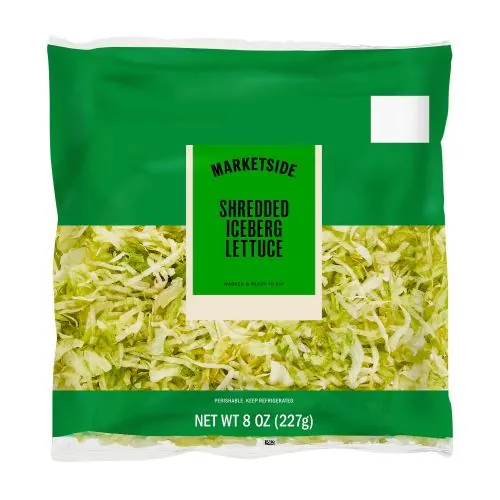
There has also been recall confusion around this investigation, including a false-positive lab result retracted by FDA and conflicting supplier communications noted in the public record. That is a good reason not to manage this from screenshots or neighborhood posts. Use the FDA recall page for the current product list and any expansion of affected items.[3]
Why Rinsing Is Not Enough
Cyclospora control is frustrating because the usual produce routine is helpful but not decisive. CDC advises washing fruits and vegetables under running water and using friction, but washing does not reliably eliminate the parasite.[9] That matters when the person eating the food is 78, takes morning medications, and may not have much reserve if diarrhea starts.
Home-freezing is not the answer either. CDC states that freezing does not kill Cyclospora cayetanensis, while cooking to 158°F / 70°C is the reliable kill step.[9] In a senior household, that makes cooked vegetables a much safer default than a carefully washed raw salad.
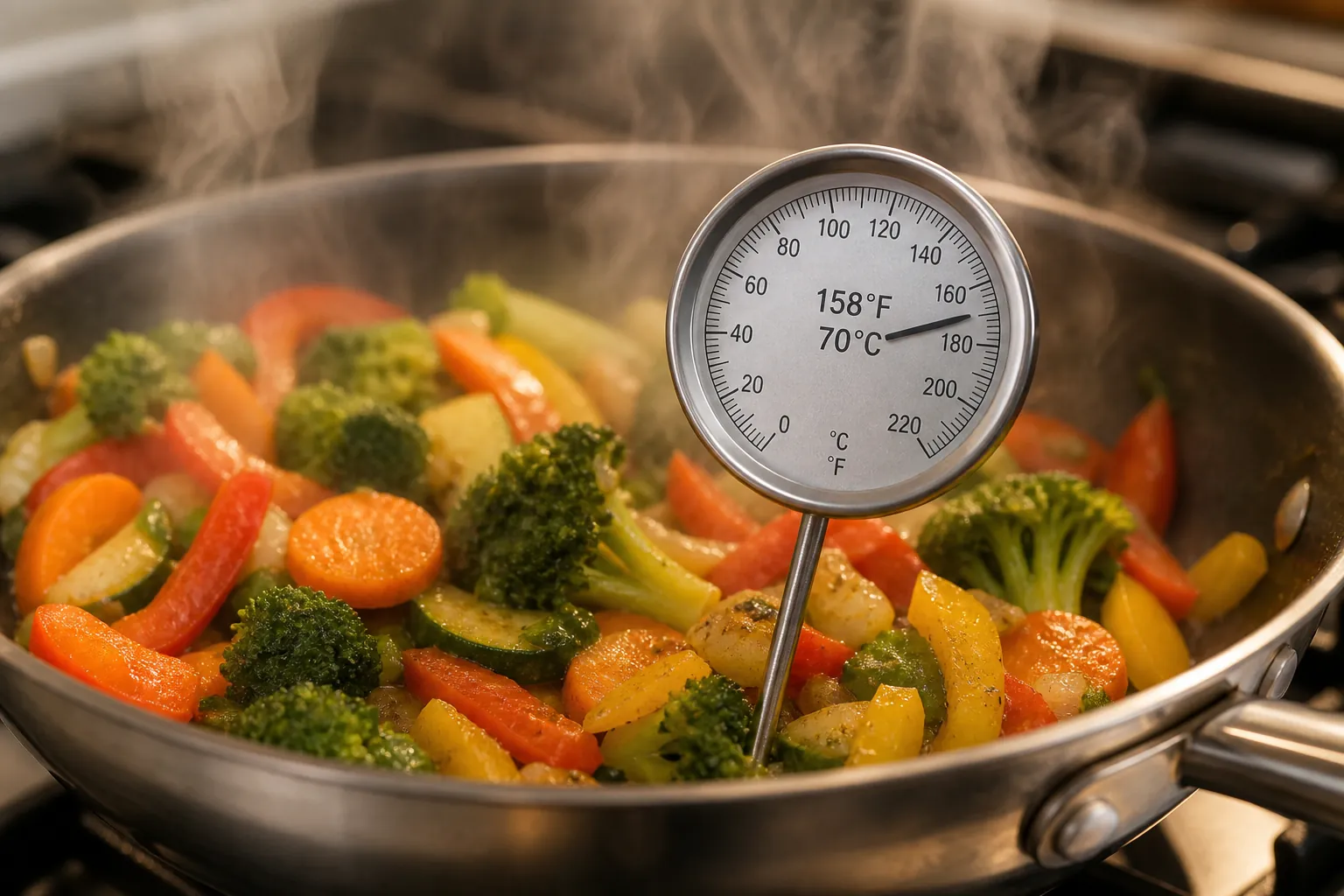
A practical plate can still look normal: scrambled eggs with canned tomatoes cooked into them, soup with vegetables, steamed broccoli, roasted carrots, canned peaches, baked potatoes, oatmeal with cooked fruit, or a sandwich with a cooked side instead of lettuce. The point is not to remove fresh food forever. It is to stop serving raw produce when the household cannot verify the source and the eater is more likely to be harmed by dehydration.
Whole-Head Lettuce Is A Lower-Concern Choice, Not A Recall Workaround
NC State Extension identifies whole-head lettuce, with outer leaves removed, as a safer option than bagged or shredded lettuce, and also points to cooked vegetables, peeled fruit, canned produce, and commercially frozen produce as safer choices.[8] That does not mean whole-head lettuce is the best choice for every older adult during an active outbreak. It means that if a household is not avoiding raw produce entirely, whole-head lettuce gives the caregiver more control than a bag of pre-cut greens.
For a healthy older adult who strongly wants salad, a caregiver may decide to use a whole head from a non-recalled source, discard the outer leaves, rinse the remaining leaves under running water with friction, and serve it promptly. For an older adult with frailty, poor fluid intake, immune compromise, recent hospitalization, or active diarrhea, cooked produce is the cleaner decision.
The Senior Risk Is Dehydration, Not Just An Upset Stomach
Cyclospora illness often means prolonged watery diarrhea. In younger adults, that may become a miserable week of bathroom trips. In older adults, the chain can move faster: diarrhea lowers fluid volume, fluid loss worsens dizziness, dizziness increases fall risk, and confusion can make it harder for the person to drink, eat, or report how long symptoms have been going on.
AARP reported that about 9% of confirmed cases were hospitalized, with a median age of 44 and an age range extending to 95.[4] Those numbers do not mean every senior who eats lettuce will become seriously ill. They do mean that a senior-specific answer is not overreacting, especially when the household can switch to cooked or canned produce for a short period.
Call a clinician promptly if an older adult has watery diarrhea with dizziness, confusion, decreased urination, dark urine, dry mouth, rapid heartbeat, inability to keep fluids down, or symptoms that are not improving. AARP and Johns Hopkins both identify dehydration warning signs as a central concern in older adults with cyclosporiasis.[4][7]
Medication Issues To Mention On The Call
Do not try to choose an antibiotic at home. The standard treatment for cyclosporiasis is trimethoprim-sulfamethoxazole, often shortened to TMP-SMX, but Dr. Luis Marcos of Stony Brook Medicine told AARP that it can interact with warfarin, sulfonylureas, and potassium-sparing diuretics.[4] Those medicines are common enough in older households that the medication list should be in hand before the doctor or nurse calls back.
- Say whether the person takes warfarin or another blood thinner.
- Say whether the person takes a diabetes medicine in the sulfonylurea class.
- Say whether the person takes a potassium-sparing diuretic or has kidney disease.
- Report dizziness, confusion, falls, low urine output, or trouble drinking fluids before discussing food history.
- Keep the suspected food package or take a clear photo of the label if it can be done without further handling.
Outbreak States And Recall States Are Not The Same
CDC’s 9-state outbreak count tells where confirmed outbreak-associated illnesses had been reported as of July 24.[1][2] FDA’s 27-state recall distribution tells where recalled product may have been sold.[3] Those are different lists serving different purposes. A caregiver in a state without confirmed cases should not ignore a recalled product in the refrigerator, and a caregiver in an outbreak state should not assume every raw vegetable is part of the confirmed recall.
Because the investigation is active, the safest way to keep the state and product details current is to check the FDA recall investigation page before serving any questionable shredded iceberg or bagged salad product.[3]
A Short Note On What Cyclospora Is
Cyclospora cayetanensis is a parasite that can contaminate fresh produce and cause cyclosporiasis. FDA describes cyclospora as a foodborne pathogen associated with fresh produce, and CDC’s prevention guidance focuses on washing, handling, and cooking practices because the parasite reaches people through contaminated food or water.[9][10]
For this household decision, the biology matters less than the safety step: rinsing can reduce risk, home-freezing does not kill it, and cooking to 158°F / 70°C is the reliable control point.[9]
Household Rule For Seniors During The Active Outbreak
Until the contaminated source is confirmed and the recall picture is stable, the safest senior strategy is to avoid raw produce unless the source is clearly safe or the food is cooked to 158°F / 70°C. That includes throwing out the recalled Marketside shredded iceberg products, pausing bagged raw salads, using cooked or canned produce freely, and calling a clinician when diarrhea comes with dehydration signs such as dizziness, confusion, dark urine, decreased urination, dry mouth, or a rapid heartbeat.
References
- HAN-00531 — CDC
- Investigation Update: Outbreak of Cyclospora Illnesses — CDC
- Investigation of 9-State Outbreak of Cyclospora Illnesses: Iceberg Lettuce, July 2026 — FDA
- Cyclospora Outbreak: What Older Adults Should Know — AARP
- Cyclosporiasis parasite: Food safety and what to avoid — CNN
- Cyclospora Outbreak 2026: What Consumers Need to Know — Consumer Reports
- Cyclosporiasis Outbreak — Johns Hopkins Medicine
- Cyclospora Outbreak: Answers to Your Most Common Questions — NC State Extension
- Preventing Cyclosporiasis — CDC
- Cyclosporiasis and Fresh Produce — FDA
Browse more in the Glossary.