
Glossary entry
Best Hairstyles for Elderly Women with Fine Hair by Daily Effort
The best hairstyles for elderly women with fine hair are not the ones that look best in a salon photo. They are the ones that still make sense on a regular morning: after a shower, before an appointment, when fingers are stiff, when the blow-dryer feels heavy, or when no one can drive to the salon for another week.
Fine hair in later life is common enough that it should not be treated like a private failure. Mayo Clinic reported that 55% of women experience noticeable hair loss by age 70, and AARP cites a 2022 Menopause study finding that 52% of postmenopausal women reported thinning hair.[1][2] The haircut matters because thinning changes what a style can hold, where the scalp shows, and how much work it takes to look “done.”
It also matters emotionally. The National Council on Aging reports that nearly 30% of women with hair loss show two signs of depression.[3] That does not mean a haircut can solve grief, illness, aging, or isolation. It does mean the conversation should be practical without becoming cold. If a daughter, son, spouse, aide, or friend is helping choose the cut, the goal is not to win an argument about maintenance. It is to find a style that gives back some ease.
| Daily effort level | Best haircut families | What the morning usually involves | Main tradeoff |
|---|---|---|---|
| Wash-and-go, under 5 minutes | Pixie, bixie, textured crop | Finger-style, pat into shape, add a small amount of light product if wanted | Needs fairly reliable trims, often around every 4-6 weeks |
| Low styling, 5-10 minutes | Layered bob, blunt chin-length bob, side-swept bob | Simple blow-dry, light volumizing product, occasional brush shaping | More daily handling than a pixie, but usually less salon urgency |
| Moderate styling, 10-15 minutes | Shoulder-length shag, soft lob | Scrunching, air-drying control, or light heat-tool work | Grows out more gracefully, but can collapse if fine hair is too sparse or heavy |
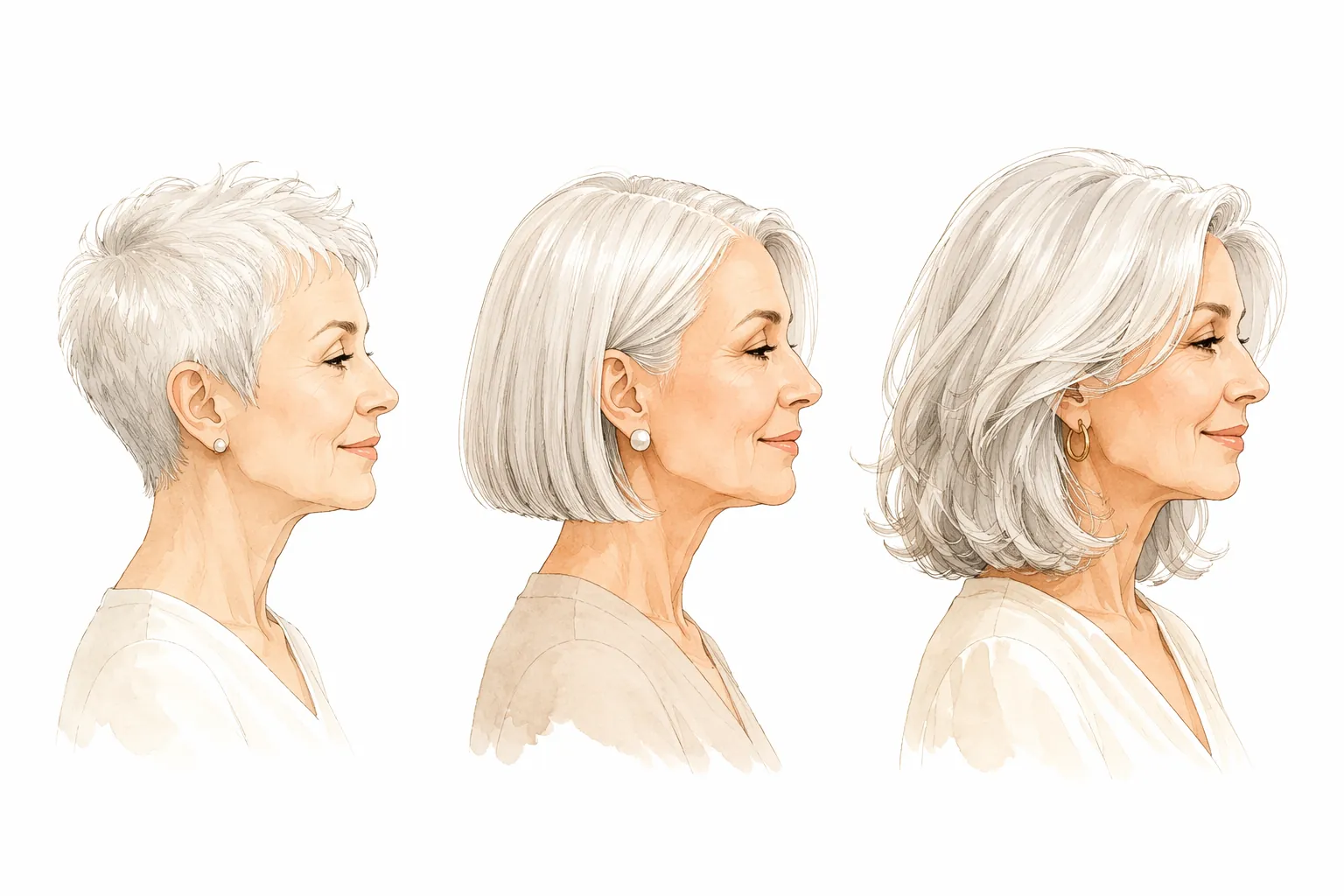
Start With Effort, Then Choose the Shape
A good cut for fine aging hair has to answer four ordinary questions before it answers whether it is stylish: How much hair is there at the crown? Can the woman lift both arms comfortably? Can she grip a brush or dryer? Can she get to the salon often enough to keep the shape from turning into a burden?
Current haircut reporting does help a little here, because the 2026 trend cycle favors softer, wearable shapes such as textured lobs, soft pixies, and bixies rather than rigid geometric cuts.[4] That is welcome news, but trend language should stay in its place. A soft pixie is useful only if it works with the woman’s hair density, hands, schedule, and patience.
Wash-and-Go Cuts: Under 5 Minutes
This is the first place to look when styling has become tiring, painful, or easy to forget. These cuts ask the least of the morning. They also put more responsibility on the haircut itself, which is why the stylist’s skill matters so much.
Pixie With Crown Layering
For very fine hair, a pixie with light crown layering often gives the strongest volume-to-effort return. Salon and beauty sources repeatedly point to short, layered pixie shapes as useful for older women with thin or fine mature hair because the shorter length reduces weight and lets the crown lift more easily.[5][6]
The daily action is simple: towel-dry, use fingers to lift the crown, smooth the sides, and stop. A pea-sized amount of lightweight mousse or styling cream may help, but the cut should not depend on a round brush. If it only looks good after a salon blowout, it is not really wash-and-go.
The catch is the trim schedule. Short pixies can lose their shape quickly, and salon guidance commonly puts pixie trims around every 4-6 weeks.[5] Treat that as a planning range, not a law. A woman whose hair grows slowly may stretch it; someone with cowlicks, thick patches, or a very precise neckline may not.
Avoid this cut if regular trims are unrealistic and an overgrown neckline would bother her. Also be cautious if she dislikes exposed ears, uses hearing aids that she prefers to cover, or feels cold around the neck. Practical does not mean she has to give up feeling like herself.
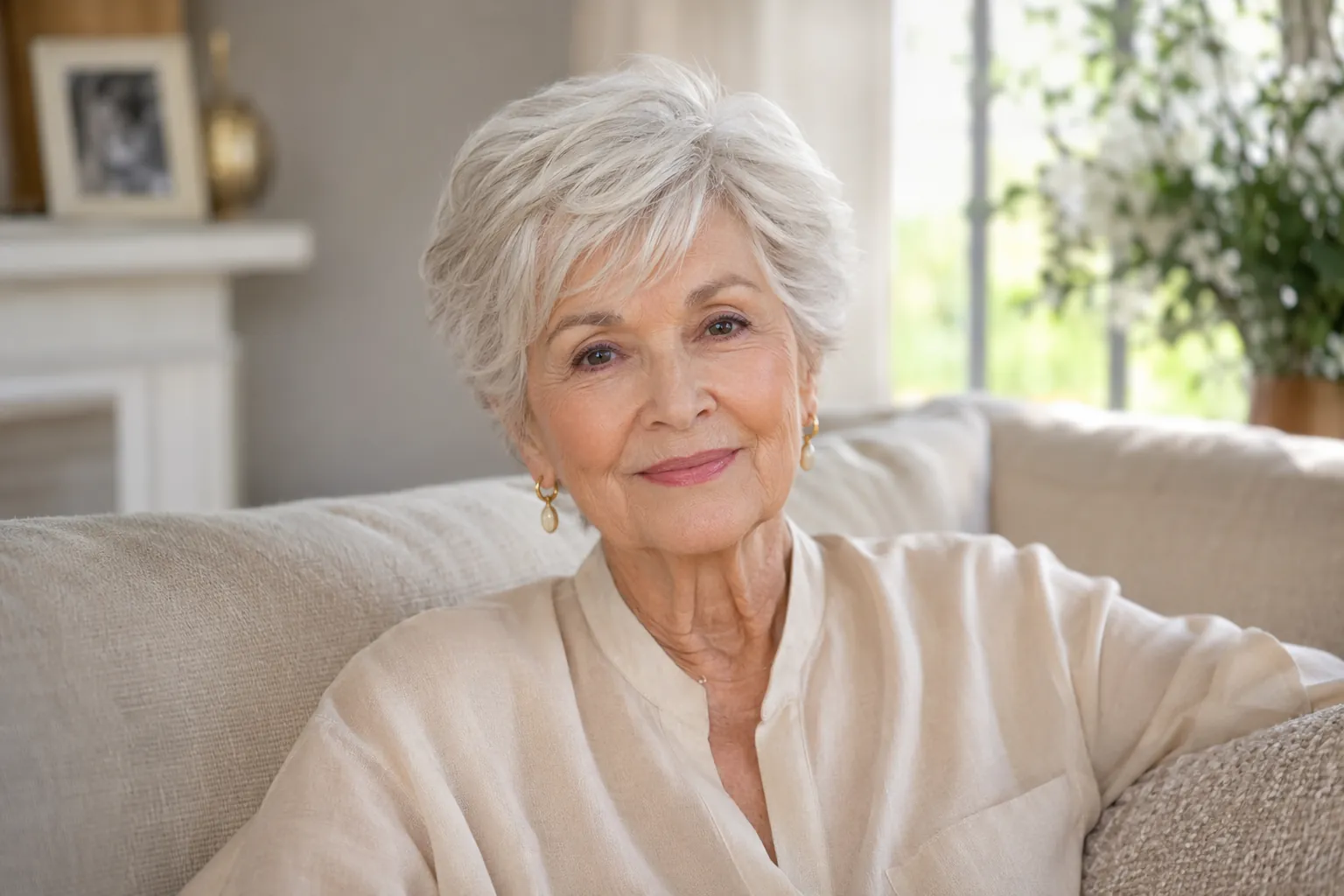
Bixie
A bixie sits between a pixie and a bob. It gives a little more softness around the face than a very short pixie, while staying short enough that fine hair is not dragged flat by length. For women who feel a pixie is too bare, this can be the gentler first step.
The useful version has texture at the crown and enough shape around the sides that it can be pushed into place with fingers. It should not require curling small pieces every morning. If the stylist shows the cut with lots of wax, a mini flat iron, or careful piece-by-piece styling, ask what it will look like after a simple wash and hand styling.
A bixie suits someone who wants low effort but not an extremely short silhouette. It may be less ideal for hair that flips unpredictably at the ears, unless the stylist cuts with those growth patterns in mind.
Textured Crop
A textured crop can be kinder than a blunt short cut on fine thinning hair because the eye reads movement instead of counting every thin spot. The best crops are soft, not spiky. They lift at the crown, break up flatness, and make silver, white, or gray hair look intentional.
This cut is especially useful when arthritis, shoulder pain, tremor, or fatigue makes tool work unreliable. It also keeps hair out of the way during washing, dressing, and medical appointments. For anyone using a walker or wheelchair, a short crop avoids the little daily annoyances of hair catching on collars, scarves, or headrests.
The wrong version is too choppy. Fine hair can look thinner if the ends are shredded heavily. Ask for softness and crown lift, not aggressive razoring unless the stylist knows the hair can support it.
Low-Styling Bobs: 5-10 Minutes
Bobs are the compromise category. They keep enough length to feel familiar and feminine to many older women, but they can still make fine hair look fuller if the ends are not over-layered. They do ask for more daily handling than a pixie. Someone usually has to smooth the front, dry the roots, or guide the shape under at the jaw.
Blunt Chin-Length Bob
A blunt chin-length bob can make fine hair appear denser because the ends line up instead of tapering away. That visual weight is the reason this cut remains useful for women whose hair is fine but not extremely sparse.
The morning routine is usually a simple blow-dry, with attention at the roots and front pieces. It may not need a polished salon finish, but it does need enough smoothing that the ends do not separate into strings. For a woman who can hold a dryer for a few minutes, this can be a dignified, neat, repeatable cut.
Avoid a blunt bob if the hair is so thin that the straight line exposes the lack of density, or if the woman cannot tolerate hair touching her jaw and neck. Also think twice if the natural texture bends in different directions and no one is willing to dry it into place.
Layered Bob
A layered bob works best when the layers are restrained. The point is to remove just enough weight to create lift, especially near the crown, without thinning out the bottom so much that the hair looks wispy. For fine hair, “more layers” is not automatically better.
This cut suits women who can manage a small amount of styling and want a softer look than a blunt bob. A light volumizing product at the roots and a quick dry can be enough if the cut is balanced. If the salon finish depends on a large round brush and careful wrist rotation, ask the stylist to show the simpler version before leaving the chair.
For caregivers, this is where the shared-labor question becomes real. If the bob looks good only when someone else blow-dries it, then that person has become part of the hairstyle. That may be perfectly fine in a household with help. It is not fine if everyone is pretending the cut is independent.
Side-Swept Bob or Bob With Side-Swept Bangs
Side-swept bangs can be useful when thinning shows most at the temples or hairline. Glam cites expert Stanley Nolan on side-swept bangs for fine hair, noting that they can conceal hairline and temple thinning while drawing attention toward the eyes and cheekbones.[7]
This is a small design choice with a large daily consequence. Bangs that are too heavy can collapse. Bangs that are too long can fall into the eyes, interfere with glasses, or become irritating during meals and reading. The best side-swept version is light enough to move, long enough to soften, and short enough not to need constant fussing.
Ask the stylist how the bangs should be dried with one hand, with no round brush, or with only a vent brush. If the answer is complicated, the bangs may become the one part of the haircut that spoils the whole morning.
Moderate-Styling Cuts: 10-15 Minutes
Longer cuts are not wrong for elderly women with fine hair. They are just more conditional. A woman who enjoys styling, has good hand strength, or has reliable help may prefer the softness of a shag or lob. These cuts can also grow out more gracefully than short crops, which matters when salon access is uncertain.
Shoulder-Length Shag
A shoulder-length shag can work when fine hair still has some natural wave or bend. Its advantage is movement: the shape does not have to be perfectly smooth, and a little irregularity can look intentional. Scrunching while damp may be enough for some women.
The risk is over-layering. Fine elderly hair can turn transparent at the ends if too much is removed. A shag should create softness around the face and crown without sacrificing every bit of density at the bottom.
This cut is a better match for someone who can tolerate hair on the neck and shoulders, does not mind using a small amount of product, and is comfortable letting the hair dry with texture rather than forcing it smooth.
Soft Lob
A lob, or long bob, can be appealing because it does not demand the same trim urgency as a pixie and can be tucked behind the ears or pulled partly back. For women who cannot get to the salon every month, that grow-out forgiveness matters.
The styling cost is higher. A lob on fine hair can hang flat unless it has a soft bend, root lift, or carefully shaped ends. Some women can get that with air-drying and product. Others need a curling iron, hot brush, or blow-dryer. That is not a moral failing; it is a tool requirement.
Avoid the lob if the woman dislikes heat tools, cannot raise her arms safely, or becomes frustrated when hair falls forward. Choose it when she wants more length and either enjoys styling or has help that is willingly part of the routine.
Two Filters Photo Galleries Usually Miss
A flattering photo can hide the two conditions that decide whether the style survives at home: dexterity and salon access.
Dexterity and Tool Tolerance
Before choosing a cut, watch the actual grooming routine. Can she lift the dryer long enough to dry the crown? Can she grip a brush? Does she use both hands easily? Does she become tired after bathing? Does standing at the mirror feel safe?
If the answer to most of those questions is no, a short textured cut is usually kinder than a bob that technically looks fuller but needs daily shaping. Grooming also overlaps with bathroom safety. Wet floors, post-shower fatigue, and reaching overhead can turn a simple hair routine into a fall-risk moment, especially after illness or a recent fall.
A helpful salon appointment includes one plain request: “Show us how this looks with the least styling possible.” That reveals more than the finished mirror photo.
Salon Access and Transportation
Short hair often reduces daily effort but increases the need for shape maintenance. Longer hair often gives more time between appointments but asks for more daily styling. Neither is automatically easier; the easier choice depends on which kind of help is more available.
For some women, the missing piece is transportation. Rittenhouse Village notes that retirement communities may offer on-site beauty services, which can reduce the strain of arranging rides and outside appointments.[8] That kind of access can make a pixie or crop more realistic than it would be for someone who depends on a family member’s work schedule for every trim.
When family caregivers are involved, write down who will schedule trims, who will drive, and who will help if styling becomes difficult. Hair decisions can become one more small item in a long list of care tasks. Naming the task is not unkind; it prevents resentment later.
A Practical Match
If daily styling is nearly impossible, start with a pixie, bixie, or textured crop. Choose crown layering, soft edges, and a shape that can be reset with fingers. The salon schedule is the tradeoff, so make sure transportation or on-site services are realistic.
If 5-10 minutes is realistic, look at the bob family. A blunt chin-length bob can give the strongest density illusion, a layered bob can add lift, and side-swept bangs can soften temple or hairline thinning. Keep the styling method simple enough to repeat on an ordinary morning.
If salon access is limited and some styling is acceptable, a shoulder-length shag or soft lob may be worth the tradeoff. These shapes can grow out more forgivingly, but they should be chosen honestly: fine hair at that length may need product, scrunching, or heat to avoid looking flat.
The right haircut is the one that protects both appearance and energy. It should make the woman in the mirror feel cared for without handing her, or the person helping her, another quiet chore.
References
- Mayo Clinic Minute: Expert advice for women with thinning hair, Mayo Clinic News Network, 2024.
- What Causes Hair Loss in Older Women?, AARP.
- Hair Loss Statistics, National Council on Aging.
- Haircuts for Fine Mature Hair, Harper’s Bazaar.
- Haircut for Older Women with Thin Hair, Numi Hair Salon.
- Short Hairstyles for Fine Mature Hair, Good Housekeeping UK.
- Fine Hairstyles for Older Women, Glam.
- 5 Low-Maintenance Hairstyles for Senior Women with Thin Hair, Rittenhouse Village.
Browse more in the Glossary.