
Clinical term
How Hallucinogens Raise Fall Risk in Older Adults
Last verified 2026-07-27
Hallucinogens can raise fall risk in older adults by causing dizziness, altered perception, confusion, cardiovascular changes, drug interactions, and, in some users, lingering visual disturbances. If you are searching for the long term risks of hallucinogen use in elderly family members, the most useful answer is not a broad warning about drugs in general. It is a more practical one: these substances can temporarily change the way a person sees, balances, judges distance, responds to blood pressure changes, and moves through a familiar home.
That matters because most home fall-prevention work looks at the house first: loose rugs, bad lighting, missing stair rails, slippery bathrooms. Those checks still matter. They just do not catch every reason a parent may suddenly misjudge a step, reach for a wall that is farther away than it looks, or stand up dizzy after seeming fine an hour earlier. A 2022 review on hallucinogen use in older adults specifically names hallucinogen-induced dizziness as a concern that may put older patients at increased risk of falls.[1]
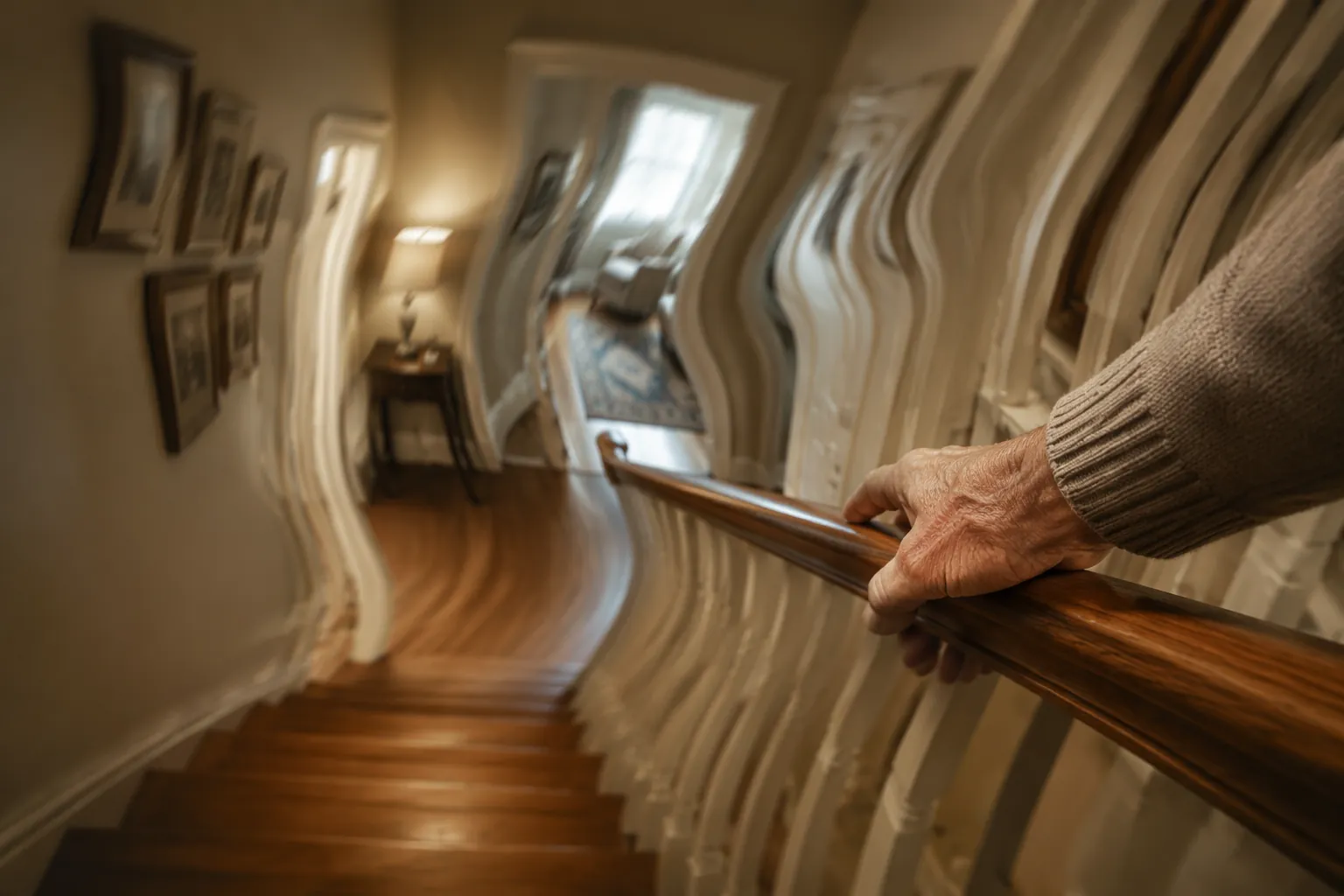
The first risk window is during active use
The most immediate fall concern is the active period after use, when dizziness, perceptual distortion, confusion, and poor coordination can overlap. A person may still be able to talk, laugh, or insist they are steady, while their body is getting less reliable information from vision, balance, and judgment. In a younger person sitting with friends, that may mean embarrassment or nausea. In an older adult walking to the bathroom at night, it can mean a hip fracture.
The available evidence does not give families a clean number, such as “hallucinogen users over 70 fall twice as often.” No geriatric fall-rate study has directly measured that. The safer reading of the evidence is narrower: hallucinogens can cause effects that are already known to make mobility unsafe, and an older adult often has less margin for error when those effects appear.
During this period, caregivers should treat the following as mobility red flags rather than just “odd behavior”:
- Dizziness, lightheadedness, or swaying when standing
- Confusion about where the bathroom, bedroom, door, or stairs are
- Reaching for furniture, walls, or railings that are not close enough to support them
- Pausing at thresholds, curbs, or stair edges as if the distance is hard to judge
- Unusual confidence about walking outside, showering, cooking, or using stairs while visibly unsteady
A familiar home can become surprisingly unforgiving when perception changes. The low bathroom threshold that was harmless yesterday may be missed. A patterned rug may look like a dip in the floor. Reflections on tile can make wet areas harder to read. Dim stair lighting that was merely inconvenient can become a real hazard when depth perception is already unreliable.
Blood pressure and heart-rate changes can make the fall sudden
Some psychedelic substances can increase blood pressure and heart rate. Redden and colleagues note cardiovascular effects as a relevant concern for older adults, while also pointing out that small clinical trials, largely involving younger participants, have not documented cardiac events.[1] Both parts of that statement matter. The absence of cardiac events in small, younger trial groups should not be stretched into reassurance for every older adult at home.
From a fall-prevention point of view, the concern is not only long-term cardiovascular disease. It is the moment someone stands, walks, climbs stairs, or gets into the shower while lightheaded, faint, or briefly losing consciousness. Syncope or loss of consciousness can turn an ordinary trip to the kitchen into a sudden, unprotected fall.
This is where a caregiver’s observation can be more useful than a lecture. If an older adult seems flushed, shaky, unusually anxious, faint, or short of breath after suspected use, the immediate safety question is simple: should this person be walking alone right now? If there is chest pain, loss of consciousness, seizure-like activity, serious confusion, or a fall with possible injury, treat it as urgent and seek emergency medical help.
The medication list is where families can actually intervene
Medication interactions are one of the most practical places to look because they can be reviewed before a crisis. Many older adults already take prescriptions that affect alertness, blood pressure, mood, sleep, coordination, or seizure threshold. Adding a hallucinogen may change more than the “trip.” It may change the safety of standing, walking, bathing, or navigating stairs.
A systematic review of drug-drug interactions involving classic psychedelics included 52 studies and flagged several combinations that matter for safety planning.[2] The strongest caregiver takeaway is not to memorize every possible interaction. It is to make sure hallucinogen use is included in the same medication review as prescriptions, over-the-counter sleep aids, cannabis, alcohol, supplements, and any products described as “plant medicine” or “microdosing.”
| Medication or drug class to ask about | Why it matters for fall planning |
|---|---|
| Lithium | Lithium taken with classic psychedelics has been associated with seizures in analyses of online experience reports; seizure or collapse can obviously create injury risk.[2][3] |
| Older antihypertensives such as reserpine | The interaction review reported that reserpine intensified negative LSD effects, including tremors and confusion, which can make safe mobility harder.[2] |
| SSRIs and other antidepressants | These may change psychedelic effects and can be part of a broader dizziness, sedation, or confusion picture that deserves clinician or pharmacist review.[2] |
| Antipsychotics and sedating psychiatric medications | Sedation, slowed reaction time, and altered mental status can compound an already risky mobility situation.[2] |
| Any medication that lowers blood pressure or causes dizziness | Even without a named psychedelic interaction, stacking dizziness with altered perception can make standing and walking less safe. |
The lithium finding deserves careful wording. It is not a controlled trial proving that every person on lithium who uses a psychedelic will have a seizure. The cited evidence comes from user experience reports and case-type analyses, which are weaker than randomized clinical data. Still, for a caregiver trying to prevent a fall, “possible seizure or collapse risk” is enough reason to involve a prescriber before use rather than after an ambulance call.[3]
The conversation does not need to sound accusatory. A useful script is: “I’m updating the fall-risk and medication list. Are there any substances, mushrooms, psychedelic products, cannabis, sleep aids, or supplements we should include so the pharmacist can check for interactions?” That phrasing respects privacy better than “Are you doing drugs?” and it is more likely to produce information the clinician can use.
Lingering visual changes can turn stairs and thresholds into hazards
Not every fall-related concern ends when the acute effects fade. Hallucinogen Persisting Perception Disorder, or HPPD, refers to recurring visual disturbances after hallucinogen use. American Addiction Centers describes effects such as flashing lights, halos, and trailing images, and cites an estimated occurrence of about 4% among chronic users.[4]
That figure should not be treated as a geriatric statistic. It does not tell us how common HPPD is in older adults, how often it leads to falls, or which older users are most vulnerable. The home-safety implication is still worth taking seriously because the symptoms line up with situations that already challenge aging eyes and balance: stairs, curbs, uneven sidewalks, bathroom floors, shiny tile, nighttime hallways, and door thresholds.
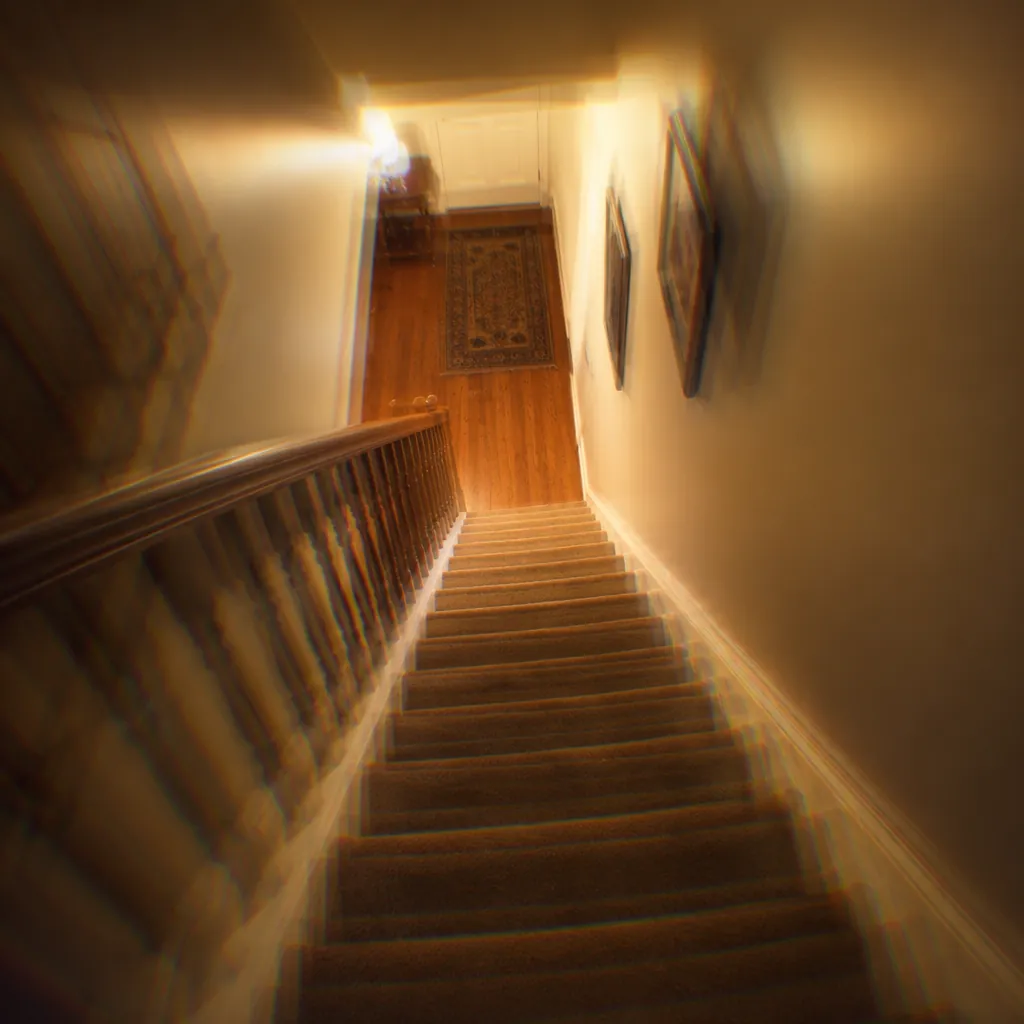
A person who sees trails around stair edges may hesitate, overstep, or place a foot partly on the tread. Halos around lights can make glare worse. Flashing or shifting visual effects can make a bathroom floor look less stable than it is, or hide the edge of a curb. If an older adult reports “seeing things move,” “trails,” “sparkles,” “halos,” or “the floor looking strange,” it belongs in the fall-risk conversation, not only in a mental-health conversation.
Therapeutic use and unsupervised use are not the same safety situation
The safety question is complicated by serious research interest in psychedelics. Recent reporting has discussed possible cognitive and aging-brain benefits, and observational findings have been interpreted as promising enough to study further.[5] That does not settle whether psychedelics are beneficial, harmful, or appropriate for a particular older adult. It also does not answer the narrower question families face at home: is this person safe to walk, shower, cook, or use stairs while affected?
A medically supervised therapeutic setting has screening, preparation, monitoring, and staff who can respond to symptoms. Unsupervised or high-dose recreational use in a home does not offer the same protections. Even when an older adult has made an informed, autonomous choice, the home environment still has to be managed around temporary changes in perception, judgment, blood pressure, and coordination.
What to add to a fall-prevention plan
If hallucinogen use may be involved, add it to the same practical planning you would use for dizziness, new medications, alcohol use, vision changes, or post-hospital weakness. The goal is not to police every private choice. The goal is to prevent a preventable fall while someone is temporarily less steady or less able to judge their surroundings.
- Add hallucinogens and related products to the medication and substance list. Include prescriptions, over-the-counter drugs, supplements, cannabis, alcohol, sleep aids, and any psychedelic products the person is willing to name.
- Ask a clinician or pharmacist to review interactions. This is especially important if the older adult takes lithium, blood-pressure medications, antidepressants, antipsychotics, sedatives, or any drug that has caused dizziness in the past.
- Watch for dizziness, confusion, fainting, unusual behavior, visual changes, tremors, or new unsteadiness. These symptoms should change the mobility plan immediately.
- Avoid higher-risk activities during and after use when symptoms are present. That includes stairs, bathing, night walking, cooking over heat, going outside alone, driving, and carrying laundry or objects that block the view of the floor.
- Adjust the environment around perception problems. Improve lighting, reduce glare, clear thresholds, keep stair edges visible, use handrails, add non-slip bathroom surfaces, and keep pathways simple.
- Plan supervision without turning it into a power struggle. If someone is dizzy or visually disoriented, having another person nearby for bathroom trips or stair use may be the difference between a strange evening and a serious injury.
One detail I would not leave to memory: write the plan down. If a parent becomes confused, the adult child who knows the medication list may not be the person present. A short note in the care binder or shared health document can say what symptoms to watch for, which medications require extra review, when to call a clinician, and which parts of the home are off-limits without help when dizziness or visual changes appear.
Last verified and medical-safety note
Last verified: July 27, 2026. This CareWise Guide article is for general education and home-safety planning. It is not medical advice, diagnosis, treatment, or dosing guidance. For questions about hallucinogen use, medication interactions, fainting, seizures, blood-pressure symptoms, or new visual disturbances in an older adult, consult a qualified clinician or pharmacist.
References
- Hallucinogen Use and Misuse in Older Adults — PubMed — 2022 — https://pubmed.ncbi.nlm.nih.gov/34794703/
- Drug-drug interactions involving classic psychedelics: A systematic review — PMC — 2023 — https://pmc.ncbi.nlm.nih.gov/articles/PMC10851641/
- Classic Psychedelic Coadministration with Lithium, but Not Lamotrigine, is Associated with Seizures: An Analysis of Online Psychedelic Experience Reports — PubMed — 2021 — https://pubmed.ncbi.nlm.nih.gov/34348413/
- Psychedelic Drug Effects, Side Effects & Dangers — American Addiction Centers — https://americanaddictioncenters.org/psychedelics
- Tripping into old age: can psychedelics protect the aging brain — Berkeley News — June 8, 2026 — https://news.berkeley.edu/2026/06/08/tripping-into-old-age-can-psychedelics-protect-the-aging-brain/
Browse more in the Glossary.