
Clinical term
The Simple Meal Order to Prevent Blood Sugar Spikes in Seniors
Last verified 2026-07-30
At your parent’s next dinner, the simplest version is this: ask them to eat the vegetables first, then the protein and healthy fats, and save the rice, potatoes, bread, pasta, fruit, or dessert for last.
The food on the plate does not have to change for this to work. In a small Weill Cornell crossover study of adults with metformin-treated type 2 diabetes, eating vegetables and protein before carbohydrates reduced post-meal glucose by 28.6% at 30 minutes and 36.7% at 60 minutes compared with eating carbohydrates first.[1] That is the kind of number that gets attention. The useful part at home is quieter: the same dinner can be eaten in a different order, without announcing a new diet.
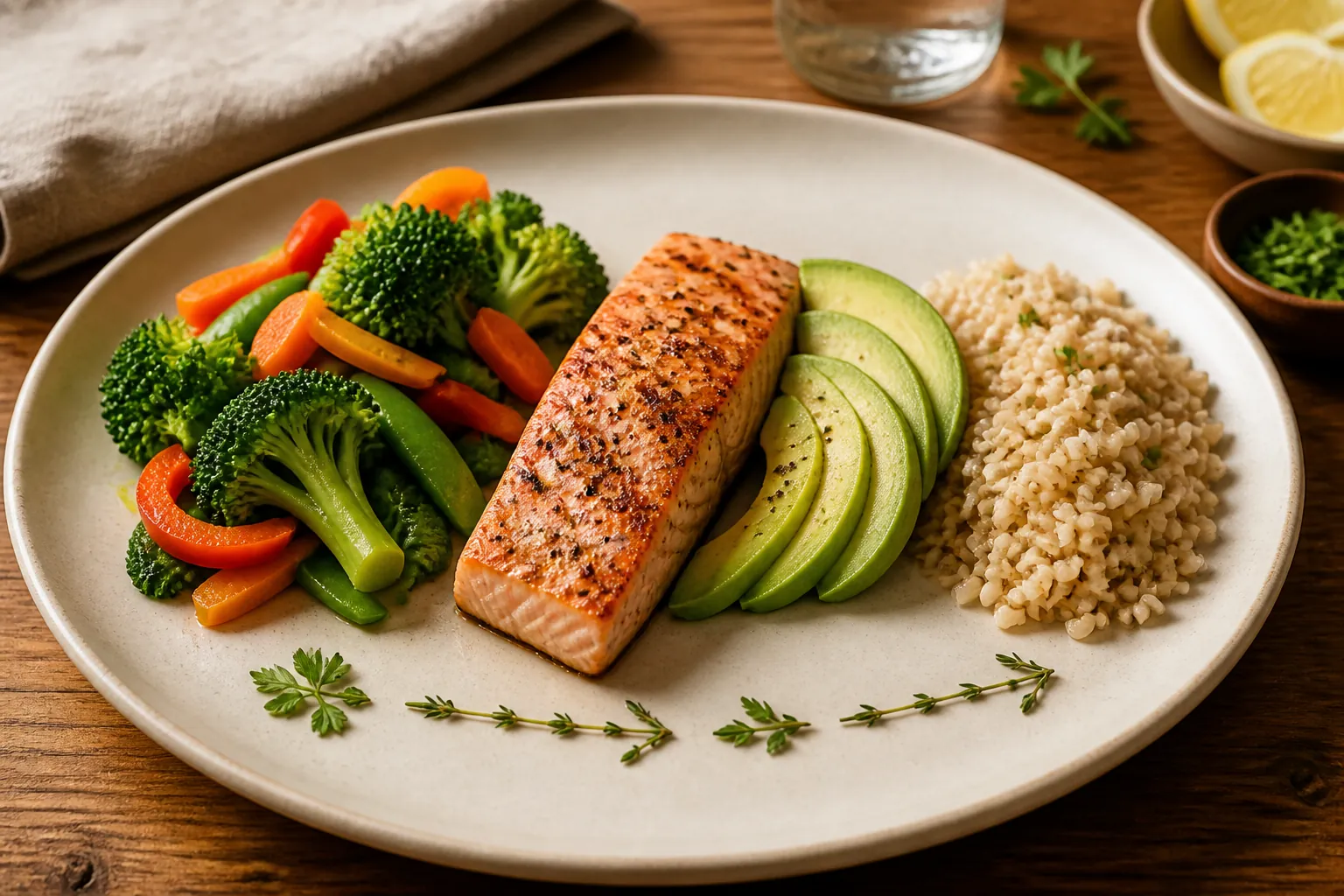
The Meal Order To Use Tonight
Use this sequence when the plate already has a mix of vegetables, protein, fat, and carbohydrate:
- Vegetables first: especially non-starchy vegetables such as salad greens, broccoli, green beans, cabbage, zucchini, peppers, cucumbers, mushrooms, asparagus, or cauliflower.
- Protein and healthy fats second: fish, chicken, turkey, eggs, tofu, beans, lentils, Greek yogurt, cheese, nuts, avocado, or olive oil-based dressings.
- Carbohydrates last: rice, noodles, pasta, bread, tortillas, potatoes, corn, peas, cereal, fruit, sweetened drinks, and dessert.
For a parent who dislikes being corrected, the wording matters. “Eat your broccoli first” can sound like an order. “Let’s start with the greens while they’re warm” often lands better. The goal is not to make dinner feel medical. It is to make the first few bites do more work.
If the meal is meatloaf, mashed potatoes, and green beans, the sequence is easy: green beans, then meatloaf, then mashed potatoes. If it is salmon, salad, and brown rice, start with the salad, eat the salmon next, and leave most of the rice until after that. If breakfast is eggs, berries, and toast, the eggs can come before the toast, while the fruit is best treated as part of the carbohydrate portion unless it is being used as the first fiber-rich food in a meal-sequence plan.
| Food on the plate | Where it usually fits |
|---|---|
| Leafy salad, broccoli, green beans, peppers, zucchini, mushrooms | First |
| Fish, chicken, turkey, eggs, tofu, cheese, plain Greek yogurt | Second |
| Avocado, nuts, olive oil dressing | Second, with protein or vegetables |
| Rice, pasta, noodles, bread, tortillas, potatoes | Last |
| Fruit, juice, dessert | Last, unless the clinician has given different instructions |
| Beans or lentils | Usually second because they provide protein and fiber, though they also contain carbohydrate |
How To Handle Real Meals That Do Not Stay In Neat Piles
Caregivers rarely serve textbook plates. Soup, casseroles, sandwiches, grain bowls, and leftovers are where meal sequencing either becomes usable or gets abandoned.
Casseroles and One-Pan Meals
If dinner is a casserole with pasta, vegetables, and chicken baked together, do not try to separate every bite. Add a small vegetable starter if you can: a side salad, cucumber slices, steamed green beans, or leftover roasted vegetables. Then serve the casserole. The sequence is not perfect, but the first bites still shift away from starch.
If adding a side dish is unrealistic, encourage the parent to take the vegetable- and protein-heavy bites first and leave the obvious pasta, rice, or potato-heavy bites for later. This is a practical adaptation, not a lab protocol.
Soups and Stews
For vegetable soup with beans or chicken, let it be the starter. For noodle soup, rice soup, or potato-heavy stew, offer a few bites of non-starchy vegetables or protein first if that is easy: a boiled egg, a piece of fish, some tofu, or a small salad. If swallowing, chewing, or appetite is already a concern, do not add extra food just to satisfy the order. Safety and enough intake come first.
Sandwiches, Toast, and Breakfast Plates
A sandwich is bread wrapped around protein, so sequencing is harder. One workable version is to serve the filling with a few vegetables first, then the bread. For example, a parent might eat some turkey and tomato from the plate before picking up the sandwich. At breakfast, eggs or plain yogurt can come before toast, cereal, pancakes, or sweetened coffee.
Grain Bowls and Rice-Based Meals
With a rice bowl, start from the top: vegetables first, then tofu, fish, chicken, egg, beans, avocado, or nuts, then rice. If everything is stirred together, make the first serving smaller and vegetable-heavy, then let the rest of the bowl follow. The point is to delay the largest starch load, not to turn dinner into sorting practice.
Why The Order Can Flatten The Spike
After a carbohydrate-heavy food is eaten, glucose from that food enters the bloodstream. In type 2 diabetes, the body may not move that glucose out of the blood quickly enough, so the rise after a meal can be sharp. Meal sequencing changes what reaches the stomach and small intestine first.
Vegetables bring fiber, and fiber-rich foods can slow how quickly glucose is absorbed. Protein and fat work through a different pathway: they can increase GLP-1 secretion, slow gastric emptying, and support a stronger insulin response before the carbohydrate arrives. A 2020 review described these mechanisms as complementary, with fiber slowing absorption and protein or fat before carbohydrate delaying gastric emptying through incretin-related effects.[2]
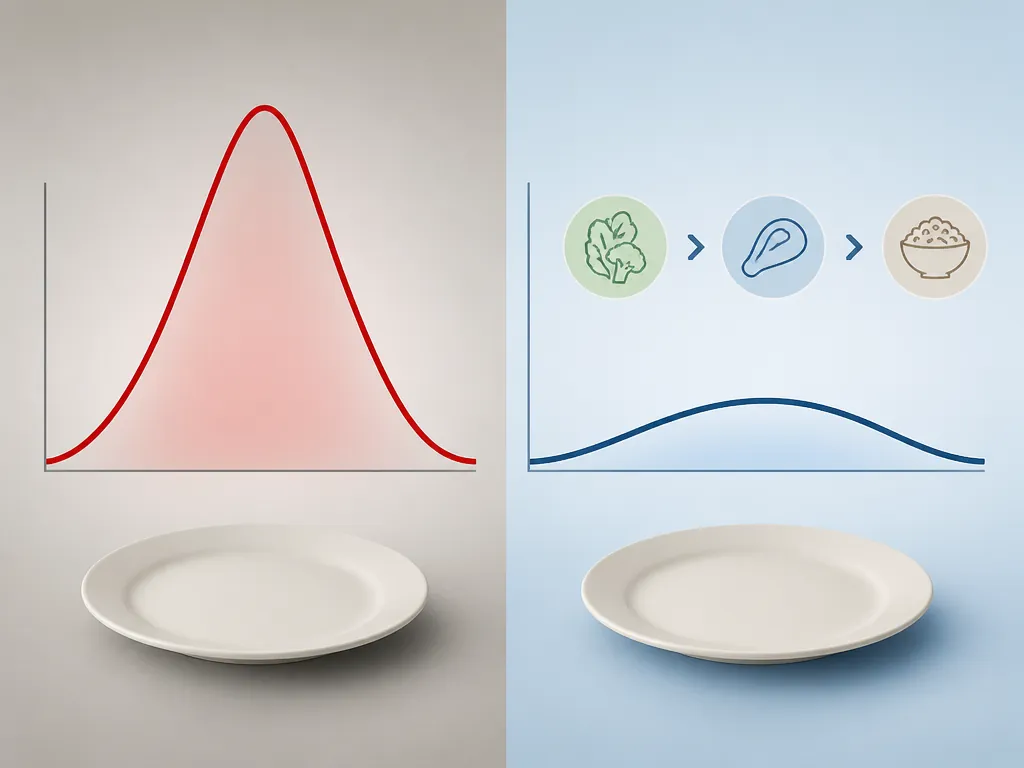
That is why the order matters even when the ingredients are unchanged. The carbohydrate is still eaten. It simply arrives after the gut has already received fiber, protein, and fat.
What The Main Study Actually Found
The clearest concrete numbers come from a small crossover study published in Diabetes Care in 2015. Researchers studied 11 adults with type 2 diabetes who were being treated with metformin. On one visit, participants ate carbohydrates first, then protein and vegetables 15 minutes later. On another visit, they ate protein and vegetables first, then carbohydrates 15 minutes later. The meal contained the same foods in both conditions.[1]
When vegetables and protein came first, post-meal glucose was 28.6% lower at 30 minutes and 36.7% lower at 60 minutes. The total glucose exposure over 2 hours, measured as incremental area under the curve, was 73% lower: 2,001 mg/dL × min compared with 7,545 mg/dL × min when carbohydrate was eaten first.[1]
That result is promising, but it should be read with its size in mind. Eleven people is a pilot study, not a final answer for every older adult with diabetes. It shows a strong short-term post-meal effect under controlled conditions. It does not prove that every family dinner will produce the same percentage drop, and it does not replace individualized diabetes care.
The Evidence Is Broader Than One Clever Experiment
The meal-order idea has been studied beyond that pilot. The 2020 review in Nutrients summarized recent findings on meal sequence and described how preloading fiber, protein, or fat before carbohydrate can reduce post-meal glucose through different physiological mechanisms.[2]
A 2026 systematic review looked at 6 studies with 107 participants and found that consuming vegetables, fruits, or protein before carbohydrates consistently reduced postprandial glucose across varied meal compositions.[3] That wider view is useful because it makes meal sequencing look less like a one-time trick. It is still mostly evidence about post-meal glucose responses, not a guarantee of long-term diabetes outcomes for every older adult.
Some of the research has been conducted in East Asian populations and with rice-based meals, so the exact size of the effect may differ with Western-style plates. That does not make the idea irrelevant to bread, pasta, potatoes, or cereal. It does mean caregivers should treat the 29–37% reduction as a supported short-term study finding, not a promised result at every meal.
Where This Fits With Medication And Safety
Meal sequencing complements diabetes medication. It does not replace metformin, insulin, GLP-1 medicines, sulfonylureas, meal plans, glucose monitoring, or any instructions from the parent’s clinician. If your parent uses insulin or medications that can cause low blood sugar, changing meal patterns should be discussed with the care team, especially if you are also seeing lower readings.
The caregiver version of this is simple: do not delay the whole meal so long that your parent gets shaky, irritable, or too tired to finish eating. The studies often use timed intervals, but at home the order matters more than performing a 15-minute pause. A few minutes of vegetables and protein first is more realistic than turning dinner into a test.
Be more cautious if your parent has swallowing difficulties, poor appetite, unintended weight loss, advanced cognitive decline, denture problems, kidney-related dietary restrictions, or specific instructions about carbohydrate timing. In those situations, the safest version may be very small: one or two vegetable bites first, then the familiar meal. If that creates resistance or reduces intake, stop and ask the clinician or dietitian how to adapt it.
Post-meal dizziness or unsteadiness also deserves attention beyond food order. If a parent feels lightheaded after meals, stands too quickly, or seems less steady later in the day, it is worth pairing glucose conversations with broader attention to nutrition, hydration, and balance. Caregivers watching those connections may find related guidance in cognitive benefits of nutrition for older adults, though symptoms should be discussed with a clinician rather than managed by food order alone.
How To Make It Acceptable To An Older Parent
The best diabetes advice on paper can fail at the table if it embarrasses the person eating. Meal sequencing has one advantage here: it can be framed as serving order, not restriction.
- Serve the vegetables first while finishing the rest of the plate.
- Put the starch slightly farther away and the vegetables closer.
- Use ordinary language: “Start with the salad,” not “We’re controlling your glucose curve.”
- Avoid arguing over the last bites of bread or rice if the first half of the meal went well.
- Repeat the same small routine for a few meals before deciding whether it is workable.
For caregivers comparing this with more restrictive eating plans, meal sequencing sits in a different lane. It does not ask an older adult to give up carbohydrates across the board. If you are weighing more intensive carbohydrate restriction, it may help to read about low-carb diets and cholesterol in older adults as a separate question.
It can also be one manageable domain to start with when a parent is resisting larger changes. Families often struggle when they try to adjust transportation, medication routines, finances, food, and home safety all at once. Starting with one dinner habit is less overwhelming than trying to renegotiate everything. For that broader kind of family decision-making, see signs an elderly parent may need to step back from responsibilities.
A Simple Script For The Next Meal
If you want to try meal order to prevent blood sugar spikes in an elderly parent with diabetes, keep the first attempt ordinary:
- Plate the meal as usual.
- Serve or point to the vegetables first.
- Encourage protein next.
- Leave rice, bread, potatoes, pasta, fruit, or dessert for the end.
- Watch whether your parent accepts the routine without eating less or becoming upset.
If your parent tracks post-meal glucose, bring patterns to the clinician rather than changing medication on your own. If they do not track readings, the first measure is still useful: did this make dinner easier, harder, calmer, or more contentious?
Meal sequencing is not a cure and not a full diabetes plan. It is a credible, low-burden adjustment that can be tried with the foods already being served: vegetables first, protein and healthy fats second, carbohydrates last.
References
- Food Order Has a Significant Impact on Postprandial Glucose and Insulin Levels, Diabetes Care, 2015.
- A Review of Recent Findings on Meal Sequence, Nutrients, 2020.
- Effects of meal sequence intervention on blood glucose response, Clinical Nutrition Research, 2026.
Browse more in the Glossary.