
Clinical term
Measles Outbreak Precautions for Elderly Adults and Caregivers
Last verified 2026-07-16
If you are asking whether you or an older parent needs to do something today, the answer is usually: check immunity first, then act only as needed. Measles is serious enough for older adults that it should not be waved off as a childhood disease. But measles outbreak precautions for elderly adults should start with birth year and vaccine history, not with a family-wide panic.
The 2026 outbreak is large enough to make that check worth doing. As of July 16, 2026, CDC data showed more than 2,260 measles cases across 44 jurisdictions, the highest national count since the 1990s; roughly one-third of cases were in adults, and 93% of cases were in people who were unvaccinated or whose vaccination status was unknown. Those numbers are a snapshot, and the CDC updates its measles data weekly, but they explain why old vaccine records have suddenly become practical documents instead of attic clutter. [1]
For older adults, the concern is not simply catching a rash illness. CDC and AARP guidance both warn that measles can lead to serious complications in adults, including pneumonia, hepatitis, and encephalitis; CDC notes that about 1 in 5 unvaccinated people with measles is hospitalized. [2][3]

Start with the birth-year question
The awkward truth is that older adults are not all in the same measles-risk bucket. A 78-year-old, a 66-year-old, and a 60-year-old may all be called “older adults” in a health article, but their measles protection can come from different eras: natural infection, early vaccine programs, a one-dose childhood schedule, or no reliable record at all.
| Birth year or situation | What it usually means | What to do now |
|---|---|---|
| Born before 1957 | Generally presumed to have natural immunity because measles was so widespread before routine vaccination. [4] | Usually no new MMR dose is needed unless a clinician, employer, travel plan, or local health department gives a specific reason to document or update immunity. |
| Born 1957–1967 | Needs special attention. Some people in this cohort may have received an inactivated, or killed, measles vaccine used in the 1960s, which is no longer considered effective protection. People vaccinated before 1968 with inactivated measles vaccine or a measles vaccine of unknown type should be revaccinated with live MMR when medically appropriate. [4][5] | Look for records, but do not rely only on “I got something as a kid.” If the record says inactivated measles vaccine, killed vaccine, or is unclear, call the clinician or pharmacy about live MMR—unless there is a live-vaccine contraindication. |
| Born 1968–1989 | May have received only one documented measles-containing vaccine dose, depending on age, records, school requirements, and risk category. [5] | Find the vaccine record if possible. If there is only one dose, ask whether a second dose is recommended based on exposure risk, travel, local outbreak guidance, work setting, or household risk. |
| No records, uncertain memory, or conflicting family stories | A memory of “getting shots” is not the same as documented immunity, especially for people near the 1957–1967 boundary. | If MMR is medically appropriate, CDC says there is no medical harm in receiving an additional MMR dose even if the person is already immune. [4] |
| Immunocompromised older adult | Live MMR may not be safe for some people with significant immune suppression. | Do not self-schedule MMR without medical guidance. Call the treating clinician, oncology/transplant/rheumatology team, or primary care office for individualized instructions. |
The 1957 line can feel oddly exact, but it is useful. People born before 1957 lived through a period when measles infection was common enough that natural immunity is generally presumed. That does not mean every older adult born before 1957 has a handy proof document, and it does not mean every institution will waive documentation in every circumstance. It does mean that a healthy 82-year-old with no exposure and no special work or travel requirement is in a different decision category than a 63-year-old with no vaccine card.
The 1957–1967 group deserves the most careful phone call. If someone remembers a measles shot from the mid-1960s, that memory may be real and still not be enough. The old inactivated measles vaccine is the problem. If the record shows that vaccine, or if the type is unknown and the dose was before 1968, CDC guidance points toward revaccination with live attenuated measles vaccine for people who can safely receive it. [4]
For many families, the cleanest answer is not a blood test hunt, a school-record chase, and three days of voicemail. When the person can safely receive MMR, an additional dose is often the practical way out of uncertainty because the CDC states plainly that an extra MMR dose is not medically harmful for someone who is already immune. [4]
What counts as strong protection
Two doses of MMR are considered 97% effective against measles, and one dose is considered 93% effective. CDC also states that people who respond adequately to measles vaccination are protected long term. [6]
That difference between one dose and two doses matters most when exposure risk rises: local transmission, travel, a household contact who works in a school or healthcare setting, or a known exposure notice from a clinic, church, senior center, airport, restaurant, or public event. It may matter less for a person born before 1957 with no special exposure risk and no reason to prove immunity. The point is to classify the person correctly before adding errands.
If you are the adult child making calls, ask for one of three answers, not a vague “check immunity”: Does the record show two MMR doses? Does the birth year create presumed immunity? Or is this an uncertain-status person who should receive MMR if medically eligible? That phrasing usually gets a more useful response from a pharmacy, primary care office, or health department.
Layer precautions while you sort the record
Measles spreads through the air, and the virus can remain in the air for up to two hours after an infected person leaves a space. [7] That one fact changes the daily calculation during active local transmission. A quick stop in a crowded waiting room or a busy indoor event is not the same risk for an immune person as it is for someone whose status is unknown.
- Check your local or state health department’s measles page before large indoor gatherings, clinic visits, religious services, senior-center events, or travel through busy hubs. State and local guidance can change faster than national summaries.
- Confirm the household’s MMR status, not only the older adult’s. Grandchildren, paid caregivers, adult children, and visiting relatives can be part of the protection layer.
- If an older adult is immunocompetent and has uncertain records, call the pharmacy or primary care office about MMR before there is an exposure notice. It is easier to solve this on a calm Tuesday than inside a 72-hour clock.
- If an older adult is immunocompromised, do not treat “get another MMR” as the default. Ask the specialist or primary care clinician what documentation, avoidance steps, and post-exposure plan should be in place.
- Call ahead before bringing someone with possible measles symptoms into a clinic, urgent care, pharmacy, or emergency department. A waiting room can become an exposure site.
This is the same kind of caregiver triage used in other health alerts: reduce unnecessary exposure, get the right office on the phone, and avoid turning a preventable risk into a bigger event. CareWise readers who have handled air quality alerts may recognize the same pattern of protective actions for a parent during a health threat: the safest step is often the one taken before the crisis becomes personal.
If there may have been exposure, switch from “sometime soon” to hours
A possible exposure is not the moment to begin a long family debate about whether Dad’s childhood doctor was thorough. The useful question becomes: when did the exposure happen, does the person have evidence of immunity, and can they receive MMR?
| Time after exposure | Why it matters | Who to contact |
|---|---|---|
| Immediately | Identify whether the person was in the same room, building area, clinic, event, or other shared airspace during the exposure window. Measles can linger in the air for up to two hours after an infected person leaves. [7] | Call the local health department or the clinician named in the exposure notice. If symptoms are present, call before arriving anywhere in person. |
| Within 72 hours | MMR given within 72 hours of measles exposure may provide protection or make illness milder. [8] | For an immunocompetent older adult without evidence of immunity, ask the clinician, pharmacy, or health department whether MMR should be given now. |
| Within 6 days | Immune globulin can be used within 6 days of exposure for certain high-risk people, including those who cannot receive MMR. [8] | For immunocompromised older adults, do not wait for symptoms. Call the treating specialist or health department promptly. |
| For 21 days after exposure | Unvaccinated exposed people may be asked to quarantine for 21 days. During a 2025 South Carolina outbreak, about 400 people were under quarantine, while people who had completed their MMR series did not need to quarantine. [9] | Follow the health department’s quarantine instructions. Ask what activities, appointments, visitors, and caregiving arrangements must change. |
Possible exposure, no symptoms
If there are no symptoms, do not assume there is nothing to do. Find the exposure date and time, look for MMR documentation, and call the health department or clinician named in the notice. The first 72 hours matter for MMR. The first 6 days matter for immune globulin. After that, quarantine or monitoring instructions may still apply, especially for people without evidence of immunity.
Symptoms or known close contact
If an older adult has fever, rash, or symptoms that a clinician or exposure notice says could fit measles, call before going to the doctor’s office, urgent care, pharmacy, or emergency department. The goal is not to delay care. It is to let the facility route the person safely so other patients are not exposed.
For a caregiver, this is a familiar kind of decision: not “do we care?” but “which door do we use first?” If breathing trouble, severe confusion, dehydration, or another emergency is present, emergency care may be needed, but the facility still needs advance warning about possible measles exposure whenever possible.
Who should be called today
The right call depends on the problem in front of you. A pharmacy may be enough for a healthy older adult with no records who likely needs MMR. A primary care office may be better when medication lists, immune status, cancer treatment, transplant history, or steroid use could change the answer. The health department is the right call when there is an exposure notice, quarantine question, local outbreak instruction, or no clear clinician to coordinate the response.
- Call a pharmacy if the older adult is generally healthy, has no MMR contraindication you know of, and needs help obtaining a routine MMR dose because records are missing or incomplete.
- Call the primary care office if the birth-year category is unclear, records conflict, the person has chronic illness, or you are unsure whether live vaccine is appropriate.
- Call the treating specialist first if the person is immunocompromised or receives treatments that affect the immune system.
- Call the local health department if there was a known exposure, a quarantine instruction, or a question about local outbreak restrictions.
- Call ahead to any facility before arriving in person if measles symptoms are possible.
If you are managing this for a parent from another household, write down four facts before you call: birth year, any measles or MMR record, immune-compromising conditions or medicines, and the exposure date if there was one. Those four details usually decide whether the next step is reassurance, MMR, immune globulin, quarantine, or urgent clinical evaluation.
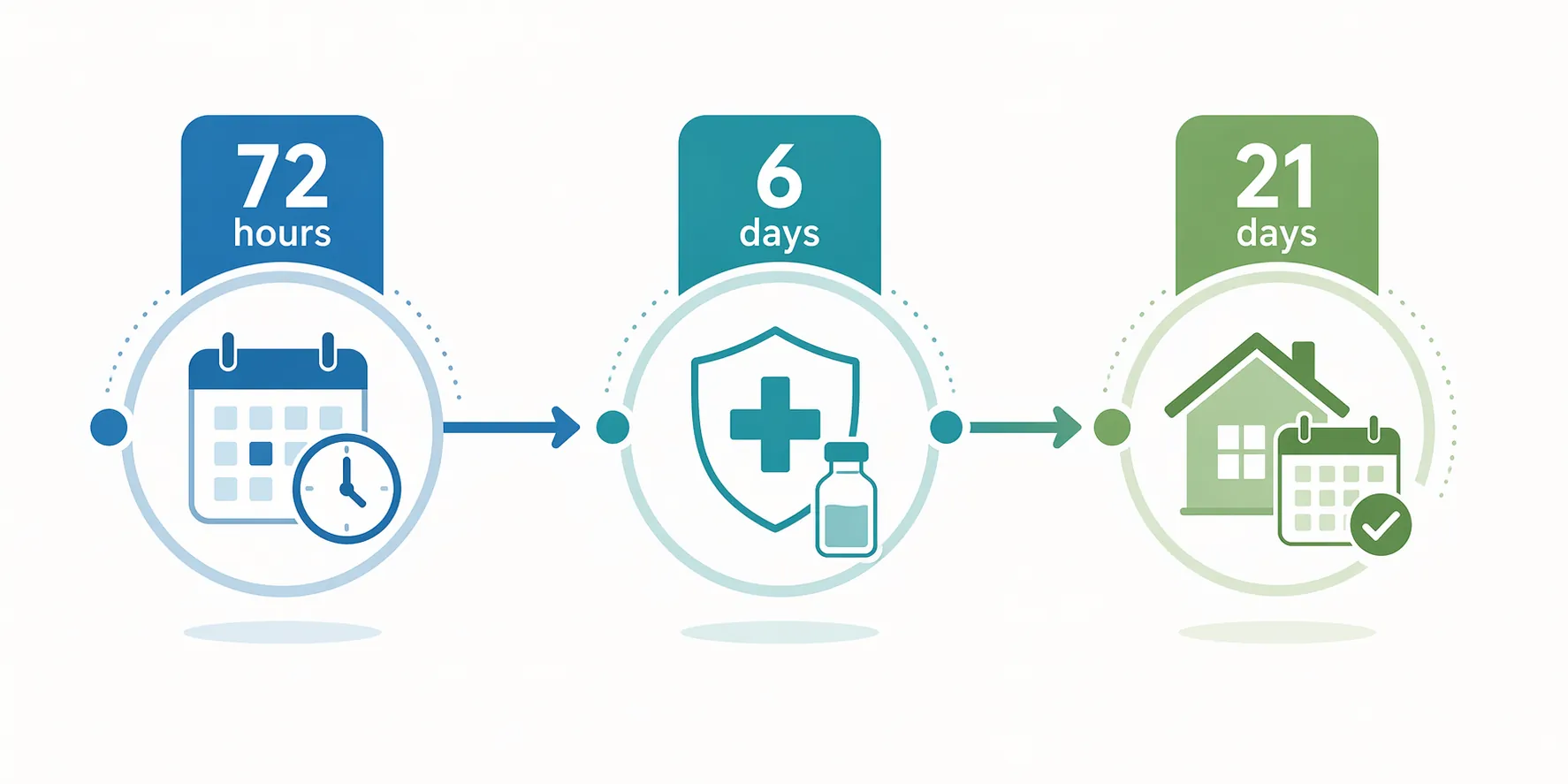
For older adults, measles precautions in 2026 begin with knowing which immunity cohort they are in. If status is uncertain and MMR is medically appropriate, an additional dose is a safe way to reduce preventable risk. If exposure has already happened, the response is measured in 72 hours, 6 days, and 21 days—not in “let’s wait and see.”
References
- Measles Cases and Outbreaks — CDC, July 17, 2026
- Measles in Older Adults — CDC, May 11, 2026
- Measles Symptoms and Risks for Older Adults — AARP
- Measles Vaccine Recommendations — CDC
- Measles Cases Are Rising. Do Older Adults Need a Vaccine? — AARP, July 24, 2026
- Measles Vaccination — CDC
- Interim Infection Prevention and Control Recommendations for Measles in Healthcare Settings — CDC
- Measles Questions About Measles — CDC
- What to do if you’ve been exposed to measles — CNN, January 15, 2026
Browse more in the Glossary.