
Glossary entry
What Medicare Advantage Benefit Cuts Mean for Seniors in 2027
Last verified 2026-07-30
This is not financial or legal advice. Medicare/Medicaid and benefits rules vary by state and change over time — verify current rules with your state Medicaid office or Area Agency on Aging.
Last verified: July 30, 2026. This explainer is for benefits literacy, not personal financial, legal, or plan-selection advice.

Will Medicare Advantage extras shrink in 2027?
For many seniors, the honest answer is: probably, yes, especially for supplemental benefits such as over-the-counter allowances, post-hospital meal benefits, non-emergency transportation, and possibly fitness perks. That does not mean every Medicare Advantage member will lose the same benefit, or that every local plan will cut in the same place. It means the warning signs are strong enough that the 2027 Annual Notice of Change should not be treated like routine mail.
The distinction matters. A ride benefit is not a luxury if it gets someone to dialysis. A small OTC card is not “extra” in the household where it covers aspirin, toothpaste, incontinence supplies, or cold medicine. The practical question is not whether Medicare Advantage is good or bad in general. It is whether the plan you chose for a specific everyday need will still solve that problem in 2027.
| What we know now | What it means for seniors |
|---|---|
| CMS finalized an average 2.48% Medicare Advantage payment increase for 2027, estimated at more than $13 billion in additional payments, after an earlier proposed increase of 0.09% was viewed as much tighter by the industry. Insurers still say the final increase does not fully cover their pressures. [1][2] | Higher federal payments do not guarantee that a plan will keep every supplemental benefit unchanged. |
| Humana’s CEO said the company will “adjust” Medicare Advantage benefits as it works toward a sustainable margin of at least 3% by 2028. Analysts expect other large insurers to make similar moves, though Humana may cut deepest. [3] | This is a public signal of insurer intent, not a plan-by-plan list of confirmed Humana cuts. |
| From 2025 to 2026, several supplemental benefits already showed declines: OTC allowances, rollover availability, transportation, meals, and fitness all moved downward in at least one major data source. [4][5] | The best available evidence points to the same benefits being most vulnerable in 2027. |
| Individual 2027 plan details are not yet available as of July 30, 2026. Plan information is typically available in late September or early October, and open enrollment runs October 15 through December 7. [6] | You cannot finish the comparison today, but you can decide now which benefits you must verify when the paperwork arrives. |
The benefits most exposed are the ones people notice at home

The strongest warning signal is not a press release. It is the 2025-to-2026 pattern in supplemental benefits. These are the perks people tend to remember from the brochure because they answer a concrete need: a monthly OTC card, a few rides, meals after a hospital stay, or a gym membership that helps someone keep moving.
| Benefit | Recent trend | Why the impact can feel bigger than the dollar amount |
|---|---|---|
| Over-the-counter allowance | The average monthly OTC limit dropped by about 13% to $23 per month, and plans offering rollover fell from 9.6% to 2.4%. [4] | A lower card amount can mean cutting back on small health items that are bought repeatedly, not once a year. |
| Non-emergency transportation | The share of plans offering transportation fell to 24%, down from 31%. [5] | For someone who no longer drives, a reduced ride benefit can shift the burden to relatives, paid rides, or missed appointments. |
| Meal benefits | The share of plans offering meal benefits fell to 57%, down from 65%. [5] | Meal coverage often matters most during a vulnerable window after hospitalization or illness. |
| Fitness benefits | Fitness remains common, with 93% of plans offering it, down from 95%. [5] | The benefit may survive more often than others, but members still need to check whether the same gym network or program remains available. |
| Dental, vision, and hearing | These benefits appear more stable than the most exposed perks because many seniors have no other Medicare coverage path for them, but limits and annual maximums may still narrow. [4] | The headline may say the benefit remains, while the usable amount, covered services, or provider choices become less generous. |
The OTC number is a good example of why averages can understate the annoyance at the kitchen table. A $23 monthly allowance may still help. But if the prior amount covered most of a member’s regular supplies and the new amount does not roll over, the member has to notice the change, adjust purchases, and possibly pay more out of pocket.
Transportation and meals can be even less forgiving. A plan can still advertise that it offers transportation, while reducing the number of rides, limiting covered destinations, or changing how authorization works. A meal benefit can still exist, while becoming narrower after discharge or more limited by condition. Those details usually do not matter until the moment a family is trying to use the benefit.
Why cuts can happen even after a federal payment increase
The confusing part is that Medicare Advantage plans are still getting a finalized average payment increase for 2027. CMS finalized a 2.48% increase, worth more than $13 billion in additional payments, a much more favorable result than the earlier proposed 0.09% increase. Insurers nevertheless argue that the increase is not enough to cover their cost trends and margin pressures. [1][2]
That is not a contradiction so much as a reminder that “more money than proposed” and “enough money to keep every benefit intact” are different claims. Medicare Advantage bids have to account for expected medical use, administrative costs, quality payments, risk adjustment, competition in the local market, and the margin a company is trying to earn. Some reports may describe the size of the increase differently depending on whether Medicare Advantage risk-score trends are included, but the practical point is the same: if an insurer concludes that the payment increase does not cover the total pressure, supplemental benefits are one of the places it can look for savings.
Humana has been unusually plain about this direction. CEO Jim Rechtin said the company will “adjust” Medicare Advantage benefits as it works toward a sustainable margin of at least 3% by 2028. Becker’s reported that analysts expect major insurers more broadly to follow with benefit changes, with Humana expected to cut deepest. [3]
That statement deserves attention, but it should not be stretched beyond what it says. It does not tell a Humana member whether their 2027 OTC card, ride benefit, meal benefit, or dental maximum will change in their county. It does tell members not to assume that a familiar plan name means familiar benefits next year.
What is still unknown as of July 30, 2026
The missing piece is the one families most want: the exact 2027 plan benefit package in their ZIP code. Those plan-level details are not out yet. Medicare Advantage plan information is typically available in late September or early October, ahead of the annual open enrollment period. [6]
Until then, the 2025–2026 data should be read as a warning signal, not a final forecast. It can tell you which benefits deserve a highlighter. It cannot tell you whether your current plan will cut two rides, remove rollover, lower a dental maximum, or leave your most-used benefits alone.
There is also a transparency issue worth noticing. CMS’s 2027 final rule rescinded a requirement that plans send mid-year notices about unused supplemental benefits. That rollback makes it easier for a member to reach September without a clear reminder of which extras they never used, which ones they tried to use, and which ones mattered. [5]
So the job now is not to panic or switch early. The job is to make a short list of the benefits that would actually change your year if they were reduced.
The 2027 open-enrollment timeline to watch
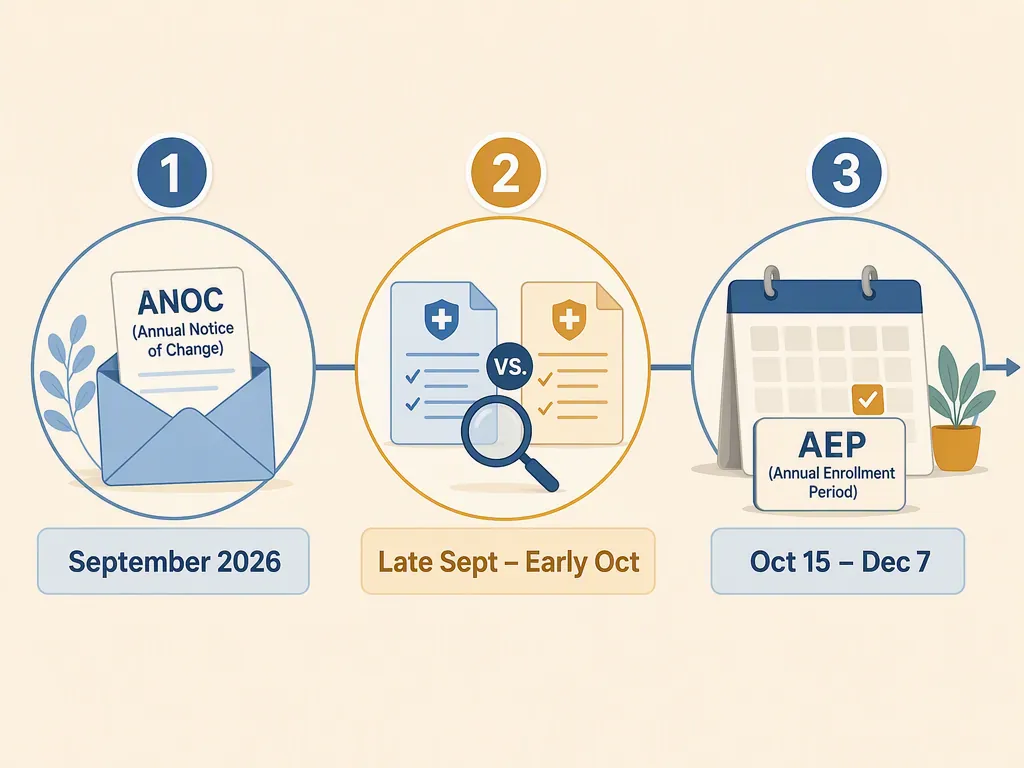
| When | What to do | What to look for |
|---|---|---|
| September 2026 | Read the Annual Notice of Change when it arrives. | Do not stop at the premium. Circle changes to OTC, meals, transportation, dental, vision, hearing, drug coverage, provider network, referrals, and prior authorization. |
| Late September or early October 2026 | Compare 2027 plan details when they become available. | Check your current plan against other local Medicare Advantage plans and, if relevant, Original Medicare plus separate drug and supplemental coverage options. [6] |
| October 15 through December 7, 2026 | Use Medicare open enrollment if you need to change coverage. | This is the annual window to switch Medicare Advantage plans, move from Medicare Advantage to Original Medicare, move from Original Medicare to Medicare Advantage, or change Part D drug coverage. [6] |
The Annual Notice of Change is not written for easy reading. Still, it is the one document that is supposed to show how your current plan will change for the next year. If a parent hands it to you unopened in October, start with the benefits they used this year, not with the benefits that look most generous on the first page.
Rank benefits by actual use, not by brochure appeal
A clean comparison begins with a plain list. Write down the benefits the member used in 2026 and how often they used them. The list may be short: one specialist, three prescriptions, one OTC order every month, a dentist, and two rides after a procedure. That short list is more useful than a glossy packet of benefits nobody used.
- OTC: How much did you actually spend each month? Did the unused amount roll over? Did you buy in store, by catalog, or online?
- Meals: Did you qualify after a hospital or skilled nursing stay? How many meals were available, and under what conditions?
- Transportation: How many rides did you use? Were they for medical appointments only? Were dialysis, physical therapy, pharmacy trips, or adult day services covered?
- Fitness: Was your preferred gym or program included, or was the benefit technically available but impractical?
- Dental, vision, and hearing: What was the annual maximum? Which providers accepted the plan? Were dentures, implants, hearing aids, or major dental work treated differently from routine services?
Then compare the whole plan, not one perk by itself. A bigger OTC card may not help if a drug moves to a higher cost tier, a specialist leaves the network, or the plan adds a prior authorization hurdle for a service the member already receives. The right comparison puts premiums, maximum out-of-pocket limits, drug costs, pharmacies, doctors, hospitals, and supplemental benefits on the same page.
A short 2027 cost context box
Supplemental benefit cuts will land alongside other Medicare cost changes. These figures should be treated as projections where noted, because final Medicare premium announcements are typically made later.
| 2027 item | Projected or reported amount | Why it matters in a plan comparison |
|---|---|---|
| Medicare Part D deductible | $700, up from $615. [7] | A plan’s drug deductible and formulary can matter more than a small supplemental perk if the member takes expensive medications. |
| Part D out-of-pocket cap | $2,400, up from $2,100. [7] | This affects the worst-case prescription spending picture for people with high drug costs. |
| Part D base premium | $41.33 per month. [7] | The base premium is not the same as every plan’s actual premium, but it helps frame the broader Part D cost environment. |
| Medicare Part B premium | Projected at $209.50 per month, up 3.5% from $202.90. [7] | For many retirees, the Part B premium is deducted from Social Security before the check reaches the bank account. |
If you are trying to understand how a higher Part B premium could affect a Social Security deposit, see 2027 Social Security COLA: How Much Retirees Keep After Medicare Premiums. For a broader household review before open enrollment, 6 Steps for a Mid-Year Financial Checkup for Seniors can help organize the bills, insurance notices, and benefit cards that tend to pile up in different drawers.
FAQ: common 2027 Medicare Advantage benefit-cut questions
Are OTC, meals, transportation, and fitness benefits going away completely?
Not necessarily. The better expectation is uneven reduction: lower allowances, fewer plans offering a benefit, tighter eligibility rules, smaller networks, fewer rides, or less generous coverage windows. Fitness benefits still appeared in 93% of plans in the 2026 data, so that category may remain common even if details change. [5]
Should I switch plans if one extra benefit gets smaller?
Maybe, but not before checking the rest of the plan. A smaller OTC card is frustrating, but switching for a larger one can backfire if the new plan has worse drug coverage, drops a doctor, excludes a preferred hospital, or has a higher out-of-pocket risk. Treat the lost benefit as a reason to compare, not as the only comparison point.
Are dental, vision, and hearing benefits safe?
Safer than some other supplemental perks, but not guaranteed unchanged. Analysts have described dental, vision, and hearing as more stable because many beneficiaries do not have another Medicare coverage route for those services, yet annual maximums, covered procedures, and provider access can still narrow. [4]
What should caregivers check first?
Start with the appointments and services that would create the biggest problem if disrupted: dialysis transportation, oncology care, cardiology, insulin or other costly drugs, home health services, durable medical equipment, dental work already in progress, and post-hospital support. If the member has fall risk concerns, it may also help to review what fall prevention services Medicare covers so you can separate core Medicare-covered services from plan extras.
What if I miss the October 15 to December 7 open enrollment window?
You may have fewer options unless another enrollment period applies. Medicare timing rules can be unforgiving, especially when someone is newly eligible, moving, losing coverage, or changing between Original Medicare and Medicare Advantage. For a broader calendar view, see Every Senior’s Guide to Retirement Age Milestones.
Should I worry about scams during plan-change season?
Yes, but worry should turn into verification, not silence. During open enrollment, keep plan documents, Medicare statements, and calls organized. Do not give personal Medicare information to an unsolicited caller. If a caregiver is helping review claims or service records after a plan change, A Caregiver’s Checklist for Medicare Home Health Fraud Prevention is a useful companion.
The practical bottom line for 2027
Seniors cannot know every 2027 Medicare Advantage benefit change yet. The plan-level details are still ahead. But the evidence already points to a higher risk of cuts in the supplemental benefits that make daily life easier: OTC allowances, meals, transportation, and some fitness arrangements.
The best protection is not guessing which company will cut the most. It is knowing which benefits you actually use, reading the September Annual Notice of Change with those benefits in mind, comparing 2027 plans when details are available, and using the October 15 to December 7 open enrollment window if the current plan no longer fits.
References
- Medicare Advantage health plans may cut extra benefits in 2027 — Reuters
- From “Flat” to Favorable: How Medicare Advantage Payments Increased in the CY 2027 Rate Announcement — Georgetown CHIR
- Humana to “adjust” Medicare Advantage benefits in 2027 as funding gap widens, CEO says — Becker’s Payer Issues
- 4 Medicare Advantage supplemental benefits most at risk — Becker’s Payer Issues
- Changes to the Medicare Advantage Program Enhance Some Consumer Protections But Roll Back Others — KFF
- What to Know About the Medicare Open Enrollment Period and Medicare Coverage Options — KFF
- Medicare 2027 Projections: How Much Premiums Are Set to Rise — Kiplinger
Browse more in the Glossary.