
Glossary entry
What Fall Prevention Services Does Medicare Cover in 2025?
Last verified Q3 2026
This is not financial or legal advice. Medicare/Medicaid and benefits rules vary by state and change over time — verify current rules with your state Medicaid office or Area Agency on Aging.
Last verified: Q3 2026. This article is educational and is not financial, legal, or medical advice. For a specific bill, coverage decision, or Medicare Advantage plan rule, confirm with Medicare, the plan, and the treating clinician.
In 2025, Medicare did cover several fall-prevention services for seniors, but not all in the same way. The free part is the fall risk review that can happen during the one-time Welcome to Medicare visit and yearly Annual Wellness Visits. The paid-but-covered part is medically necessary physical therapy or occupational therapy under Part B, usually after the Part B deductible. The confusing part is that Medicare still does not automatically send every person who reports a fall to PT or OT; proposed legislation would move in that direction, but it is not law as of Q3 2026.
| Fall-prevention service | Original Medicare rule in 2025 | What you may pay |
|---|---|---|
| Fall risk assessment during the Welcome to Medicare visit | Covered once for people new to Part B, as part of the preventive visit | No cost if the provider accepts assignment and the visit stays within covered preventive services |
| Fall risk assessment during the Annual Wellness Visit | Covered yearly as part of the health risk assessment and prevention planning | No cost if the provider accepts assignment and the visit stays within covered preventive services |
| Physical therapy for balance, gait, strength, or fall prevention | Covered under Part B when medically necessary and properly documented | After the $257 Part B deductible in 2025, Medicare generally pays 80% of the approved amount |
| Occupational therapy for daily-activity safety and function | Covered under Part B when medically necessary | After the Part B deductible, Medicare generally pays 80% of the approved amount |
| Medicare Advantage fall-prevention extras | Varies by plan, insurer, and county | Check the plan’s Evidence of Coverage, copays, network, and prior authorization rules |
| Automatic PT/OT referral after reporting a fall | Not a Medicare right as of Q3 2026 | You may still request an evaluation or referral from the clinician |
| GUIDE caregiver respite support | Available through participating dementia care organizations for eligible beneficiaries | May include up to $2,500 per year in respite services for dementia caregivers |
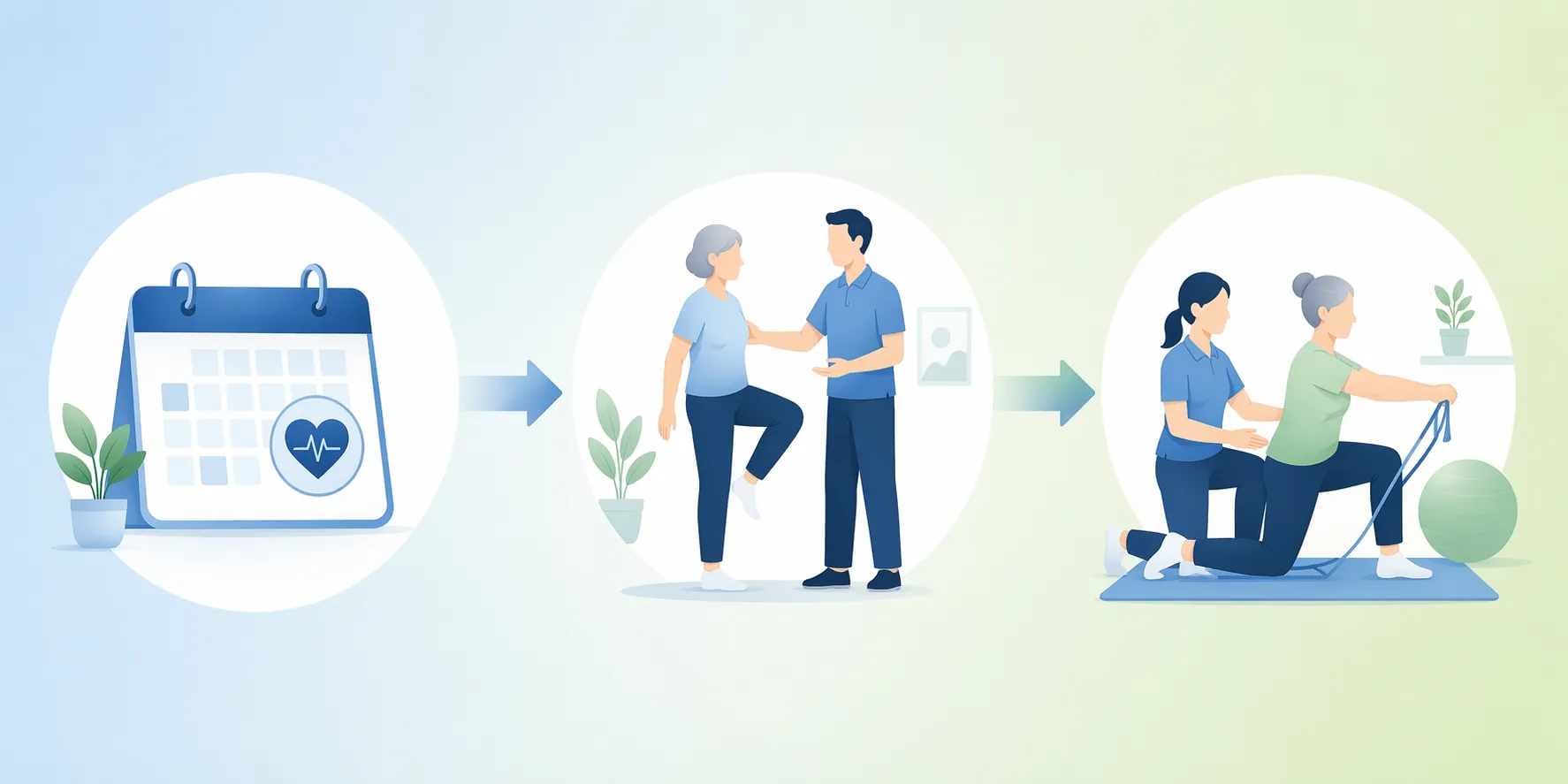
What is free under Medicare for fall prevention in 2025?
The most useful no-cost entry point is the preventive visit. Medicare includes fall-related screening opportunities in the one-time Welcome to Medicare visit and in yearly Annual Wellness Visits for Part B beneficiaries. These visits can include a health risk assessment, review of functional ability and safety, and a personalized prevention plan, which is exactly where fall risk belongs.[1]
The catch is ordinary and maddening: a covered screening can be skipped in practice if nobody names the problem. A parent may say “I’m fine” because the fall was embarrassing. A clinician may be trying to cover medications, blood pressure, vaccines, and labs in the same short appointment. The caregiver who knows about the near-miss in the hallway may be the only person in the room ready to say it plainly.
Use direct language before the visit ends: “Can we do the fall risk assessment that is included in the Medicare Annual Wellness Visit?” If there has already been a fall, add: “Can you document the fall and whether PT or OT is medically necessary?” For visit-by-visit wording, CareWise has a companion guide on how to advocate for a fall risk assessment at your parent’s next doctor visit.
One billing warning matters here. The wellness visit itself can be free, but a same-day problem visit, tests, or treatment can create cost-sharing if the appointment goes beyond covered preventive services. If cost is a concern, ask the office before or during the visit: “Will anything today be billed outside the Annual Wellness Visit?”
What does Medicare Part B pay for after a fall risk is found?
If the screening shows risk, or if the person has already fallen, the next useful step is usually clinical documentation and a referral or order for therapy when medically necessary. Medicare Part B can cover outpatient physical therapy and occupational therapy for fall prevention when the services are reasonable, necessary, and provided by qualified professionals.
In 2025, the standard Part B premium was $185 per month, a 5.9% increase from 2024, and the Part B deductible was $257, up $17 from 2024.[2] After that deductible is met, Original Medicare generally pays 80% of the Medicare-approved amount for covered Part B services, leaving the beneficiary or supplemental coverage responsible for the remaining 20%.

For fall prevention, PT might work on gait, leg strength, balance, safe transfers, and assistive-device use. OT may focus more on the daily tasks where falls actually happen: getting in and out of the shower, carrying laundry, managing kitchen routines, rising from a chair, or navigating a cluttered bedroom at night. The difference is not academic when a caregiver is trying to decide whom to ask for. A balance problem may need PT; a home-routine safety problem may need OT; many people need both.
The $2,410 therapy threshold is not an automatic stop sign
In 2025, Medicare used a $2,410 threshold for combined physical therapy and speech-language pathology services. Consumer articles often call this a “cap,” but that wording can scare people into thinking therapy must end once claims reach that amount. It does not work that way. When therapy remains medically necessary, claims can continue past the threshold with the KX modifier, which signals that documentation supports the need for more services.[3]
That does not mean unlimited therapy without questions. Claims above $3,000 may be subject to Targeted Medical Review, so documentation matters.[3] The practical question to ask the therapist or clinic is not “Are we at the cap?” It is: “If therapy continues, is medical necessity documented, and will the claim use the KX modifier if required?”
After an actual fall, timing can also affect which Medicare benefits are relevant, especially if there is a hospitalization, skilled nursing facility stay, home health need, or outpatient therapy plan. CareWise’s guide to activating senior health services after a fall walks through that post-fall sequence.
Does Medicare require a PT or OT referral after a senior reports a fall?
No. As of Q3 2026, Medicare does not require an automatic PT or OT referral for every beneficiary who reports a fall. The SAFE Act, reintroduced in 2025 as H.R. 1171, proposed requiring physicians to collect fall history during wellness visits and refer beneficiaries who report a fall to physical or occupational therapy, but it has not become law.[4]
This distinction matters because a proposed benefit cannot help someone schedule therapy today. What a senior or caregiver can do now is ask the clinician to document the fall history, assess current risk, and decide whether a PT or OT referral is medically necessary under existing Medicare rules.
What changes for Medicare Advantage members?
Medicare Advantage plans must cover Medicare-covered services, but the path can look different. A plan may use networks, copays, prior authorization, referral requirements, or supplemental benefits that do not exist in the same form under Original Medicare. Some plans may offer fitness, home-safety, transportation, or care-management extras, but those benefits vary by insurer, plan, and county.
Before scheduling fall-prevention therapy under Medicare Advantage, check three things: whether the therapist is in network, whether prior authorization is required, and what the copay will be for each visit. If the plan advertises a fall-prevention or home-safety extra, ask for the rule in writing from the Evidence of Coverage or the plan’s member services team.
Does GUIDE help with fall prevention?
GUIDE is not a general fall-prevention benefit. It is a Medicare dementia care model for eligible people with dementia and their caregivers. Its fall-prevention relevance is indirect but important: dementia increases fall risk, and caregiver exhaustion can make supervision, follow-through, and home routines harder to sustain.
CMS expanded GUIDE participation from 96 organizations to 390 organizations in 2025, and the model can include up to $2,500 per year in respite services for eligible dementia caregivers.[5] For a spouse or adult child who has been trying to prevent falls while also managing wandering, medications, sleep disruption, and appointments, respite is not a luxury word. It can be the difference between a plan that exists on paper and one someone has enough energy to carry out.
For dementia households, pair any Medicare-covered clinical services with caregiver support. CareWise’s guide to managing your health while caring for a spouse with dementia is a useful next read.
What is still usually out of pocket?
Medicare coverage is strongest when a service is clinical, medically necessary, and documented. It is weaker when the need is practical but not framed as a covered medical service. Grab bars, brighter lighting, shoe changes, clutter removal, stair repairs, and routine home modifications are often the work families still have to organize separately unless another specific program, plan benefit, or local service applies.
That does not make the home work optional. It means the Medicare-covered assessment or therapy visit should feed into a home plan instead of sitting in the chart. Ask the PT, OT, or clinician what changes should happen first at home, then use a structured tool such as CareWise’s CDC STEADI fall prevention checklist for home to turn the advice into room-by-room action.
What should a senior or caregiver do next?
- At the next Welcome to Medicare or Annual Wellness Visit, ask for the fall risk assessment by name.
- If there has been a fall, near-fall, dizziness, balance change, medication concern, or fear of falling, ask the clinician to document it.
- If risk is present, ask whether PT, OT, or both are medically necessary for fall prevention.
- For Original Medicare, confirm the Part B deductible status, 20% coinsurance, and whether supplemental coverage applies.
- For Medicare Advantage, confirm network status, referral rules, prior authorization, and visit copays before therapy starts.
- If therapy approaches the 2025 threshold, ask the clinic whether medical necessity is documented and whether the KX modifier is needed.
A covered benefit that nobody requests can disappear into a 14-minute visit. The useful move is simple: ask for the assessment, ask what it shows, and ask what Medicare-covered service should happen next.
References
- Yearly “Wellness” visits, Medicare.gov.
- 2025 Medicare Parts A & B Premiums and Deductibles, Centers for Medicare & Medicaid Services.
- 2025 Medicare Therapy Thresholds, BTE Technologies.
- The SAFE Act: A New Bill Aims to Prevent Falls Among Older Adults, Medbridge.
- Guiding an Improved Dementia Experience (GUIDE) Model, Centers for Medicare & Medicaid Services.
Browse more in the Glossary.