
Glossary entry
A Caregiver's Checklist for Medicare Home Health Fraud Prevention
Last verified 2026-07-27
This is not financial or legal advice. Medicare/Medicaid and benefits rules vary by state and change over time — verify current rules with your state Medicaid office or Area Agency on Aging.
The best fraud detector in a Medicare home health case may be the person who knows that the aide comes on Tuesdays, the nurse changed the wound dressing last Thursday, and no one in the house asked for the unopened brace box now sitting by the front door. A family caregiver has something a billing system does not have: memory of what actually happened in the home, backed up by calendars, visit notes, pharmacy receipts, doctor messages, and the parent’s own account when it is reliable.

That comparison work matters in 2026. The Justice Department’s National Health Care Fraud Takedown charged 455 defendants in connection with more than $6.5 billion in alleged false claims across 56 federal districts; those are charges, not convictions, and defendants are presumed innocent unless proven guilty. Still, the scale explains why a confusing Medicare statement deserves more than a shrug. CMS’s FY2025 Medicare improper payment data put the benchmark at $57 billion, which is not the same thing as fraud but does show how much money can move through the system incorrectly. [1][2]
CMS also announced a nationwide six-month moratorium on new home health agency and hospice enrollments in 2026, saying program integrity risks for these provider and supplier types were “among the highest of any provider/supplier type.” [3] That does not make every home health agency suspect. It does mean families are right to keep records, ask questions, and report bills that do not match care.
| Phase | What to do this week | What you are trying to catch |
|---|---|---|
| Detect | Compare Medicare statements, EOBs, home calendars, visit notes, doctor orders, and delivered equipment. | Billed visits that did not happen, services the parent does not recognize, supplies no one ordered, or home health care without a valid medical basis. |
| Protect | Guard the Medicare number, monitor the Medicare.gov account, shred old cards and labels, reduce junk offers, and replace a compromised Medicare number. | Misuse of the parent’s identity before more claims are filed. |
| Report | Call 1-800-MEDICARE, contact the local Senior Medicare Patrol, submit an HHS OIG tip when appropriate, and notify the parent’s primary care doctor. | Suspicious billing that official reviewers, insurers, or clinicians need to see. |
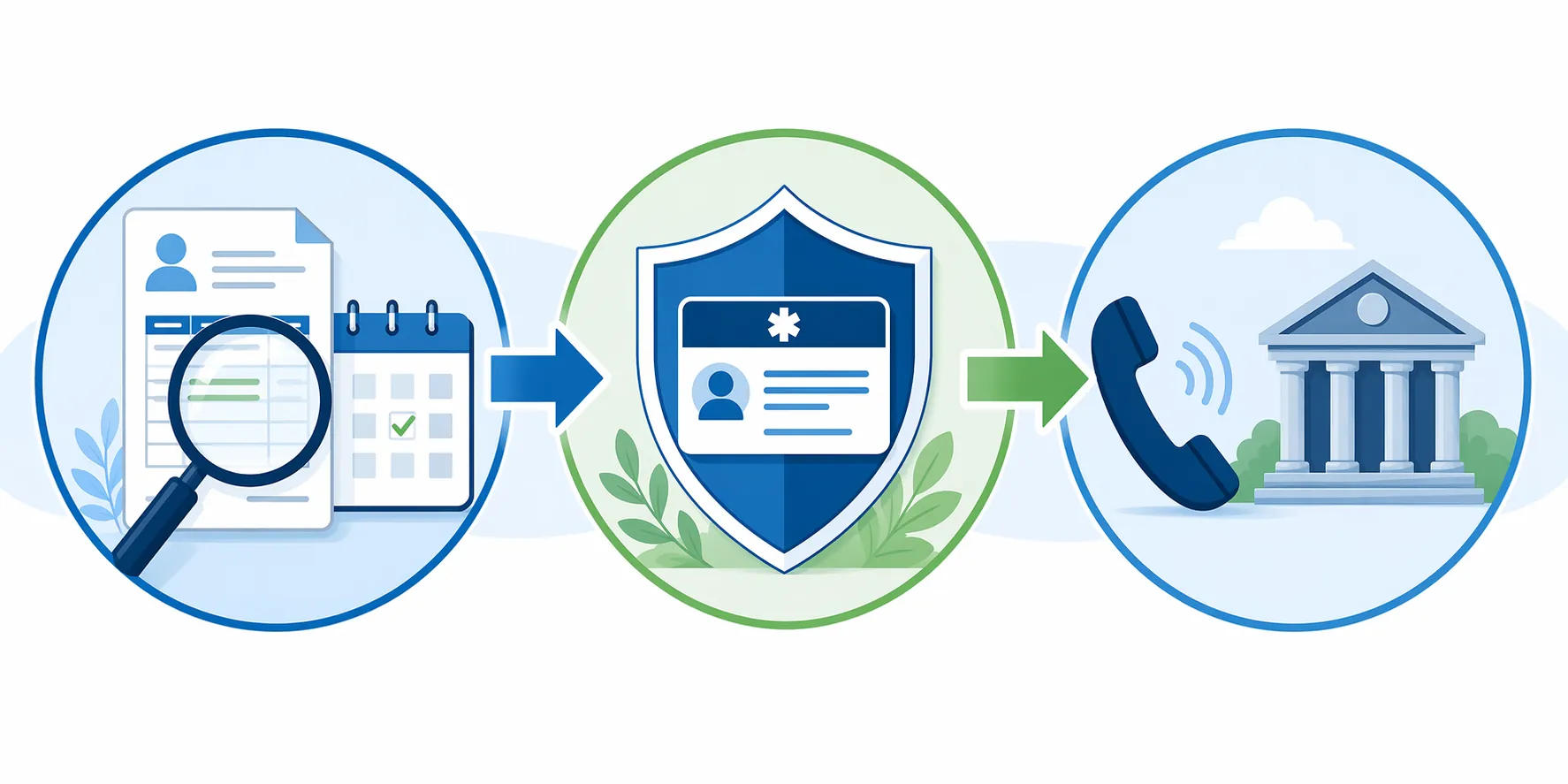
Detect: match the bill to the living room
Start with the Medicare Summary Notice, Medicare Advantage Explanation of Benefits, or other plan statement. Do not try to read it like a lawyer. Read it like the person who knows the week: date, provider name, service, equipment, and amount billed. If you need a refresher on how Medicare pieces fit together, use a basic Medicare Parts overview so you know whether you are looking at a Part A, Part B, or plan-related document.
For each line, ask four plain questions:
- Was my parent actually receiving Medicare home health services on that date?
- Did that named nurse, therapist, aide, agency, or supplier have any real connection to my parent’s care?
- Does the billed service match what happened in the home, not just something that sounds generally medical?
- Did any equipment or supplies arrive, and if so, did the doctor or parent actually request them?
A useful setup is one folder, paper or digital, with five sections: Medicare statements, agency schedules, caregiver calendar, doctor orders or visit summaries, and equipment or supply records. The folder does not have to be pretty. It has to let you answer, six weeks later, whether someone came into the house on a particular Wednesday.
Check billed visits against the home calendar
Home health fraud can involve billing Medicare for services that were not provided, services that were not medically necessary, or services connected to improper enrollment or recruitment. The Senior Medicare Patrol lists home health fraud schemes such as billing for services never received, using a Medicare number to bill for services a person did not need, or enrolling someone in home health care without their knowledge. [4]
This is where the family calendar becomes evidence. If the statement says a skilled nursing visit occurred on May 12, look at the agency schedule, the caregiver notes, text messages with siblings, doorbell camera history if you use one, and the parent’s recollection. A single mismatch may be a billing delay, typo, or memory problem. A pattern deserves a call.
Keep the comparison narrow. “I do not remember this agency” is a concern. “This provider is definitely committing fraud” is not something the family has to prove. The job at this stage is to preserve the discrepancy: date, provider, service, amount billed if shown, and what your records say happened instead.
Confirm the home health order and homebound certification
Legitimate Medicare home health care is not the same as general help around the house. It requires a doctor’s order, and the patient must meet Medicare’s homebound requirement. The Senior Medicare Patrol specifically warns caregivers to watch for home health services ordered by a physician the patient does not know, or services offered without a proper medical need. [4] If your family is still sorting out the difference between personal care and medical home health, this aging-in-place home care plan may help separate the categories.
A practical check is to ask: which doctor ordered this, when was Mom or Dad seen, and what condition is the service treating? If the agency name is familiar but the ordering doctor is not, call the parent’s primary care office before assuming it is harmless. Sometimes a covering physician, hospital discharge doctor, or specialist is involved. Sometimes no one who knows the patient ordered anything.
The same check applies when services suddenly expand. A parent who was supposed to receive short-term wound care after a hospitalization may not recognize that the agency is billing for additional therapy or aide visits. Compare the plan of care, discharge paperwork, and actual visits. If the parent has cognitive impairment, do not rely only on “I guess someone came.” Ask the agency for the visit record and compare it to your notes.
Treat unsolicited equipment like evidence, not clutter
Unordered durable medical equipment is one of the easiest warning signs for families to see. The National Council on Aging warns older adults to be suspicious of medical equipment or supplies they did not order, including braces, testing supplies, or other items that arrive after someone obtains a Medicare number. [5] The Senior Medicare Patrol also identifies unsolicited supplies and equipment as a common fraud signal. [4]
Do not throw the box away immediately. Take a photo of the shipping label, supplier name, contents, packing slip, and any invoice. Write down the date it arrived. Ask the parent, “Did anyone call you about this?” Then ask the doctor’s office whether it was ordered. If no one ordered it, do not use it while you are checking. For a broader explanation of what Medicare does and does not cover, keep a separate DME coverage guide handy, but do not let coverage rules distract from the first question: who ordered this for this patient?
One brace that turns out to be legitimate is not a scandal. A brace, wound care supply shipment, or testing supply package tied to a company no one recognizes is a reason to pull the next Medicare statement and look for the matching claim.
Keep a discrepancy log
A discrepancy log should be boring and specific. Use a notebook, spreadsheet, or note in your phone. The best entries are short:
| What to record | Example of the level of detail |
|---|---|
| Statement date | Medicare Summary Notice received in July |
| Claim or service date | Billed nursing visit on a date your calendar shows no visit |
| Provider or supplier | Agency or equipment company name exactly as printed |
| What your records show | No aide or nurse signed in; parent was at daughter’s house; no supply box received |
| Who you contacted | Agency billing office, doctor’s office, 1-800-MEDICARE, SMP, or OIG |
| Result | Left message, claim under review, told to file report, replacement Medicare number requested |
Avoid editing the log into a story too soon. Official reviewers need facts they can check. A caregiver who can say, “This statement shows three visits; here are the agency calendar and my notes showing one visit,” is giving them a cleaner starting point than a long account of every frustration with the agency.
Protect: make the Medicare number harder to misuse
Treat the Medicare number the way you would treat a credit card number. The National Council on Aging advises older adults not to share Medicare information with unsolicited callers, door-to-door representatives, or people offering “free” equipment or services in exchange for a Medicare number. [5]
- Create or help monitor the parent’s Medicare.gov account so you can see claims activity before a paper statement arrives.
- Store the Medicare card in a consistent place, and do not photograph or text it unless there is a real care need.
- Shred old Medicare cards, insurance labels, pharmacy labels, and paperwork that includes the Medicare number.
- Reduce prescreened insurance and credit offers when possible, especially if the parent tends to respond to mail that looks official.
- If the number appears compromised, ask Medicare about replacing it. NCOA notes that people can request a new Medicare number if their current one has been used fraudulently. [5]
The Medicare.gov account deserves special attention because it shifts review from “whenever the mail gets opened” to a routine check. Pair it with another caregiving task, such as a monthly financial checkup for seniors. If several relatives help, decide who checks claims and who keeps the folder. Two people assuming the other one checked is how suspicious lines sit for months.
Report: use the right door for the problem in front of you
Reporting feels less intimidating when you know the job of each contact. You do not need to decide whether a claim is fraud, abuse, error, or sloppy billing before calling. You need to send the concern to people who can review it.
| Where to report | Use this when | What to have ready |
|---|---|---|
| 1-800-MEDICARE | A Medicare statement, claim, supplier, or home health service does not match what happened. | Medicare number, statement date, provider name, service date, and what the family’s records show. |
| Senior Medicare Patrol | You want help sorting whether something looks like fraud, abuse, or an error before or while reporting. | The statement, calendar, equipment photos, agency name, and any notes from calls already made. |
| HHS OIG tips | The issue appears to involve a broader fraud scheme, identity misuse, kickbacks, or repeated suspicious billing. | Names, dates, claim details, phone numbers used, mailers, texts, and any documents or photos. |
| Parent’s primary care doctor | A service, order, homebound certification, supply, or equipment item appears under a doctor’s name or seems medically unsupported. | The billed item or service, ordering provider name, and the question you need answered: did this office order or approve it? |
Call Medicare when the claim itself is wrong
Use 1-800-MEDICARE when the statement shows a service, supplier, agency, or equipment claim that does not match your records. Have the statement in front of you. Read the provider name exactly as printed. Give the service date, not just the month. If equipment arrived, say whether it was used, refused, returned, or still unopened.
Before calling, it is reasonable to contact the provider or supplier if the issue may be a simple billing mistake. Do not let that step become a dead end. If the answer is vague, the company pressures your parent, or the explanation does not match the doctor’s records, move on to an official report.
Ask Senior Medicare Patrol for help sorting the paperwork
The Senior Medicare Patrol is built for this middle ground: something looks wrong, but the family is not sure what category it belongs in. SMP programs help Medicare beneficiaries, families, and caregivers prevent, detect, and report health care fraud, errors, and abuse, and the national locator is available at smpresource.org or 1-877-808-2468. [4]
This is especially useful when there are several moving parts: a home health agency, an unfamiliar ordering doctor, a brace supplier, and a parent who remembers a phone call but not what they agreed to. SMP can help organize the concern so the report is clearer.
Use HHS OIG for suspected fraud schemes
HHS OIG accepts tips and complaints about suspected fraud, waste, abuse, and mismanagement in HHS programs through its online tip system. [6] This route makes sense when the concern goes beyond one questionable line on a statement: repeated claims under the parent’s number, aggressive recruiting, forged-looking documents, suspicious marketing calls, or a supplier that keeps billing after being told no.
When filing an OIG tip, stick to what you can support. “The statement shows this claim; the parent did not receive the service; the doctor’s office says it did not order it; here are the supplier details” is stronger than guessing at motives.
Tell the primary care doctor when the medical record may be involved
The parent’s primary care doctor is not the fraud hotline, but the office may be the fastest place to verify whether a home health order, certification, equipment prescription, or referral is real. If an unfamiliar agency says the doctor ordered care, ask the office to confirm. If the office did not order it, ask them to document that in the chart and tell you whether they want a copy of the statement or supplier paperwork.
This also protects legitimate care. If a real nurse visit is being questioned because the family did not understand the discharge plan, the doctor’s office can often explain the order. Good home health workers should not have to work under suspicion because a statement is hard to read.
What to gather before you make the first call
Set aside 20 minutes and gather the following before calling Medicare, SMP, OIG, the agency, or the doctor’s office:
- The Medicare Summary Notice, Explanation of Benefits, or claim screenshot.
- The parent’s Medicare card or Medicare number, kept private except when speaking with an official channel or trusted provider.
- The provider, agency, supplier, or doctor name exactly as printed.
- Dates of service, delivery, calls, mailers, or visits.
- The home calendar, agency schedule, or caregiver notes showing what actually happened.
- Photos of unordered equipment, shipping labels, packing slips, and invoices.
- Names of people you already spoke with and what they said.
If several siblings are involved, pick one reporter. Others can help collect records, but multiple family members calling different places with partial details can create confusion. Keep a shared note after each call: date, phone number, person spoken to, reference number if given, and next step.
Where this checklist stops
This checklist is focused on Medicare home health because Medicare rules are federal and many families are reviewing Medicare statements at the kitchen table. Medicaid home health and personal care rules can vary by state, especially around eligibility, electronic visit verification, and who authorizes services. If Medicaid is paying for part of your parent’s care, keep the same recordkeeping habits but ask the state Medicaid agency, managed care plan, or local legal aid program which reporting path applies.
It also stops short of accusing individual workers. A missed visit, a confusing statement, or a delayed claim can happen without fraud. The pattern to act on is a mismatch that cannot be explained: services the parent never received, supplies no one ordered, agencies or doctors the family does not recognize, or home health care that appears without a valid medical order.
Why reporting is still worth doing
A family report may feel small next to national fraud numbers, but official action often begins with claim patterns, beneficiary complaints, provider reviews, and documentation that shows something is wrong. During the 2026 National Health Care Fraud Takedown, CMS suspended 1,079 providers and revoked billing privileges for 1,403 providers. [1] That does not promise a specific result for one household’s report, but it shows that suspicious billing can move into administrative and investigative channels.
Families do not need to become investigators. The repeatable routine is enough: read the statement, compare it to the calendar, question unordered supplies, guard the Medicare number, and send unresolved discrepancies to the right place. That is how the quiet paperwork after dinner becomes protection.
Last verified: July 27, 2026.
References
- National Health Care Fraud Takedown Results in 455 Defendants Charged in Connection With Over $6.5 Billion in Alleged Fraud — U.S. Department of Justice — June 23, 2026
- CMS FY2025 fact sheet via GAO — U.S. Government Accountability Office
- CMS Announces Aggressive Nationwide Crackdown on Fraud with Six-Month Hospice, Home Health Agency Enrollment Moratoria — Centers for Medicare & Medicaid Services — 2026
- Home Health Care Fraud — SMP Resource Center
- Medicare Fraud And Abuse: How Older Adults Can Protect Themselves — National Council on Aging
- HHS OIG Tips and Complaints — U.S. Department of Health and Human Services Office of Inspector General
Browse more in the Glossary.