
Glossary entry
Why Seniors Should Use Their Free Medicare Visit for Fall Prevention
Last verified Q3 2026
This is not financial or legal advice. Medicare/Medicaid and benefits rules vary by state and change over time — verify current rules with your state Medicaid office or Area Agency on Aging.
Medicare’s Annual Wellness Visit is one of the more useful preventive healthcare benefits for seniors because it gives a clinician a structured chance to ask about falls before a broken hip, head injury, or frightened 911 call forces the conversation. For people with Medicare Part B, the visit is covered once every 12 months when the provider accepts assignment, and it is meant to produce or update a personalized prevention plan—not to serve as a full physical exam. [1]
That distinction matters, but so does the missed opportunity. In 2020, only about 45% of community-dwelling Medicare beneficiaries received an Annual Wellness Visit, based on the Medicare Current Beneficiary Survey Public Use File; that figure is date-stamped here as last verified in Q3 2026 because use may have shifted since the pandemic period. [2]
The point is not that one appointment magically prevents falls. The point is that the visit can get fall risk into the medical record while there is still time to act. In a peer-reviewed analysis of Texas fee-for-service Medicare data from 2014 through 2018, Tzeng and colleagues matched 742,494 beneficiaries and found that receiving an Annual Wellness Visit was associated with a 3.9% lower risk of falls and a 4.0% lower risk of fractures over 24 months compared with matched beneficiaries who did not receive the visit. [3]
Those numbers are modest enough to be believable and large enough to matter at Medicare scale. They are also not evenly distributed. The same study found a stronger association for rural residents, with a 20.1% lower fall risk, and found an 8.2% lower fracture risk among beneficiaries with four or more chronic conditions. Receiving Annual Wellness Visits in three consecutive years was associated with greater fall reduction than receiving only one. [3]
A fair reading keeps the guardrails in place: this was an observational study, not a randomized trial, and it used Texas fee-for-service Medicare claims rather than all Medicare beneficiaries nationwide. Still, it gives the visit more weight than the usual soft advice to “stay on top of prevention.” It shows a practical pathway: screen, notice risk, document it, and then decide what needs attention next.
What the Annual Wellness Visit actually does for fall prevention
A senior who feels fine may reasonably wonder why another appointment belongs on the calendar. The answer is that fall risk often hides in ordinary details: a new blood pressure medicine, an old throw rug, a little dizziness on standing, a slower walk to the bathroom at night, or a recent “near fall” the person does not think is worth mentioning.

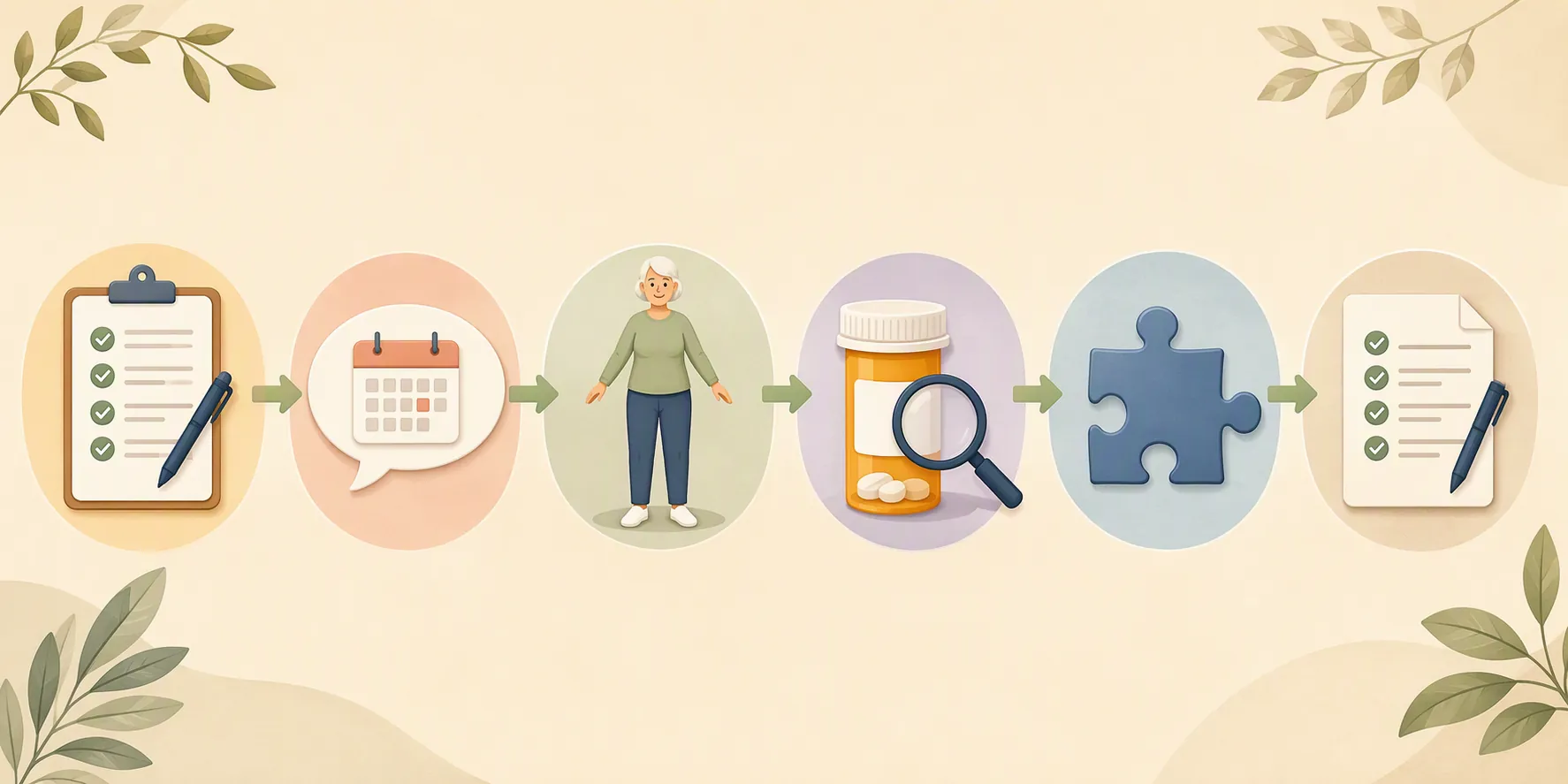
During the Annual Wellness Visit, the clinician is expected to complete or update a health risk assessment, review medical and family history, assess functional ability and safety, screen for cognitive impairment, and create or update a written prevention plan. Medicare describes the visit as a yearly wellness visit to develop or update a personalized prevention plan, not as a head-to-toe physical. [1]
For fall prevention, that structure gives the patient and caregiver permission to bring up concerns that might otherwise be brushed off as “just aging.” The Tzeng study specifically describes fall-related components of the visit, including questions about fall history, balance or gait problems, medication reconciliation, cognitive assessment, and a personalized preventive plan. [3]
| Part of the visit | Why it matters for falls |
|---|---|
| Health risk assessment | Creates a structured opening for mobility, home safety, activity level, dizziness, and daily-function concerns. [1] |
| Fall history | A fall, near fall, or new fear of falling can be documented before it becomes an emergency pattern. [3] |
| Balance or gait questions | Trouble walking, rising from a chair, or feeling unsteady can lead to a more focused assessment or referral. [3] |
| Medication review | Sedatives, blood pressure medicines, sleep aids, and combinations of drugs may increase dizziness or unsteadiness; the visit gives the clinician a chance to reconcile the medication list. [3] |
| Cognitive assessment | Memory or judgment changes can affect medication use, safe movement at home, and whether the person notices hazards. [1] |
| Written prevention plan | Turns the conversation into a documented plan for screenings, referrals, risk reduction, and follow-up. [1] |
This is where the visit earns its place. A clinician cannot address a fall risk that never gets named. A caregiver may have noticed that Dad grabs the towel bar to step into the shower, or that Mom stopped walking to the mailbox after a stumble, but those details often sound too small for a separate medical appointment. They are exactly the kind of details that belong in a wellness visit.
The “free” visit still has boundaries
The Annual Wellness Visit has no Part B coinsurance or deductible when the provider accepts assignment, but that does not mean every related service is free. Medicare warns that if the doctor or other provider performs additional tests or services during the same visit that are not covered under the preventive benefit, the patient may owe coinsurance, and the Part B deductible may apply. [1]
That is the diagnostic trap worth naming early. If the visit uncovers dizziness, neuropathy, poor vision, medication side effects, or a gait problem, follow-up testing, treatment, physical therapy, occupational therapy, or specialist care may involve cost-sharing depending on the person’s coverage. That possibility should not scare anyone away from the visit; it should keep the conversation honest.
This article is focused on Original Medicare Part B. People enrolled in Medicare Advantage should check the plan’s Evidence of Coverage or call the plan before assuming the same billing rules, network rules, or supplemental benefits apply. Medicare Advantage plans must cover Medicare-covered preventive services, but the way a member accesses care can depend on the plan.
What to ask for if falls are already on your mind
The most useful Annual Wellness Visit is not a passive appointment where the patient waits to see what the clinician remembers to ask. Bring the fall question into the room plainly. A simple sentence is enough: “I want to use this visit to review my fall risk and what we can do before I fall.”
A caregiver can say the same thing without turning the visit into an argument: “I’ve noticed a few balance changes at home, and I’d like them included in today’s wellness plan.” That is not nagging. It is putting observable risk where the medical team can see it.
- Tell the clinician about any fall in the past year, even if there was no injury.
- Mention near falls, furniture-walking, new use of a cane or walker, or avoiding stairs, showers, sidewalks, or errands because of unsteadiness.
- Bring a current medication list, including over-the-counter sleep aids, allergy medicines, pain medicines, supplements, and alcohol use if relevant.
- Ask whether any medicines could contribute to dizziness, low blood pressure, sleepiness, confusion, or slower reaction time.
- Ask whether a physical therapy or occupational therapy referral makes sense.
- Ask what should happen next if the screening shows increased fall risk.
The visit is also a good time to ask whether vision, footwear, foot pain, blood pressure changes, home hazards, or memory changes are contributing to risk. Original Medicare generally does not cover routine dental, vision, or hearing care, so a fall-prevention plan may need to include steps outside the Annual Wellness Visit itself. The important thing is to get the risk recognized and written down.
If the screen is positive, the next step should be specific
A fall-risk screen is only useful if it leads somewhere. Sometimes the next step is simple: adjust a medication schedule, treat dizziness, strengthen legs, remove a loose rug, improve lighting, or review how a cane is being used. Sometimes it calls for a more formal referral.
For a broader look at what Medicare may cover after fall risk is identified—including therapy, evaluations, and related services—see What Fall Prevention Services Does Medicare Cover in 2025?. If the concern is the home itself, a physician-ordered evaluation may be the next practical question; the details are covered in Professional Home Safety Assessments for Older Adults: What Medicare Now Covers.
Patients and caregivers who want to act before the appointment do not need to wait for permission to look around the home. A room-by-room review can make the wellness visit more productive because it turns “I’m worried about falls” into concrete examples: the bathroom has no grab bar, the hallway is dim, the bedroom path is cluttered, the front step has no rail. The CDC STEADI Fall Prevention Checklist for Home is a practical way to organize that review.
For families still sorting out the bigger picture—exercise, home changes, medication questions, footwear, emergency planning, and how to talk about all of this without starting a fight—the Fall Prevention FAQ for Seniors and Caregivers is the better next stop.
Why this visit is worth scheduling even if you feel fine
Many older adults skip the Annual Wellness Visit for understandable reasons. They already see enough doctors. They do not want to be told they are “at risk.” They feel fine. Or they assume that if a visit is important, someone would have explained it clearly by now.
But fall prevention is not only for people who are already falling. The Annual Wellness Visit can catch the earlier layer: the medication that makes standing up risky, the unreported stumble, the balance change, the memory issue that affects safe routines, or the home hazard nobody has connected to medical risk yet.
That is why the 45% utilization figure is frustrating. It does not point to personal failure by seniors. It points to a benefits system that often tells people a service exists without making clear what it is good for. A no-cost visit that includes fall-risk screening should not sit unused because the name sounds vague or because the paperwork is hard to read.
There are other preventive healthcare benefits for seniors worth understanding, including vaccines; for that broader prevention topic, see Which Vaccines Do Older Adults Need After 50?. But for fall prevention, the Annual Wellness Visit deserves special attention because it connects directly to daily safety, independence, and the kinds of risks families often notice before the chart does.
If you have Medicare Part B and have not had an Annual Wellness Visit in the past 12 months, scheduling it is a low-friction way to surface fall risks before a fall forces the issue. Go in with the right expectation: it is a preventive planning visit, not a comprehensive physical. If the visit uncovers something that needs follow-up, ask the clinician what the next step is, and check that next step against your specific Medicare coverage before assuming it will be free.
References
- Yearly Wellness Visits, Medicare.gov, https://www.medicare.gov/coverage/yearly-wellness-visits
- Medicare Current Beneficiary Survey 2020 Public Use File, Centers for Medicare & Medicaid Services, https://www.cms.gov/data-research/research/medicare-current-beneficiary-survey/data-tables/2020-mcbs-puf
- Annual wellness visits and older adults' fall and fracture risk, Preventive Medicine, 2022, https://pmc.ncbi.nlm.nih.gov/articles/PMC9691561/
Browse more in the Glossary.