
Clinical term
How to Identify Pancreatic Cancer Symptoms in Older Adults
Last verified 2026-07-26
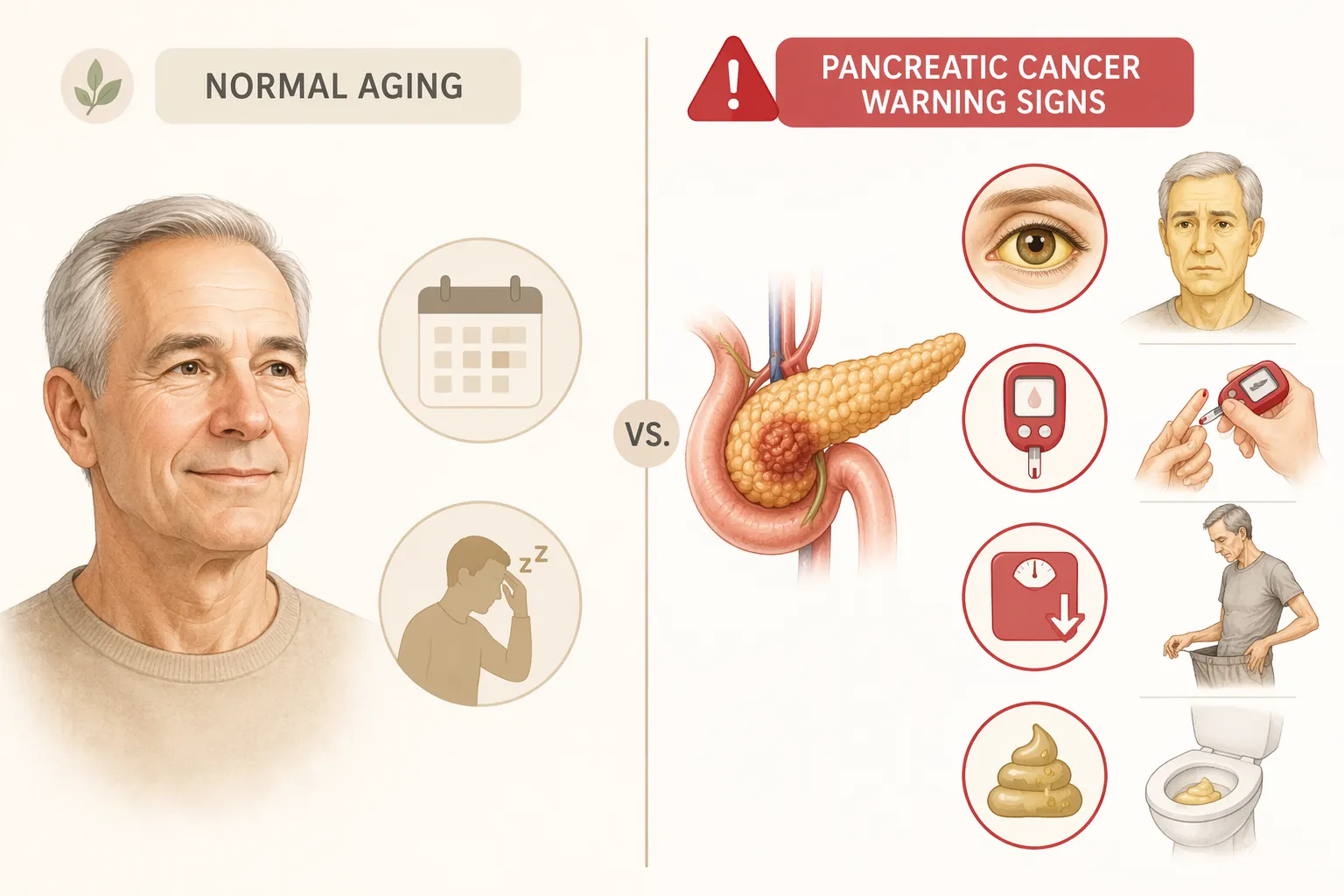
When an older parent starts sleeping more, eating less, complaining of back pain, or losing weight, the hard part is not knowing whether to worry. Families are often told, directly or indirectly, to expect decline. Some slowing down may come with age. Yellow eyes do not. Dark urine with pale stools does not. Greasy, floating, foul-smelling stools do not. A sudden diabetes diagnosis after 50, especially alongside weight loss, should not be filed away as “just getting older.”
Pancreatic cancer symptoms in older adults are difficult because several early signs can sound ordinary: fatigue, appetite loss, nausea, belly discomfort, or back pain. Most older adults with one of these symptoms do not have pancreatic cancer. The point is not to panic over every ache. It is to recognize the few changes that are not normal aging and to push them into a medical conversation quickly, before they are softened into “stomach trouble” or “she’s just tired.”

The clearest dividing line: what aging does not explain
Normal aging can mean less stamina, slower recovery after illness, chronic joint pain, or a smaller appetite during stressful periods. It should not turn the whites of the eyes yellow, make urine tea-colored, make stools clay-colored or greasy, or cause major unexplained weight loss. Those changes deserve a prompt call to a clinician, even if the older adult feels embarrassed, minimizes the symptom, or insists it will pass.
| What you notice | How to handle it |
|---|---|
| Yellow skin or eyes, dark urine, pale stools, itchy skin | Not normal aging. Call promptly; jaundice needs medical evaluation. |
| New diabetes after age 50 plus unexplained weight loss or decline | Do not assume it is ordinary aging. Ask whether further evaluation is needed. |
| Greasy, floating, pale, foul-smelling stools | Not an age-related bathroom change. Report it clearly and concretely. |
| Unexplained weight loss, especially visible clothing looseness or loss of muscle | Track the amount and time frame; ask for evaluation if there is no clear reason. |
| Profound fatigue unrelated to activity | Concerning when persistent, worsening, or paired with weight loss, jaundice, appetite loss, or pain. |
| Dull upper abdominal or mid-back pain | Less specific alone, but more concerning if persistent, worse after eating or lying down, or clustered with other signs. |
| Blood clot symptoms such as one swollen painful leg, sudden shortness of breath, or chest pain | Urgent. Seek immediate medical care. |
Jaundice is the warning sign not to watch and wait
Jaundice means yellowing of the skin or the whites of the eyes. In pancreatic cancer, it can happen when a tumor blocks the bile duct, causing bilirubin to build up. The American Cancer Society describes jaundice, dark urine, light-colored or greasy stools, and itchy skin as key signs and symptoms that can occur with pancreatic cancer; jaundice is often one of the first signs when cancer starts in the head of the pancreas, where it can press on the bile duct early.[1]
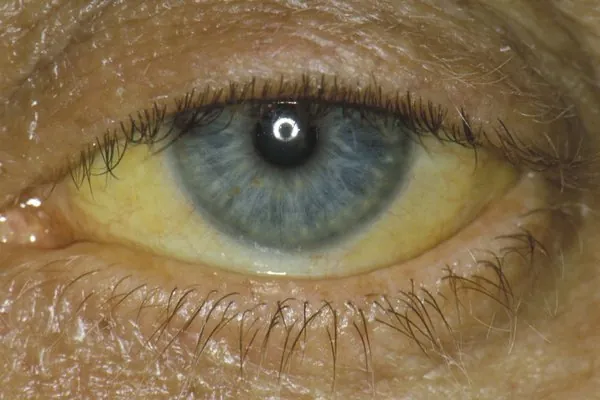
This is the symptom I would not let a family negotiate down into “maybe the lighting is bad.” Look at the whites of the eyes in natural light. Ask about urine color. Ask whether stools have become pale, gray, clay-colored, greasy, or hard to flush. Ask about itching that does not seem tied to a rash. If those answers point toward jaundice, the right next step is prompt medical evaluation, not a home remedy, a new diet, or waiting for the next routine appointment.
Jaundice does not automatically mean pancreatic cancer. Gallstones, liver disease, medication effects, and other conditions can also cause it. But none of those are reasons to ignore it. They are reasons to get it assessed.
New-onset diabetes after 50 deserves a second look when weight is falling
Diabetes is common in older adults, so a new diagnosis after 50 can feel unsurprising. That is exactly why it can be missed as a clue. The concern changes when diabetes appears suddenly in someone who is also losing weight without trying, eating less, becoming weaker, or developing digestive changes.
PanCAN describes a documented connection between pancreatic cancer and new-onset diabetes: adults age 50 and older with new-onset diabetes have a 6-to-8-fold increased risk of pancreatic cancer, and about 1 in 4 people with pancreatic cancer are diagnosed with diabetes within 1 to 2 years before the cancer is found.[2] That does not mean most new diabetes is cancer. It means timing and context matter.
A practical way to raise this with the clinician is simple: “This diabetes diagnosis is new, and she has also lost weight without trying. Should we be looking for an underlying cause?” That question is not accusing anyone of missing cancer. It is making sure the diabetes is not treated as an isolated paperwork problem while the person in front of you is visibly declining.
Greasy, pale, floating stools are not just “digestive changes”
Caregivers often notice bathroom clues before anyone says them out loud. The older adult may be embarrassed, may think it is from something they ate, or may not connect stool changes with a larger health pattern. With pancreatic cancer, stool changes can happen when pancreatic enzymes or bile are blocked from reaching the intestine, interfering with digestion and fat absorption. The result can be stools that are pale, greasy, bulky, floating, unusually foul-smelling, or difficult to flush.[1][3]
The useful detail is sensory and specific. “Her stomach is off” is easy to wave away. “Her stools have become pale and greasy and are floating” is harder to dismiss. If this is happening with yellowing eyes, dark urine, weight loss, or appetite loss, mention the whole cluster in one message or appointment, not as separate unrelated complaints.
Weight loss and fatigue need a time frame, not a shrug
A skipped lunch is not a cancer symptom. A bad week after an infection is not the same as ongoing decline. The concern is unexplained weight loss: clothing hanging looser, dentures fitting differently, a wedding ring slipping, less muscle in the arms or legs, or a scale showing a clear downward trend without trying. Unexplained weight loss of 5% or more of body weight over 6 to 12 months is a commonly used medical threshold for concern, and both the American Cancer Society and Mayo Clinic list weight loss among pancreatic cancer symptoms.[1][4]
Fatigue is trickier because older adults are often expected to be tired. The fatigue that belongs in the notebook is different: sleeping much more than usual, abandoning normal routines, feeling wiped out without exertion, or becoming too exhausted to eat, shower, walk to the mailbox, or keep up with a familiar activity. The American Cancer Society notes that pancreatic cancer fatigue can be profound and may come with depressed mood and sleep problems.[1]
If your parent has both weight loss and fatigue, do not let the appointment become only about “low energy.” Bring the weight history, appetite changes, stool changes, pain pattern, and any diabetes change into the same conversation. Clinicians make better decisions when the pattern is visible.
Back pain can matter, but usually not by itself
Back pain is common in later life. Arthritis, spinal stenosis, muscle strain, osteoporosis, and old injuries are far more common explanations than pancreatic cancer. That perspective matters, because fear can make every ache feel like an emergency.
The pancreatic cancer pain pattern worth noticing is more specific. Mayo Clinic describes pain that may occur in the belly and spread to the sides or back, and cancer-related pain is often described as a dull ache in the upper abdomen or mid-back that can be worse after eating or when lying down.[4] Pain that is new, persistent, not clearly tied to movement, and paired with weight loss, jaundice, appetite loss, greasy stools, or new diabetes deserves more attention than a familiar arthritic back.
Other clues become more important when they cluster
Nausea, vomiting, appetite loss, bloating, mood changes, and sleep disruption are all nonspecific. They can come from medications, constipation, depression, infections, grief, pain, or other chronic conditions. In a caregiver’s notebook, they still matter because they help show whether the older adult is drifting away from baseline.
- Appetite loss matters more when it leads to measurable weight loss or the person feels full after very small meals.
- Nausea or vomiting matters more when it is persistent, unexplained, or paired with jaundice, pain, or weight loss.
- Mood and sleep changes matter more when they arrive with profound fatigue and physical decline.
- A new blood clot with no clear trigger matters because blood clots, including deep vein thrombosis and pulmonary embolism, can be an early clue in some people with pancreatic cancer.[1][3]
Possible clot or embolism symptoms are not “call next week” symptoms. One swollen, painful, red, or warm leg can suggest a deep vein clot. Sudden shortness of breath, chest pain, coughing blood, or fainting can suggest a pulmonary embolism. Those symptoms need urgent medical care.
Why age makes dismissal more dangerous
Age alone is not a diagnosis. Still, pancreatic cancer is more relevant in older adults than in younger people. SEER data show that about two-thirds of pancreatic cancer patients are at least 65, and the median age at diagnosis is 71.[5] The Precede Foundation similarly notes that adults 65 and older account for about 70% of new cases and highlights a central problem in older adults: symptoms may be attributed to other conditions or aging itself, delaying recognition.[6]
That is why the caregiver’s pattern-recognition role matters. An older parent may see five separate annoyances: itchy skin, darker urine, less appetite, looser pants, and tiredness. A caregiver may see one pattern that needs to be said plainly in the exam room.
Delay has real consequences, though no article can tell from symptoms alone what stage a cancer is in or whether cancer is present. SEER reports that only 15% of pancreatic cancers are diagnosed at the localized stage, where 5-year relative survival is 43.6%; once the disease has metastasized, 5-year relative survival is 3.4%.[5] Those numbers are not a reason to assume the worst. They are a reason not to let clear red flags sit unaddressed.
What to document before you call
You do not need a perfect medical record. You need enough concrete information to prevent vague symptoms from dissolving in a short visit. Write down what changed, when it started, whether it is getting worse, and what else appeared around the same time.
- Color changes: yellow eyes or skin, dark urine, pale or clay-colored stools, new itching.
- Weight trend: current weight, previous weight if known, clothing changes, appetite changes, and whether weight loss was intentional.
- Diabetes timing: date of new diagnosis, recent blood sugar changes, medication changes, and whether weight loss came before or after the diagnosis.
- Stool description: greasy, floating, pale, foul-smelling, bulky, hard to flush, diarrhea, or new constipation.
- Pain pattern: location, whether it spreads to the back, whether it changes after eating or lying down, and whether it feels different from known arthritis or injury pain.
- Functional decline: sleeping more, skipping normal activities, needing more help, or becoming too tired for ordinary routines.
How urgently to escalate
Use urgency based on the symptom, not on whether the older adult “seems like themselves” for part of the day. Many people minimize symptoms, especially when they fear losing independence or burdening family.
| Situation | What to do |
|---|---|
| Yellow eyes or skin, dark urine with pale stools, or new jaundice symptoms | Call the clinician promptly and ask how soon the person should be evaluated. |
| New-onset diabetes after 50 plus unexplained weight loss, appetite loss, or decline | Schedule a medical review and ask whether the combination needs further evaluation. |
| Greasy, floating, pale, foul-smelling stools with weight loss or jaundice | Report the stool changes specifically; do not describe them only as stomach upset. |
| Unexplained weight loss of about 5% or more over 6 to 12 months | Ask for evaluation, especially if there is fatigue, appetite loss, pain, or digestive change. |
| Persistent upper abdominal or mid-back pain with other red flags | Ask for an appointment rather than assuming it is arthritis. |
| One swollen painful leg, sudden shortness of breath, chest pain, fainting, or coughing blood | Seek urgent or emergency medical care. |
There is no general screening test recommended for everyone to find pancreatic cancer early. Screening is generally reserved for people at high risk, such as those with certain inherited syndromes, BRCA-related risk, hereditary pancreatitis, or strong family history. For most families, the realistic job is not screening; it is noticing a concerning change and getting it evaluated.
What to say when you feel awkward pushing
Caregivers often hesitate because they do not want to sound dramatic. A useful script is calm and specific: “I know these symptoms may have other causes, but they are new for her. She has lost weight, her urine is darker, her stools are pale and greasy, and she is much more tired. What should we check next?”
If the first answer is watchful waiting, ask what should happen during that waiting period: “What change would make this urgent? How long should we wait? Should we repeat labs or do imaging if the weight loss continues? Who should we call if jaundice appears or worsens?” Those are reasonable questions. They also create a plan instead of leaving the family to guess.
This article is informational only and cannot diagnose pancreatic cancer or replace medical advice, diagnosis, or treatment. But it can help you name what you are seeing. In older adults, the safest approach is not to assume every symptom is cancer. It is to stop treating clearly abnormal changes as the price of getting older.
References
- Signs and Symptoms of Pancreatic Cancer, American Cancer Society
- Diabetes and Pancreatic Cancer, Pancreatic Cancer Action Network
- Symptoms of pancreatic cancer, Cancer Research UK
- Pancreatic cancer - Symptoms and causes, Mayo Clinic
- Cancer Stat Facts: Pancreatic Cancer, SEER
- Pancreatic Cancer in the Aging Population: Challenges and Opportunities for Early Detection, Precede Foundation
Browse more in the Glossary.