
Glossary entry
Will a Cheaper Medicare Part D Premium Cost You More?
Last verified 2026-08-01
This is not financial or legal advice. Medicare/Medicaid and benefits rules vary by state and change over time — verify current rules with your state Medicaid office or Area Agency on Aging.

The tempting comparison in 2027 will be simple enough to make at the kitchen table: one notice shows a stand-alone Medicare Part D premium going up, while a Medicare Advantage plan with drug coverage advertises a much lower drug premium — maybe even $0.
That temptation is not imaginary. In 2026, the average monthly premium for stand-alone prescription drug plans was $36, compared with $8 for Medicare Advantage prescription drug plans. Among enrollees without low-income subsidies, nearly 8 in 10 MA-PD enrollees paid no Part D premium, compared with about 3 in 10 people in stand-alone PDPs.[1]
So if you are asking, “will Medicare Part D premiums increase for seniors in 2027, and should I switch to Medicare Advantage to avoid it?” the honest answer starts here: the premium gap explains why switching looks responsible. It does not prove the new plan will cost less.
The part that deserves a second look is the deductible. The share of MA-PD enrollees in plans charging a drug deductible rose from 23% in 2024 to 82% in 2026. At the same time, no-deductible options in the stand-alone PDP market became harder to find: the share of PDP enrollees in plans with no drug deductible fell from 15% to 4%.[1]
A lower premium can still be a real savings. But if the plan moves costs into a deductible, coinsurance, a higher drug tier, a different pharmacy network, or a prior-authorization rule, the monthly bill is only the first line of the receipt.
Why the MA-PD premium can look so much better
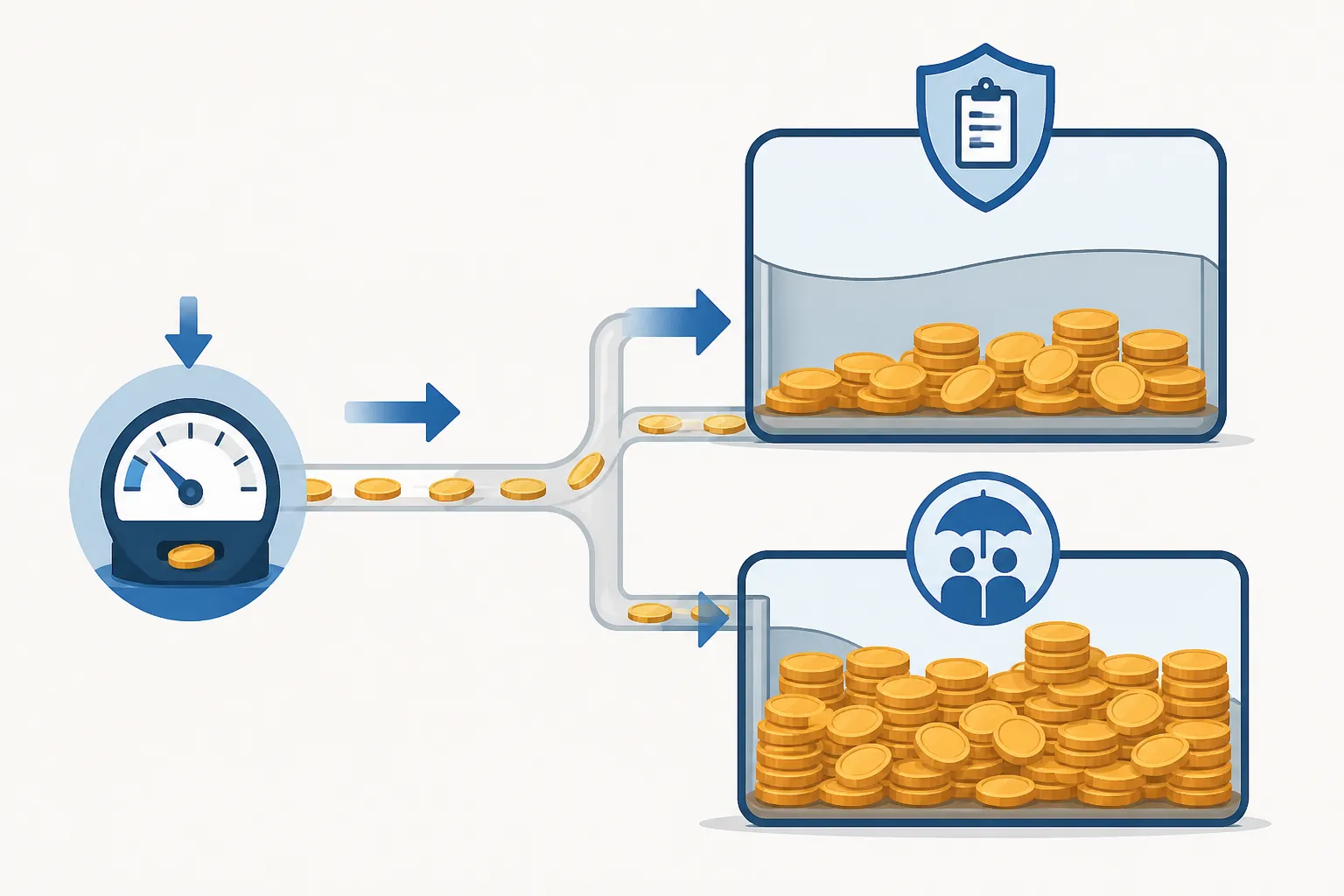
Medicare Advantage plans are not simply pricing the same drug coverage more cheaply. They have a financing tool that stand-alone Part D plans do not have in the same way: rebates from Medicare Advantage payments can be used to buy down the Part D premium. In 2026, MA sponsors used about $53 per member per month in rebates — about $13 billion — to reduce Part D premiums, while stand-alone drug plans received a temporary stabilization subsidy of about $16 per member per month, or $3.6 billion, that CMS is ending after 2026.[2]
That is the mechanism behind much of the price gap. It is also why a $0 or low MA-PD drug premium should be treated as a starting point, not a verdict.
The 2027 numbers are not final at the plan level yet. CMS finalized the 2027 Part D base beneficiary premium at $41.33, up from $38.99, and the end of the temporary subsidy could mean larger increases for some stand-alone PDP enrollees, but plan-specific premiums will not be known until the 2027 plan landscape is released in mid-to-late September 2026.[3]
There is also a forecast fight around the size of the increase. NPR reported on July 29, 2026, that the Trump administration said most seniors would pay less than $10 more, while analysts warned that some people could face larger premium jumps.[4]
For the yes-or-no background on the premium increase itself, see How Much More Will Seniors Pay for Part D in 2027?. If the question is whether the subsidy change leaves you more exposed, start with Does the Medicare Part D Subsidy End Affect Your Drug Costs?. This article is about the next step: whether switching coverage types actually helps.
The comparison has to start with your medications, not the premium
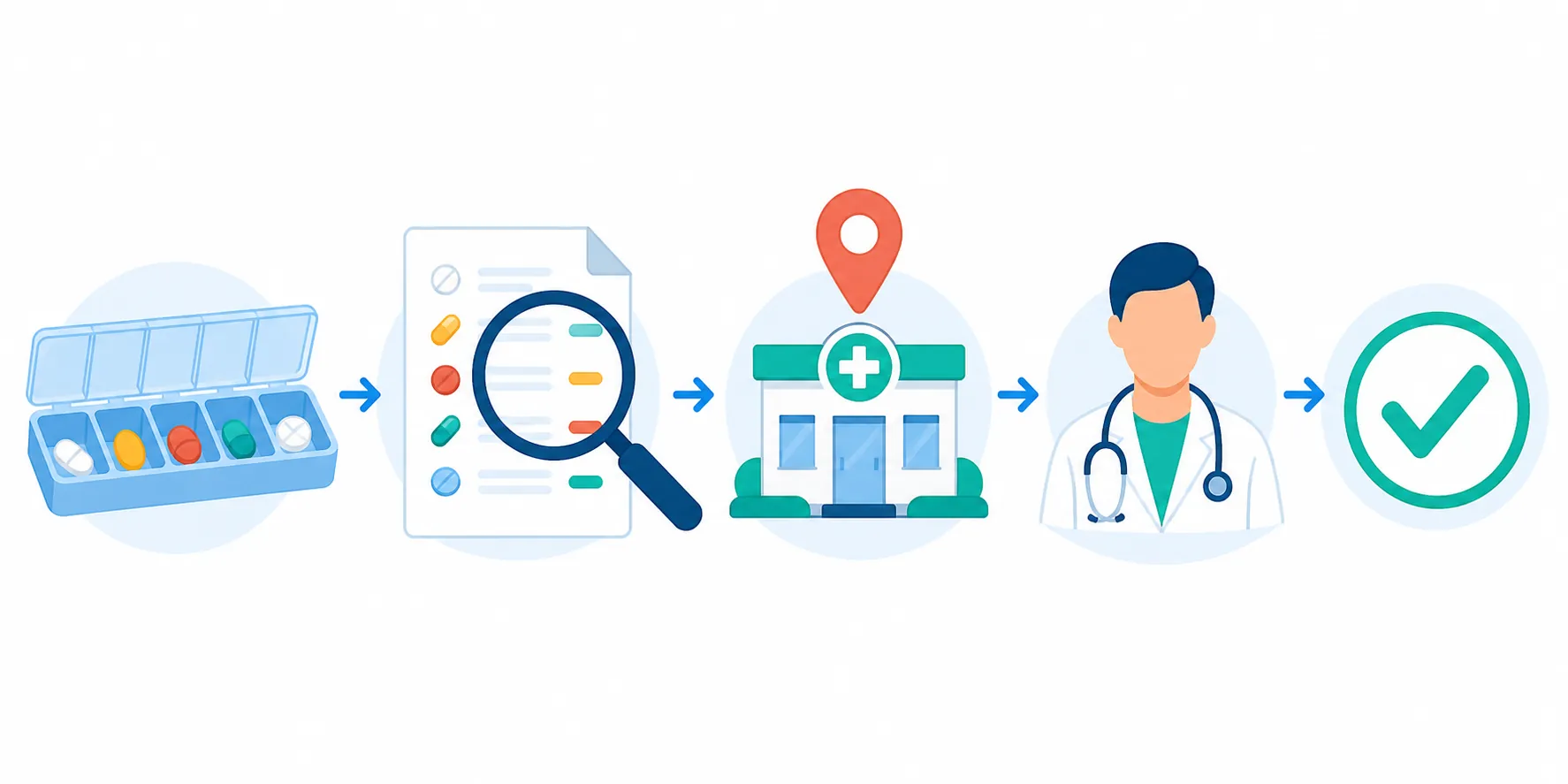
A useful plan comparison is boring in the best way. It goes bottle by bottle. It uses the exact drug name, dose, quantity, refill pattern, and pharmacy. It checks the plan’s formulary instead of assuming that a drug covered this year will stay covered next year.
That is not fussiness. The GAO found that Part D plans and formularies change from year to year, and that switching can disrupt access to a beneficiary’s current medications.[5]
| What to check | What to write down | Why it matters |
|---|---|---|
| Each prescription | Drug name, dosage, quantity, and refill schedule | A plan can look cheap until one regular medication is uncovered or placed on a costly tier. |
| Formulary status | Covered, not covered, or covered with restrictions | A premium savings can disappear if a current drug requires an exception, substitution, or full retail payment. |
| Tier | Preferred generic, generic, preferred brand, non-preferred drug, specialty, or the plan’s equivalent tier | Tier placement affects whether you pay a small copay, a larger copay, or coinsurance. |
| Deductible | Whether the deductible applies to that drug and how much must be paid first | The low-premium plan may ask you to spend more before normal cost sharing begins. |
| Cost sharing | Copay or coinsurance at the pharmacy you actually use | Coinsurance can be more unpredictable than a flat copay, especially for expensive drugs. |
| Utilization rules | Prior authorization, step therapy, or quantity limits | A covered drug may still require paperwork or a trial of another medication first. |
| Pharmacy | Preferred, standard, in-network, mail-order, or out-of-network status | The same plan can produce different costs depending on where the prescription is filled. |
The pharmacy line is easy to underestimate. A plan may cover the drug, but not at the price shown unless the person uses a preferred pharmacy. For someone who no longer drives, or who relies on a daughter to pick up prescriptions after work, “preferred” has to mean usable, not just cheaper on a screen.
Prior authorization deserves the same plain-language treatment. If a medication needs prior authorization, the plan is not saying “never.” It is saying the doctor or prescriber may have to submit documentation before the plan pays. That can be manageable for a stable, well-staffed medical office. It can become a problem when the refill is due, the prescriber is hard to reach, or the old approval does not transfer neatly to the new plan.
If you want to reduce costs without leaving your stand-alone drug plan market, compare those options too. A lower PDP premium, a different pharmacy, or a formulary that fits your current drugs better may solve the problem without taking on the medical-network rules of Medicare Advantage. See 7 Ways Seniors Can Lower Their Medicare Part D Premiums in 2027 for that stay-put comparison path.
Do not compare only the drug benefit if the move is into Medicare Advantage
Switching from one stand-alone Part D plan to another is a drug-plan decision. Switching from traditional Medicare plus a PDP into an MA-PD plan is a health-coverage decision with a drug plan inside it.
That difference matters most when a person has doctors they trust, specialists they see regularly, or a hospital system they want to keep. In 2026, Medicare Advantage enrollees had access to about half the physicians available under traditional Medicare, and 99% of Medicare Advantage enrollees were in plans that required prior authorization for some services.[6]
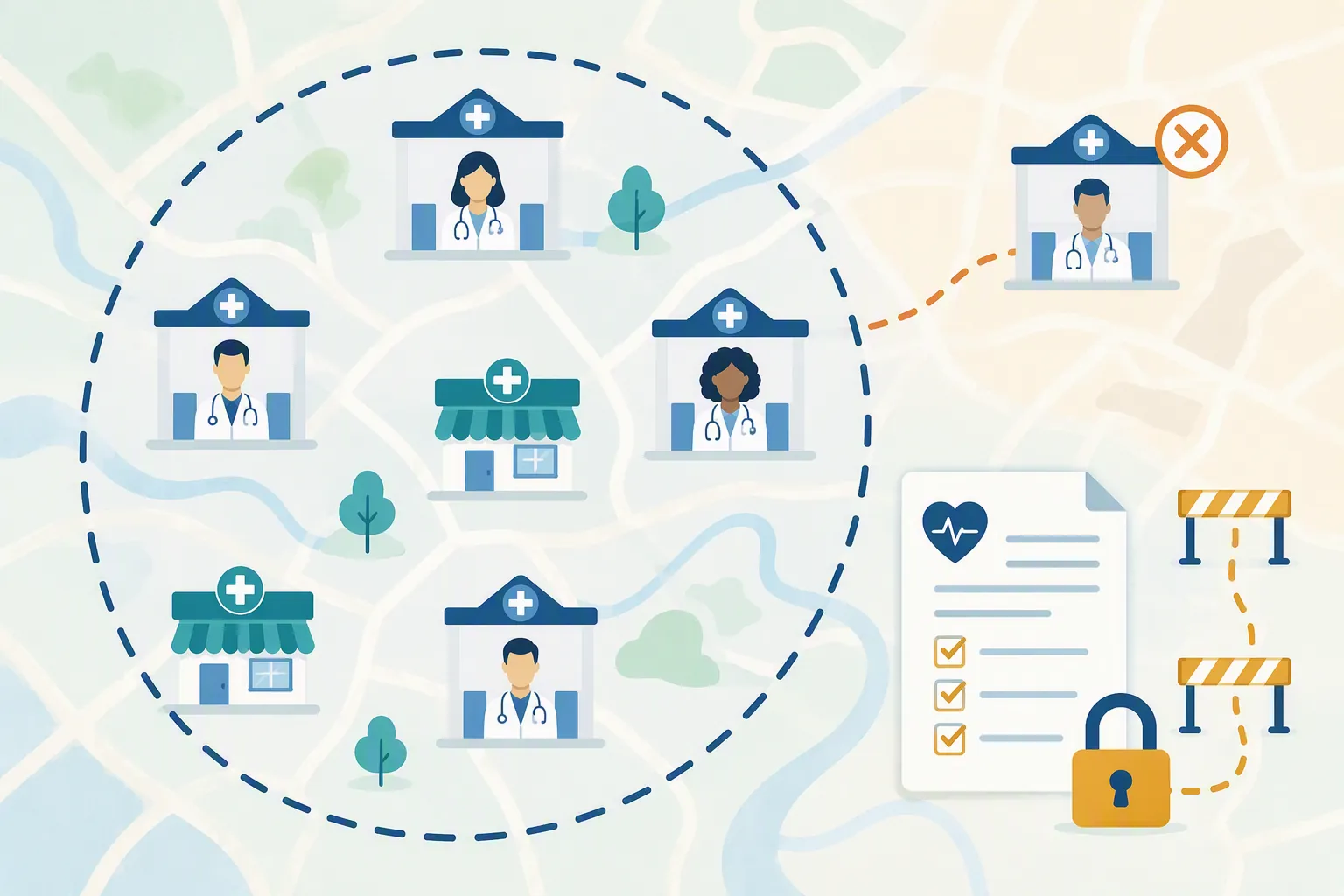
That does not make every Medicare Advantage plan a bad deal. It does mean a drug-premium savings should not be allowed to quietly trade away a cardiologist, oncologist, neurologist, physical therapy provider, or preferred hospital. The doctor check needs to be done plan by plan, not by asking whether a medical group “takes Medicare Advantage” in general.
For each MA-PD plan that looks attractive, confirm:
- The primary care doctor is in network for that exact plan name.
- Key specialists are in network, especially doctors managing chronic or serious conditions.
- The preferred hospital and nearby urgent-care options are in network.
- Referrals are required only where you can realistically get them.
- Prior authorization rules for recurring services, equipment, imaging, therapy, or procedures are understood before enrollment.
- The plan’s medical out-of-pocket maximum is compared with current spending risk under traditional Medicare and any supplemental coverage.
The last point is especially important for someone leaving traditional Medicare with a Medigap policy. In many situations, getting back into a Medigap plan later may depend on state rules, timing, underwriting, or guaranteed-issue protections. That is not a reason to freeze in place; it is a reason to understand the exit door before walking through the entrance.
For the wider Medicare Advantage side of the decision, including possible benefit changes, see What Medicare Advantage Benefit Cuts Mean for Seniors in 2027.
A lower premium is useful only after the annual math is done
The comparison should be annual, not monthly. A $0 premium saves money every month, but a deductible, coinsurance, non-preferred pharmacy price, or uncovered medication can spend that savings quickly.
Use this sequence before treating an MA-PD plan as cheaper:
- List every current prescription, including dose, quantity, and how often it is refilled.
- Run the drug list through Medicare Plan Finder or the plan’s official materials for each plan being considered.
- Record the premium, deductible, copays, coinsurance, and pharmacy-specific prices.
- Mark any prior authorization, step therapy, or quantity-limit rule.
- Check whether the pharmacy that is actually used is preferred, standard, or out of network.
- If the plan is Medicare Advantage, verify doctors, specialists, hospitals, referrals, and medical-service prior authorization.
- Compare the estimated annual total, not just the premium line.
The Medicare open enrollment period runs from October 15 through December 7. Yet in a recent open enrollment period, 69% of beneficiaries did not compare plans.[7]
That statistic is the uncomfortable one because it is not about Washington or insurers. It is about the unopened envelope, the refill that worked last year, and the assumption that the plan will keep behaving. In a year when premiums, formularies, deductibles, and plan participation can change, doing nothing is still a choice.
The out-of-pocket cap can also change the way prescription costs feel across the year, especially for people with expensive medicines. For that piece of the comparison, see Saving on Prescriptions After Medicare Part D 2027 Changes.
Low-income subsidy and Extra Help users need a separate check
If you receive Extra Help or another low-income subsidy, do not assume the same plan comparison applies. Benchmark stand-alone PDP options for low-income subsidy beneficiaries fell from 8 in 2021 to 2 in 2026, narrowing the number of premium-free benchmark choices in the PDP market.[1]
An MA-PD plan might still be attractive. But the questions become more specific: whether your subsidy applies as expected, whether your drugs remain protected at a manageable cost, whether your pharmacy access changes, and whether the plan’s medical network fits your care. This is a good place to use a State Health Insurance Assistance Program counselor, Medicare, or another qualified benefits counselor before switching.
When switching is more likely to pay off
A switch from a stand-alone PDP to an MA-PD plan is more likely to be worth considering when the lower premium is not the only thing going right.
- All current prescriptions are on the formulary at acceptable tiers.
- The deductible applies in a way that still leaves the annual total lower.
- The person’s regular pharmacy is preferred or otherwise affordable and practical.
- Prior authorization rules are limited, understood, and manageable with the current prescribers.
- Primary doctors, specialists, hospitals, and other recurring providers are confirmed in network.
- The person understands what happens if they want to leave the MA plan later, especially if Medigap coverage is involved.
It is less likely to pay off when one expensive medication is missing, the preferred pharmacy is inconvenient, a specialist is out of network, or the plan adds a prior-authorization hurdle to care that is already difficult to coordinate.
The defensible rule for 2027
A cheaper MA-PD premium can be a smart move, but only after it survives the real comparison: your medications, your pharmacy, your doctors, your authorization rules, and your estimated annual out-of-pocket cost.
Do not switch because the premium is $0. Do not stay only because switching feels risky. Put the current plan and the new plan side by side, drug by drug and doctor by doctor, before open enrollment ends.
Last verified: August 1, 2026. This article is for general educational purposes and is not medical, legal, financial, or personalized insurance advice. Confirm plan details with Medicare, the plan, a licensed counselor, or another qualified professional before making coverage changes.
References
- Medicare Part D Enrollment, Premiums, and Cost Sharing in 2026 — KFF
- How Medicare Advantage Rebates Disadvantage Medicare's Stand-Alone Drug Plan Market — KFF
- CMS's Decision to End Temporary Subsidies to Medicare's Stand-Alone Drug Plans Could Mean Larger Premium Increases for Some Beneficiaries Next Year — KFF
- The Trump administration's move to end subsidies for Medicare drug plans could cost consumers — NPR, July 29, 2026
- Medicare Part D: Implementation of Beneficiary Premium Stabilization Demonstration — GAO
- Medicare Advantage in 2026: Premiums, Out-of-Pocket Limits, Supplemental Benefits, and Prior Authorization — KFF
- What to Know About the Medicare Open Enrollment Period and Medicare Coverage Options — KFF
Browse more in the Glossary.