
Glossary entry
The legal status of psychedelic therapy for older adults
Last verified 2026-07-27
This is not financial or legal advice. Medicare/Medicaid and benefits rules vary by state and change over time — verify current rules with your state Medicaid office or Area Agency on Aging.
Last verified: July 27, 2026. This guide is U.S.-centric and is not medical or legal advice. For an older adult, the short answer is split: legal psilocybin access exists only in a few state pathways, those pathways do not set an upper age limit, and they are generally paid out of pocket; ketamine is the broader legal medical option today, but its risks, evidence, and Medicare coverage rules are not simple.

Current legal access map for older adults
The first thing to separate is legality from medical suitability. Oregon, Colorado, and New Mexico are the meaningful psilocybin-program states in the current materials: Oregon has been operating since 2023, Colorado has been rolling out through 2024–2025, and New Mexico is building toward launch. The cited program guides and access-barrier literature do not identify an upper age cutoff for these state psilocybin programs, but they do describe a practical barrier many families will feel immediately: sessions are typically out of pocket, roughly $1,000–$5,000, with no Medicare or Medicaid acceptance in these state service models.[1][2]
That matters because “legal” does not mean “covered,” “medical,” or “appropriate for a 74-year-old with hypertension, sleep medication, and a cardiology history.” In these state programs, the older adult may be legally eligible on age alone, while still being screened out, advised against participation, or unable to pay.
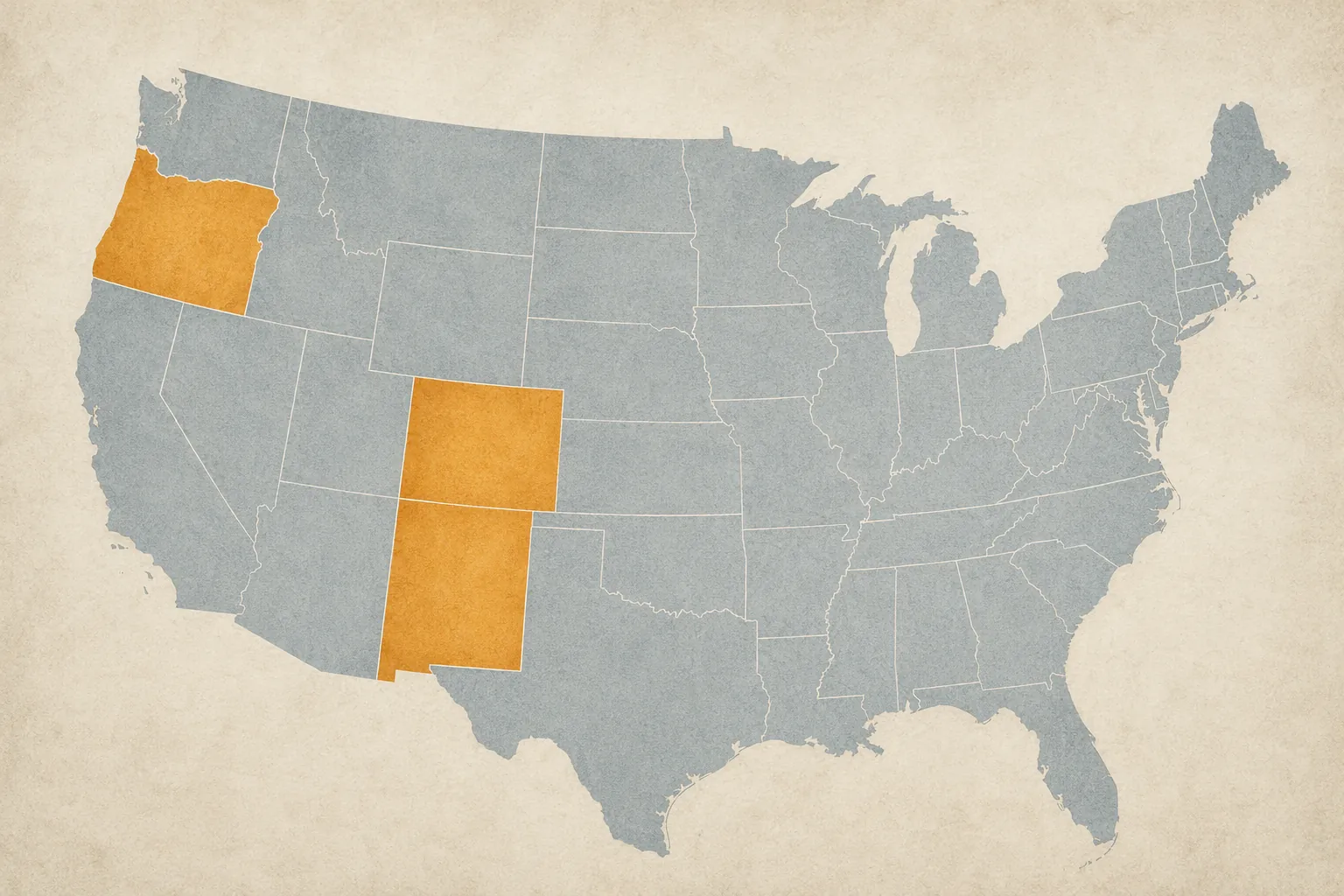
| State | Psilocybin access status for older adults | Practical meaning today |
|---|---|---|
| Alabama | No immediate state psilocybin access identified in the cited materials | Ketamine remains the separate legal medical route; psilocybin access would generally require another lawful pathway, such as a clinical trial. |
| Alaska | No immediate state psilocybin access identified in the cited materials | No state psilocybin program to rely on from the current cited sources. |
| Arizona | No immediate state psilocybin access identified in the cited materials | Do not assume local “psychedelic therapy” advertising means legal psilocybin treatment. |
| Arkansas | No immediate state psilocybin access identified in the cited materials | Ketamine clinics may exist, but that is a different legal and clinical category. |
| California | No immediate state psilocybin access identified in the cited materials | Clinical trials or other lawful routes would need to be verified separately. |
| Colorado | Operational or rolling out state psilocybin program | No upper age limit identified, but screening, cost, and noncoverage by Medicare/Medicaid remain central issues.[1][2] |
| Connecticut | Expansion signed but not operational in the cited materials | A signed development is not an appointment slot; verify launch dates before making plans. |
| Delaware | No immediate state psilocybin access identified in the cited materials | No state program access supported by the current sources. |
| Florida | No immediate state psilocybin access identified in the cited materials | Ketamine or Spravato may be medically available, but psilocybin is not shown here as a state access route. |
| Georgia | No immediate state psilocybin access identified in the cited materials | No immediate state psilocybin pathway identified. |
| Hawaii | No immediate state psilocybin access identified in the cited materials | No immediate state psilocybin pathway identified. |
| Idaho | No immediate state psilocybin access identified in the cited materials | No immediate state psilocybin pathway identified. |
| Illinois | No immediate state psilocybin access identified in the cited materials | Verify any claimed access route carefully; ketamine is the separate legal medical option. |
| Indiana | No immediate state psilocybin access identified in the cited materials | No immediate state psilocybin pathway identified. |
| Iowa | No immediate state psilocybin access identified in the cited materials | No immediate state psilocybin pathway identified. |
| Kansas | No immediate state psilocybin access identified in the cited materials | No immediate state psilocybin pathway identified. |
| Kentucky | No immediate state psilocybin access identified in the cited materials | No immediate state psilocybin pathway identified. |
| Louisiana | No immediate state psilocybin access identified in the cited materials | No immediate state psilocybin pathway identified. |
| Maine | No immediate state psilocybin access identified in the cited materials | No immediate state psilocybin pathway identified. |
| Maryland | No immediate state psilocybin access identified in the cited materials | No immediate state psilocybin pathway identified. |
| Massachusetts | No immediate state psilocybin access identified in the cited materials | No immediate state psilocybin pathway identified from the current sources. |
| Michigan | No immediate state psilocybin access identified in the cited materials | No immediate state psilocybin pathway identified. |
| Minnesota | No immediate state psilocybin access identified in the cited materials | No immediate state psilocybin pathway identified. |
| Mississippi | No immediate state psilocybin access identified in the cited materials | No immediate state psilocybin pathway identified. |
| Missouri | No immediate state psilocybin access identified in the cited materials | No immediate state psilocybin pathway identified. |
| Montana | No immediate state psilocybin access identified in the cited materials | No immediate state psilocybin pathway identified. |
| Nebraska | No immediate state psilocybin access identified in the cited materials | No immediate state psilocybin pathway identified. |
| Nevada | No immediate state psilocybin access identified in the cited materials | No immediate state psilocybin pathway identified. |
| New Hampshire | No immediate state psilocybin access identified in the cited materials | No immediate state psilocybin pathway identified. |
| New Jersey | Signed development, not operational in the cited materials | Promising on paper is not the same as current access; verify operational rules and start dates. |
| New Mexico | Building toward launch | Meaningful state to watch, but families should confirm whether services are actually available before arranging care.[1] |
| New York | No immediate state psilocybin access identified in the cited materials | No immediate state psilocybin pathway identified. |
| North Carolina | No immediate state psilocybin access identified in the cited materials | No immediate state psilocybin pathway identified. |
| North Dakota | No immediate state psilocybin access identified in the cited materials | No immediate state psilocybin pathway identified. |
| Ohio | No immediate state psilocybin access identified in the cited materials | No immediate state psilocybin pathway identified. |
| Oklahoma | No immediate state psilocybin access identified in the cited materials | No immediate state psilocybin pathway identified. |
| Oregon | Operational state psilocybin services since 2023 | No upper age limit identified, but services are out of pocket and not Medicare/Medicaid-covered in the cited materials.[1][2] |
| Pennsylvania | No immediate state psilocybin access identified in the cited materials | No immediate state psilocybin pathway identified. |
| Rhode Island | No immediate state psilocybin access identified in the cited materials | No immediate state psilocybin pathway identified. |
| South Carolina | No immediate state psilocybin access identified in the cited materials | No immediate state psilocybin pathway identified. |
| South Dakota | Pilot signed but not operational in the cited materials | Not an immediate access route for an older adult today. |
| Tennessee | No immediate state psilocybin access identified in the cited materials | No immediate state psilocybin pathway identified. |
| Texas | No immediate state psilocybin access identified in the cited materials | No immediate state psilocybin pathway identified. |
| Utah | No immediate state psilocybin access identified in the cited materials | No immediate state psilocybin pathway identified. |
| Vermont | No immediate state psilocybin access identified in the cited materials | No immediate state psilocybin pathway identified. |
| Virginia | No immediate state psilocybin access identified in the cited materials | No immediate state psilocybin pathway identified. |
| Washington | No immediate state psilocybin access identified in the cited materials | No immediate state psilocybin pathway identified. |
| West Virginia | No immediate state psilocybin access identified in the cited materials | No immediate state psilocybin pathway identified. |
| Wisconsin | No immediate state psilocybin access identified in the cited materials | No immediate state psilocybin pathway identified. |
| Wyoming | No immediate state psilocybin access identified in the cited materials | No immediate state psilocybin pathway identified. |
Oregon, Colorado, and New Mexico deserve a different kind of caution
In a family conversation, Oregon and Colorado may sound like “yes” states. For an older adult, a better translation is: there may be a legal state-regulated route, but it is not the same as a Medicare-covered psychiatric treatment plan. These programs can matter for people who have exhausted other options, but they also move the burden of screening, cost, transportation, and follow-up back onto the person and family.
New Mexico belongs in the watch-carefully group rather than the assume-access group. If a parent lives there, the right question is not “Did the law change?” but “Are licensed services actually operating, what do they require, and who is responsible if something goes wrong?” That distinction prevents a lot of expensive, emotionally charged dead ends.
The older-adult evidence gap is not a footnote
The most important number in this whole topic may be 1.4%. A 2024 systematic review by Bouchet and colleagues found that only 19 of 1,400 participants in psychedelic-assisted therapy trials were age 65 or older, based on literature through 2023.[3] That does not prove psychedelics are unsafe for older adults. It means the evidence base clinicians are asked to rely on is largely not built from older bodies, older medication lists, or older cardiovascular risk profiles.

That is where many ordinary legal-status summaries become too thin. A state may allow a psilocybin session, but a clinician still has to think about blood pressure, arrhythmia history, falls, dementia symptoms, bipolar or psychosis risk, kidney or liver disease, anticoagulants, antidepressants, sedatives, and whether the person can understand and consent to the experience. A caregiver who has ever tried to reconcile six pill bottles after a hospital discharge will recognize the problem immediately: the law is only one layer.
The UCSF Phase 1 trial is important precisely because it is aimed at this missing population. The study is designed as a safety trial of psilocybin in healthy adults ages 65–85 and began enrolling in April 2026; it is identified in the cited materials as the first dedicated geriatric psilocybin trial.[4] That is a milestone, not a reassurance. Until results are available, it should be treated as evidence that researchers are finally asking the older-adult question, not as proof that the answer is already known.
The access problem is also bigger than psychedelics. One aging-services article cites a 2012 finding that about 70% of older adults with mood and anxiety disorders never seek treatment.[5] For families, that can create a desperate atmosphere: if a parent has suffered for years, any new option can start to feel like the humane option. That is exactly when the practical questions need to get sharper, not softer.
- Ask the prescriber or program who reviews the full medication list, including sleep aids, antihistamines, pain relievers, blood thinners, antidepressants, and supplements.
- Ask whether cardiovascular screening is required and what blood pressure level would stop the session.
- Ask how the program handles cognitive impairment, suspected dementia, hallucinations, delirium history, or fluctuating attention.
- Ask who coordinates with the older adult’s primary care doctor, psychiatrist, cardiologist, neurologist, or palliative-care team.
- Ask what happens after the session if anxiety, confusion, insomnia, blood pressure problems, or suicidal thoughts worsen.
For a newer caregiver, those questions fit into the same decision-making habits used in a broader caregiver plan such as From Crisis to Confidence: A Stage-Based Guide for New Caregivers of Elderly Parents. For a family already dealing with complex prescriptions, the same caution behind medication-safety reviews applies here. And if dementia is in the picture — including Lewy body dementia, where hallucinations and medication sensitivity can already be part of daily life — psychedelic access should not be treated as a consumer wellness decision.
Ketamine is the broad legal option, but it is not interchangeable with psilocybin
If someone asks what psychedelic-like treatment an older adult can legally access today, ketamine is usually the more practical answer. Ketamine is Schedule III and is legally available in all 50 states through medical channels. Spravato, the intranasal esketamine product, has FDA approval for treatment-resistant depression, and Medicare Part B may cover it in some circumstances; the cited geriatric ketamine guide describes a session cost of about $590 with 80% covered under Part B, while also noting regional and plan variation because there is no uniform national coverage determination.[6]
The paperwork point is not minor. A family should get coverage details in writing before the first appointment: diagnosis requirement, prior authorization, site-of-care rules, observation requirements, copay, deductible status, and whether the provider accepts the older adult’s Medicare Advantage or supplemental plan. Medicare coverage can make Spravato more realistic than out-of-pocket psilocybin services, but “covered” still needs to survive the local billing office.
The older-adult ketamine data are mixed
The TRANSFORM-3 trial is a useful warning against overgeneralizing. In older adults, intranasal esketamine did not meet its primary endpoint overall, though the 65–74 subgroup showed a significant benefit signal.[6] That is narrower than many clinic websites make it sound. It also cannot simply be transferred to off-label sublingual ketamine, which is a different formulation and has not been studied specifically in older adults in the same way in the cited material.[6]
Blood pressure is one of the concrete reasons this matters. The cited geriatric ketamine source reports systolic blood pressure spikes of at least 40 mmHg in 17% of older ketamine patients, compared with about 8% in broader adult populations.[6] For a 38-year-old, that may be a monitoring issue. For a 78-year-old with vascular disease, stroke history, atrial fibrillation, or poorly controlled hypertension, it may be the reason a clinician pauses or says no.
| Route | Legal status today | Older-adult caveat |
|---|---|---|
| State psilocybin services | Available only through limited state pathways such as Oregon and Colorado, with New Mexico building toward launch | No upper age limit identified, but limited geriatric evidence, screening concerns, and out-of-pocket cost dominate. |
| Clinical psilocybin trials | Legal if the older adult qualifies and enrolls through a regulated study | Historically very low inclusion of adults 65+, with dedicated geriatric research only beginning to address the gap. |
| Spravato / intranasal esketamine | FDA-approved for treatment-resistant depression and may be covered under Medicare Part B | Evidence in older adults is mixed; coverage varies by region and plan; blood pressure monitoring matters. |
| Off-label ketamine | Legally available through medical practice in all 50 states | Not the same evidence base as Spravato; older-adult-specific data are limited in the cited material. |
What may change next, and what does not help a parent today
The legal landscape is moving fast enough that any guide like this should be checked quarterly. Executive Order 14401 and the FDA’s April 24, 2026 announcement about accelerating action on treatments for serious mental illness are important signals, and legal analysts have been watching how federal action could interact with psychedelic drug development.[7][8] But a federal policy signal is not the same as a legal treatment appointment for an older adult this month.
COMPASS Pathways’ COMP360 psilocybin program is another major item to watch. The cited tracker reports positive Phase 3 data and a planned new drug application submission, with possible approval timing discussed around late 2026 or early 2027.[9] If FDA approval happens, state trigger laws could quickly expand regulated access in states covering roughly 90% of the U.S. population. That would be a large legal shift, but it still would not erase the geriatric evidence problem overnight.
End-of-life access is a separate, emotionally serious thread. Compassion & Choices has advocated for psychedelic therapy access in end-of-life care, and the federal Right to Try Act is part of the access conversation for people with life-threatening illness.[10] Those pathways matter, especially for existential distress near the end of life, but they are not a general answer for an older adult with depression who is otherwise trying to find lawful, affordable outpatient care.
Veterans’ access is also moving. A five-year HHS-VA memorandum of understanding on veteran psychedelic access was signed July 13, 2026, according to secondary-source summaries.[11] Families should still wait for implementation details before treating it as available care: who qualifies, which diagnoses are covered, what substances are involved, where services occur, and whether older veterans with complex medical histories are included.
A safer way to proceed
For an older adult, the legal status of psychedelic therapy is not one answer. Psilocybin is legally accessible only through limited state programs or research pathways in the materials cited here, and no upper age limit is the beginning of the question, not the end. Ketamine is more widely available and Spravato may be Medicare-relevant, but the older-adult data, blood pressure effects, and coverage rules need careful review.
The safest next step is practical: verify the current state rule, ask the treating clinician to review geriatric risks and medications, confirm Medicare or plan coverage in writing, and treat legal-status pages like a quarterly checkup rather than a permanent answer.
References
- Psychedelic Beacon guide, Psychedelic Beacon.
- Frontiers in Public Health access-barriers paper, Frontiers in Public Health.
- Older Adults in Psychedelic-Assisted Therapy Trials: A Systematic Review, 2024.
- NCT07516405, UCSF Clinical Trials, April 2026.
- ASA Generations article, American Society on Aging.
- Ketamine Therapy for Elderly, Innerwell.
- FDA press release on accelerating action on serious mental illness treatments, FDA, April 24, 2026.
- Harvard Petrie-Flom Q&A on Executive Order 14401, Harvard Petrie-Flom Center.
- COMPASS Pathways COMP360 tracker, Psychedelic Alpha.
- Compassion & Choices end-of-life psychedelic therapy advocacy, Compassion & Choices.
- HHS-VA five-year MOU on veteran psychedelic access, HHS and VA, July 13, 2026.
Browse more in the Glossary.