
Glossary entry
Social Security Increase 2027: What Seniors Need to Know
Last verified 2026-07-26
This is not financial or legal advice. Medicare/Medicaid and benefits rules vary by state and change over time — verify current rules with your state Medicaid office or Area Agency on Aging.
For 2027, the Social Security increase is still only an estimate: current projections put the COLA at about 3.6% to 3.9%. For the average retired worker, that would raise a monthly benefit of about $2,084 to roughly $2,159 to $2,165, or about $75 to $81 more before Medicare is taken out.[1][2][3]
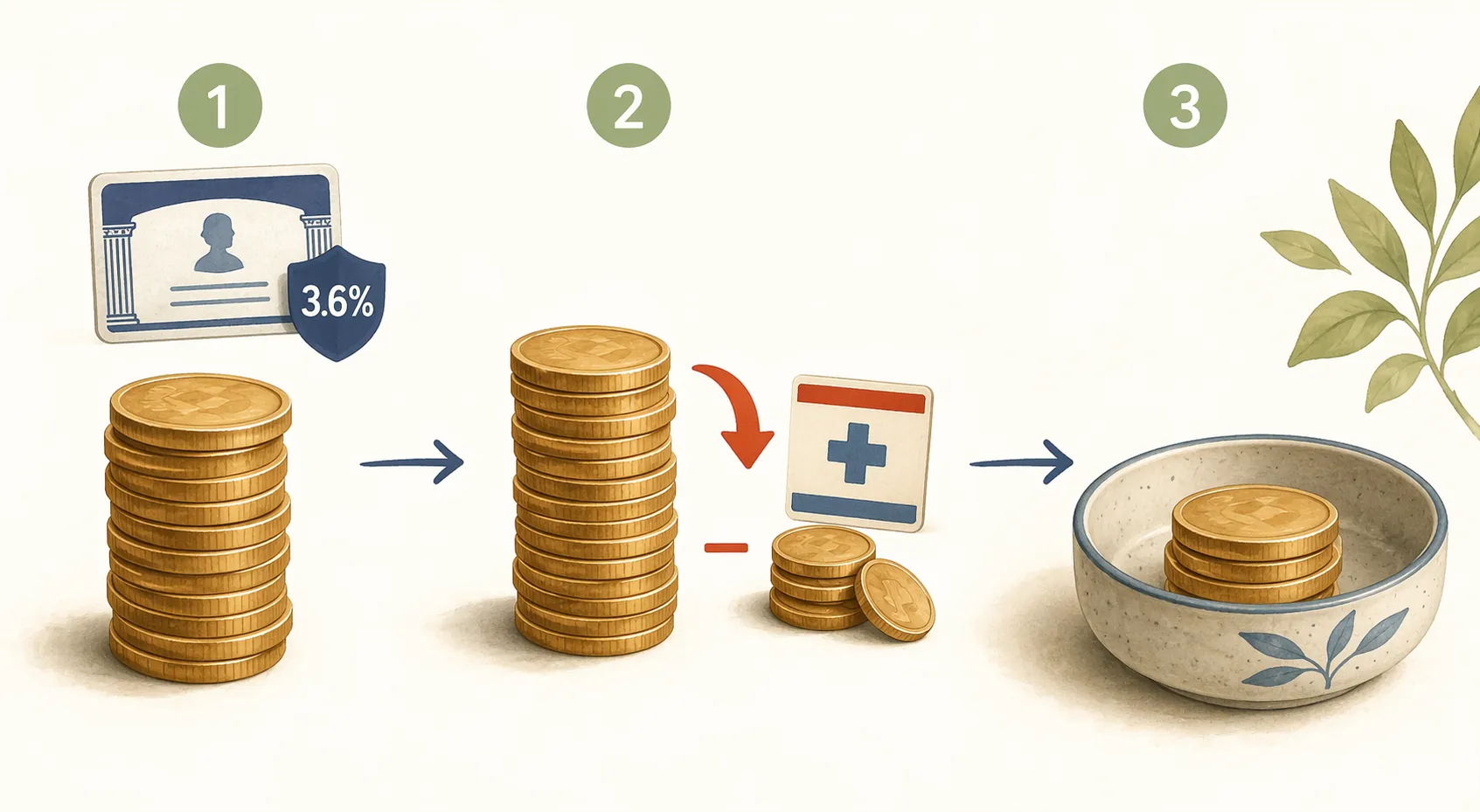
That “before Medicare” part matters. The standard Medicare Part B premium is projected to rise from $202.90 in 2026 to $209.50 in 2027, a $6.60 monthly increase based on Medicare Trustees reporting.[4] If your Part B premium is deducted from your Social Security payment, a $75 gross COLA increase turns into about $68.40 more in the bank each month.
This article is informational, not personalized financial, tax, or legal advice. Your own benefit, Medicare premium, tax withholding, and any income-related Medicare surcharges can change the number.

The Useful Number Is the Net Increase
A percentage is fine for the news. It is not enough for a grocery list, a prescription refill, or a bathroom grab bar. For household planning, the cleaner way to look at the 2027 Social Security increase is this:
| Line item | Current estimate |
|---|---|
| Average retired-worker benefit before COLA | About $2,084 per month |
| Projected 2027 COLA range | About 3.6% to 3.9% |
| Estimated gross monthly increase | About $75 to $81 |
| Projected 2027 Part B premium increase | $6.60 per month |
| Rough net gain using a $75 COLA increase | About $68.40 per month |
The table uses averages, so it will not match every check. Someone with a higher benefit would receive a larger dollar COLA. Someone with a lower benefit would receive a smaller one. But the Medicare subtraction is the part many people forget when they hear the headline COLA.
For a simple working budget, pencil in the net amount, not the full COLA. If the average gross increase lands near $75 and Part B rises by $6.60, the practical planning number is roughly $68 more per month. If the final COLA lands closer to the higher end of current projections, the net could be a little better. It is still not final.
Why the 2027 COLA Is Still Provisional
The official 2027 COLA is not known yet. Social Security calculates the annual adjustment using CPI-W inflation data from July, August, and September. The official number is expected in mid-October 2026, after the third-quarter data is available.[1]
That is why the current estimates do not all match. AARP has cited a 3.6% estimate, The Senior Citizens League has projected 3.9%, and CNBC Select has reported estimates in the same general range while translating them into average monthly dollar increases.[1][2][3] The difference is not a mistake; it reflects the fact that the last months of inflation data still matter.
If inflation cools between now and September, the final COLA can come in lower than the current range. If inflation runs hotter, it can come in higher. Until the Social Security Administration announces the official figure, any 2027 COLA number should stay written in pencil.
Medicare Part B Can Shrink the Raise Before You See It
Many retirees have Medicare Part B premiums deducted directly from their Social Security payments. When that happens, the COLA and the Part B premium change meet each other before the deposit reaches the checking account.
The 2026 Medicare Trustees-based projection puts the standard Part B premium at $209.50 in 2027, up from $202.90 in 2026.[4] Kiplinger has also reported 2027 Medicare premium and IRMAA-related estimates, while noting that official 2027 Medicare amounts are still to come.[5]
CMS is expected to publish official 2027 Medicare premiums later in 2026. Until then, $209.50 should be treated as a projection, not a confirmed bill. Higher-income beneficiaries may also owe IRMAA surcharges, so their net Social Security increase can be smaller than the basic Part B example suggests.[5]
When the Higher 2027 Payments Arrive
The 2027 COLA applies to January 2027 benefits, but not everyone receives a payment on the same day. Based on Social Security payment schedule rules reported by AARP, COLA-adjusted checks are expected to arrive on January 3, 13, 20, or 27, 2027, depending on when the person started receiving benefits and the beneficiary’s birth date.[1]
| If this applies | Expected January 2027 payment timing |
|---|---|
| Benefits started before May 1997, or certain beneficiaries who receive both Social Security and SSI | January 3, 2027 |
| Birth date falls on the 1st through 10th of the month | January 13, 2027 |
| Birth date falls on the 11th through 20th of the month | January 20, 2027 |
| Birth date falls on the 21st through 31st of the month | January 27, 2027 |
The practical point is simple: do not plan as if every senior sees the increase on January 1. If a rent payment, credit card bill, caregiver reimbursement, or home repair deposit is due early in the month, the actual Social Security deposit date matters.
What to Do Between July and October 2026
This is the waiting period when it is easy to overcount the raise. The better job is to set up a rough 2027 budget now, then revise it when the official COLA and Medicare numbers arrive.
- Write down the current monthly Social Security deposit after Medicare and tax withholding, not just the gross benefit.
- Add a temporary estimate of about $68 per month if using the average-retiree example.
- Mark the official COLA announcement for mid-October 2026, then replace the estimate with the actual percentage.
- Wait for official 2027 Medicare premiums before locking in the final monthly budget.
- Check the January 2027 payment date before promising money for repairs, family help, or annual bills.
For a broader household review, this is also the right time to revisit a mid-year financial checkup, a retirement planning checklist, or retirement age milestones if claiming decisions are still ahead. The COLA is one line in the notebook; Medicare, taxes, debt, utilities, and home safety costs sit on the same page.
Why a Larger COLA May Still Feel Tight
A 3.6% to 3.9% increase can sound meaningful and still feel thin once it reaches a household budget. The Senior Citizens League has reported that Social Security benefits have lost about 14% of buying power since 2010, arguing that the CPI-W measure does not fully reflect costs many older households face, including health care and housing.[2]
That buying-power figure is context, not a personal calculation. It does not tell any one household exactly how much shortfall to expect. It does explain why an extra $68 or so per month can disappear quickly when premiums, prescriptions, utilities, insurance, groceries, or a small home repair have already gone up.
For a senior trying to decide whether the increase can help pay for better lighting, a threshold repair, or bathroom safety work, the safest approach is to separate fixed monthly bills from one-time projects. The projected net COLA may help create room, but it should not be spent as if the full headline percentage is available.
A Simple Planning Example
Suppose a retiree is close to the average benefit and receives about $2,084 before the 2027 COLA. If the increase lands at about $75 per month and the standard Part B premium rises by $6.60, the monthly deposit improves by about $68.40 before considering taxes, other deductions, or income-related Medicare surcharges.
That amount can matter. Over a few months, it may help cover a utility increase, a prescription copay pattern, or part of a modest safety improvement at home. It is not the same as receiving the full $75 to $81 free and clear, and it is not confirmed until the official COLA and Medicare premiums are published.
The Number to Pencil In
For now, the practical answer is this: the projected COLA is about 3.6% to 3.9%, the average gross increase is about $75 to $81 per month, and the average retiree using the standard Part B example should budget closer to a roughly $68 monthly net gain.
Keep that number temporary. Replace it after the official Social Security COLA is announced in mid-October 2026, then check the official Medicare premium notice before treating the January 2027 deposit as settled.
References
- Social Security COLA 2027 Increase Estimate, AARP
- TSCL Predicts 2027 COLA Climb to 3.9 Percent as Seniors Continue to Feel Financial Strain, The Senior Citizens League
- Social Security COLA 2027, CNBC Select
- Medicare Report Estimates Future Part B Premiums. What Will You Pay in 2027 and Beyond?, MOAA
- Medicare Premiums, IRMAA Brackets and Surcharges for Part B and D in 2027, Kiplinger
Browse more in the Glossary.