
Clinical term
Is Testosterone Therapy Safe and Effective for Older Men?
Last verified 2026-07-25
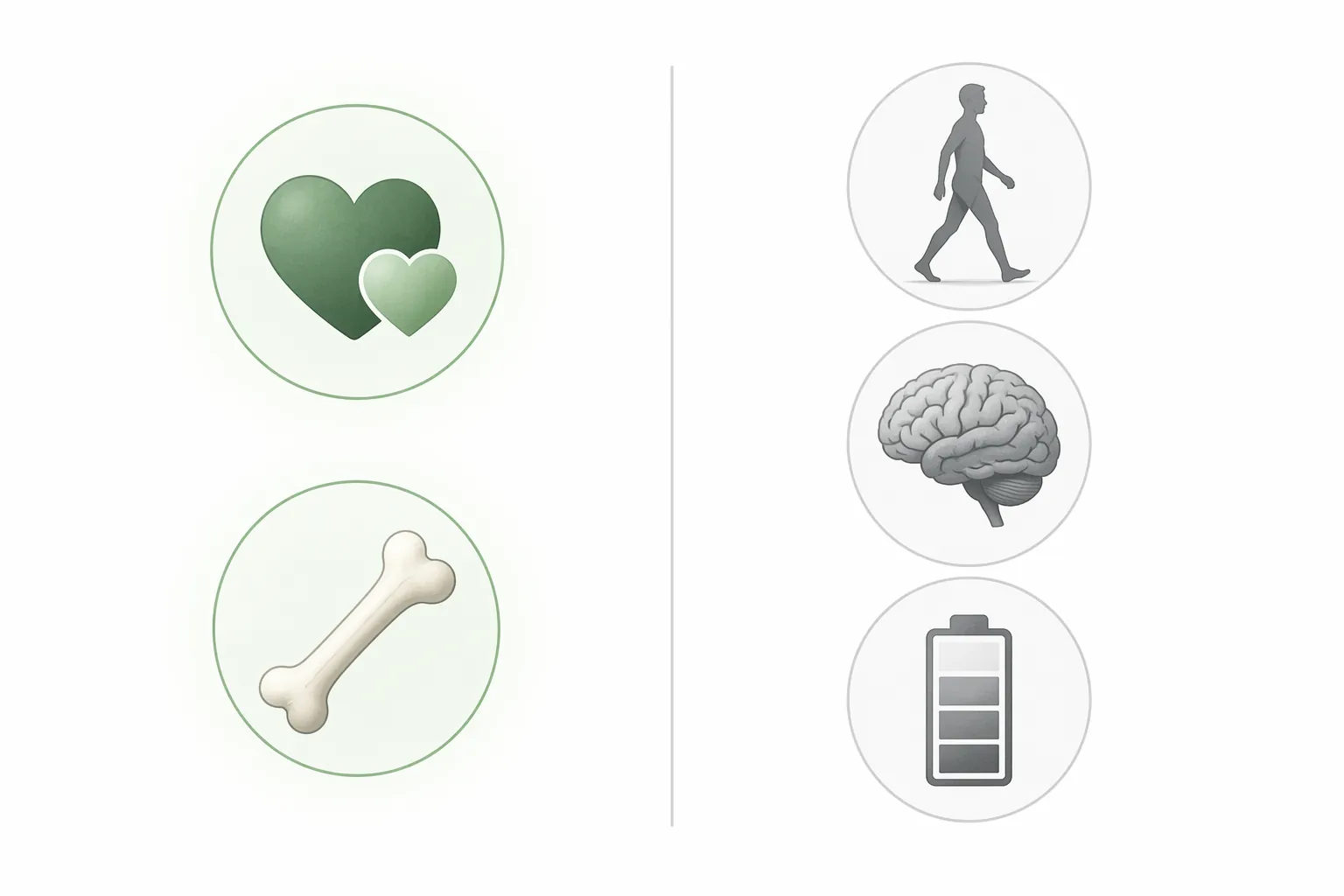
For an older man with confirmed low testosterone, testosterone therapy can help most reliably with sexual desire and some measures of sexual function. It can also improve bone mineral density. It has not shown meaningful benefit for vitality, walking capacity, physical function, or cognition in the major trials of older men, so it should not be treated as a general energy, memory, or anti-aging treatment.[1][2]
The practical question is not whether testosterone is “good” or “bad.” It is whether the symptoms, blood tests, goals, risks, and follow-up burden line up well enough to make a monitored trial of treatment reasonable. This article is for education only and is not a diagnosis or personal medical advice; decisions about testosterone therapy belong with your own healthcare provider.

Who might reasonably consider testosterone therapy?
The strongest case is an older man who has symptoms that fit low testosterone, especially sexual dysfunction, and has repeatedly low testosterone on blood testing. Symptoms alone are not enough. Fatigue, low mood, less muscle, poor sleep, medication side effects, depression, diabetes, thyroid disease, alcohol use, and ordinary aging can overlap with “low T” complaints.
Testosterone levels tend to decline by about 1% per year after roughly age 30 to 40, but age-related decline by itself rarely justifies treatment. A diagnosis generally requires confirmed hypogonadism, often using two morning testosterone measurements, with a commonly used low threshold around 300 ng/dL.[3]
The American College of Physicians guideline takes a narrow position for age-related low testosterone: discuss testosterone therapy with men who have sexual dysfunction and want improvement in sexual function, but do not start it to improve energy, vitality, physical function, or cognition. The guideline also recommends reevaluating within 12 months and stopping therapy if sexual function does not improve.[2]
What benefits are realistic?
The Testosterone Trials are the most useful evidence for day-to-day expectations in older men. They enrolled 790 men age 65 or older with testosterone levels below 275 ng/dL. Testosterone treatment produced moderate improvement in sexual desire, erectile function, and sexual activity, but did not improve vitality, six-minute walking distance, or cognitive function.[1]
Libido and erections are related, but not the same outcome
If the main concern is loss of sexual desire, testosterone therapy has a clearer evidence base. In the T Trials, sexual desire, erectile function, and sexual activity improved, but the effect was moderate rather than dramatic.[1] That distinction matters because erectile dysfunction can come from blood vessel disease, diabetes, nerve injury, medication effects, prostate treatment, relationship strain, or anxiety. Testosterone may be one part of the conversation, not a guaranteed substitute for evaluating those other causes.
Bone density improved, but fracture prevention is a separate question
Testosterone improved bone mineral density at the spine and hip in older men in the T Trials.[1] That is a real finding, and it matters for older adults because weak bones can turn a fall into a life-changing injury. Still, improved bone density should not be casually translated into “this prevents fractures” unless a study actually measures fracture outcomes. For a man at high fracture risk, the doctor may also need to consider osteoporosis testing, vitamin D status, fall risk, alcohol use, and medications that affect balance or bone.
Lean mass is not the same as useful strength
Some studies show body-composition changes with testosterone. In the T4DM trial, which studied men age 50 to 74 with impaired glucose tolerance, testosterone was associated with a small lean mass gain and fat loss compared with placebo.[4] That is not the same as proving that an older man will walk farther, rise from a chair more safely, or regain independence. In the T Trials, physical function and six-minute walk outcomes did not meaningfully improve.[1]
Energy is where expectations often get ahead of evidence
Low energy is one of the most common reasons families become interested in testosterone therapy. It is also one of the weakest reasons to start it. The ACP guideline recommends against initiating testosterone for energy or vitality, and the T Trials did not show meaningful vitality improvement.[1][2] If fatigue is the main symptom, the safer first conversation is broader: sleep quality, anemia, heart disease, depression, pain, alcohol, medications, and activity level may all matter.
Cognition has not shown clear benefit
Testosterone therapy should not be started with the expectation that it will sharpen memory or thinking. The T Trials did not show cognitive benefit, and the ACP guideline recommends against using testosterone for cognition in men with age-related low testosterone.[1][2] Memory changes deserve their own evaluation rather than being folded into a hormone prescription.
| Expectation | What the evidence supports |
|---|---|
| More sexual desire | Reasonable to discuss if testosterone is repeatedly low and sexual dysfunction is a major concern. |
| Better erections | Possible modest improvement, but erectile dysfunction often has several causes. |
| Stronger bones | Bone mineral density improved in older men, but fracture prevention should not be assumed from that alone. |
| More energy | Not supported as a reason to start therapy. |
| Better walking or physical function | Not meaningfully improved in the major older-men trial evidence. |
| Sharper memory | Not supported as an indication for treatment. |
Is testosterone therapy safe for the heart?
The cardiovascular safety discussion changed in 2023 because of TRAVERSE. This trial enrolled 5,246 men age 45 to 80 with hypogonadism and existing cardiovascular disease or elevated cardiovascular risk. Testosterone replacement was noninferior to placebo for major adverse cardiovascular events, with a hazard ratio of 0.96.[5] In plain language, the trial did not show an increased risk of heart attack, stroke, or cardiovascular death in the studied population.
That is reassuring, but it should not be stretched too far. TRAVERSE updates the heart-attack-and-stroke safety question; it does not turn testosterone into a general health treatment, and it does not erase the need to watch for other problems. The trial also found atrial fibrillation in 3.5% of the testosterone group versus 2.4% of the placebo group, and venous thromboembolism was also a noted safety signal.[5]
The monitoring burden is part of the treatment
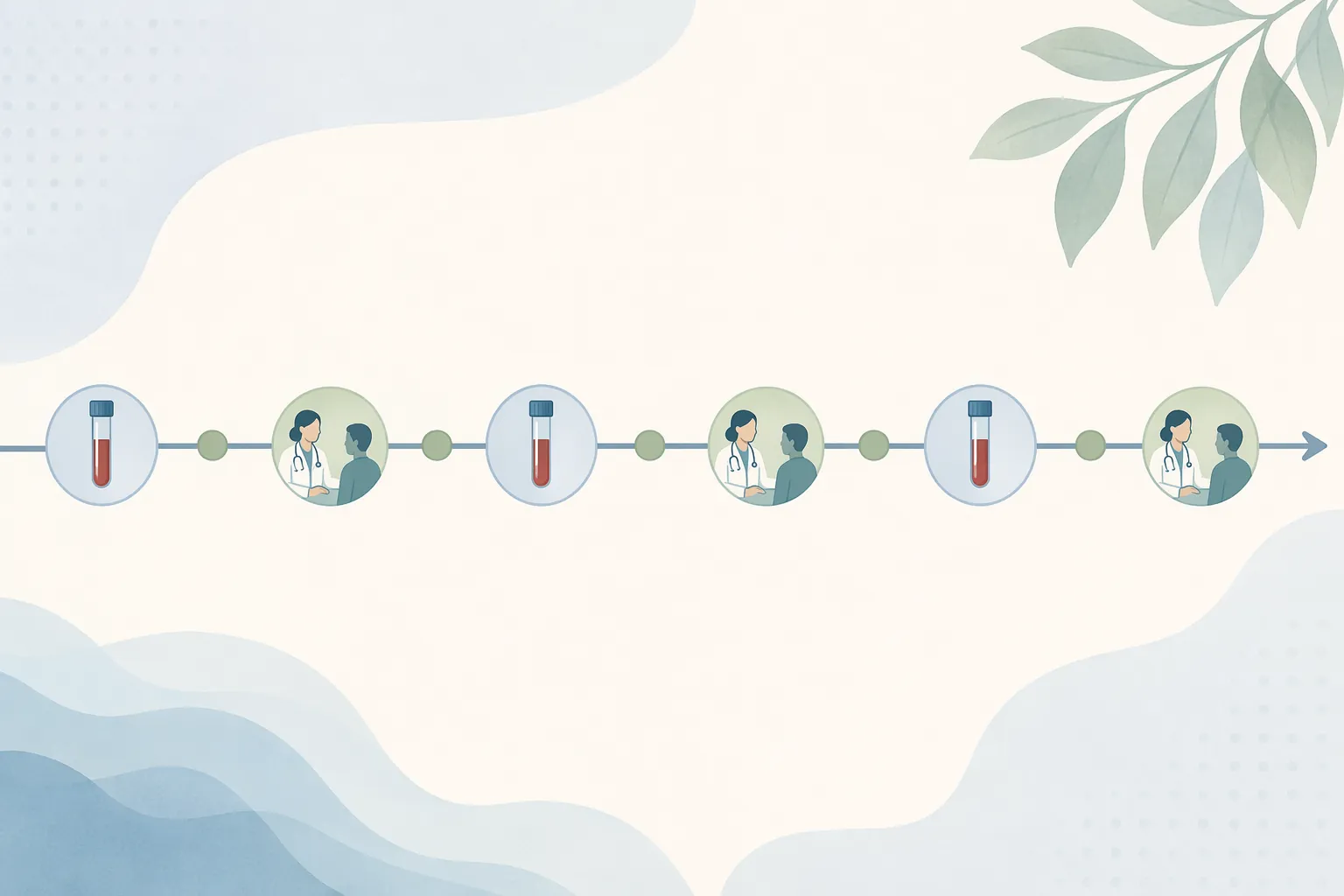
Testosterone therapy is not a one-time prescription that can be forgotten in the medicine cabinet. It requires follow-up visits, repeat blood work, symptom review, and a willingness to stop if the goal is not being met. This is especially important for older adults, who are more likely to have heart rhythm problems, sleep disorders, prostate concerns, and multiple medications.
Erythrocytosis is the lab result people should know by name
Erythrocytosis means the red blood cell concentration becomes too high, often tracked through hematocrit. A hematocrit above 54% is commonly treated as a warning threshold. In the T4DM trial, erythrocytosis occurred in 22% of men assigned to testosterone compared with 1% assigned to placebo.[4] That is not a small nuisance finding; it is one of the main reasons blood monitoring matters.
A patient starting therapy should know when the next blood test is due, what value would trigger a dose change or pause, and who will call about abnormal results. If that follow-up plan is vague, the treatment plan is not complete.
Atrial fibrillation and clotting risk deserve a direct question
For a man with a history of atrial fibrillation, unexplained palpitations, prior blood clots, stroke risk factors, or anticoagulant use, the TRAVERSE safety signals are worth discussing explicitly. The finding does not mean every older man should avoid testosterone. It does mean the conversation should include heart rhythm and clot history, not only testosterone numbers and symptoms.[5]
Some groups were not well represented in the major evidence
Major trials commonly excluded men with recent cardiovascular events, prostate cancer, or severe sleep apnea, and evidence in men over 80 remains limited; the T Trials had a mean age of 72, and TRAVERSE enrolled men only up to age 80.[1][5] Those gaps do not automatically rule out treatment, but they move the decision further into individualized medical judgment.
What about diabetes prevention?
The T4DM trial deserves attention but not overuse. It studied 1,007 men age 50 to 74 with impaired glucose tolerance and found a 40% relative reduction in type 2 diabetes risk with testosterone, with a relative risk of 0.59.[4] That result applies to a specific group of men with impaired glucose tolerance, not to all older men with low energy, weight gain, or a family history of diabetes.
The same trial also reported the high erythrocytosis rate noted earlier.[4] So even where a metabolic signal looks promising, the risk-and-monitoring side of the ledger does not disappear.
Does the form of testosterone matter?
Formulation matters for cost, convenience, skin transfer risk, dosing stability, and follow-up, but this should not become a shopping exercise before the diagnosis and treatment goal are clear. The ACP guideline reported large cost differences in 2016 Medicare data: intramuscular testosterone cost about $156 per year compared with about $2,135 per year for transdermal therapy. In ACP patient preference data, 53% preferred injectable treatment over gel because of lower cost.[2]
Cost is not a side issue for older adults on fixed incomes. If a man stops because the treatment is expensive, messy, inconvenient, or not helping, that is still part of the real-world effectiveness picture. The ACP guideline review reported observational discontinuation rates of 30% to 62%.[2]
Questions to bring to the doctor
The best visit is not the one where a patient argues for or against testosterone in the abstract. It is the one where the goal, diagnosis, risks, and stopping rule are made plain.
- Have my testosterone levels been checked twice in the morning, and were they clearly low?
- Are my symptoms mainly sexual dysfunction, or are we trying to treat fatigue, weakness, mood, or memory?
- What other causes of these symptoms should be checked before starting testosterone?
- What benefit would count as success, and when will we decide whether it is working?
- How often will hematocrit and other labs be monitored, and what result would make us stop or change the dose?
- How do my history of heart disease, atrial fibrillation, blood clots, prostate cancer, sleep apnea, or recent cardiovascular events affect the decision?
- Which formulation fits my cost, safety, and follow-up situation?
A careful trial of testosterone therapy can be reasonable for an older man with confirmed low testosterone when the main goal is better sexual function, with bone-density benefit as a secondary evidence-supported point. It is not well supported for energy, strength, walking, or cognition. The improved cardiovascular safety evidence is reassuring, but monitoring for erythrocytosis, atrial fibrillation, venous thromboembolism, and uncertainty in groups not well represented in trials is part of the price of admission.
References
- Effects of Testosterone Treatment in Older Men, New England Journal of Medicine, 2016,
- Testosterone Treatment in Adult Men With Age-Related Low Testosterone: A Clinical Guideline From the American College of Physicians, Annals of Internal Medicine, 2020,
- Testosterone Therapy in Older Men, Drugs & Aging, 2025,
- Testosterone Treatment to Prevent or Revert Type 2 Diabetes in Men Enrolled in a Lifestyle Programme, Lancet Diabetes & Endocrinology, 2021
- Cardiovascular Safety of Testosterone-Replacement Therapy, New England Journal of Medicine, 2023,
Browse more in the Glossary.