
Product term
Thyroid Medication Recall Safety for Seniors
Last verified 2026-07-27
If a recall headline has you holding your levothyroxine bottle and wondering whether to skip tomorrow’s pill, start here: do not stop taking levothyroxine on your own. The July 2025 recall involved certain levothyroxine sodium tablets that may have contained less active hormone than the label said, but abruptly stopping thyroid medication can create its own danger, especially for older adults. The safer first move is to check whether your exact bottle is affected, call the pharmacist, and arrange an uninterrupted replacement.
As of July 27, 2026, the recall information people most often ask about is the FDA Class II recall covering more than 160,000 bottles of levothyroxine sodium tablets made by Intas Pharmaceuticals and distributed by Accord Healthcare and Major Pharmaceuticals, in strengths from 25 mcg through 175 mcg.[1] A Class II recall means use of or exposure to the product may cause temporary or medically reversible health consequences, while the probability of serious harm is remote.[2] That wording matters: it is serious enough to act on, but it is not a reason to abandon a daily medication without a clinician’s instruction.
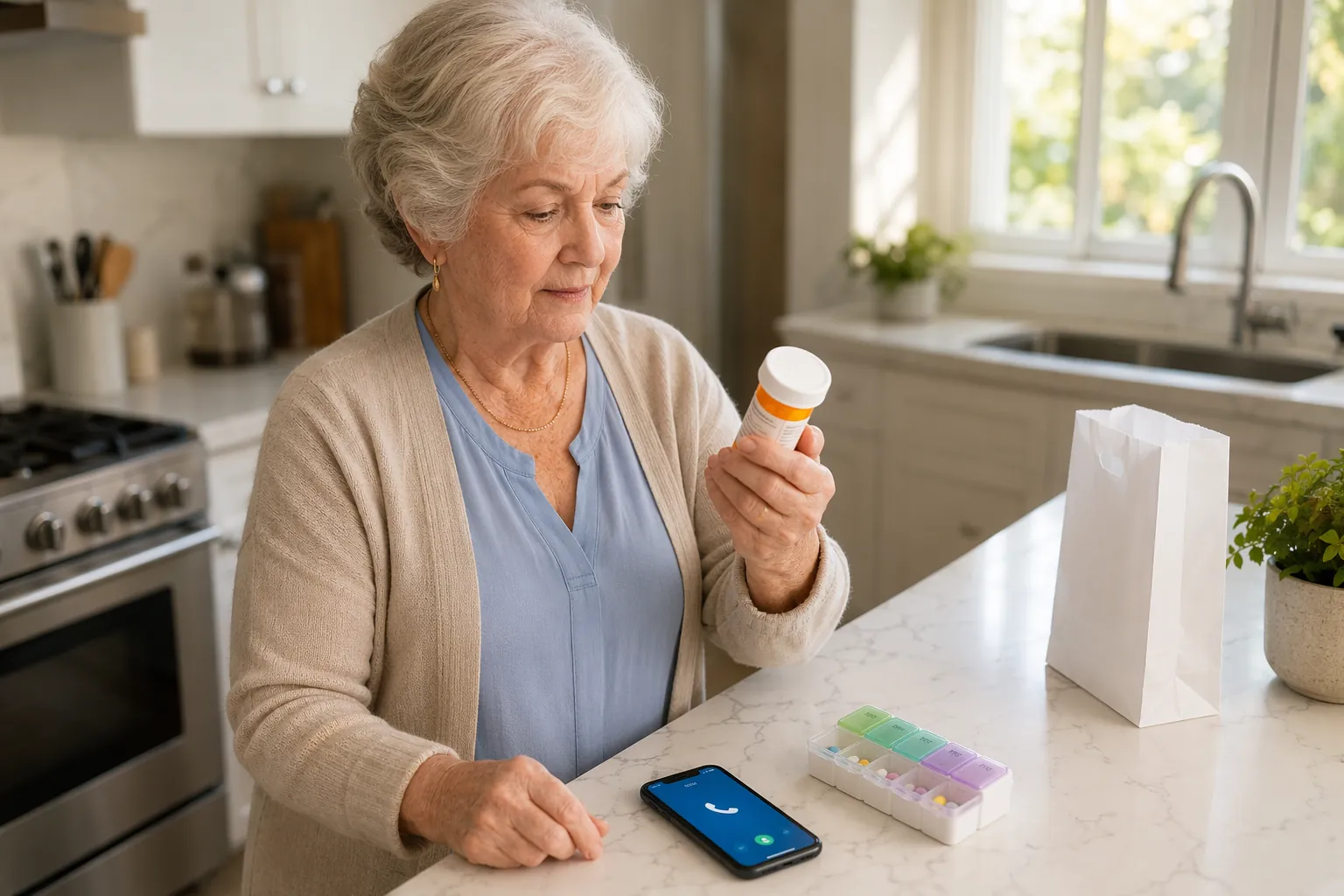
What to do before the next dose
This is educational guidance, not personal medical advice. If your prescriber has given you different instructions because of heart disease, recent thyroid lab results, thyroid cancer treatment, or another condition, follow that clinician’s plan. For most people standing at the counter with the bottle in hand, the safe workflow is simple enough to write on a notepad.
- Keep taking levothyroxine as prescribed unless your doctor, pharmacist, or another qualified clinician tells you otherwise. The American Thyroid Association warns patients not to discontinue levothyroxine abruptly.[3]
- Find the drug name, manufacturer or distributor, strength, lot number, and expiration date on the prescription bottle or pharmacy paperwork.
- Compare those details with the FDA recall listing for the affected levothyroxine lots. Match all details, not just the medication name.
- Call the dispensing pharmacy and say: “I take levothyroxine. I’m checking whether my bottle is part of the recall. Can you verify the lot and tell me how to get an unaffected replacement without missing a dose?”
- Ask whether the replacement will come from a different lot or a different manufacturer, and whether your prescriber must send a new prescription.
- After the replacement, watch for returning hypothyroid symptoms for two to four weeks and report concerning changes promptly.
That first instruction is not there to calm people down with empty reassurance. It is there because missed levothyroxine doses can leave an older adult undertreated, and the symptoms of undertreatment are often the same symptoms families already struggle to interpret: tiredness, slowed thinking, low mood, constipation, cold sensitivity, swelling, weight gain, and less steady walking. The recall problem was possible subpotency, not contamination with a poison. Treat it as a replacement problem, not a reason to create a medication gap.
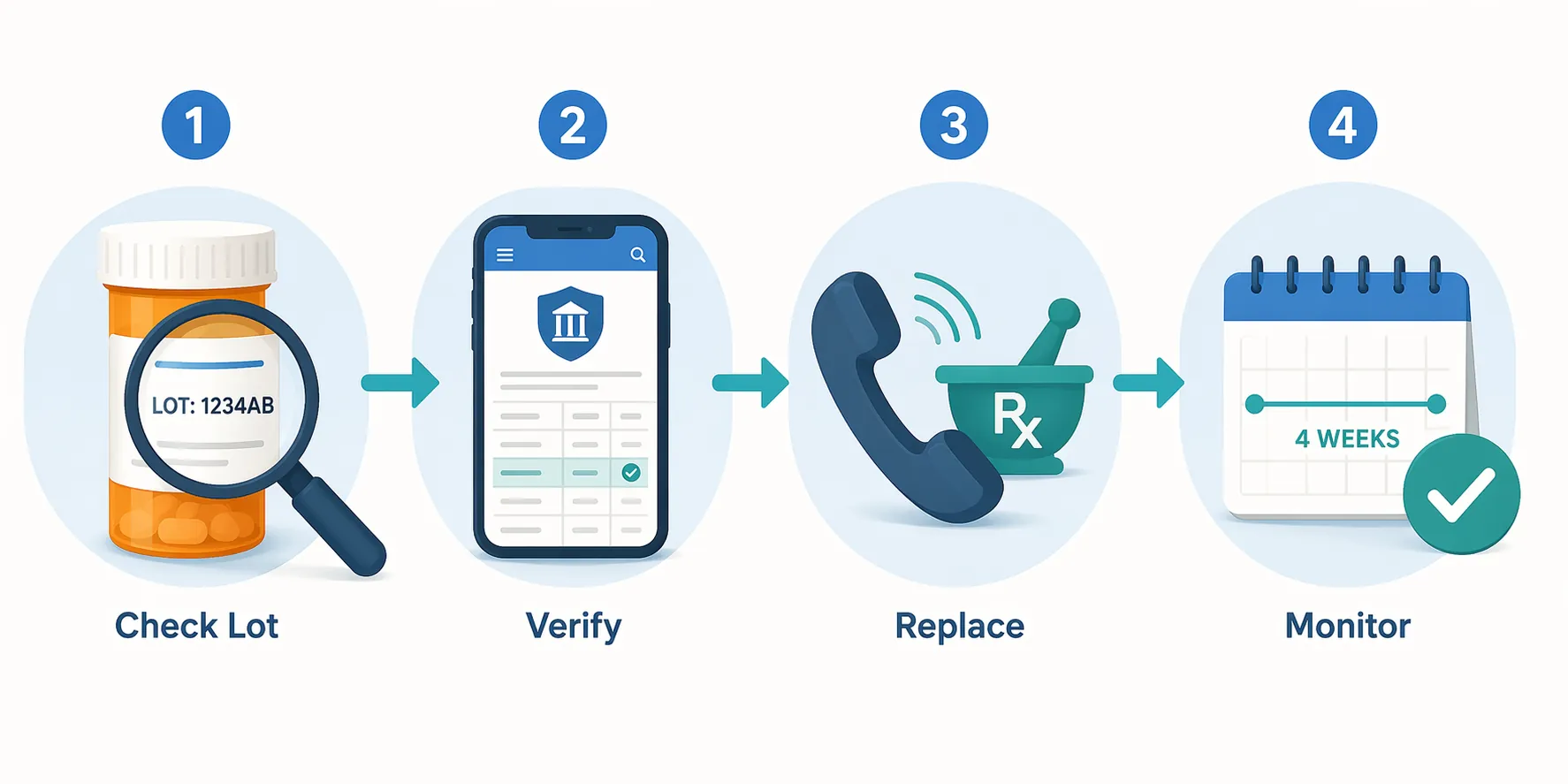
How to check the bottle without guessing
Do not decide based on the word “levothyroxine” alone. Levothyroxine is widely used, and a recall normally applies to specific manufacturers, strengths, lots, and expiration dates. One bottle can be affected while the same medicine at the same dose from another lot is not.
| What to look for | Where it may appear | Why it matters |
|---|---|---|
| Medication name | Prescription label, pharmacy leaflet | Confirms you are checking levothyroxine sodium, not another thyroid medicine |
| Strength | Bottle label, usually in mcg | The recall covered listed strengths from 25 mcg through 175 mcg, so strength must match the recall entry |
| Manufacturer or distributor | Bottle label, pharmacy printout, pharmacy record | The July 2025 recall involved Intas Pharmaceuticals, Accord Healthcare, and Major Pharmaceuticals products |
| Lot number | Bottle label or pharmacy-supplied packaging details | This is the key identifier for whether your exact supply is included |
| Expiration date | Bottle label or original package information | Helps distinguish similar lots and confirms the affected product entry |
If the pharmacy repackaged the tablets into a standard orange bottle and you cannot find the lot number, do not sit there trying to decode the label. Call the pharmacy. They can often check the dispensing record and the stock bottle information. If the first person who answers cannot verify it, ask for the pharmacist.
The FDA’s medication-safety advice for older adults includes keeping a current medicine list, using medicines as directed, storing them properly, and checking expiration dates.[4] For a recall, that written list becomes useful only if it includes the dose and pharmacy contact information. A caregiver who helps with refills should have the same list, or at least know where it is kept.
For broader organizing help, a practical medication list and refill routine can be easier to maintain with a standing system like Medication Management for Older Adults: A Caregiver's Practical Guide. Recall checking goes much faster when the ordinary medication paperwork is not scattered between three drawers.
What to ask the pharmacist
The pharmacist is the right first call because the pharmacy dispensed the bottle and can usually see the product source. The goal is not just to hear “yes” or “no.” The goal is to leave the call knowing what tablet you should take next, when you can pick it up, and whether anyone still needs to contact the prescriber.
- “Can you confirm whether my levothyroxine lot number and expiration date are on the FDA recall list?”
- “If it is affected, do you have an unaffected lot of the same strength available today?”
- “Will the replacement be from the same manufacturer or a different manufacturer?”
- “Do I need a new prescription from my doctor for the replacement?”
- “Should I keep taking my current tablets until the replacement is ready, or has my prescriber given different instructions?”
- “Will my insurance or Medicare Part D plan require any special processing for a recall replacement?”
That Medicare Part D question is administrative, not a benefits lesson. Levothyroxine is commonly covered, but a replacement involving a different manufacturer, early refill, or new prescription can create a delay. Ask early so the pharmacy has time to sort it out before the pill organizer is empty.
If the pharmacy says the replacement requires prescriber approval, call the prescriber’s office the same day. Use plain wording: “My levothyroxine bottle may be part of the July 2025 recall. The pharmacy says I may need an unaffected replacement or different manufacturer. I am trying not to miss a dose.” That last sentence is important. It tells the office this is a continuity-of-care issue, not a casual refill request.
Why seniors need closer watching after a subpotent recall
Subpotent means the tablet may contain less active thyroid hormone than the labeled amount. For an older adult, that can matter even when the difference sounds small, because levothyroxine dosing in later life has a narrow practical margin. Reviews of levothyroxine treatment in older adults describe age-related issues including reduced clearance, cardiac sensitivity, atrial fibrillation concern, and bone-density concern; one review also reported that up to 41% of older adults on levothyroxine had suppressed TSH, a sign of possible overtreatment.[5]
This is why the answer to a subpotent recall is not to double a pill, skip a pill, or switch brands casually from a leftover bottle in the cabinet. Undertreatment and overtreatment both have consequences. Too little thyroid hormone can bring back hypothyroid symptoms; too much can be hard on the heart and bones. A BMJ nested case-control study found that higher levothyroxine doses in older adults were associated with increased fracture risk, which supports being careful about dose changes rather than improvising at home.[6]
Bone concerns have not disappeared in newer research. Reporting on a 2024 RSNA study described greater bone-mass loss over six years among levothyroxine users over 65 compared with non-users, even when TSH was in the normal range.[7] That does not mean older adults should stop levothyroxine. It means dosing and monitoring deserve respect, especially when a recall forces a product change.
The symptoms families miss
The American Thyroid Association notes that thyroid disease in older adults may show up differently than it does in younger people, and hypothyroidism can be associated with fatigue, confusion, depression, falling, and heart failure in older patients.[8] Those are exactly the changes that get brushed off as aging, grief, poor sleep, or “slowing down.” After a subpotent recall, do not dismiss a new pattern just because each symptom seems ordinary by itself.
- More fatigue than usual, especially if it changes daily routines
- New or worsening cold sensitivity
- Constipation that is new for the person
- Slower thinking, more confusion, or less interest in normal activities
- Unexplained weight gain or puffiness
- More unsteadiness, near-falls, or actual falls
- Shortness of breath, swelling, chest discomfort, or worsening heart-failure symptoms
A caregiver does not need to diagnose thyroid levels from the kitchen table. The job is to notice a change, write down when it started, and tell the clinician that it happened around a recalled supply or a replacement switch. That gives the prescriber a cleaner story and may help decide whether thyroid labs or a dose review are needed.
Watch the calcium and iron timing
A recall can uncover another problem that was already there: levothyroxine being taken too close to calcium or iron. Calcium and iron supplements can reduce levothyroxine absorption by about 20% to 30%, and a four-hour separation window is commonly recommended.[5] Many seniors take calcium for bone health or iron for anemia, so this is not a small detail.
A practical schedule might be levothyroxine first thing in the morning with water, then calcium or iron later in the day. If the person takes levothyroxine at bedtime, the same separation rule still matters. Do not change a long-standing schedule without checking whether it will collide with meals, other prescriptions, or the person’s ability to remember the dose.
This matters after a recall because poor absorption can look like undertreatment from a weak tablet. If the dose, manufacturer, and lot all change at the same time that supplements are taken too close together, the clinician has a much harder time interpreting symptoms and lab results.
After the replacement: monitor for two to four weeks
Once the pharmacist provides an unaffected replacement, keep the old bottle separate until the pharmacy tells you what to do with it. Do not pour old and new tablets into the same organizer without checking. If a caregiver fills the weekly pill box, mark the date the replacement started.
| What to track | What to write down |
|---|---|
| Start date | The first day the unaffected replacement was taken |
| Tablet details | Strength, manufacturer if known, and whether the pill looks different |
| Symptoms | Fatigue, cold sensitivity, constipation, mood, thinking, swelling, weight change, balance changes |
| Missed doses | Any day the person skipped, delayed, doubled, or vomited after a dose |
| Supplement timing | Calcium, iron, antacids, or multivitamins taken within four hours |
| Calls made | Date and name of pharmacist, prescriber office, or nurse who gave instructions |
Two to four weeks is a practical home-monitoring window, not a promise that every thyroid lab value will settle in that time. It is long enough for families to notice whether the person is returning to baseline or drifting into a pattern that needs a call. If symptoms are severe, new, or cardiac-related, do not wait for the end of the window.
For families who want a familiar recall-monitoring structure, the same basic habit applies across other safety notices: verify the affected item, remove or replace it correctly, and watch the senior for changes. That approach is similar to the monitoring pattern in How to Check on a Senior After the 2026 Egg Recall, though medication recalls require a pharmacist or prescriber before treatment changes.
When to call the clinician
Call the prescriber promptly if the pharmacy confirms the bottle is affected, if a different manufacturer is needed, if the older adult has symptoms that are new or worsening, or if there is any confusion about whether to keep taking the current supply while waiting for replacement. Also call if the person has a history of atrial fibrillation, heart failure, osteoporosis, recent fracture, thyroid cancer treatment, or recent abnormal thyroid labs. Those details can change how closely the clinician wants to monitor the switch.
Seek urgent medical help for chest pain, fainting, severe shortness of breath, sudden severe confusion, signs of stroke, or a fall with injury. Those symptoms should not be managed as a routine recall question.
If the adult child is helping by phone, ask them to stay on the line while the bottle is read out loud. One person can read the label; the other can write down the lot, strength, expiration date, pharmacy number, and pharmacist’s instructions. That small handoff prevents a common recall mistake: everyone assumes someone else wrote down the exact detail.
The safe plan is not complicated, but it has to be done in order: keep the medication going unless a clinician says otherwise, verify the exact bottle, replace it through the pharmacy, involve the prescriber when needed, separate levothyroxine from calcium and iron, and watch the person—not just the headline—for the next few weeks.
References
- FDA Upgrades Recall on 160,000 Bottles of Thyroid Medication, HealthDay.
- Recalls Background and Definitions, U.S. Food and Drug Administration.
- FDA Alert: Levothyroxine 2025, American Thyroid Association.
- 5 Medication Safety Tips for Older Adults, U.S. Food and Drug Administration.
- Levothyroxine Therapy in Elderly Patients With Hypothyroidism, Frontiers in Endocrinology.
- Levothyroxine dose and risk of fractures in older adults: nested case-control study, BMJ, 2011.
- Synthroid May Be Linked to Bone Loss, Study Finds, Health.com.
- Older Patients and Thyroid Disease, American Thyroid Association.
Browse more in the Glossary.