
Clinical term
Thyroid Medication Recalled? What Seniors Need to Do First
Last verified 2026-07-27
If you hear that your thyroid medication has been recalled, do not pour the pills into the trash and do not skip tomorrow morning’s dose unless the recall notice, your pharmacist, or your prescriber tells you to stop. For many thyroid recalls, the safer first move is slower and more ordinary: find the bottle, check the lot number, confirm whether your exact bottle is included, and arrange a replacement before changing the dose.
The FDA says that for Class II and Class III drug recalls, consumers can generally continue taking the medicine while they follow the recall instructions, unless they are told otherwise by the manufacturer or a health professional.[1] Cleveland Clinic gives the same practical warning from the patient side: a recall notice does not automatically mean you should stop taking the medicine before you verify what applies to your own prescription.[2]

What to do first, in order
- Keep taking the thyroid medication as prescribed unless the recall notice or a clinician specifically tells you to stop.
- Put the bottle, pharmacy notice, and your medication list on the table so you are not relying on memory.
- Find the drug name, strength, manufacturer, National Drug Code if listed, expiration date, and lot number.
- Compare those details with the FDA notice, pharmacy message, or manufacturer notice.
- If any part is unclear, call the dispensing pharmacy before skipping doses.
- If the bottle is affected, ask how to get a replacement supply and whether your prescriber needs to issue a new prescription.
That order matters. A thyroid pill is usually taken every day, and older adults may have more than one bottle in the house: the current bottle, an emergency travel bottle, a mail-order refill that arrived early, or an old bottle kept “just in case.” A recall may apply to one lot and not another. The headline may name levothyroxine, but the bottle in your hand may have a different manufacturer, lot, or fill date.
The current example is the July 2026 Major Pharmaceuticals levothyroxine recall. It involved about 160,000 bottles and was described as a Class II recall tied to subpotent tablets, meaning the medicine may contain less active ingredient than intended.[3] That is not the same as a warning that every thyroid pill on the shelf is contaminated or immediately dangerous. It does mean the exact bottle has to be checked.
Find the lot number before you make a medication decision
The lot number is the recall’s fingerprint. It tells the pharmacy and manufacturer which manufacturing batch the bottle came from. A recall notice may also list the drug strength, package size, expiration date, and manufacturer. All of those details help separate an affected bottle from an unaffected one.
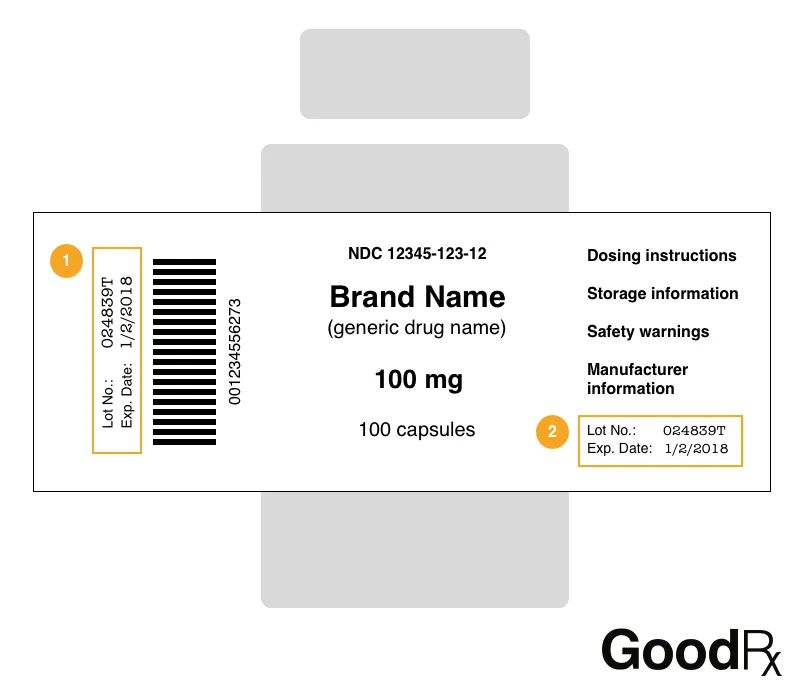
On some bottles, the lot number is printed on the pharmacy label. On others, it may be on the manufacturer’s original packaging, a side label, or paperwork that came with the prescription. GoodRx notes that lot numbers are often found on the bottle or packaging and are used to match a medicine to a recall notice.[4] If the print is too small, take a photo with a phone and enlarge it, or ask the pharmacy to look up the fill record.
If you use a pill organizer, do not try to identify loose tablets by sight. Put the organizer aside and go back to the labeled bottle or pharmacy record. Many thyroid tablets are small, and strength changes can be hard to see. If a caregiver fills the organizer for the week, that caregiver should check which bottle was used, not just which pills are in the Monday-through-Sunday box.
Mail-order pharmacy adds one more layer. The bottle may not have come from the same local counter where you usually ask questions, and replacement shipping can take longer. Call the customer service number on the prescription label and ask for the recall department or pharmacist. Have the bottle in your hand when you call. If the mail-order pharmacy confirms the bottle is affected, ask whether they can transfer a short replacement fill to a local pharmacy while the full replacement is processed.
If your bottle is not affected
If the lot number, strength, manufacturer, and expiration date do not match the recall notice, keep taking the medicine as prescribed. Save the recall notice or write down the date you checked it, especially if an adult child, spouse, home aide, or nurse helps with medications. A short note on the medication list can prevent the same scare from being re-checked three times by three different people.
The FDA encourages older adults to keep an up-to-date medication list, including prescription drugs, over-the-counter products, vitamins, and supplements.[5] During a recall, that list becomes more than tidy recordkeeping. It tells the pharmacist which thyroid strength you take, which doctor prescribed it, and what else might matter if symptoms change.
If your bottle is affected
If the pharmacy confirms that your bottle is part of the recall, ask three questions before you hang up:
- Should I keep taking this bottle until the replacement is ready?
- How soon can you provide an unaffected replacement in the same strength?
- Does my prescriber need to approve a new prescription, brand change, manufacturer change, or early refill?
For a Class II subpotency recall, the answer is often not an emergency stop. It is usually a controlled replacement. The FDA’s general Class II and III guidance supports continuing the medication while following recall instructions, but that guidance has limits.[1] If the recall notice, manufacturer, pharmacist, or prescriber says to stop, stop according to their instructions. If the notice is a more urgent Class I recall, do not treat it like a routine subpotency replacement.
Do not change the dose on your own to “make up” for possible weakness. Taking two tablets, cutting tablets differently, or alternating doses without prescriber guidance can create a new problem. Thyroid dosing is adjusted carefully because both too little and too much thyroid hormone can matter, especially for people with heart disease, frailty, or several medications.
What “subpotent” means for a thyroid recall
Subpotent means the tablet may have less active medicine than it should. With levothyroxine or other thyroid hormone medicine, that can act like getting a lower dose than prescribed. The concern is usually a return of hypothyroid symptoms or lab changes, not a sudden poisoning event.
This is why recall class matters. A Class II recall is used when a product may cause temporary or medically reversible health consequences, or when the probability of serious harm is remote.[1] The July 2026 Major Pharmaceuticals recall was described as Class II and tied to subpotent levothyroxine tablets.[3]
That does not make the recall meaningless. Thyroid medicine is not a casual pill for many older adults. HealthInAging.org, from the American Geriatrics Society’s Health in Aging Foundation, says up to 15% of adults over age 70 have hypothyroidism, including subclinical hypothyroidism.[6] A recall can therefore land in many households where the morning pill routine is already tied to energy, balance, heart symptoms, and the rest of the medication schedule.
What to watch for while you are replacing the medicine
While you are waiting for a replacement, watch for symptoms that could mean the dose is not doing its usual job. The changes may be subtle at first: unusual fatigue, feeling colder than usual, constipation, dry skin, mental fogginess, low mood, swelling, slower movement, or new weakness. In an older adult, these can be mistaken for “just aging,” a bad night’s sleep, or recovery from another illness.
For someone who already has balance trouble, muscle weakness or slowed thinking can also affect fall risk. If that is your concern, our deeper guide on subpotent levothyroxine and falls in seniors explains that connection in more detail. For a broader home-safety review, see the fall prevention FAQ.
Heart symptoms deserve faster attention. In an FDA-posted recall notice for certain Acella NP Thyroid lots, the company warned that patients with underlying cardiac disease who received too much or too little thyroid hormone could experience cardiac pain, palpitations, or cardiac arrhythmia.[7] That was a different recall, but the caution belongs at the kitchen table whenever an older adult with heart disease is dealing with a thyroid dose problem.
- Call the prescriber promptly for new or worsening palpitations, chest discomfort, shortness of breath, fainting, or an irregular heartbeat.
- Call sooner if the person has known heart disease, atrial fibrillation, recent hospitalization, or a recent thyroid dose change.
- Seek urgent medical help for severe chest pain, trouble breathing, fainting, stroke-like symptoms, or symptoms that feel immediately dangerous.
- Write down when symptoms started, which bottle was used, and whether any doses were missed, doubled, or delayed.
Do not wait for a routine appointment if symptoms are changing quickly. A recall replacement is a pharmacy task; chest pain or a new rhythm concern is a clinical task.
Who to call, and what to say
Start with the pharmacy that filled the prescription. The pharmacist can usually verify the lot, manufacturer, and fill history faster than the prescriber’s office can. If the bottle is affected, the pharmacy can tell you whether they have unaffected stock, whether the refill is too soon for insurance, and whether they need a new prescription.
| Situation | Best first call | What to ask |
|---|---|---|
| You cannot read the lot number | Pharmacy | Can you verify my lot from the fill record? |
| The bottle matches the recall | Pharmacy | How do I get an unaffected replacement before I stop or change anything? |
| The pharmacy needs authorization | Prescriber | Can you approve a replacement, early refill, or manufacturer change? |
| Symptoms are changing | Prescriber or urgent care depending on severity | Could this be related to thyroid dose change, missed doses, or another condition? |
| You use mail order and replacement is delayed | Mail-order pharmacy, then prescriber if needed | Can a short local supply be arranged? |
When you call, keep the request plain: “I take levothyroxine. I heard there is a recall. Can you check whether my bottle’s lot number is included, and tell me how to replace it if it is?” If you are calling for a parent or spouse, say whether you are listed as an authorized contact. If not, have the patient nearby to give permission.
For households juggling several prescriptions, the recall may expose a larger medication-organization problem. Our caregiver’s guide to medication management for older adults covers medication lists, refill systems, and caregiver handoffs. If you have handled recalls before in another drug class, the same verification-first pattern also appears in our guide to recalled allergy medication for seniors.
What not to do
- Do not stop thyroid medication only because a news story names the same drug.
- Do not assume every bottle in the house is affected.
- Do not double doses to compensate for a possible subpotent tablet.
- Do not mix loose pills from several old bottles to “use up” what is left.
- Do not throw away the recalled bottle until the pharmacy tells you how to return or dispose of it.
- Do not ignore chest pain, palpitations, fainting, or a new irregular heartbeat while waiting for a replacement.
The bottle may be needed for lot verification, insurance replacement, or return instructions. If the pharmacy tells you to stop using it, separate it from the daily pill area and label it clearly so it does not get put back into the organizer by mistake.
Check the latest notice before relying on an old screenshot
Recall details can be updated. Lot numbers, distribution information, and pharmacy instructions may change after the first article or social media post circulates. Use the most current FDA recall information, the manufacturer’s notice, or the pharmacy’s own records. If those sources disagree with a general article, the pharmacy and current official notice should guide the next step.
For most seniors facing a thyroid medication recall, the useful answer is not dramatic: keep the routine steady, verify the exact bottle, replace affected medication promptly, and watch symptoms while the replacement is being arranged. The person who has to take the morning pill needs a confirmed plan more than a frightening headline.
References
- Understanding Drug Recalls: What to Know and What to Do — FDA
- Medication Recalled? What You Should Do Next May Surprise You — Cleveland Clinic
- Commonly Prescribed Thyroid Medication Recalled Nationwide, FDA Warns — Prevention
- Drug Recalls: What to Do If Your Medication Is Recalled — GoodRx
- 5 Medication Safety Tips for Older Adults — FDA
- Thyroid Problems: Basic Facts — HealthInAging.org
- Acella Pharmaceuticals, LLC Issues Voluntary Nationwide Recall of Certain Lots of NP Thyroid® (Thyroid Tablets, USP) Due to Super Potency — FDA
Browse more in the Glossary.