
Product term
How to Build Timeless Summer Outfits for Older Women
Last verified 2026-07-24
The hard summer outfit is not the dressy one. It is the ordinary Tuesday outfit: something cool enough for errands, polished enough for lunch, easy enough to put on without a struggle, and steady enough for stairs, sidewalks, porch steps, slick restaurant floors, and the long walk back across a hot parking lot.
That is where timeless summer outfits for older women become more than a style question. A linen shirt, a Breton tee, a midi wrap dress, a pair of wide-leg trousers, or a cream cardigan can still look fresh at 68, 78, or 88. The difference is in the editing: breathable fabric, light colors, shoes that hold the foot, and hems that do not ask the wearer to manage them with every step.

Start With Cool, Simple, Polished
The most useful summer wardrobe for an older woman usually begins with pieces that do not fight the weather: a light cotton shirt, a linen button-down worn open over a tank, a loose silk blouse, a breathable tee, an A-line midi skirt, or trousers that skim rather than cling. The National Institute on Aging recommends lightweight, light-colored, loose-fitting clothing in natural fabrics such as cotton, linen, and silk for older adults in hot weather.[1]
That guidance happens to describe many of the clothes women already reach for when they want to look easy and put together. White, ivory, pale blue, stone, soft olive, chambray, and sand do not have to read as plain. They give shape to summer outfits without adding visual weight, and they make accessories work harder: a straw hat, a navy belt, tortoiseshell sunglasses, a good watch, or tan leather sandals.
The safety reason matters because heat changes how a woman moves. When clothing traps heat, the body has to work harder to stay cool; dizziness, fatigue, and rushing to get inside all make a simple curb or threshold more treacherous. For a deeper look at how clothing choices fit into heat-related fall prevention, see extreme heat safety tips to prevent senior falls.
| Wardrobe choice | Why it looks timeless | Why it works in real life |
|---|---|---|
| White or cream linen button-down | Crisp, simple, easy to dress up or down | Light color and breathable fabric help manage heat |
| Wide-leg linen trousers | Elegant movement without tightness | Comfortable if the hem clears the shoe and does not drag |
| Midi wrap dress | Defined shape without fuss | Safer than floor-length styles when the hem clears the lower leg |
| A-line midi skirt | Classic proportion with room to move | Less likely to tangle around the ankles than a maxi skirt |
| Breton tee | Graphic but not trendy | Pairs with stable shoes and simple bottoms for errands |
| Wide-brim hat | Makes a plain outfit feel intentional | Adds shade without adding heat to the body |
Let the Shoes Decide Whether the Outfit Is Finished
Shoes are where many pretty summer outfits become unreliable. A woman can wear the best linen in the room and still be one loose slide away from trouble. The Centers for Disease Control and Prevention reports that one in four older adults falls each year, and the age-adjusted fall death rate rose 21% from 2018 to 2024, from 64.7 to 78.4 per 100,000.[2] Those numbers are not a reason to dress fearfully. They are a reason to stop treating footwear as an afterthought.
A summer shoe should pass a few plain tests before it earns closet space. It should stay on the foot without toe-gripping. It should have a sole that grips the ground rather than skating over tile or polished concrete. It should give the arch some support. The heel should be low enough that the body is not pitched forward; senior footwear guidance commonly points to low heels, including heels of 1 inch or less, and warns against unstable summer styles such as flip-flops and backless sandals.[3][4]
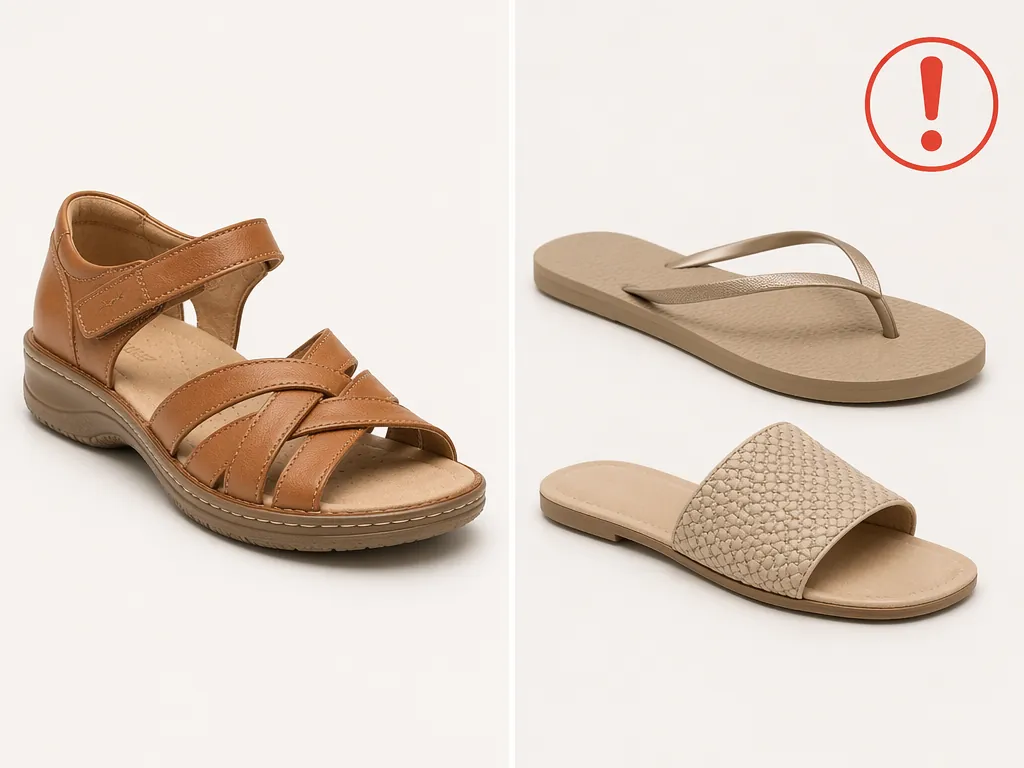
The safest sandals do not have to look medical. Look for a secure heel strap or closed back, a shaped footbed, a sole with visible traction, and enough structure that the shoe does not fold in half like a beach slipper. Tan, pewter, navy, black, bone, or metallic leather can work with linen trousers, skirts, and dresses without calling attention to itself.
Flip-flops belong in a very narrow category: short, dry, controlled moments, if they are worn at all. They are poor partners for grocery aisles, outdoor lunches, boardwalks, ferry ramps, hotel lobbies, and unfamiliar bathrooms. For water, sand, and uneven summer surfaces, the shoe conversation becomes even more important; CareWise Guide’s beach safety tips for older adults explain why support and traction matter so much outside the house.
- Better with linen trousers: low leather sandals with a back strap, supportive loafers, or breathable walking shoes in a light neutral.
- Better with midi dresses: structured sandals, low wedges with broad contact on the ground, or closed-back flats with grip.
- Better for errands: cushioned sneakers, walking sandals with heel security, or slip-resistant flats that do not gape.
- Worth retiring: stretched-out slides, slick-soled dress sandals, loose flip-flops, and any shoe that makes the toes claw to keep it on.
Choose Hems That Clear the Floor Without Losing Grace
A hemline can be elegant and still be a nuisance. Floor-brushing maxi dresses photograph beautifully, but they ask for constant management: lifting on stairs, catching in car doors, sweeping under heels, wrapping around ankles in a breeze. One distracted step is enough.
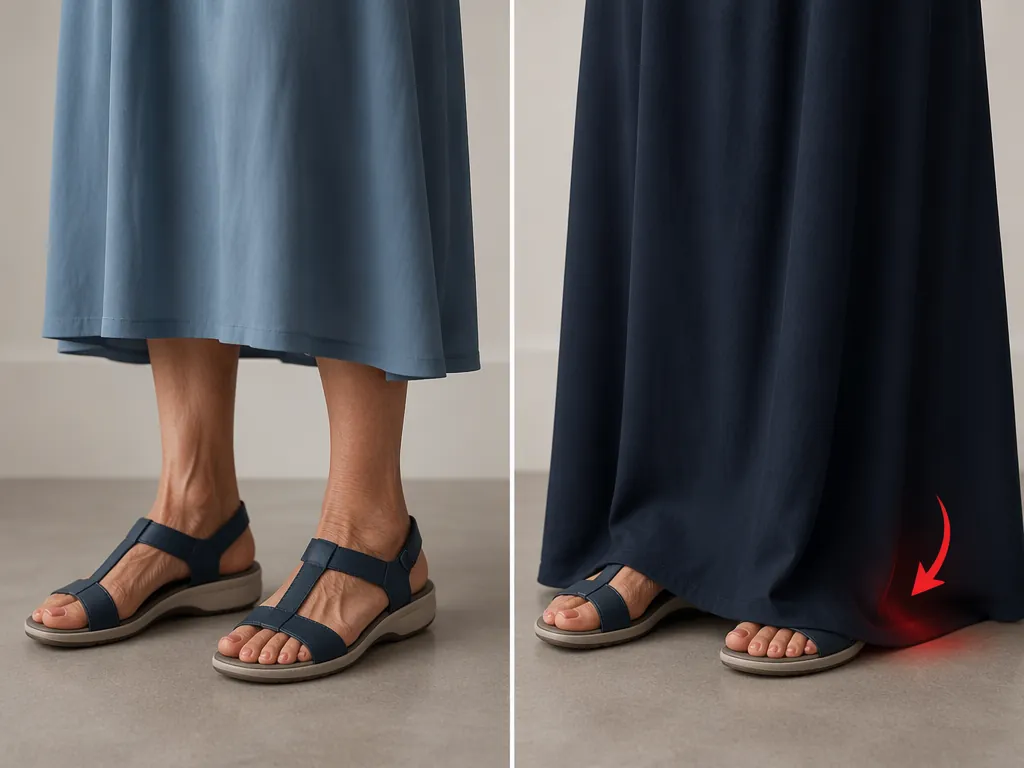
The friendlier length is often midi: below the knee, somewhere around mid-calf, with enough clearance that the fabric does not meet the shoe. A-line skirts and wrap dresses are especially useful because they create shape without gripping the legs. The key is not the word “midi” on a tag; it is what happens when the woman walks, sits, climbs a step, and gets out of a car.
Wide-leg trousers need the same inspection. They should skim the top of the foot or stop above it, not puddle. If the trousers look wonderful only with a higher heel, they may not be the right summer workhorse. A small alteration can turn an impractical pair into the best piece in the closet.
Before keeping a dress, skirt, or trouser for regular summer wear, try it with the actual shoes it will be worn with. Walk across a room, turn, climb one step if available, and sit down. If a hand automatically goes to the fabric to keep it from dragging or tangling, that is information.
Build Outfits From a Small Summer Palette
A timeless summer wardrobe does not need many pieces. It needs pieces that cooperate. Start with two or three breathable tops, one polished bottom, one easy dress, one light layer, one hat, and two pairs of reliable shoes. The outfit should not depend on fussing, pinning, tugging, or changing shoes halfway through the day.
- Errands: Breton tee, ankle-clearing linen trousers, supportive walking sandals, straw hat.
- Lunch: white linen button-down, A-line midi skirt, low closed-back flats, simple earrings.
- Travel day: soft cotton shirt, lightweight trousers, cushioned sneakers, cream cardigan for air-conditioning.
- Garden party: midi wrap dress, structured low sandals with a heel strap, wide-brim hat.
- Hot appointment day: loose silk or cotton blouse, pale trousers, non-skid flats, lightweight tote.
White and cream pieces are useful because they reflect heat and look intentional, not because every older woman needs to fade into neutrals. AARP’s Ethel style guidance also points to natural fibers for staying cool and wide-brim hats as both a style piece and sun-protection tool.[5] Color can come from a scarf, lip color, earrings, a navy stripe, a coral shirt, or a patterned skirt. The base simply needs to help the body through the day.
Humidity deserves its own respect. A blouse that feels fine at home may cling and trap heat after a few blocks outside. If humid weather often leaves a woman lightheaded or unsteady, clothing is part of the prevention plan, along with hydration, shade, timing, and rest. CareWise Guide explains the connection in how humidity affects senior falls.
Dress While Seated, Then Do the Doorway Check
Some falls happen before a woman ever leaves the bedroom. Pulling on trousers while standing, stepping into a dress in a hurry, balancing on one foot to fasten a sandal, or turning quickly toward the mirror can be risky when the morning is hot or the body is stiff.
The National Council on Aging published dressing advice from a Geri-Fit program director who reported that, in that clinical program’s experience, sitting while dressing and avoiding hazards such as backless shoes and dragging hems could reduce fall risk by up to 95%.[6] That figure should be treated as a program-based clinical observation, not a controlled-trial result. The practical advice is still sensible: sit down to dress, slow the process, and check the outfit before walking away.
- Sit on a stable chair or bed before putting on trousers, skirts, socks, or shoes.
- Fasten straps, buckles, and backs before standing.
- Stand still for a moment before walking, especially in hot weather.
- Look down once: are the hems clear, the shoes secure, and the soles flat on the floor?
- Avoid rushing to answer the door, phone, or ride while half-dressed.
If a woman often feels foggy, exhausted, or unsteady while getting dressed, the outfit may not be the only issue. Sleep, medications, blood pressure changes, and other health factors can affect balance. One related concern for older women is discussed in CareWise Guide’s article on sleep apnea misdiagnosis and fall risk.
What to Keep, Alter, or Let Go
Closet sorting is kinder when the question is not “Is this age-appropriate?” but “Does this still serve the woman who is wearing it?” Some pieces only need a different shoe. Some need hemming. Some are fine for sitting on a shaded patio but wrong for walking through a museum or airport. A few have earned retirement.
| Piece | Keep if | Alter or replace if |
|---|---|---|
| Linen shirt | It is breathable, loose enough to move in, and easy to button | It pulls across the shoulders or feels heavy once damp |
| Wide-leg trousers | The hem clears the shoe and the waistband does not require tugging | The fabric puddles, catches under the heel, or needs high heels |
| Midi dress | The wrap or closure stays secure and the skirt clears the lower leg | The tie loosens, the neckline gaps, or the hem tangles |
| Summer sandals | They have a back strap or closed back, arch support, and traction | They slide, slap, bend too easily, or have slick soles |
| Hat | It shades the face without blocking vision | It blows off easily or makes it harder to see steps and curbs |
This is also where adult daughters, sisters, and friends can be useful, if they do not take over. The goal is not to strip personality from the closet. It is to notice the quiet betrayals: the sandal that no longer fits snugly, the hem that used to work with heels, the dark synthetic blouse kept for “nice” lunches even though it becomes unbearable by noon.
For travel or days out in hotter places, the same wardrobe test should happen before packing. Clothing that works for a shaded neighborhood may feel very different on pavement, in crowds, or after a long wait for transportation. CareWise Guide’s look at summer destinations where heat raises senior fall risk can help when planning outfits for trips, weddings, reunions, or appointments away from home.
The Four-Part Test Before Calling an Outfit Timeless
A good summer outfit for an older woman should pass more than a mirror test. Before deciding that a look is timeless, ask four practical questions: Does it keep her cool? Does it let her walk securely? Does it clear the floor? Does it still feel like something she chose for herself?
References
- Hot Weather Safety for Older Adults, National Institute on Aging
- Older Adult Falls Data, Centers for Disease Control and Prevention
- Selecting the Proper Footwear for Seniors, Caring Senior Service
- Summer Fashion Tips for Seniors, Home Care Aid
- The Must-Have Items Every Older Woman Should Wear This Summer, AARP Ethel
- A Simple Dressing Tip That Could Save You From a Fall, National Council on Aging
Browse more in the Glossary.