
Clinical term
What Seniors Need to Know About Tylenol and Naproxen
Last verified 2026-07-25
Yes, many seniors can take Tylenol and naproxen on the same day, but that answer is only useful if it comes with limits. Tylenol is acetaminophen. Naproxen is the pain reliever sold over the counter as Aleve and in some store brands. They are different medicines, and the safety question is usually about taking two separate products, not a single FDA-approved Tylenol-plus-naproxen combination tablet.
For older adults, the usual ceiling I would write in large print is this: keep total acetaminophen at or below 3,000 mg per day unless a clinician gives different instructions, and keep over-the-counter naproxen at or below 660 mg per day.[1][2] Use both for the shortest reasonable time. Those numbers matter more than the casual phrase “safe to take together.”
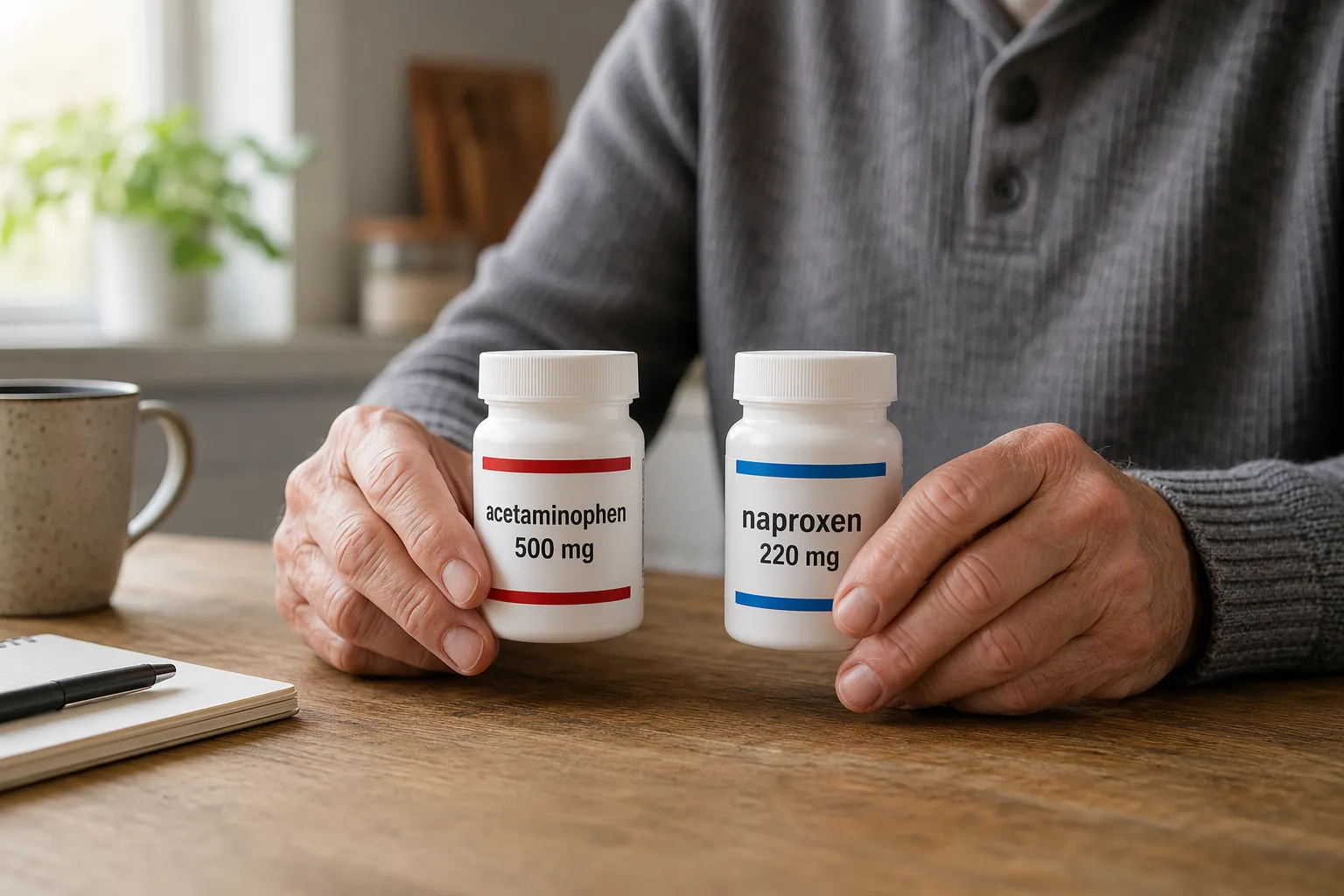
This is general medication-safety information, not a personal prescription. A senior taking blood thinners, blood pressure medicine, antidepressants, kidney or liver medications, or who has had a recent fall should have a doctor or pharmacist check the plan before adding naproxen, increasing acetaminophen, or combining pain relievers.
The Short Answer, With Senior-Specific Limits
Tylenol and naproxen do not duplicate each other in the way two NSAIDs would. Acetaminophen is not an NSAID. Naproxen is an NSAID, the same broad drug family as ibuprofen. That is why a clinician may allow acetaminophen and naproxen in the same pain plan, while usually avoiding combinations such as naproxen plus ibuprofen.
| Medicine | Common OTC strength | Senior-focused daily limit to notice | Main safety issue at home |
|---|---|---|---|
| Tylenol / acetaminophen | Often 325 mg, 500 mg, or 650 mg per dose unit | Generally no more than 3,000 mg total per day unless directed otherwise | Hidden acetaminophen in cold, flu, sleep, and prescription products |
| Aleve / naproxen sodium | Often 220 mg per tablet or caplet | No more than 660 mg per day for OTC use | Stomach bleeding, kidney strain, blood pressure effects, drug interactions, dizziness or fall risk |
The “total” is the part people miss. If a senior takes two 500 mg acetaminophen tablets three times in a day, that is already 3,000 mg. If that same person also takes a nighttime cold product with acetaminophen, the label may look like a different medicine, but the liver sees another acetaminophen dose.
For naproxen, the over-the-counter label direction is tighter than many people expect: no more than 660 mg in 24 hours.[2] More is not a harmless “stronger dose” for a 78-year-old with blood pressure pills and a borderline kidney number. It is a different risk conversation.
Why Acetaminophen Still Needs Counting
Acetaminophen is often the first over-the-counter pain reliever suggested for older adults because it does not carry the same stomach, kidney, and blood pressure concerns as NSAIDs. That does not make it automatic or risk-free. AARP’s older-adult guidance uses 3,000 mg per day as the practical upper limit for seniors, not the 4,000 mg number many adults remember from older general advice.[1]
The danger at home is rarely one plainly labeled bottle. It is the cabinet. More than 600 over-the-counter and prescription medicines contain acetaminophen, and AARP notes the FDA’s warning that 40% of acetaminophen overdose cases are accidental, often from taking multiple products that contain the same ingredient.[1]
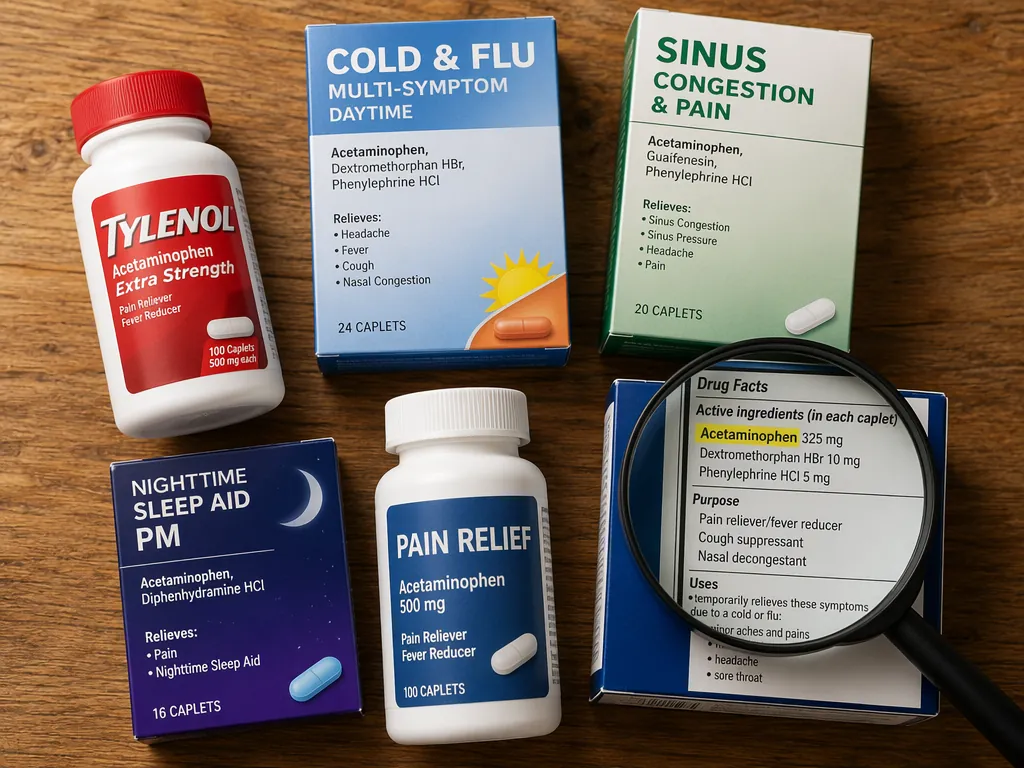
Write the word acetaminophen on a piece of paper, then check every pain, fever, cold, flu, sinus, cough, sleep, and prescription pain product in the house. Also look for APAP, an abbreviation that may appear on prescription labels. If a product contains acetaminophen, it belongs on the same daily tally.
There is another wrinkle that deserves more attention than it gets. A 2024 report cited by AARP, involving 180,483 people over 65, associated regular acetaminophen use with a higher risk of peptic ulcer bleeding.[1] That finding does not mean occasional acetaminophen use causes bleeding in every older adult. It does mean “Tylenol is always the gentle one” is too sloppy for seniors who already have ulcer history, anemia, blood thinners, or several pain relievers in rotation.
Where Naproxen Becomes the Bigger Problem
Naproxen can be useful. For inflammatory pain, some people get better relief from an NSAID than from acetaminophen alone. The question is whether the person in front of the bottle is a good candidate for it.
The over-the-counter naproxen label warns about stomach bleeding, and the risk is higher in people age 60 or older.[3] That warning is not theoretical. Better Health While Aging cites an older estimate of roughly 41,000 hospitalizations and 3,300 deaths among older adults each year from NSAID-related problems.[3] The estimate is not a current head count for every community, but it explains why pharmacists do not treat naproxen like a casual add-on in later life.
The red flags are familiar in real households: a past ulcer, black stools, vomiting blood, unexplained anemia, daily aspirin, warfarin, apixaban, rivaroxaban, clopidogrel, steroid pills, heavy alcohol use, or “just one more” NSAID already in the cabinet. Naproxen plus ibuprofen is duplication. Naproxen plus aspirin may increase bleeding concern. Naproxen with blood thinners is not a do-it-yourself decision.
Kidneys are another reason the senior version of this advice is narrower. NSAIDs can strain kidney function, especially during dehydration, illness, poor intake, or when combined with common blood pressure medicines. Harvard Health notes NSAID concerns with blood pressure, kidney function, and interactions with medicines such as blood thinners and some antidepressants.[4]
Blood pressure is not a side issue. A senior may take naproxen for a sore knee, then see higher blood pressure readings, ankle swelling, dizziness, or a medication adjustment that would not have been needed if the pain plan had been reviewed first. The person living with the consequence is not the label. It is the person trying to get safely from bed to bathroom at night.
Falls Belong in the Same Conversation
Pain medicine advice for seniors should include falls because pain, poor sleep, dizziness, low blood pressure, high blood pressure, nighttime bathroom trips, and sedating “PM” products all meet in the hallway. Mayo Clinic lists NSAIDs among medications that can increase fall risk in older adults, including through blood pressure effects.[5] The National Council on Aging also describes medication review programs that flag inappropriate NSAID use as a fall-related medication risk area.[6]
That does not mean naproxen directly causes every fall after someone takes it. It means NSAIDs belong on the review list when an older adult has fallen, nearly fallen, become dizzy, or started moving differently after a new pain routine. A practical medication review looks at the full stack: pain relievers, sleep aids, blood pressure pills, bladder medicines, antidepressants, antihistamines, and alcohol use.
If you are helping a parent after a fall, medication review is not nagging; it is housekeeping with consequences. A more detailed checklist is in this caregiver guide to medications that increase fall risk in older adults. If the fall also raises questions about lighting, bathroom footing, stairs, or nighttime pathways, use a room-by-room home safety assessment without letting the house checklist replace the medication check.
When Not to Combine Tylenol and Naproxen Without Guidance
The combination is most likely to stay reasonable when both medicines are low-dose, short-term, clearly counted, and used by someone without major interaction risks. It moves out of “simple home advice” when any of the following are present:
- Blood thinners or antiplatelet medicines, including warfarin, apixaban, rivaroxaban, clopidogrel, or daily aspirin
- SSRIs or other antidepressants that may add bleeding or dizziness concerns
- High blood pressure, heart disease, heart failure, swelling, or a recent blood pressure medication change
- Kidney disease, reduced kidney function, dehydration, vomiting, diarrhea, or poor fluid intake
- Liver disease, heavy alcohol use, or repeated acetaminophen use over many days
- Ulcer history, stomach bleeding, black stools, anemia, steroid pills, or regular alcohol use
- Recent falls, dizziness, confusion, new unsteadiness, or nighttime wandering
In those situations, the safer move is not simply to pick acetaminophen instead of naproxen or to suffer through pain. It is to ask for a medication review that names the pain problem, the current medicines, the kidney and liver concerns, the fall history, and the exact OTC products already being used.
Same Time or Alternating?
Some people take acetaminophen and naproxen at the same time because the doses are due and the pain is active. Others alternate them so they can avoid taking everything at once and keep better track of what was used. Either approach can become unsafe if the daily totals are wrong.
Verywell Health and Medical News Today both describe practical spacing approaches for acetaminophen and NSAIDs, while also noting over-the-counter duration limits: do not use OTC pain relievers for pain longer than 10 days or for fever longer than 3 days unless a clinician says to.[7][8] For seniors, I would treat those duration limits as a prompt to call sooner, not as permission to push through ten days of worsening pain.
A simple log beats memory. Write down the time, product name, strength, and number of tablets. “Tylenol 500 mg, two tablets, 8 a.m.” is useful. “Pain pills this morning” is not. If more than one person helps with medications, keep the log where the bottle is kept, not in someone’s phone.
| Before the next dose | What to check |
|---|---|
| Acetaminophen total | Add every product containing acetaminophen or APAP; stay within the senior limit unless directed otherwise. |
| Naproxen total | Count all naproxen tablets or caplets in the past 24 hours; do not combine with another NSAID. |
| Time window | Check when the last dose was taken instead of guessing from pain level alone. |
| Warning signs | Stop and seek medical advice for black stools, vomiting blood, severe stomach pain, shortness of breath, swelling, severe dizziness, confusion, or a fall. |
The PM Trap
Tylenol PM and Aleve PM are not just Tylenol or Aleve with a bedtime label. PM products commonly add diphenhydramine, a sedating antihistamine. In older adults, that ingredient can add next-day grogginess, confusion, dry mouth, constipation, urinary trouble, and fall risk. NCOA’s medication safety work places sedating and inappropriate medicines squarely in the fall-prevention review conversation.[6]
The most common bad pattern is ordinary: knee pain wakes someone at 11 p.m.; the regular bottle is in the kitchen; the PM box is on the bedside table; one dose turns into acetaminophen plus diphenhydramine, or naproxen plus diphenhydramine, without anyone counting the added ingredient. The next morning’s unsteadiness is then blamed on age, not on the product.
If sleep is the reason for reaching for a PM pain reliever, that is a separate problem to discuss. Do not use the pain label to smuggle in a sleep medicine.
A Safer Home Routine for Tylenol With Naproxen
Before a senior takes Tylenol with naproxen, line up the actual bottles. Not the brand names from memory, the bottles. Read the Drug Facts label. Look at the active ingredient, strength, dose directions, and warnings. If the print is too small, use a magnifier or take a clear phone photo and enlarge it.
- Confirm the exact products: acetaminophen, naproxen sodium, and any PM, cold, flu, sinus, or prescription pain products.
- Calculate total acetaminophen for the day, including hidden sources; keep the senior limit of 3,000 mg in view unless the clinician has given a different limit.
- Calculate total naproxen for the past 24 hours; keep OTC use within 660 mg per day.
- Check duration: pain lasting beyond a few days, worsening pain, fever, swelling, injury, or new weakness deserves medical advice rather than repeated OTC dosing.
- Screen for contraindications: blood thinners, SSRIs, blood pressure medicines, kidney disease, liver disease, ulcers, alcohol use, heart disease, dizziness, or recent falls.
- Ask a pharmacist or clinician to review the plan if the list is long, the label is confusing, or more than one person is managing the pills.
If pain is starting to change how someone walks, bathes, sleeps, or uses stairs, medication review and home setup belong together. The next useful step may be prioritizing practical changes through an aging-in-place home modifications guide, but the medication list still needs its own check.
Tylenol and naproxen may be compatible as separate medicines. For seniors, the safer answer depends on dose discipline, short duration, interaction screening, and fall-risk awareness. That is less tidy than “yes” or “no,” but it is the answer that survives the medicine cabinet.
References
- What Older Adults Should Know About Acetaminophen, AARP
- What to Know About OTC Pain Relievers as You Age, AARP
- How to Choose the Safest OTC Pain Reliever for Older Adults, Better Health While Aging
- Where to turn for pain relief: acetaminophen or NSAIDs?, Harvard Health
- Fall risk: How medications can contribute, Mayo Clinic
- What Medications Increase the Risk of Falling Among Older Adults?, National Council on Aging
- Can Acetaminophen and NSAIDs Be Taken Together?, Verywell Health
- Can you take Aleve and Tylenol together?, Medical News Today
Browse more in the Glossary.