
Glossary entry
When Is It Time for a Senior Residential Home? A Stage-Based Decision Guide for Family Caregivers
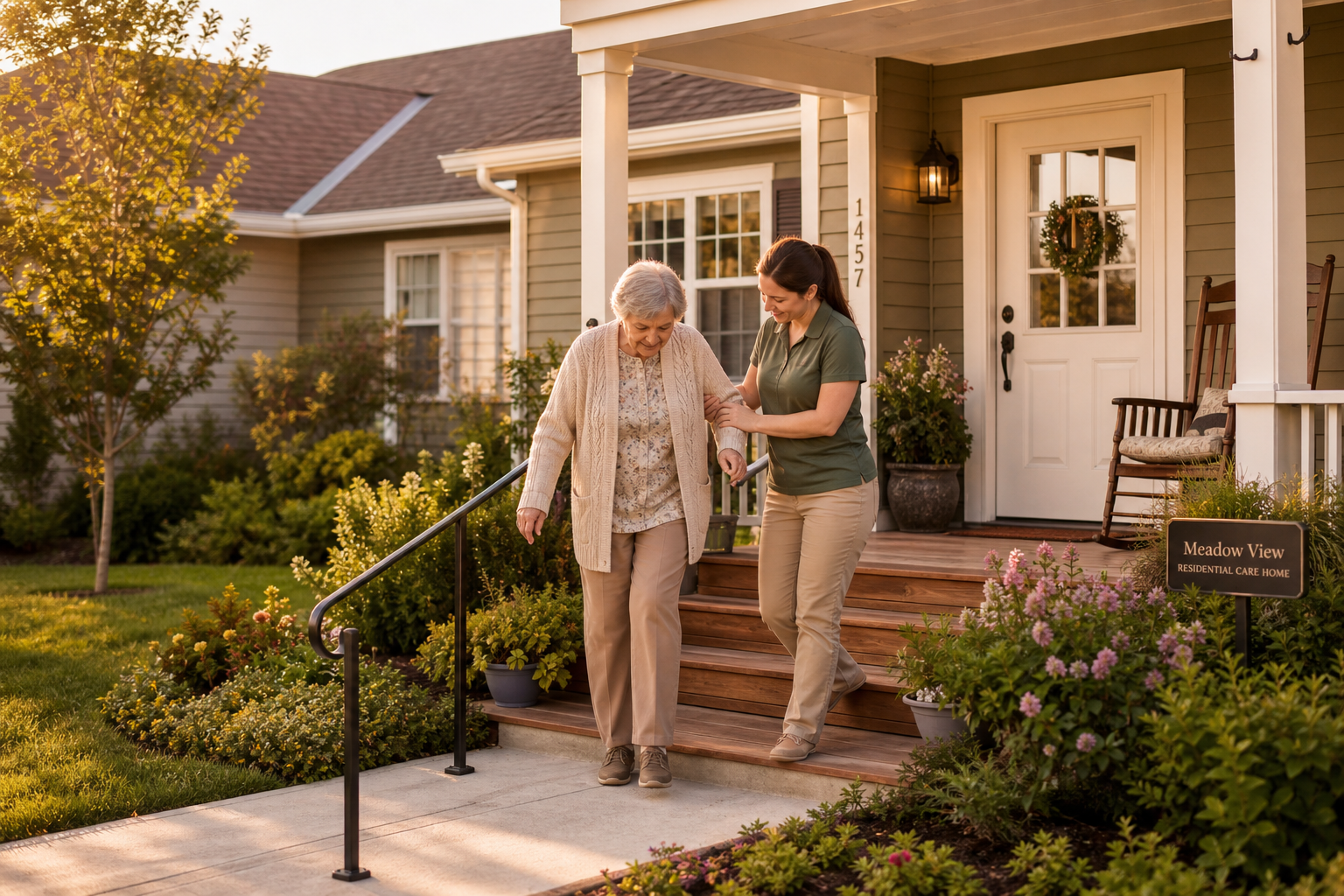
The Decision Landscape: Why Age Isn't the Answer
If you are reading this, you have likely just lived through a moment that shifted everything — a parent's fall that required a trip to the ER, a new dementia diagnosis that reframed every future plan, or a hospitalization that revealed just how fragile the current arrangement really is. In the days that follow, one question surfaces again and again: Is it time for a residential care home?
The honest answer is that age alone tells you very little. A vigorous 88-year-old with intact cognition and stable mobility may be safer at home with modest support than a 74-year-old with advancing dementia who cannot remember to eat. The decision to move to a residential care home — what the National Institute on Aging calls a board and care home or residential care facility — hinges on four measurable factors: functional decline in activities of daily living (ADLs), safety risks in the home environment, caregiver capacity and burnout, and social isolation.
This guide walks you through each of those four factors in a structured way. By the end, you will have a clear picture of where your parent stands and a practical framework for the family conversation that needs to happen next.
Step 1: Assessing Activities of Daily Living (ADLs)
The single most reliable indicator that a higher level of care is needed is the loss of ability to perform basic activities of daily living independently. These are the six fundamental self-care tasks that clinicians use to measure functional status. According to the American Health Care Association and National Center for Assisted Living (AHCA/NCAL), the most common ADL requiring assistance among assisted living residents is bathing, followed by walking.
Use the table below to assess your parent's current level of independence for each ADL. Be honest about what you observe — not what you wish were true.
| ADL | Independent | Needs Some Help | Fully Dependent |
|---|---|---|---|
| Bathing | Baths or showers without assistance | Needs help getting in/out of tub or shower; needs reminders or setup | Cannot bathe without full physical assistance |
| Dressing | Selects and puts on clothes independently | Needs help with buttons, zippers, or choosing appropriate clothing | Cannot dress without full assistance |
| Toileting | Uses toilet independently, manages hygiene | Needs help getting to the toilet or cleaning up | Incontinent or requires full assistance with toileting |
| Transferring | Gets in and out of bed or chair independently | Needs minor help or uses a mobility aid | Cannot transfer without physical assistance or a lift |
| Continence | Full bladder and bowel control | Occasional accidents; uses pads or reminders | Frequent incontinence; requires full management |
| Feeding | Eats independently, prepares simple meals | Needs help cutting food or reminders to eat | Cannot feed self; requires spoon-feeding or tube feeding |
Browse more in the Glossary.