
Keep Elderly Parents Cool Without Air Conditioning, Room by Room
This room-by-room guide provides immediately actionable strategies for keeping an elderly parent cool at home during summer heat waves without relying on air conditioning — covering window timing, ventilation, personal cooling methods, and clear danger signs that require emergency medical attention.
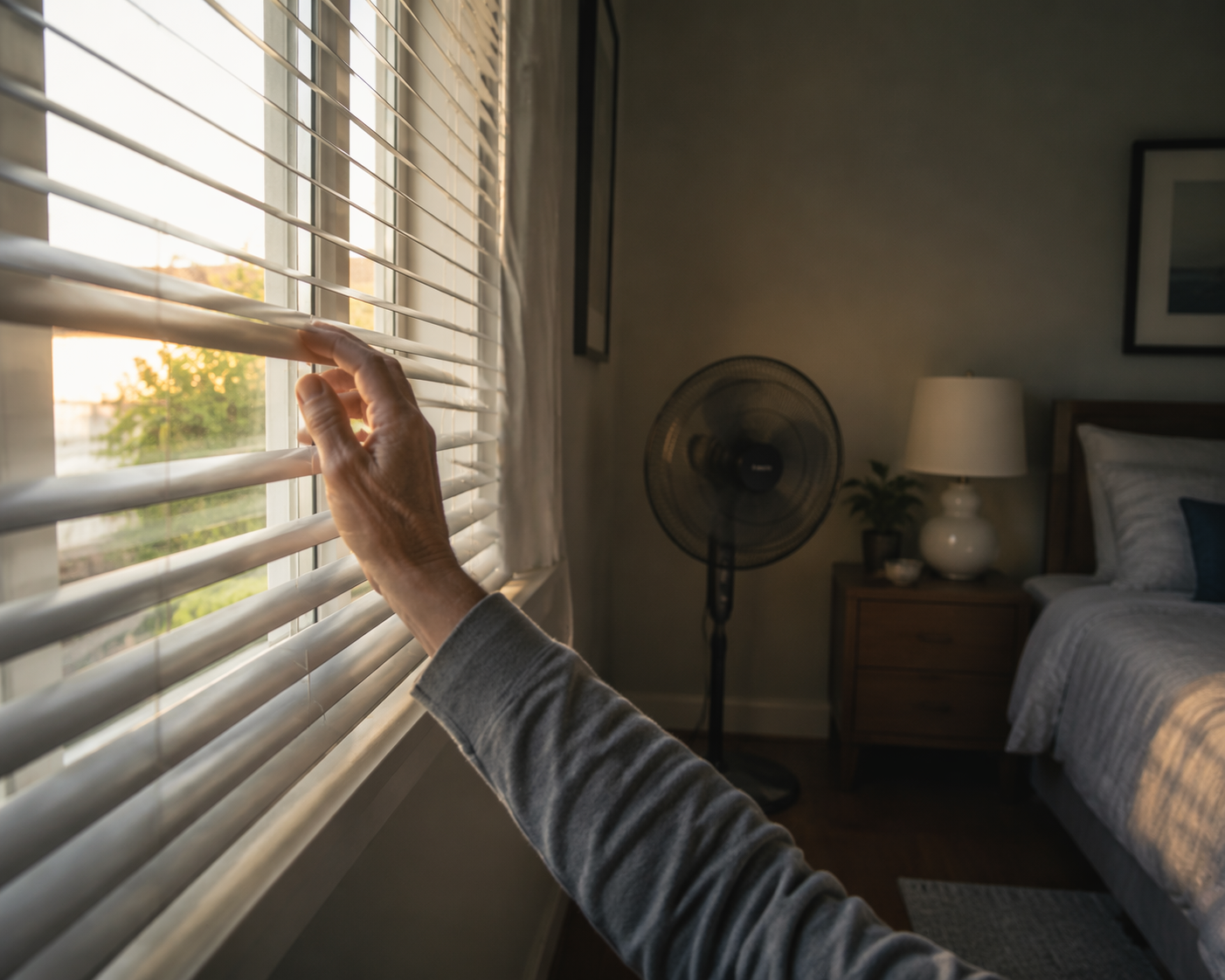
If you are trying to figure out how to keep elderly parents cool without air conditioning in summer, start before the house feels bad. By the time the living room is stuffy at 2 p.m., you are mostly doing damage control. The useful work happens early: close blinds and curtains before direct sun reaches the room, shut windows before the outside air turns hotter than the inside air, and save open-window cooling for the evening and overnight hours.
A practical cutoff is 9 a.m. In one home-cooling interview, a door and window specialist described closing blinds and windows before the heat builds as a way to prevent indoor temperature spikes of 10–20°F, especially in sun-exposed rooms.[1] Efficiency Vermont gives the same basic building-science logic from another angle: use cooler night air to flush heat out, then close the home back up before the day warms.[2]
That timing matters more than any single fan. Fans can help sweat evaporate and make skin feel cooler, but the CDC warns that electric fans alone may not prevent heat-related illness when temperatures are in the high 90s because they move hot air around rather than cooling it.[3] Treat fans as support equipment, not as the whole plan.
The Morning Cutoff: Close the House Before It Starts Losing
Before 9 a.m., walk the house once. Close blinds, curtains, and shades on any window that gets direct or strong reflected sun. Then close the windows once the outdoor air is no longer cooler than the indoor air. If your parent likes “fresh air,” this is where the conversation often gets sticky. Fresh air at noon during a heat wave is not fresh in the way they mean it. It is heat entering faster than the room can shed it.
The goal is not to make the house cold. Without air conditioning, that may not be realistic. The goal is to keep the indoor temperature from climbing as fast as the outdoor temperature. A room that starts shaded and closed has a better chance of staying usable until late afternoon than a room that has been collecting sun since breakfast.
- Close blinds and curtains first on east- and south-facing windows, then check west-facing windows before midday.
- Shut windows when outside air feels warmer than indoor air, even if there is a breeze.
- Keep interior doors open only where they help air move between cooler rooms.
- Move the main daytime chair away from sun patches, exterior walls that radiate heat, and windows that are not well shaded.
If you are managing this from a distance, make the morning cutoff the instruction you repeat. “Close everything by 9” is clearer than a long lecture about heat safety. If a neighbor, aide, sibling, or grandchild can stop by, ask them to do this first, before they sort pills, dishes, or laundry.
Use Night Air Deliberately, Not Randomly
Night-flush ventilation is the useful version of “open the windows.” It means opening windows in the evening or overnight when outdoor air is cooler, preferably on opposite sides of the home so air can move through instead of pooling in one room. Efficiency Vermont notes that this kind of night ventilation can reduce next-day peak indoor temperatures by several degrees.[2]
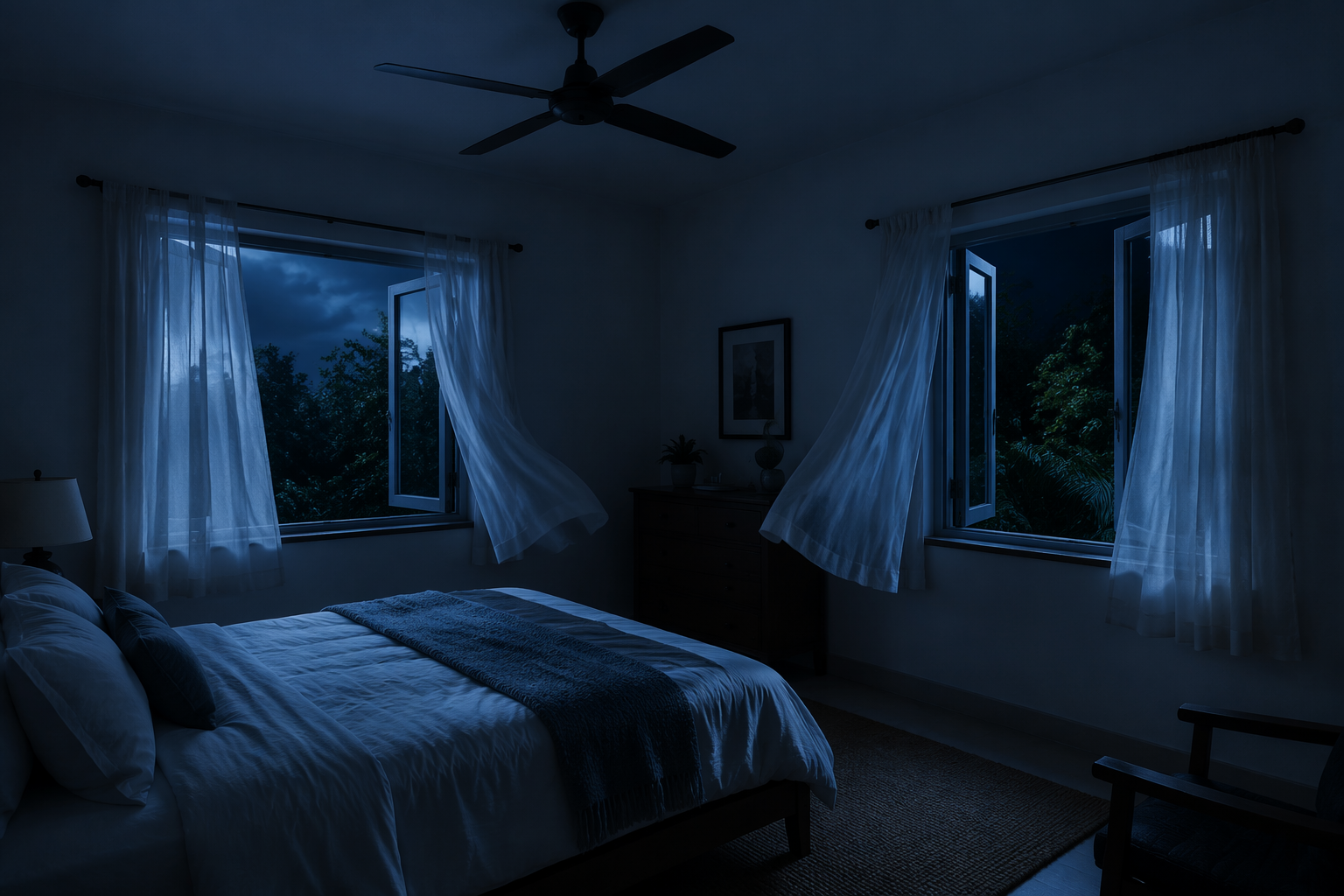
Do not open every window just because the sun went down. First check whether the air outside is actually cooler. If it is still hot and still, opening the house may add heat and humidity. If it is cooler outside, open the safest windows you can: ones with screens, locks, stops, or positions that do not create a fall or security problem.
A box fan or standing fan can help pull cooler air through the house, but placement matters. One fan can face inward from a shaded, cooler side. Another can face outward from a warmer side to exhaust trapped heat. If there is only one fan, use it where it moves air across the room your parent actually uses, not down an empty hallway.
Bedroom: Make Sleep the First Room-Level Priority
The bedroom deserves more attention than the spare room, the porch, or the perfect-looking sitting area. Poor sleep during heat wears people down, and an older adult who starts the day overheated has less margin when the afternoon peak arrives.
Set up the bedroom during the evening, not at bedtime when everyone is tired. Open opposite windows if the outside air is cooler and safe to bring in. Run a fan to move that air across the bed or through the room. If there is a ceiling fan, set it counterclockwise in summer so air pushes downward and creates a cooling effect on skin; ceiling fans can create a wind-chill effect of about 4–8°F for people in the room, though they do not lower the actual room temperature.[3]
Then take heat out of the bed itself. Age UK recommends lightweight bedding and loose, light clothing during heat waves, and that advice translates well to a U.S. home: cotton or linen sheets, no heavy comforter folded at the foot “just in case,” and sleepwear that does not trap sweat.[4] If your parent insists they get cold at night, leave one light layer within reach rather than building the bed for winter.
- Remove mattress pads, throws, or blankets that hold heat unless they are medically necessary.
- Put a glass or bottle of water where it can be reached without getting out of bed.
- Aim fans across the body or toward an exit path for warm air, not directly into a wall.
- If the upstairs bedroom stays hot, consider sleeping on the lowest safe floor; the Red Cross recommends staying on the lowest level during extreme heat when air conditioning is not available.[5]
That last point can be hard. A parent may not want to sleep in the living room. They may see it as a loss of normal life. But during a heat wave, the normal bedroom can become the worst room in the house, especially upstairs. A temporary sleeping setup on a lower floor is not a lifestyle change. It is heat management.
Living Area: Protect the Room They Actually Sit In
Most homes have one room where the older adult spends the day. Make that room the priority, even if another room would be easier to cool in theory. If your parent is not going to sit there, it does not matter.
Start with sun control. Close the coverings early, especially on windows that get morning or afternoon sun. If the living room has blinds, angle the slats upward so direct light is blocked rather than bounced onto the floor. If it has thin curtains, add a temporary layer behind them during the heat wave: a light-colored sheet, blackout curtain, or even a removable reflective covering if it can be installed safely. The immediate purpose is simple: stop sunlight from turning the room into a heat collector.
Next, look at airflow from the chair level. A fan running in the corner may be doing almost nothing for the person in the recliner. Move small tables, baskets, newspaper stacks, and unused chairs that block the path between the fan and the seating area. If there is a cooler room nearby, open the interior door between the rooms while the cooler room remains shaded. If a hallway is hotter, close that path instead.
| What You See | What To Change Today |
|---|---|
| Sun patch crossing the chair or sofa | Move the chair, close the covering earlier, or add temporary shade |
| Fan pointed above shoulder height | Lower or tilt it so air reaches the seated person |
| Furniture blocking the only airflow path | Clear a direct path between window, fan, doorway, and chair |
| TV, lamps, or electronics clustered near the chair | Turn off what is not needed and move heat-producing items away |
This is also where you should separate comfort from safety. A fan that makes the room feel less stagnant is useful. A fan that convinces everyone the room is safe when the air is dangerously hot is not. When indoor air is very hot, add direct personal cooling instead of trusting airflow alone.
Personal Cooling: Cool the Body, Not Just the Room
Room cooling slows the house down. Personal cooling helps the person in it. You need both, and they are not interchangeable.
A damp cool cloth on pulse points is one of the most practical tools in a no-AC house. Age UK recommends cooling the skin with water, including cool showers or baths, and the CDC advises older adults to use cool showers or baths and other cooling methods during extreme heat.[3][4] Put cloths on the back of the neck, wrists, and underarms. Re-wet them before they dry and warm up.
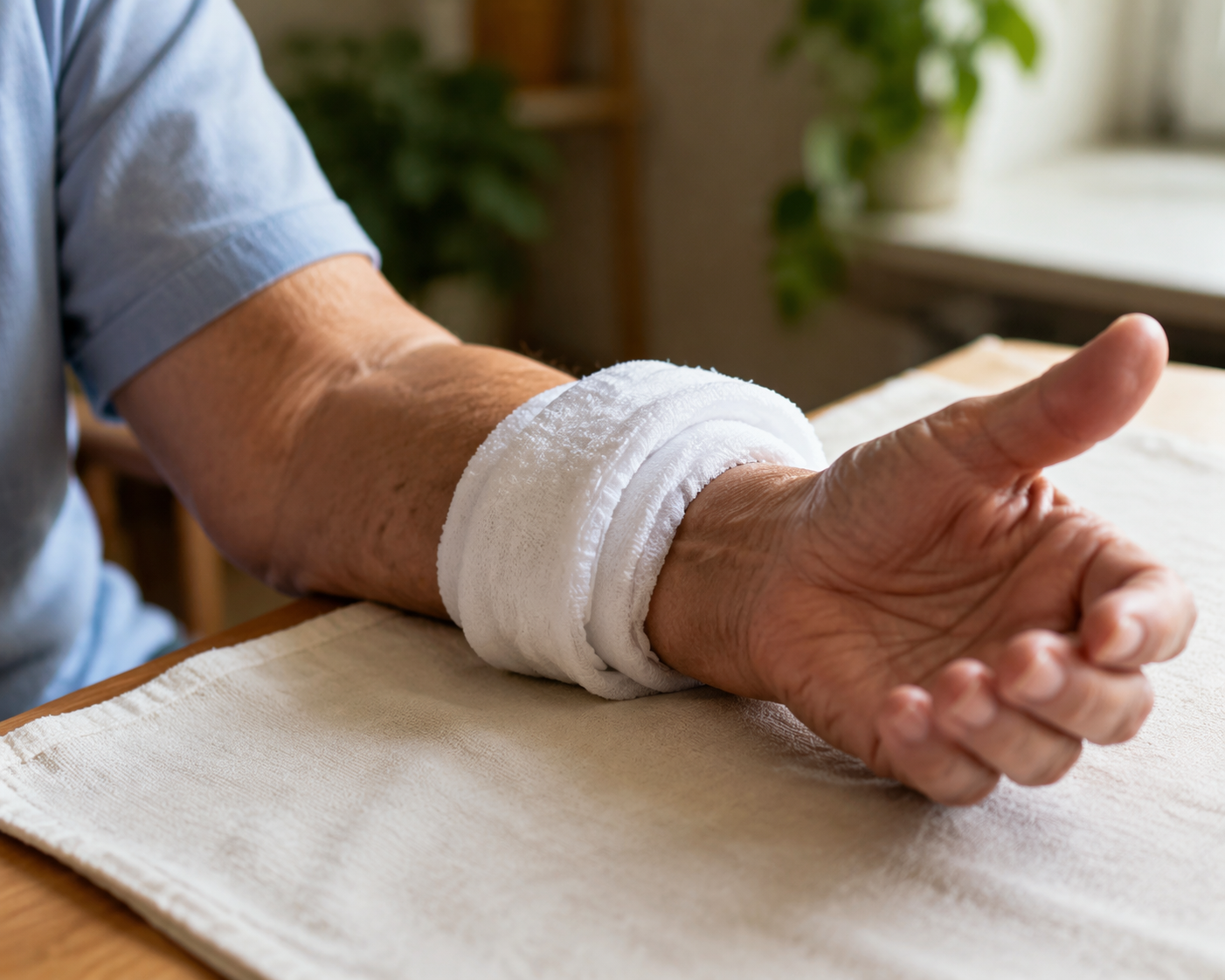
A simple setup works better than a plan that depends on someone remembering everything while overheated. Put a small bowl, clean cloths, and water near the main chair. If there is a caregiver visit, ask them to refresh the cloths before they leave. If your parent resists because it feels fussy, start with the back of the neck. It is usually less annoying than wet sleeves or dripping towels.
- Use cool, not icy, water for cloths and sponge-downs.
- Place cloths at the back of the neck, wrists, underarms, or inner elbows.
- Offer cool showers, sponge baths, or foot baths if standing in the shower is tiring or unsafe.
- Keep water within reach and encourage regular drinking unless a clinician has restricted fluids.
Hydration matters, but do not make it the only intervention. The CDC advises older adults to drink more water during hot weather and avoid waiting until they feel thirsty, while also noting that people on fluid-restricted diets or taking water pills should ask a doctor how much to drink.[3] If your parent is on heart, kidney, or diuretic medications, that medical caveat is not paperwork. It changes what “drink more” safely means.
Kitchen: Stop Adding Heat You Then Have To Fight
The kitchen does not need a complicated cooling system. It needs restraint. The Red Cross recommends avoiding appliances and lights that generate heat during extreme heat, which puts the oven and long stovetop cooking near the top of the avoid list.[5]
Plan cold or low-heat meals before the hottest day arrives: sandwiches, salads, yogurt, fruit, chilled soups, rotisserie chicken, or leftovers that can be eaten cold if safe. If food has to be warmed, use the microwave briefly rather than the oven. If someone else can cook outside or bring food over, that is better than asking an older adult to stand over a stove in a closed-up kitchen.
Do not turn hydration into a lecture about plain water only. Foods with high water content can help make eating and drinking feel less like a chore. Age UK recommends foods such as salads and fruit during heat waves.[4] For a parent with appetite changes, a plate of cold fruit, crackers, and cheese may do more good than a “proper meal” that heats the house and then sits uneaten.
Bathroom: Use Water Without Creating a Fall Risk
Cool showers and baths are effective, but the bathroom is also where an overheated older adult can get dizzy, slip, or rush. Make the safer version easy: a seated sponge-down, a cool damp washcloth at the sink, or a shallow foot bath while seated in a stable chair.
If your parent can shower safely, keep it cool or lukewarm rather than cold enough to shock. If they cannot stand long, use a shower chair if one is already available, or skip the shower and use damp cloths. The point is to lower body heat, not to win a battle over bathing.
- Set towels, dry clothes, and water within reach before the shower or sponge-down starts.
- Use a non-slip mat if the shower or floor is slick.
- Do not leave a weak, confused, or dizzy person alone in the bathroom.
- Keep the bathroom door ajar if privacy allows and ventilation is poor.
The Home Envelope: Do What Helps Now, Save Renovations for Later
Some home-envelope fixes are worth doing today. Others belong on a later project list. Do not confuse them when the heat wave has already started.
Today’s useful fixes are the ones that block sun or slow hot air without tools, contractors, or a decision your parent will fight for three days. Close coverings early. Add temporary shade on the hottest windows if it can be done safely. Seal obvious gaps only if you already have the materials and the work will not trap heat at night when you need ventilation.
Later, when nobody is making decisions in a 90-degree room, look at awnings, exterior shade, reflective films, insulation, and window improvements. Efficiency Vermont includes shading and air-sealing among ways to improve summer comfort and reduce heat gain.[2] Those measures can matter, but they are not a substitute for closing the blinds this morning.
| Do Today | Consider Later |
|---|---|
| Close blinds and curtains before sun hits the room | Install better window coverings or reflective film |
| Use evening and overnight cross-ventilation when outdoor air is cooler | Improve attic, wall, or window insulation |
| Add temporary shade where safe | Add awnings, shade sails, or long-term exterior shading |
| Move the daily chair or bed to the coolest usable room | Assess whether one efficient room AC or heat pump is needed for future heat waves |
When Passive Cooling Is No Longer Enough
There is a point where the job stops being cooling the house and becomes getting medical help. Do not let a shaded room, a fan, or a damp cloth give false confidence if your parent is showing signs of heatstroke.
Mayo Clinic lists heatstroke symptoms that include a core body temperature of 104°F or higher, altered mental state or behavior, hot dry skin or heavy sweating, nausea and vomiting, flushed skin, rapid breathing, racing heart rate, headache, and loss of consciousness.[6] The Red Cross also advises calling 911 for heat stroke and cooling the person rapidly while waiting for help.[5]
- Call 911 if your parent is confused, fainting, unconscious, or difficult to wake.
- Call 911 for hot skin, severe weakness, vomiting, rapid breathing, or a racing pulse during extreme heat.
- Move them to the coolest available place while help is on the way.
- Use cool cloths, a cool bath or shower if safe, or wet towels to start cooling the body.
- Do not give fluids to someone who is unconscious, very confused, or unable to swallow safely.
The home plan is worth doing because it buys time and lowers strain before the heat peaks. Close the house early. Flush it with cooler night air when you can. Cool the person directly. But if the person is confused, collapsing, or showing heatstroke signs, stop troubleshooting the room and call 911.
References
- How to Cool Your Home Naturally With the 'Caveman Method', Country Living
- Summer guide to energy savings & comfort, Efficiency Vermont
- Heat and Older Adults (Aged 65+), CDC
- Staying cool in a heatwave, Age UK
- Extreme Heat Safety, American Red Cross
- Heatstroke - Symptoms and causes, Mayo Clinic
Related decisions
- Do You Need a CAPS? — When and Why Family Caregivers Should Hire a Certified Aging-in-Place Specialist
- How to Pay for Elderly Home Care: Medicare, Medicaid, VA Benefits, and Out-of-Pocket Options Explained
- In-Home Senior Care Cost in 2026: Hourly Rates, Monthly Budgets, and Hidden Expenses Families Overlook
Suggest a correction
We keep this content strictly product-neutral and reviewed against CDC STEADI, NIA, and AARP HomeFit guidance. If something here looks outdated, unclear, or inaccurate, tell us — this page does not carry open public comments, because it touches medical urgency, cost, or capacity-adjacent decisions where a discussion thread is a trust liability rather than a trust asset.
See the correction process on our editorial standards page →