
Caregiver decision guide
How to Keep Chicago Seniors Safe During Air Quality Alerts
A practical guide for Chicago caregivers that translates each Air Quality Index color band into specific, escalating actions to protect older adults during air quality alerts — from limiting outdoor time at Code Yellow to sheltering in place with HEPA filtration at Code Purple and Code Maroon.
If Chicago’s Air Quality Index is Code Red today, treat it differently for an older parent than you would for yourself. For a healthy adult, Code Red may mean cutting back outdoor exertion. For a senior, especially someone with heart disease, COPD, asthma, diabetes, a recent respiratory infection, or limited mobility, it should mean staying indoors, closing windows, reducing door openings, and running the best available filtration.
That stricter approach is not alarmism. AirNow and the American Lung Association identify older adults as a sensitive group for air pollution, and Illinois health officials warn that adults over 60 are at higher risk during wildfire smoke events because of age-related changes in defense systems and the higher likelihood of pre-existing conditions.[1][2][3]
| AQI color | AQI range | What the general alert usually means | Caregiver action for a Chicago senior |
|---|---|---|---|
| Yellow | 51–100 | Moderate air quality; unusually sensitive people may need to reduce exposure. | Limit prolonged outdoor time. Keep walks short, avoid busy roads when possible, and move optional errands to a cleaner-air day. |
| Orange | 101–150 | Unhealthy for sensitive groups. | Move outdoor activity indoors. Cancel balcony sitting, outdoor exercise, and nonessential trips. Follow any clinician-advised medication plan for asthma, COPD, or heart disease. |
| Red | 151–200 | Unhealthy; some members of the general public may be affected, and sensitive groups may have more serious effects. | Keep the senior indoors with windows closed. Run a HEPA air cleaner or use the best filtered room available. Avoid unnecessary door opening and watch for breathing or cardiac symptoms. |
| Purple | 201–300 | Very unhealthy; health alert for everyone. | Set up the cleanest room. Keep doors and windows closed, run HEPA filtration continuously, reduce indoor particle sources, and check symptoms at least hourly. |
| Maroon | 301+ | Hazardous; emergency conditions. | Shelter in place with all smoke precautions. Keep the senior in the cleanest filtered room and contact a healthcare provider at any sign of breathing trouble, chest discomfort, confusion, severe weakness, or worsening chronic symptoms. |
The most useful phrase in a smoke alert is not “unhealthy.” It is what changes at home. At Code Yellow, a senior who wants to keep a routine may still be able to go outside briefly, but the long walk, the bus stop wait, the gardening, and the “I’ll just sit outside for a while” plan should shrink. At Code Orange, the default should flip: outdoor plans move inside unless there is a medical or safety reason they cannot.
By Code Red, the argument should be over before symptoms appear. The senior stays inside. Windows close. The air cleaner runs. Someone checks whether there is enough medication, food, water, and phone access to get through the day without a pharmacy trip or a lobby conversation that turns into half an hour near automatic doors.
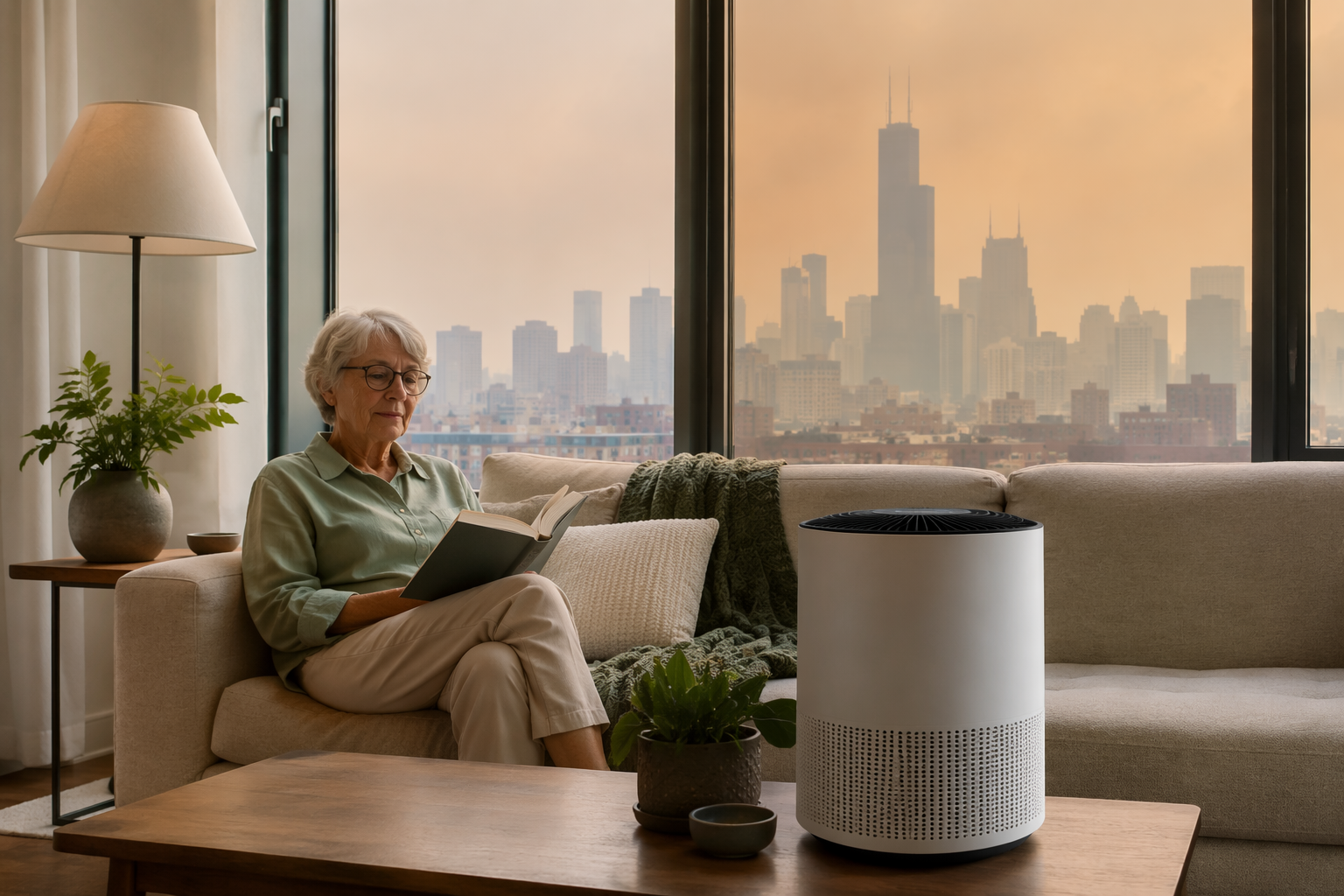
Why seniors need an earlier action threshold
The AQI scale is built for public communication, not for the adult child trying to decide whether an 82-year-old with shortness of breath can keep a dental appointment. The color bands are still useful, but older adults should not wait for the same cues as younger, healthier adults.
Wildfire smoke is especially hard on seniors because of fine particle pollution, often discussed as PM2.5. These particles are small enough to move deep into the lungs, and health agencies warn that particle pollution can worsen heart and lung disease and contribute to serious respiratory and cardiovascular problems.[3][4]
That is why a “short walk” is not automatically harmless during a smoke spike. For an older adult with cardiopulmonary vulnerability, the issue is not only how long the walk lasts. It is whether the exposure adds stress to lungs, oxygen levels, heart rhythm, or an already fragile recovery from illness.
The American Lung Association’s AQI guidance already escalates earlier for sensitive groups: at Code Orange, older adults are advised to limit prolonged outdoor activity; at Code Red, they should avoid prolonged outdoor activity; at Code Purple, they should avoid all physical activity outdoors; and at Code Maroon, everyone should stay indoors.[2]
What to do at each AQI level
Code Yellow: keep the day, shorten the exposure
Code Yellow is the level where families are most likely to do nothing because the alert sounds mild. For many older adults, that may be reasonable if they feel well and exposure is brief. The safer caregiver move is to reduce duration and intensity before the day gets away from you.
- Keep outdoor time short rather than open-ended.
- Avoid exertion outside, including long walks, yard work, and carrying groceries.
- Move optional errands, outdoor meals, and balcony time to a cleaner-air day.
- Check whether the senior has rescue inhalers, oxygen supplies, heart medications, or other clinician-prescribed supports available if relevant.
Code Orange: move the plan indoors
Code Orange is where the caregiver threshold should become firm. AirNow and the American Lung Association place older adults in the group that needs protection at this level, even when healthier neighbors may still be outside.[1][2]
For a Chicago senior, Code Orange means no outdoor exercise, no unnecessary outdoor waiting, and no casual “fresh air” sitting. If a clinician has given an action plan for asthma, COPD, or another condition, this is the time to follow it as written. Do not invent medication changes, but do not wait until the senior is wheezing to find the inhaler either.
Code Red: close the apartment, run filtration, cancel nonessential trips
Code Red is the level many caregivers search for because the app finally sounds serious. For an older adult, it should trigger a household plan, not just a suggestion to “take it easy.”
- Close windows and exterior doors.
- Run a portable HEPA air cleaner if one is available.
- Keep the senior in the room with the best filtration or the least smoke intrusion.
- Cancel nonessential appointments, shopping, outdoor social plans, and building activities that require time near entrances.
- Ask building staff, home aides, or neighbors to limit door opening and avoid bringing smoky outdoor air into the unit.
If a pharmacy run or medical appointment truly cannot wait, reduce the exposure rather than pretending it does not matter. Arrange a ride to the closest entrance, avoid outdoor waiting, use delivery or curbside pickup when possible, and have the senior return directly to the filtered room.
Code Purple: make a clean room
At Code Purple, the goal is no longer just staying inside. It is creating the cleanest practical room and keeping the senior there as much as possible until outdoor air improves. The EPA’s home air cleaner guidance recommends choosing a device sized for the room and notes that portable air cleaners can reduce indoor particle levels when used correctly.[5]
A good clean room is usually a bedroom or living room with a door, few leaky windows, and enough space for the senior to sit, sleep, take medications, drink fluids, and keep a phone nearby. If the building has sealed windows and central filtration, that may help. If the windows are old, drafty, or often opened by habit, the caregiver job is to remove negotiation from the room: close them, explain once, and redirect.
- Put the HEPA air cleaner in the room where the senior will spend the most time.
- Keep the room door closed as much as practical.
- Avoid candles, incense, smoking, frying, vacuuming without HEPA filtration, and other indoor particle sources.
- Keep medications, water, chargers, glasses, hearing aids, and emergency contacts within reach.
- Check breathing, chest comfort, alertness, and unusual fatigue at least hourly.
Code Maroon: stop managing it as a normal bad-air day
Code Maroon means hazardous air. The senior should stay indoors, remain in the cleanest filtered room available, and avoid physical activity. At this level, the question is not whether the person seems “tough enough” to go out. The question is whether the home setup is holding and whether symptoms are starting.
Call a healthcare provider promptly if there is new or worsening shortness of breath, wheezing, chest pain or pressure, faintness, bluish lips, confusion, severe weakness, an irregular or concerning heartbeat, or a sudden decline from the senior’s normal baseline. If symptoms seem urgent, use emergency services rather than trying to troubleshoot air quality at home.
What “stay indoors” really requires
During wildfire smoke, “indoors” is not a magic word. A smoky apartment with open windows, a hallway door propped open, and no filtration is not the same as a closed room with a properly running air cleaner. The City of Chicago tells residents to monitor air quality, limit outdoor exposure during poor-air days, and take extra precautions for people with heart or lung disease, older adults, children, and people who are active outdoors.[6]
Start with the obvious parts because they are the parts that fail in real life. Close windows. Close balcony doors. Turn off window fans that pull outdoor air inside. Keep building doors from standing open. If the senior lives in a residence where staff control ventilation or common areas, call the front desk and ask what they are doing about outdoor air intake, filtration, lobby doors, and activity cancellations.
Then pick the room. The cleanest room is not always the prettiest room or the one with the best view. It is the room with the fewest leaks, the fewest door openings, and the best filtration. A bedroom may work better than a large living area if the portable unit is small. A living room may work better if that is where the only HEPA cleaner can run safely without creating a tripping hazard.
The EPA advises that air cleaner performance depends on choosing a unit appropriate for the room size and using it according to the manufacturer’s directions.[5] For caregiving purposes, that means the device should be on, placed where airflow is not blocked, and left running long enough to matter. A purifier sitting unplugged beside the sofa is furniture.
If there is no portable HEPA unit, use the best available filtered space. That may mean a room served by central HVAC with a good filter, a community clean-air space if local officials designate one, or a short stay with family if travel can be done safely before conditions worsen. Do not make a frail senior travel through hazardous air for a marginal improvement. The move has to reduce total risk, not just feel more active.
Chicago smoke alerts are no longer rare enough to improvise
Chicago’s baseline air should not be described as permanently unsafe. Historical data from aqi.in show Chicago’s annual average AQI improving from 42 in 2025 to 33 in 2026, both in the generally acceptable range.[7] The caregiving problem is the spike: short periods when smoke pushes the city from ordinary summer air into a level that changes what an older adult should do.
Recent summers have made that pattern hard to dismiss. Chicago saw major wildfire-smoke episodes in June 2023, July 2025, and July 2026. Chicago Health Online reported a June 2023 AQI of 175 and a July 2025 AQI of 174, both in the unhealthy range.[8] In July 2026, NBC Chicago reported hazardous conditions with AQI levels above 340 in the city and some suburbs registering levels above 770 on local readings.[9]
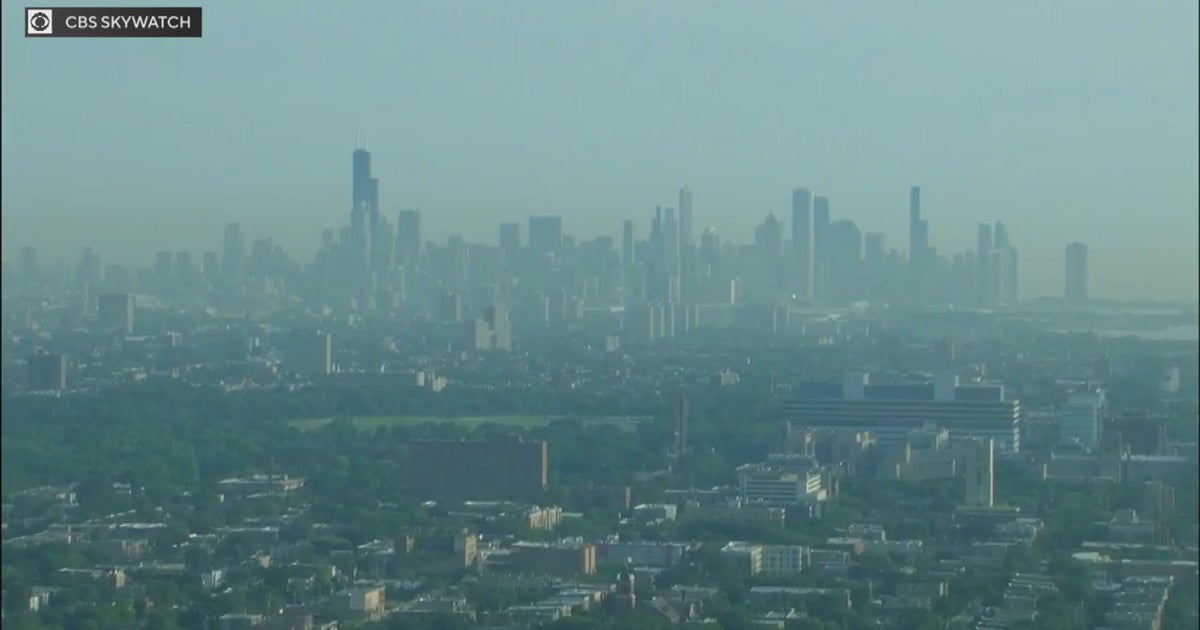
That history matters because the hardest day to build a clean-room plan is the day the alert arrives. The senior may resist changing plans. The air cleaner filter may be overdue. The building may not have decided whether to cancel an activity. The caregiver may be at work, trying to make decisions by phone while a parent insists the sky “doesn’t look that bad.”
A prepared plan removes some of that friction. It tells everyone what happens at Orange, Red, Purple, and Maroon before the family is negotiating in the middle of a smoke event.
The caregiver setup to make before the next alert
A useful air-quality plan for a senior does not need to be elaborate. It needs to be findable, repeatable, and boring enough that a neighbor, aide, spouse, or front-desk staff member can follow it.
- Choose the clean room now, not during the alert.
- Put the HEPA air cleaner in or near that room and check the filter status.
- Write down which windows must stay closed and which fan or vent settings should not pull outdoor air inside.
- Keep a short list of symptoms that require a call to the clinician or emergency services.
- Stock enough routine medications and basic supplies to avoid unnecessary errands on bad-air days.
- Tell the senior in advance what changes at Code Orange, Red, Purple, and Maroon.
For a parent in a senior building, add one more step: ask management how they handle wildfire smoke days. The practical answers matter more than the policy title. Will activities move indoors or be canceled? Are residents told to keep windows closed? Are lobby doors monitored? Is there a filtered common room? Who checks on residents who live alone?
For a parent living independently, decide who has permission to say no. Smoke alerts are exactly when vague family roles become a problem. If one adult child checks AirNow, another orders groceries, and a neighbor can knock on the door if the phone goes unanswered, the plan has a better chance of working.
When to stop watching the AQI and call for medical help
The AQI tells you about outdoor air. It does not tell you whether your parent is compensating well. Once symptoms start, the person matters more than the color on the app.
Call a healthcare provider if a senior has worsening cough, wheezing, shortness of breath, unusual fatigue, dizziness, chest discomfort, increased use of rescue medication, or any change that feels out of pattern for that person. Seek urgent help for severe breathing trouble, chest pain or pressure, fainting, blue lips, confusion, or sudden weakness.
Chicago caregivers do not need to treat every summer day as dangerous. They do need to treat smoke spikes as decision days. When the AQI rises, older adults should move earlier, stay in cleaner indoor air longer, and get medical help sooner than a healthy adult following the same color-coded alert.
References
- Older Adults, AirNow.gov
- Air Quality Index, American Lung Association
- Wildfire Smoke, Illinois Department of Public Health
- About Air Quality, CDC
- Guide to Air Cleaners in the Home, EPA
- Air Quality and Health, City of Chicago
- Chicago AQI dashboard and historical analysis, aqi.in
- “You Can Smell It Outside, Like Something’s Burning”: Chicago Air Quality, Chicago Health Online, July 2026
- What does hazardous air quality mean? Levels in some suburbs off the charts, NBC Chicago, July 2026
Questions to bring to a clinician or OT
This is not medical, legal, or a family's final decision — only a framework. Bring these questions to a clinician, occupational therapist, or your local Area Agency on Aging.
Find Local HelpRelated reading
Noticed something outdated or inaccurate on this page? Flag a correction. We review every report against CDC, NIA, and AARP HomeFit guidance before updating a page.