
Caregiver decision guide
How to Host an Elderly Guest: Safety Prep and Activities
Learn how to prepare your home for an elderly guest's safety and plan activities that match their abilities and interests, ensuring a visit that is both safe and genuinely enjoyable.
Before choosing the lunch spot or setting out the photo albums, walk through the house as your elderly guest will actually use it: entering with a bag in one hand, finding the bathroom at night, lowering into a chair, stepping around toys, reaching for a stair rail, or trying not to admit that the shower feels risky. The best elderly guest activities tips start there, because a visit cannot feel relaxed if the person you invited is quietly calculating whether the hallway, bathroom, or living room is safe enough.
That is not overreacting. Falls are the leading cause of injury for adults 65 and older in the United States. More than 14 million older adults, about 1 in 4, report falling each year, and about 37% of falls cause an injury that requires medical treatment or restricts activity. [1]
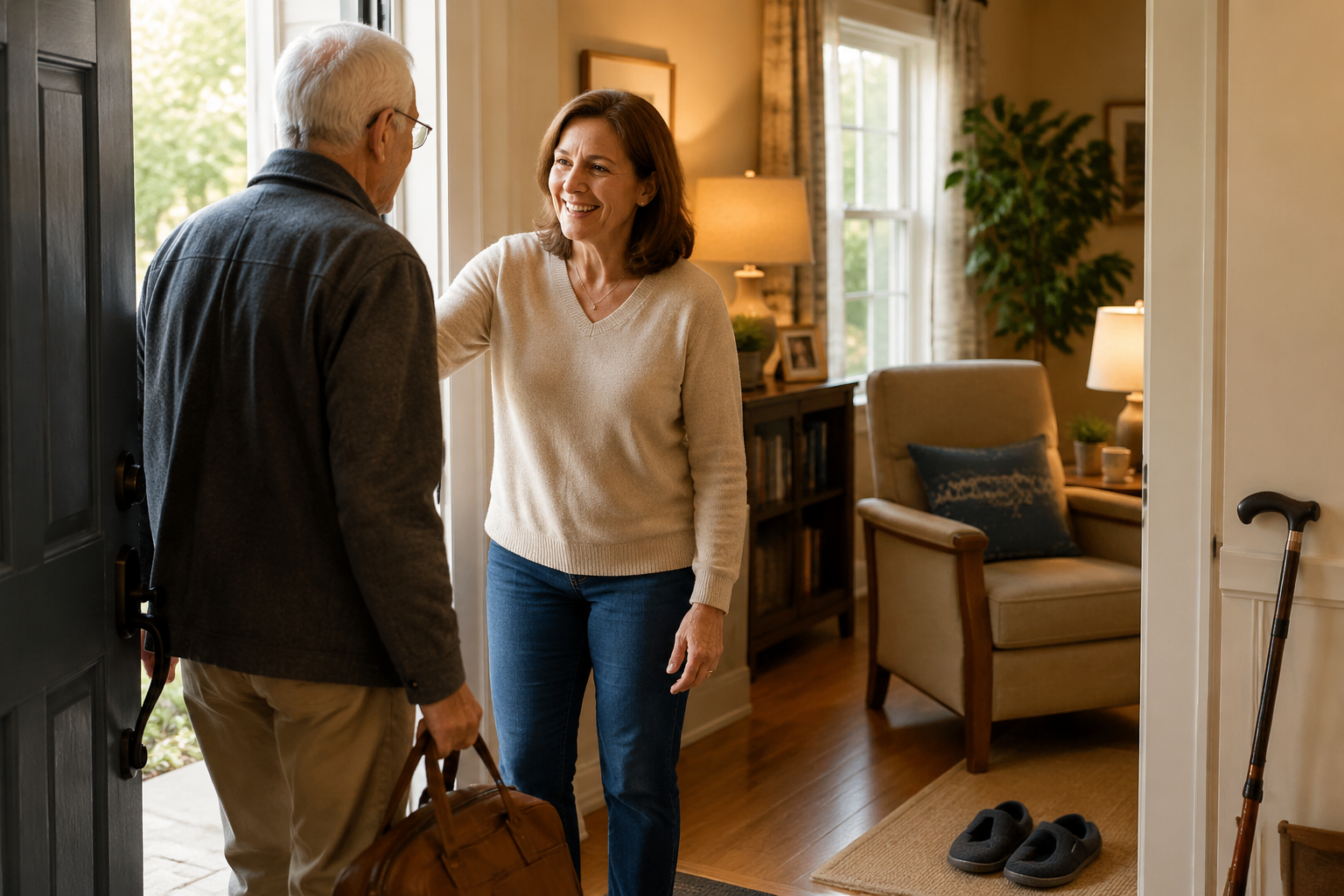
The point is not to turn your home into a clinic for the weekend. It is to remove the predictable hazards before everyone is tired, distracted, or trying to be polite. Once the house is easier to move through, the activity plan becomes kinder and more realistic: fewer forced outings, more good moments that fit the person in front of you.
Start With The Walk-Through, Not The Activity List
Do the first pass alone, before your guest arrives if you can. Carry a small bag or laundry basket to mimic how awkward balance becomes when hands are not free. Turn on the lights you would normally use in the evening. Notice where you naturally step around things, because that small adjustment may not be available to someone using a cane, walker, stiff knees, weaker vision, or slower reaction time.
The room-by-room safety advice from senior home checklists tends to repeat the same ordinary-looking items for a reason: bathroom supports, shower seating, bright hallway and stair lighting, removal of loose rugs, secure stair rails, and a main-floor sleeping option when stairs are a strain. [2][3]
| Area | What To Check Before The Visit | Why It Matters During A Real Stay |
|---|---|---|
| Entryway | Clear shoes, bags, cords, packages, and decorative items from the path. | Arrivals and departures are when people are carrying things, greeting each other, and not watching every step. |
| Living room | Remove loose rugs, widen walking paths, choose a chair with arms, and keep toys out of the main route. | A guest may be able to sit happily for an hour but still struggle to stand from a low sofa or step around clutter. |
| Bathroom | Add non-slip footing, consider grab bars or temporary supports where appropriate, and make room around the toilet and shower. | Bathroom trips are private, frequent, and often happen when no one is close enough to help. |
| Bedroom | Use a bed height the guest can manage, place a lamp within reach, and clear the route to the bathroom. | Nighttime is when poor lighting, urgency, and unfamiliar layout collide. |
| Stairs | Check lighting, secure handrails, and decide whether a main-floor sleeping arrangement is safer. | A guest who can climb stairs once may not want to do it repeatedly, tired, or in the dark. |
| Kitchen and dining | Keep walkways clear, choose stable seating, and avoid asking the guest to carry hot or heavy items. | Helping should not require proving balance, grip strength, or speed. |
If children live in the house, the safety audit needs one extra pass at child height. A toy bin beside the couch may be normal on Tuesday and a tripping hazard on Friday night. A scooter near the back door, a charging cord across the hallway, or a blanket fort in the living room may not look like “fall prevention,” but those are exactly the objects someone else has to notice before an older guest navigates the room.
The Bathroom Deserves More Attention Than The Guest Room
People often make the bed nicely and forget the bathroom. That order is backward. A clean towel is pleasant; a safe route to the toilet at 2 a.m. is essential. Check whether the floor becomes slippery, whether the bath mat grips, whether the toilet is hard to rise from, whether the shower requires stepping over a high edge, and whether there is anything sturdy to hold. Senior home safety checklists commonly emphasize grab bars, shower seats, non-slip surfaces, and clear space in the bathroom because this room combines water, hard surfaces, privacy, and urgency. [2]
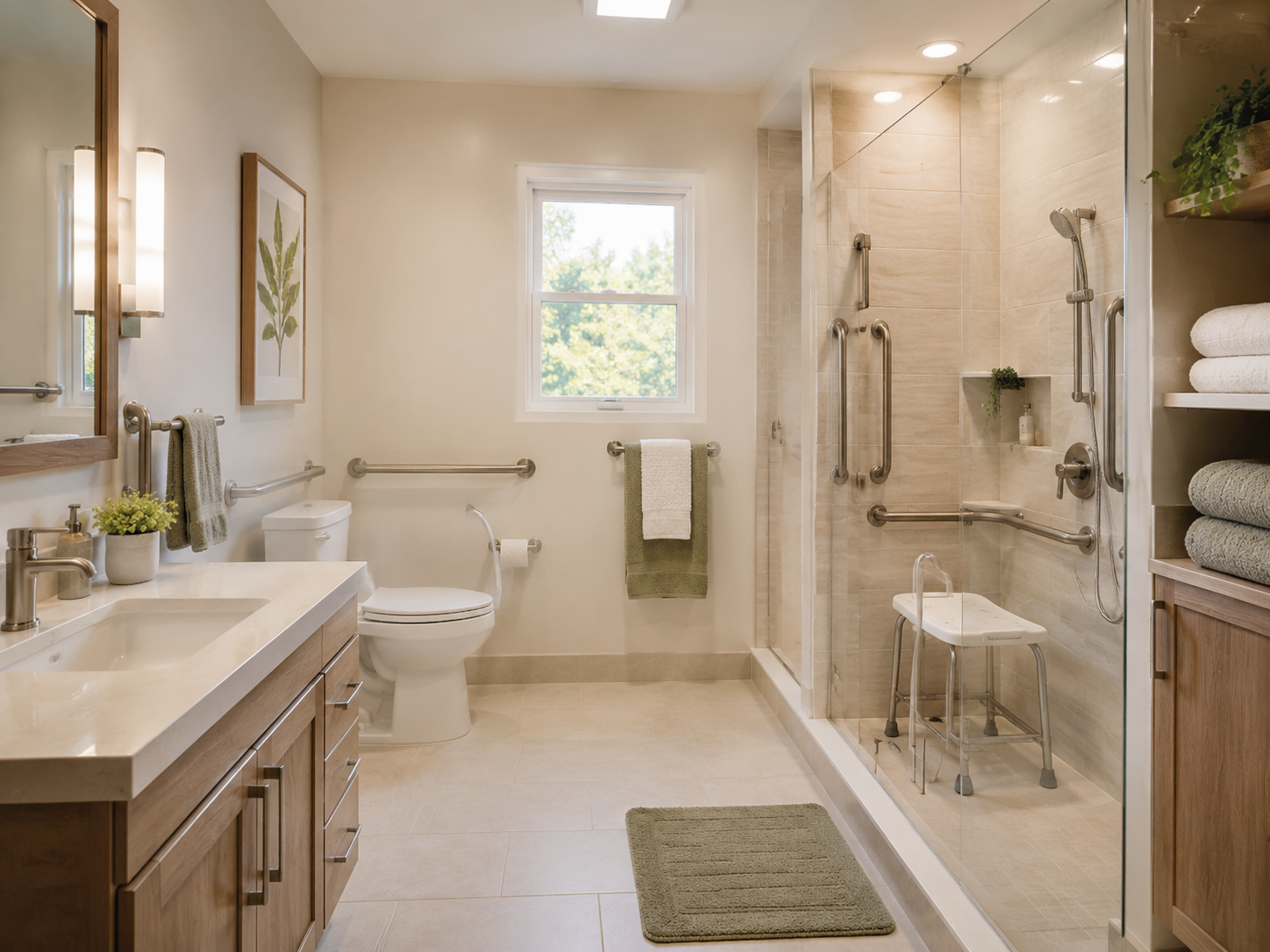
For a temporary visit, you may not be remodeling. Still, you can do more than hope. Put a night-light on the bathroom route. Remove extra baskets and decorative stools from the floor. Make sure toilet paper, soap, towels, and clean clothes are reachable without twisting or leaning. If the guest uses a walker, check that it can actually fit where you expect it to go.
Do not wait for your parent to ask for these things in front of everyone. Pride often arrives with the suitcase. A simple “I cleared this side so it’s easier at night” preserves more dignity than “Do you need help in the bathroom?” shouted from the hallway.
Choose The Chair Before You Choose The Game
A lot of family activities fail at the seating. The couch is too low. The dining chair slides. The best recliner is in the room where nobody gathers. Before planning cards, music, movies, or crafts, pick the seat your guest can get in and out of without a performance. Armrests matter. So does nearby light, a side table, a place for glasses or hearing aids, and a path to the bathroom that does not cut through a maze of coffee tables and children’s projects.
This is also where “helping” needs tact. If your parent can still do some things independently, let the room support that independence. Put the tea within reach rather than handing over every sip. Set up the photo album where the light is good rather than hovering. Move the ottoman before anyone has to point out that it is in the way.
Make The Visit Socially Meaningful Without Making It Busy
Once the house is safer, activity planning has a stronger reason than “it would be nice.” The CDC reports that about 1 in 3 U.S. adults feels lonely, and lack of social connection is associated with higher risk of heart disease, dementia, depression, and earlier death. [4]
That does not mean filling every hour. It means treating the visit as real connection, not background entertainment. A parent who cannot manage a long museum trip may still enjoy sitting near the kitchen while one grandchild reads a recipe card aloud. Someone who refuses a board game may still sing along to familiar music. Someone with limited stamina may prefer one good conversation before lunch to an afternoon schedule that leaves them depleted.
Match Activities To Mobility, Stamina, Cognition, And Pride
Curated senior activity lists can be useful for ideas: visiting guides commonly suggest photo albums, familiar music, simple cooking, crafts, cards, puzzles, gardening, short walks, movies, storytelling, letter writing, and family games. [5][6][7]
The list is only the raw material. The real decision is fit. The same activity can be comforting, boring, embarrassing, or exhausting depending on the guest. “Let’s play trivia” feels different to someone who loves competition than to someone worried about memory lapses. “Let’s go out for brunch” sounds simple until parking, noise, stairs, bathroom distance, and medication timing enter the room.
| If Your Guest Has... | Activities That Usually Fit Better | Watch For |
|---|---|---|
| Good mobility but limited stamina | Short outings, a brief walk, a favorite cafe at a quiet time, helping choose flowers or groceries. | One enjoyable errand can be enough. Build in a real rest afterward. |
| Reduced mobility | Seated conversation, photo albums, music, cards, simple food prep at the table, greeting cards, sorting family recipes. | Do not make the best activity happen in the hardest room to reach. |
| Low vision or hearing changes | Large-print cards, familiar music at a comfortable volume, tactile crafts, one-on-one conversation away from TV noise. | Group chatter can become work, not connection. |
| Mild memory changes | Open-ended storytelling, familiar recipes, name-that-tune, sorting old photos by people or places if that feels pleasant. | Avoid turning the visit into a quiz. |
| Moderate or advanced dementia | Familiar music, sensory items, folding towels, looking at images, gentle movement, simple prompts with no right answer. | Success may be calm attention or a smile, not completed output. |
| Young grandchildren in the house | Greeting cards, baking with assigned roles, looking at pictures, singing familiar songs, short storytelling. | An activity is only intergenerational if the child’s energy and the elder’s comfort can both be managed. |
A useful activity plan for a visit is short, visible, and easy to abandon. Pick two or three options for the day: one quiet, one social, one optional. If everyone is doing well, continue. If pain, confusion, fatigue, or irritability shows up, stop without making the guest explain.
Seated Activities Are Not Second-Best
A well-set seated activity can carry more connection than a complicated outing. Put the person in the supportive chair you already chose. Bring the activity to that spot. Keep the table uncluttered. Make sure glasses, hearing aids, water, tissues, and a sweater are nearby. Then choose something that does not require the guest to perform competence for the room.
- Look through a photo album and ask open prompts such as “What was this day like?” or “Who always made everyone laugh?”
- Play familiar songs and let the guest hum, tap, sing, or simply listen.
- Write greeting cards together, with one person addressing envelopes and another choosing the message.
- Prepare a simple family recipe at the table: sorting ingredients, reading the card, stirring, or giving instructions.
- Watch a familiar movie or old concert recording with the remote, captions, and volume already sorted out.
- Use low-demand crafts such as arranging flowers, folding fabric, making a simple collage, or sorting buttons by color.
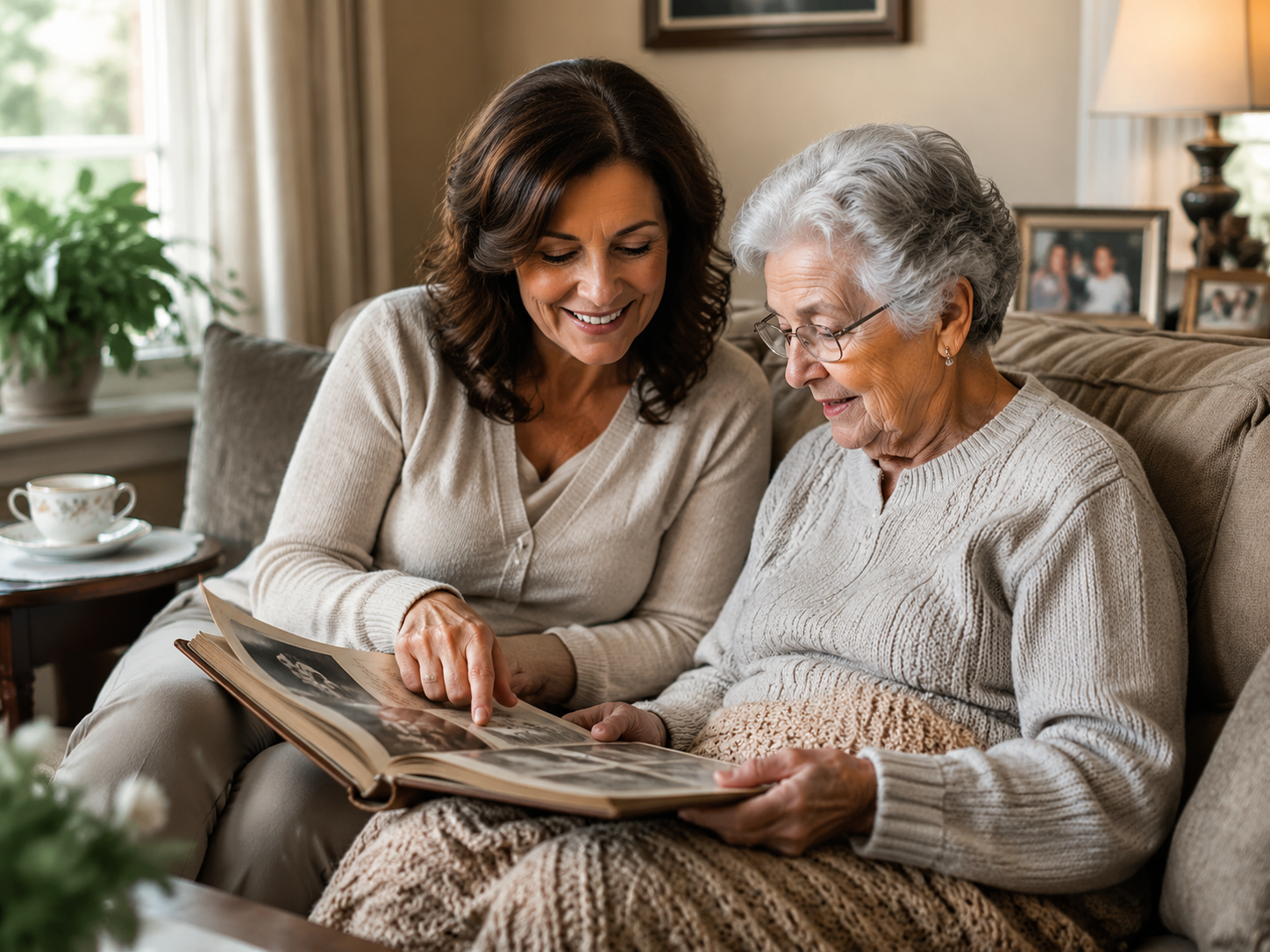
Photo albums and familiar music are often suggested in dementia activity guidance and caregiving resources because they can invite reminiscence without demanding correct answers. [8][9]
When Memory Is Changing, Remove The Test
Cognitive games can be fine for some older adults. They can also feel like an examination. TheKey cites Shadi Gholizadeh, PhD, noting that some seniors refuse cognitive games because they feel put on the spot; one suggested reframing is to ask for help with something the caregiver is doing, rather than announcing a memory exercise. [8]
The difference is subtle but important. “Let’s see if you remember this” puts the person under a light. “I’m trying to label these photos—what do you notice?” gives them room. “What year was this?” has a right answer. “What do you think was happening here?” can be answered many ways.
Anne Basting, PhD, founder of TimeSlips, is quoted in TheKey describing “Beautiful Questions” as open-ended prompts with no wrong answer for people with moderate to severe dementia. [8]
- Instead of “Do you remember this house?” try “What kind of place does this look like to you?”
- Instead of “Who is this?” try “What do you notice about this person?”
- Instead of “What did we always cook at Christmas?” try “What smells make a kitchen feel like a holiday?”
- Instead of correcting a detail, follow the feeling unless safety or distress requires redirecting.
For dementia-stage planning, TheKey summarizes findings from a 2017 study in The Gerontologist with rough activity-duration guideposts: about 30 minutes for more complex projects in mild dementia, about 25 minutes for music, entertainment, or simple crafts in moderate dementia, and about 15 minutes for sensory activities or simple exercises in severe dementia. [8]
Those numbers are planning hints, not timers to enforce. A parent may enjoy music for 10 minutes one day and 25 another. Pain, sleep, medication timing, noise, hunger, and the number of people in the room can change the result. Watch the person, not the clock.
Let Children Join, But Do Not Make Them The Whole Plan
Intergenerational activities can be genuinely valuable. A Place for Mom reports that older adults who engage with children can perform better on memory tests and show improved optimism, while children may develop empathy and greater comfort around aging. [10]
But the adult in the middle still has to manage the room. A toddler running laps around a walker is not a bonding activity. A teen asking thoughtful questions while helping make cookies might be. Good child-and-grandparent activities have clear roles, low stakes, and an easy exit.
- A child decorates greeting cards while the older adult chooses who receives them.
- A grandchild reads recipe steps while the older adult gives advice from the table.
- Everyone plays name-that-tune with familiar songs, and nobody keeps score unless the guest enjoys competition.
- A child asks one open question about a photo, then an adult quietly helps the conversation move along.
- A short craft is set up so the older adult can participate by choosing colors, arranging pieces, or simply watching.
The important word is short. Children often want more attention than an older guest can comfortably give, and older adults may keep smiling past the point of fatigue. End while the exchange is still pleasant.
Plan The Day Around Energy, Not Around The Calendar
For a visiting parent, the day usually has one best window. It may be late morning after medication and breakfast. It may be early afternoon after a rest. It is rarely “whenever everyone else is ready.” Put the most meaningful activity in that better window and let the rest of the day be lighter.
A realistic day might look like this: breakfast without rushing, rest, one seated activity or short outing, lunch, quiet time, a small visit with grandchildren, dinner, and an uncluttered route to bed. That is not a thin day. For someone with pain, mobility limitations, dementia, low endurance, or anxiety in unfamiliar spaces, that may be a full day.
If siblings or other relatives are coming, assign the invisible work before the visit starts. Someone handles child supervision. Someone clears dishes. Someone watches for fatigue. Someone manages the dog. Someone drives if there is an outing. Otherwise, the person most worried about safety will spend the visit scanning the floor instead of participating in the conversation.
Use Outings Sparingly And Prepare The Exit
An outing can be wonderful if the logistics are honest. Before suggesting a restaurant, garden center, church service, concert, or family event, check parking distance, steps, seating, bathroom access, noise, temperature, wait time, and how easily you can leave. The question is not whether the place is technically accessible. The question is whether your guest can enjoy it without spending all their energy getting through it.
Have a graceful exit line ready: “We’re going to head home while this still feels good.” That protects the guest from having to announce pain, confusion, bathroom urgency, or exhaustion in front of the group.
A Simple Hosting Flow That Actually Holds Up
The safest version of the visit is not the most restrictive one. The most meaningful version is not the busiest one. A workable plan usually follows this order:
- Walk the house from the guest’s point of view: entry, bathroom, bedroom, living room, stairs, kitchen, and night route.
- Fix the obvious hazards first: loose rugs, poor lighting, blocked paths, unstable seating, bathroom obstacles, and stair concerns.
- Choose the safest gathering spot and make it comfortable before people arrive.
- Pick a few activities that match mobility, stamina, cognition, hearing, vision, and personality.
- Keep the plan short, with rest built in and an easy way to stop.
- Let the guest participate in choices whenever possible: where to sit, what music to play, whether to go out, when to rest.
That last part matters. Safety preparation should not make an older guest feel managed out of their own visit. Ask quietly. Offer choices that are real. “Would you rather look through photos or help me with these cards?” is better than “Here is your activity.” “Do you want the chair by the window or near the table?” is better than silently arranging the person like furniture.
A good visit is the one where the rug is already gone, the bathroom light is already on, the chair already works, and the activity does not ask the guest to pretend they have more energy or memory than they do. Review the hazards, choose a few matched activities, keep plans short and adjustable, and let comfort and dignity shape the day.
References
- Older Adult Falls Data, CDC, 2026,
- Is Your Home Ready for Senior Guests? Senior Home Safety Checklist, Honest Med, 2025,
- Senior guest? How to prepare, NewportRI, December 13, 2017,
- Health Effects of Social Isolation and Loneliness, CDC,
- Fun Activities When Visiting Loved Ones, CarePatrol,
- 25 ideas for fun activities during visits with seniors, Feros Care,
- 40 Activity Ideas to Spend Time With Family and Seniors, Comfort Keepers,
- Activities for Dementia Patients, TheKey,
- 19 Dementia Activities, A Place for Mom,
- Intergenerational Activities for Seniors, A Place for Mom,
Questions to bring to a clinician or OT
This is not medical, legal, or a family's final decision — only a framework. Bring these questions to a clinician, occupational therapist, or your local Area Agency on Aging.
Find Local HelpRelated reading
Noticed something outdated or inaccurate on this page? Flag a correction. We review every report against CDC, NIA, and AARP HomeFit guidance before updating a page.