
Caregiver decision guide
How Much Will Enlicitide (Lipfendra) Cost Seniors on Medicare?
Lipfendra (enlicitide) became the first oral PCSK9 inhibitor in July 2026 with a list price of $315/month, but Medicare Part D’s $2,100 out-of-pocket cap means seniors may pay far less. This article explains the true cost after insurance coverage, prior authorization hurdles, and how to navigate access.
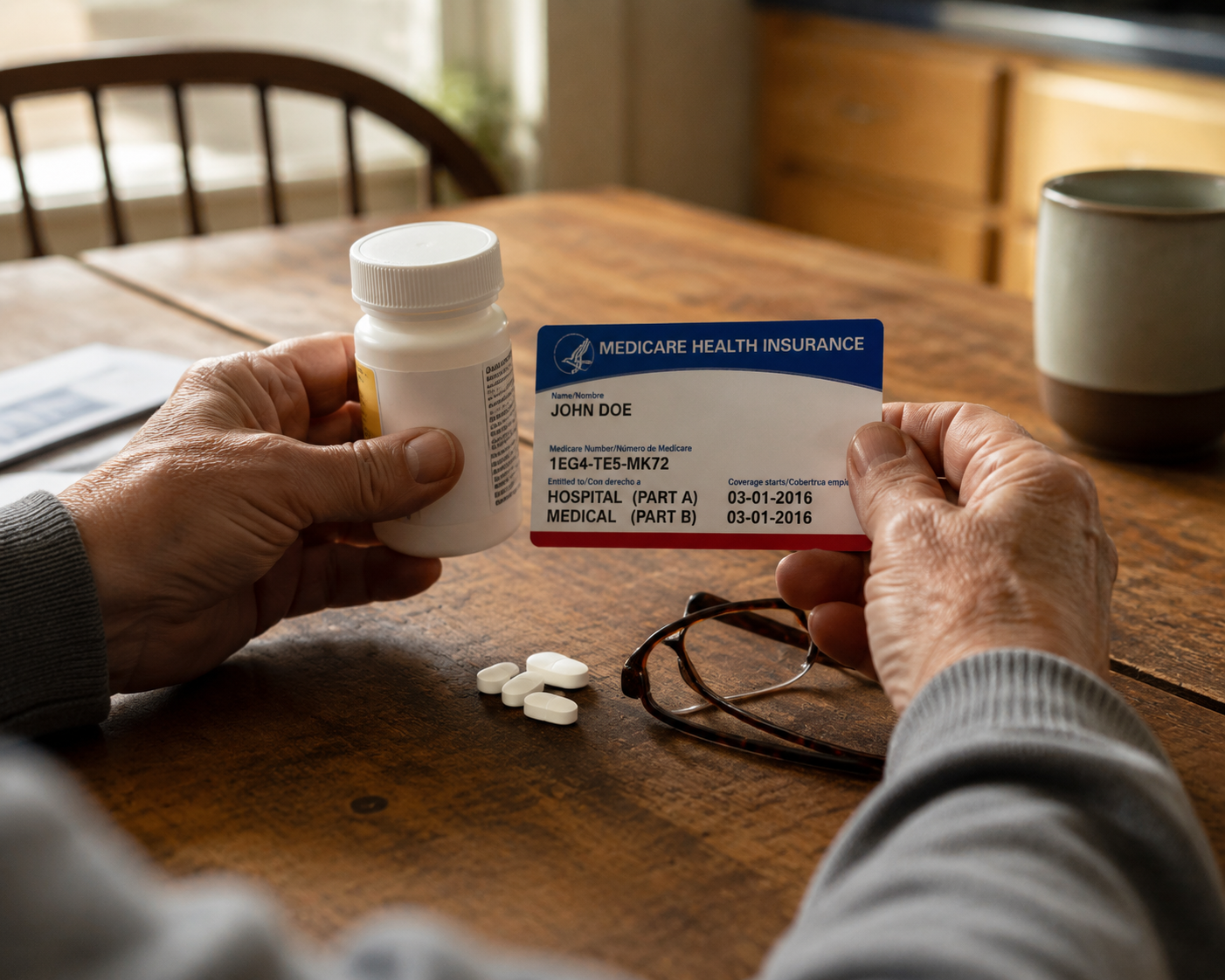
The first number most families will see for enlicitide, sold as Lipfendra, is $315 a month. That is the list price, which works out to $3,780 a year before insurance, rebates, plan rules, or Medicare Part D protections are applied.[1] It is a number that can make a pharmacy counter feel expensive before anyone has even run the claim.
For a senior on Medicare Part D in 2026, that list price does not automatically mean paying $3,780 out of pocket. The important Medicare number is the 2026 Part D out-of-pocket cap: $2,100 across all covered Part D drugs for the year, not $2,100 just for Lipfendra.[2] Once a beneficiary reaches that cap, covered Part D drugs should cost $0 for the rest of the plan year.
That makes the plain answer more reassuring than the headline price, but less tidy than anyone would like: a senior’s Lipfendra cost depends on whether their Part D plan covers it, what tier it lands on, what coinsurance or copay applies, and how much they are already spending on other prescriptions. Lipfendra was approved by the FDA on July 16, 2026, so plan-specific Medicare formulary placement is not yet visible in the way it will be after plans publish and update their coverage files.[3]
What $315 a month means under the 2026 Part D cap
The list price is the manufacturer’s starting point, not the amount every Medicare beneficiary will hand over at the pharmacy. Medicare Part D plans often use deductibles, coinsurance, tiers, preferred pharmacies, and negotiated prices. The out-of-pocket cap sits above all of that and limits the beneficiary’s annual exposure for covered Part D drugs.
| Cost question | What can be said now |
|---|---|
| Lipfendra list price | $315 per month, or $3,780 per year before insurance effects |
| 2026 Medicare Part D out-of-pocket cap | $2,100 for all covered Part D drugs combined |
| If Lipfendra is covered and the senior reaches the cap | Covered Part D drugs should be $0 for the rest of the year |
| Exact plan copay or coinsurance | Not yet knowable across plans because Lipfendra was just approved |
The cap matters most for seniors who already take several brand-name drugs. A parent who uses a blood thinner, a diabetes medication, or another costly Part D prescription may reach the $2,100 cap sooner than someone whose only expensive drug is Lipfendra. That is why two people on the same new cholesterol pill can have very different experiences: one may see Lipfendra push them toward the cap; another may already be close to the cap before Lipfendra is added.
If someone paid the full $315 monthly list price entirely out of pocket and all of it counted toward the Part D cap, they would cross $2,100 around the seventh month. Many Medicare beneficiaries will not pay the full list price each month if the drug is covered; a plan may instead charge coinsurance or a copay. Other Part D drugs, the deductible, and the plan’s actual negotiated price can change the timing.
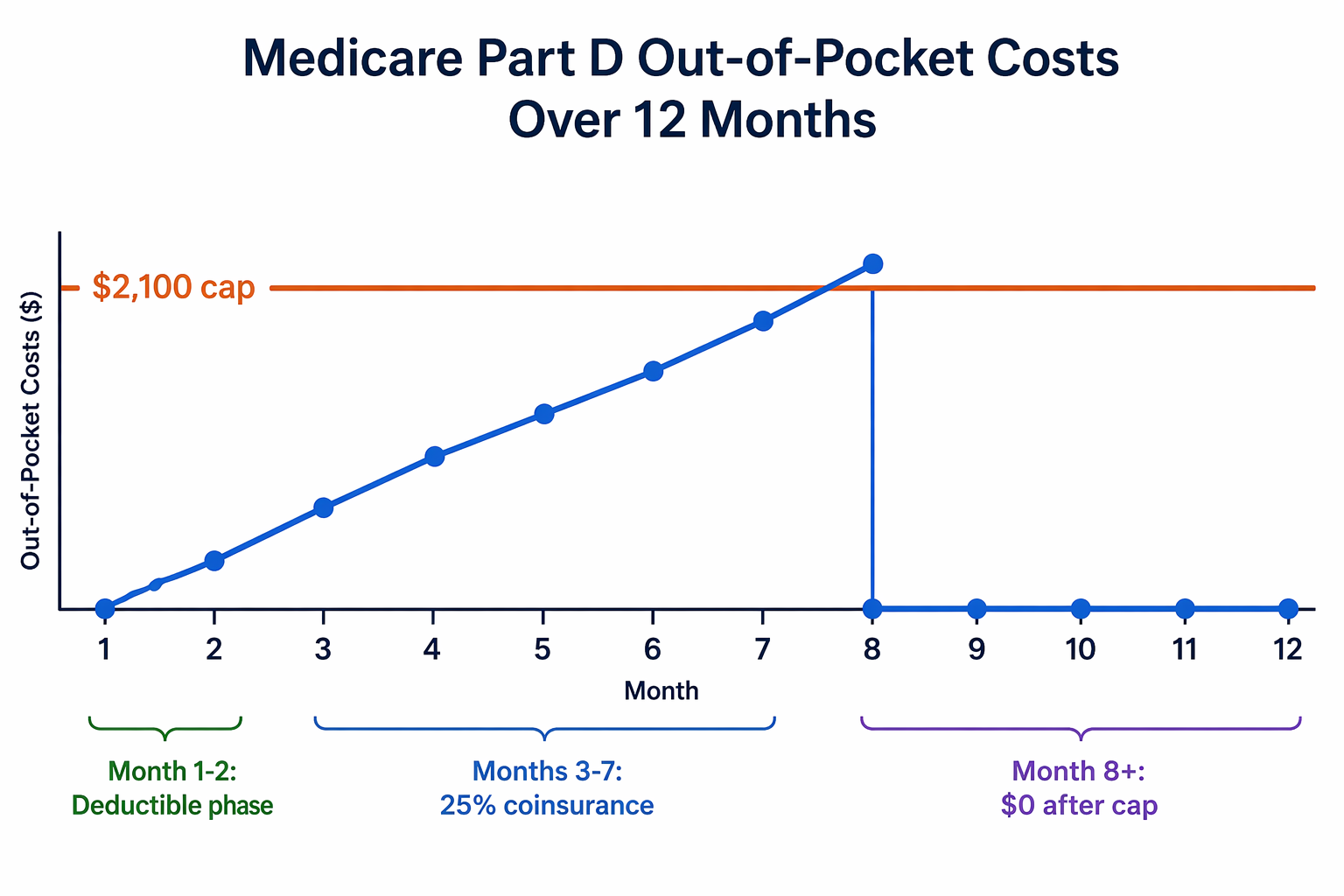
This is the part worth checking against the senior’s real medication list, not just against the Lipfendra price. The cap is annual and cumulative. It is not a coupon, not a manufacturer discount, and not a guarantee that the first fill will be cheap. It also does not solve a non-covered claim. If the plan refuses to cover Lipfendra or requires approval first, the cap does not make the pharmacy hand over the medication that day.
The first fight may be approval, not price
Lipfendra is new enough that Lipfendra-specific Medicare Part D prior authorization rules are not public in a dependable way yet. The best available clues come from existing PCSK9 inhibitor coverage patterns, because Lipfendra belongs to the same drug class as injectable PCSK9 options even though it is taken by mouth.
Those clues are not trivial. Current PCSK9 inhibitor coverage is often broad on paper, but access usually runs through prior authorization. Empirical Health’s review found that about 90% to 95% of Part D plans cover PCSK9 inhibitors, while about 97% require prior authorization.[4] That means a prescription can be “covered” and still fail at the pharmacy until the prescriber sends the right documentation.
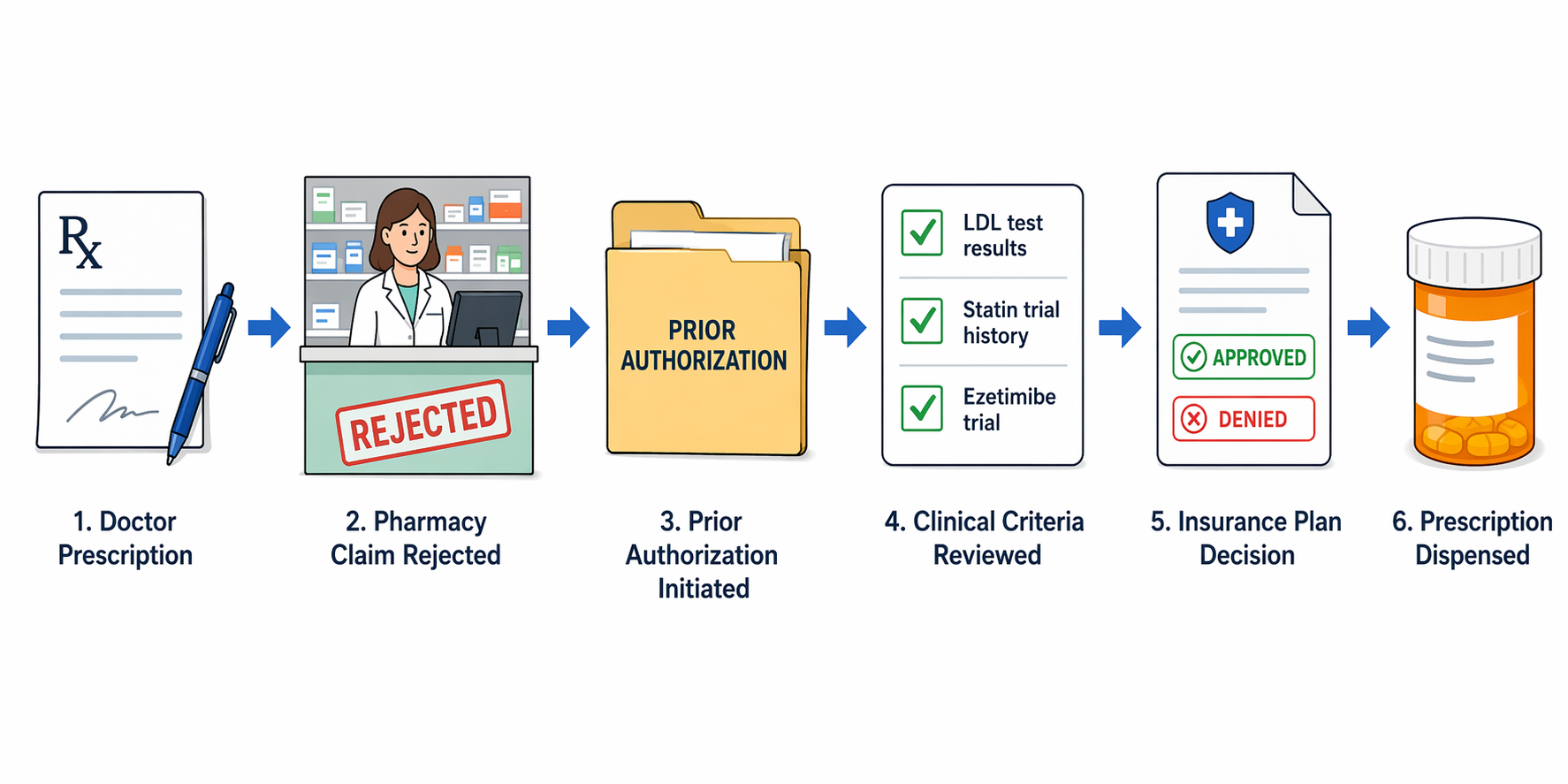
A pharmacy rejection, by itself, does not always mean the drug is permanently denied. It may mean the plan needs the cardiologist’s office to prove the patient meets criteria. That proof can include recent LDL-C lab results, diagnosis history, current statin use, previous statin intolerance, and sometimes evidence that ezetimibe or a high-intensity statin was tried first.
| What plans may ask for | Why it matters at the pharmacy |
|---|---|
| Recent LDL-C number | Existing PCSK9 criteria often use thresholds around 55 to 70 mg/dL |
| Statin history | Plans may want proof of a trial, failure, contraindication, or intolerance |
| High-intensity statin use | Step therapy may look for atorvastatin 40 mg or higher, or rosuvastatin 20 mg or higher, for 8 to 12 weeks |
| Ezetimibe history | Some plans require it before approving a PCSK9 inhibitor |
| Diagnosis and risk status | Very high-risk patients may be judged under stricter LDL goals |
The LDL threshold can vary. Empirical Health’s insurer-by-insurer review reported examples such as UnitedHealthcare using LDL-C of at least 55 mg/dL with no ezetimibe requirement, Aetna using LDL-C of at least 70 mg/dL with ezetimibe required, Cigna using LDL-C of at least 55 mg/dL with ezetimibe required, Anthem using LDL-C of at least 70 mg/dL without ezetimibe, and many Blue plans generally using LDL-C of at least 70 mg/dL with ezetimibe required.[4] These are examples from existing PCSK9 coverage, not confirmed Lipfendra rules.
For a family trying to avoid a wasted trip, the useful question is not only “How much will it cost?” It is also “What will the plan require before it lets the pharmacy fill it?” A cardiology office may already have the labs and medication history, but the plan will not assume that. Someone still has to send it, track it, and follow up when the fax, portal message, or electronic prior authorization sits unanswered.
How Lipfendra compares with injections and statins
Lipfendra’s closest comparison is not a generic statin. It is the injectable PCSK9 inhibitor category, including drugs such as Repatha and Praluent. Those injectable PCSK9s have been used as add-on therapy for patients whose cholesterol remains high despite standard treatment, and their current list prices are generally in the $500 to $600 per month range.[2]
On price alone, Lipfendra’s $315 monthly list price is lower than that injectable PCSK9 range. But Medicare access is not decided by list price alone. The injectable drugs also show why Part D plans may treat this class as something that needs documentation before approval.
Generic statins sit at the other end of the cost spectrum, with annual costs roughly in the $24 to $144 range.[2] That is why they are so often the starting point in coverage rules. A plan may not want to pay for a PCSK9 drug until it sees that the patient has already used a statin, could not tolerate one, or still has LDL-C above the plan’s threshold despite therapy.
This does not mean Lipfendra is interchangeable with a statin. It means that, from the plan’s paperwork view, statins and sometimes ezetimibe are the lower-cost steps that may have to be documented before a newer PCSK9 option gets approved.
The pill is easier than an injection only if the routine works
The reason Lipfendra is getting attention is real: it is the first FDA-approved oral therapy that inhibits PCSK9 to lower LDL-C.[3] For older adults who dislike injections, have dexterity problems, or depend on someone else to manage injectable medications, a once-daily pill could remove a meaningful barrier.
Its LDL-C lowering effect is also in the same broad territory families may have heard about with injectable PCSK9 therapy. Merck reported LDL-C reductions of about 56% to 60% in approval-supporting studies.[5] That is the cholesterol number; it is not the same as saying heart attacks and strokes have already been proven to fall by the same amount.
The cardiovascular outcomes question is still pending. The CORALreef Outcomes trial is studying cardiovascular outcomes in more than 14,500 participants, but those results are not yet available.[5] Until that evidence is published, the strongest claim is about LDL-C reduction, not confirmed reductions in heart attacks or strokes for Lipfendra specifically.
There is also a practical catch that should not be brushed aside: Lipfendra has an 8-hour fasting requirement before dosing.[2] For a healthy person with a rigid schedule, that may sound manageable. For a senior with diabetes, overnight snacks, early breakfast, nausea with morning medications, or a caregiver who only stops by at certain times, that fasting rule can become the thing that decides whether the pill is actually usable.
A pill can be less intimidating than an injection and still be difficult. If the medication has to be taken after a long fast, the family needs to think through the exact day: bedtime snacks, morning blood sugar checks, other pills, breakfast timing, and who notices if the schedule slips.
What to verify before the prescription is sent
The cleanest way to handle Lipfendra is to slow the process down before the prescription hits the pharmacy. That sounds backwards when a doctor has just recommended a new medication, but it can prevent the familiar loop of pharmacy rejection, phone calls, missing forms, and a parent being told to “check back tomorrow.”
- Ask the Part D plan whether Lipfendra is on the formulary once plan information is available, and ask what tier, copay, or coinsurance applies.
- Ask whether prior authorization is required and whether the plan has Lipfendra-specific criteria or is applying existing PCSK9 criteria.
- Gather recent LDL-C lab results, especially if the senior’s LDL-C is near 55 or 70 mg/dL.
- Write down statin history: current dose, previous doses, side effects, stopped medications, and whether atorvastatin 40 mg or rosuvastatin 20 mg was tried.
- Check whether ezetimibe was tried or discussed, because some PCSK9 coverage policies require it.
- Talk through the 8-hour fasting requirement before assuming an oral drug will be easier.
For people without usable insurance coverage, Merck’s patient assistance program says it provides free medications for eligible uninsured or underinsured patients.[6] That does not mean every Medicare beneficiary will qualify, and Medicare beneficiaries are often treated differently from commercially insured patients in manufacturer assistance programs. Still, it is worth knowing the program exists if the prescription is medically appropriate and the insurance route fails.
The cholesterol goal may also matter. The 2026 ACC/AHA dyslipidemia guideline recommends an LDL-C goal of less than 55 mg/dL for very high-risk patients, while discussing existing PCSK9 monoclonal antibodies and inclisiran rather than oral enlicitide specifically.[7] That guideline can shape how clinicians think about aggressive LDL lowering, but it should not be mistaken for a guarantee that a Part D plan will approve Lipfendra.
So the cost answer is cautiously better than the list price suggests. Lipfendra at $315 a month sounds like a $3,780 annual problem, but the 2026 Medicare Part D cap limits a covered beneficiary’s total Part D out-of-pocket spending to $2,100 for the year. The harder part may be getting to a covered fill at all: formulary placement, prior authorization, LDL thresholds, statin or ezetimibe history, and the fasting schedule may decide whether this new pill is realistic for a particular senior.
References
- Merck scores FDA nod for Lipfendra, becomes first oral PCSK9 treatment, Fierce Pharma
- Oral PCSK9 inhibitor Lipfendra, Empirical Health
- FDA approves first oral therapy that inhibits proprotein convertase subtilisin/kexin type 9 (PCSK9) to lower LDL-C, U.S. Food and Drug Administration
- PCSK9 inhibitor insurance coverage, Empirical Health
- Merck’s LIPFENDRA (enlicitide) is the first and only once-daily oral PCSK9 inhibitor approved by the U.S. FDA to reduce LDL-C in adults with hypercholesterolemia, Merck
- Merck Patient Assistance Program, Merck Helps
- 2026 ACC/AHA Guideline for the Management of Patients With Dyslipidemia, American Heart Association
Questions to bring to a clinician or OT
This is not medical, legal, or a family's final decision — only a framework. Bring these questions to a clinician, occupational therapist, or your local Area Agency on Aging.
Find Local HelpRelated reading
Noticed something outdated or inaccurate on this page? Flag a correction. We review every report against CDC, NIA, and AARP HomeFit guidance before updating a page.