
Caregiver decision guide
How to protect older adults from FDA food recall risks
Older adults face dramatically higher hospitalization rates from foodborne illness due to age-related immune decline, yet many caregivers are unaware of how to monitor FDA recalls or recognize early symptoms. This guide explains the heightened risk and provides actionable steps for tracking recalls, sanitizing contaminated foods, and knowing when to seek medical help.
A frozen supplemental shake is the kind of food many families barely think of as risky. It looks clinical, predictable, almost protected from ordinary kitchen problems. In the 2025 Listeria monocytogenes outbreak linked to frozen supplemental shakes, that assumption failed badly: the FDA reported 14 deaths and 41 hospitalizations across 21 states, and 89% of cases were tied to long-term care facilities.[1]
That is the right starting point for understanding FDA food recalls for older adults. A recall is not only a grocery-store notice or a brand problem. For an older adult in a nursing home, assisted living apartment, rehabilitation facility, or kitchen where the same safe-looking foods are bought every week, a recalled item can become a hospitalization event before anyone in the family hears the word “recall.”
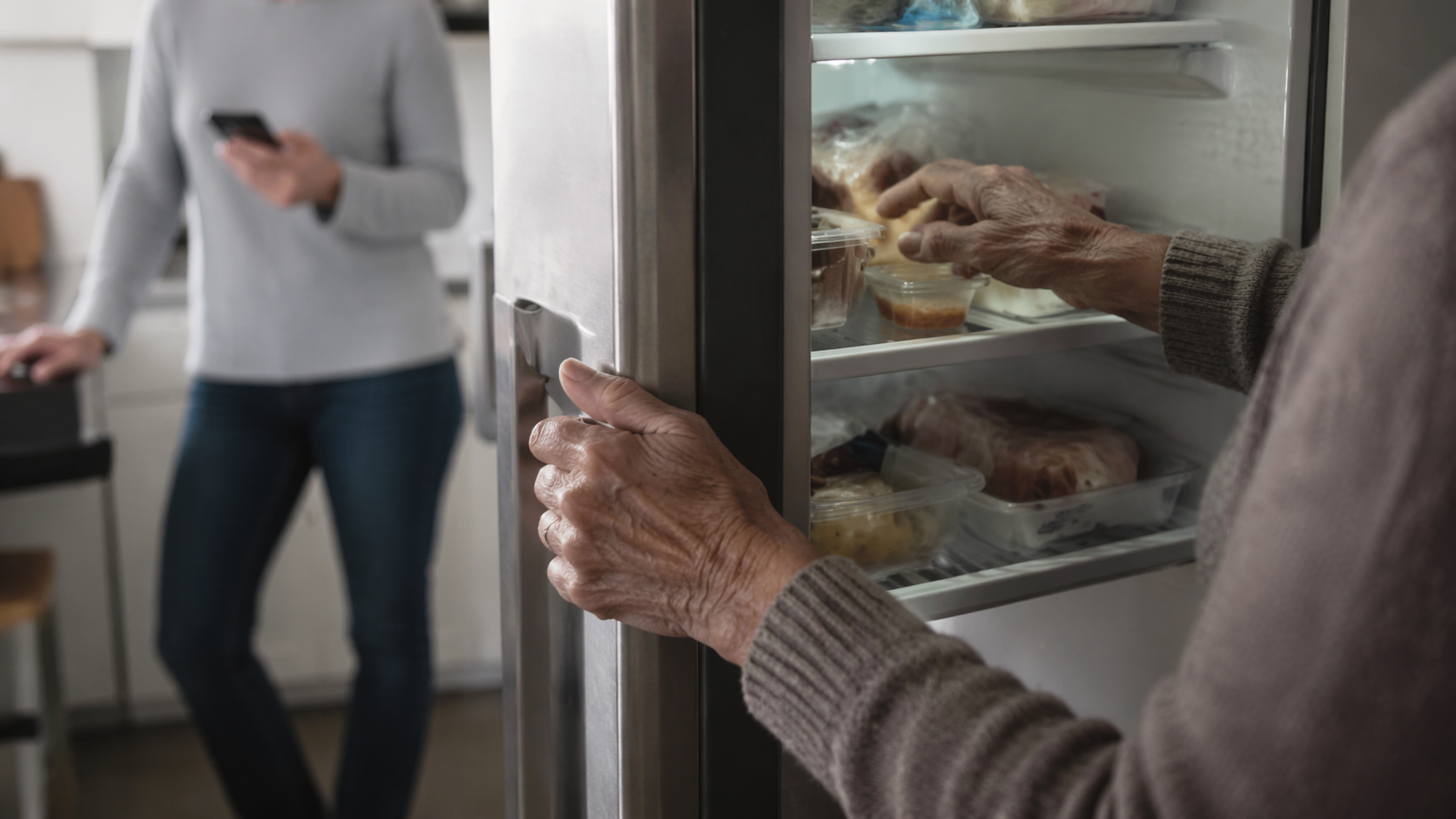
The CDC puts the vulnerability in plain terms: nearly half of adults 65 and older with a laboratory-confirmed foodborne illness from Salmonella, Campylobacter, or Listeria are hospitalized.[2] That statistic does not describe every germ or every stomach illness. It does tell caregivers something important about the margin for error. When the organism is one of these major foodborne pathogens, older adults are much more likely to need hospital-level care.
Why Age Changes the Recall Calculation
Food safety advice often sounds the same for everyone: wash hands, cook thoroughly, refrigerate promptly, watch for recalls. The problem is that the consequence of a missed step is not the same for everyone.
The FDA describes several age-related changes that make foodborne illness more dangerous for older adults. The immune system becomes less able to recognize and fight infection. The stomach may produce less acid, so fewer bacteria are destroyed before they move deeper into the digestive tract. Food may move more slowly through the gastrointestinal system, giving harmful organisms more opportunity to multiply. Liver and kidney function may also decline, making it harder for the body to clear pathogens and toxins once illness begins.[3]
These are not small details for the person deciding whether to throw out a questionable container, call a facility, or ask a clinician about vague symptoms. They mean an exposure that might cause brief illness in a younger adult can hit an older adult harder, last longer, or become invasive before it looks dramatic.
Listeria deserves special respect in this age group because it can cause severe invasive illness and because the oldest adults have historically fared poorly once infected. One workshop summary cited England and Wales data from 1990 to 2007 showing a case-fatality rate of about 45% among adults 80 and older with listeriosis.[4] That figure should not be treated as a current U.S. estimate. It is older UK data. It is still a useful warning against treating Listeria as just another stomach bug.
What FDA Recall Language Means at Home
FDA recall notices are written for a wide audience: manufacturers, retailers, health departments, institutions, and consumers. A caregiver standing in front of a refrigerator needs to translate that language into a few immediate decisions: Does this product match? Has the older adult eaten it? Is there any left? Who else supplied it? What surface did it touch?
| FDA recall class | What it means | Caregiver response |
|---|---|---|
| Class I | There is a reasonable probability that use of or exposure to the product will cause serious adverse health consequences or death. | Act immediately: stop use, isolate the item, follow disposal or return instructions, clean affected areas, and watch closely for symptoms. |
| Class II | Use of or exposure to the product may cause temporary or medically reversible health consequences, or the probability of serious harm is remote. | Still remove the item and follow the recall instructions, especially for an older adult with chronic illness or frailty. |
| Class III | Use of or exposure to the product is not likely to cause adverse health consequences. | Check the product details and follow the notice, but the medical urgency is generally lower. |
The class matters, but it should not be the only filter. A Class II recall may still deserve fast action in a household where an older adult is immunocompromised, recovering from surgery, receiving cancer treatment, living with advanced kidney disease, or eating foods supplied by more than one source.
A 20-year analysis of FDA food and beverage recalls found that Class I recalls made up 53% of FDA food recalls in the period studied.[6] The same analysis found that Listeria monocytogenes and Salmonella together accounted for 40% of FDA food and beverage recalls from 2002 through 2023, with Listeria at 22% and Salmonella at 18%.[6] That does not mean every recall involves these pathogens. It does mean they are not rare background names; they are central to the recall landscape caregivers are being asked to navigate.
The Recall Check Should Be a Care Task, Not a News Habit
Many families hear about recalls only when a story becomes large enough to reach television, social media, or a facility email. That is too fragile a system for an older adult who eats prepared meals, refrigerated ready-to-eat foods, deli items, nutritional shakes, or foods stocked by someone else.
The practical workflow is simple enough to attach to existing caregiving routines. It does not require reading every agency page every morning. It does require knowing where recall information appears and checking product details carefully when an alert applies.
- Sign up for FDA food recall alerts through the FDA’s free GovDelivery email subscription service.[7]
- Check the FDA food recalls page and FoodSafety.gov’s recall tools when buying higher-risk foods for an older adult, after a facility notice, or when a widely used brand appears in the news.[7][8]
- Compare the recall notice against the product name, brand, package size, lot number, best-by date, establishment number when listed, and place of purchase.
- If the older adult lives in long-term care, ask the facility whether the recalled product or ingredient was served, not only whether it is still in storage.
- If the older adult receives delivered meals, ask the meal provider whether any recalled ingredient was used during the affected production window.
The product comparison step is where many mistakes happen. A caregiver sees a familiar brand name and either panics unnecessarily or dismisses the notice too quickly. Recalls often apply to specific package sizes, production dates, lot codes, or distribution areas. The right question is not “Do we buy that brand?” but “Do we have the exact item described in the notice, or was it served to the older adult?”
When a Recalled Food Is in the Refrigerator
Once a product matches a recall, the safest response is deliberately boring: stop using it, separate it from other foods, and follow the recall instructions. Do not taste it. Do not serve one more portion because the package is already open. Do not save it for a younger family member unless the recall notice clearly says that is appropriate, which it usually will not.
If the recall involves possible Listeria contamination, cleanup matters because Listeria can survive and grow at refrigerator temperatures.[9] That one fact defeats a common household assumption: cold storage slows many organisms, but it does not make a contaminated refrigerator safe.
- Put the recalled food in a sealed bag before discarding it, unless the recall notice gives different return instructions.
- Wash hands after handling the product and again after cleaning.
- Clean refrigerator shelves, drawers, handles, cutting boards, counters, and utensils that may have touched the food or its juices.
- Sanitize hard surfaces with a solution of 1 tablespoon unscented liquid chlorine bleach in 1 gallon of hot water, then allow the surface to air dry, following FDA and FoodSafety.gov guidance.[8][9]
- Throw away nearby ready-to-eat foods if they may have been touched by drips, spills, or contaminated hands.
This is not about scrubbing for reassurance. It is about interrupting a path of exposure. Ready-to-eat foods are especially unforgiving because there may be no later cooking step to kill bacteria before the older adult eats them.
The Hardest Part: Symptoms May Arrive Late
Caregivers are trained by daily life to watch the next 24 or 48 hours. If nothing happens, the worry fades. Listeria does not always respect that timeline. FoodSafety.gov warns that symptoms of listeriosis can appear up to 10 weeks after exposure.[8]
That long window is one reason a recall should not end, for a caregiver, when the package leaves the house. If an older adult may have eaten a recalled food, write down the product, the likely date of exposure, the recall organism if named, and the date the item was removed. Keep that note somewhere visible to the person who manages appointments or medication lists.
The symptoms that deserve urgent attention include fever, muscle aches, stiff neck, confusion, and loss of balance after possible exposure.[8] In an older adult, confusion or balance changes can be misread as dehydration, poor sleep, medication effects, or “just a bad day.” Those explanations may be true, but after a possible Listeria exposure they should not be used to delay a call.
Call a healthcare provider immediately if these symptoms appear after a possible exposure. If the older adult is in a facility, tell the nurse or medical director the exact recalled food and exposure date if known. If the older adult goes to urgent care or the emergency department, bring the recall information or a screenshot. Clinicians cannot connect a symptom to a recall they are never told about.
For Families Dealing With Facilities and Delivered Meals
The 2025 frozen shake outbreak matters partly because it took place in the world many families already depend on: long-term care and supplemental nutrition.[1] A family caregiver may not have bought the food, opened the case, or stocked the refrigerator. That does not mean there is nothing to do.
When a recall appears to involve a food category used by a facility, ask specific questions. Broad questions produce broad reassurance. Specific questions create a record and make it easier for staff to route the concern to dietary services, nursing leadership, or the vendor.
- “Was this recalled product, brand, lot, or ingredient served here during the affected dates?”
- “Was it served to my parent or spouse, including as part of a shake, dessert, sandwich, salad, or supplement?”
- “Has the facility removed the product from storage and service areas?”
- “What cleaning or sanitizing was done in refrigerators, carts, preparation surfaces, and resident rooms where the product may have been handled?”
- “What symptoms should families report, and for how long after possible exposure?”
The same approach works with home-delivered meals. The caregiver does not need to accuse anyone of negligence. The caregiver does need enough information to know whether the older adult was exposed and whether symptom monitoring should continue beyond the usual day or two.
A Small Routine That Closes a Dangerous Gap
A workable recall routine can be brief. Once a week, scan FDA or FoodSafety.gov recall listings for foods the older adult actually eats. When shopping, keep receipts or take a quick photo of higher-risk refrigerated products if the older adult relies on them often. When a recall hits, compare the details before deciding the notice does or does not apply. If it applies, remove the food, clean contact areas, and write down the exposure date.
The point is not to make families live in fear of the refrigerator. It is to stop treating recall awareness as something that happens only when a headline gets loud enough. Older adults have less room for delay, less room for guesswork, and sometimes less ability to describe early illness clearly. Caregivers cannot eliminate recall risk, but they can shrink the dangerous knowledge gap by making recall monitoring, refrigerator cleanup, and delayed symptom recognition part of ordinary care.
References
- Outbreak Investigation of Listeria monocytogenes: Frozen Supplemental Shakes, FDA, February 2025, link
- Safer Food Choices for Adults 65 and Older, CDC, link
- Food Safety for Older Adults, FDA, link
- An Evaluation of the Role of Microbiological Criteria for Foods and Food Ingredients, NCBI Bookshelf, link
- Recalls Background and Definitions, FDA, link
- Food Recall Trends in the United States, 2002–2023, Journal of Food Protection, link
- Recalls, Market Withdrawals, & Safety Alerts, FDA, link
- People at Risk: Older Adults, FoodSafety.gov, link
- Listeria, FDA, link
Questions to bring to a clinician or OT
This is not medical, legal, or a family's final decision — only a framework. Bring these questions to a clinician, occupational therapist, or your local Area Agency on Aging.
Find Local HelpRelated reading
Noticed something outdated or inaccurate on this page? Flag a correction. We review every report against CDC, NIA, and AARP HomeFit guidance before updating a page.