
Caregiver decision guide
What to Do During a Food Recall for Your Elderly Parent
This guide walks caregivers through the immediate steps to take when an elderly loved one has a recalled food product at home, including age-specific risk factors, symptom monitoring, and when to seek medical help.
If your elderly parent has a recalled food product at home, do not eat it, do not taste it, do not give it away, and do not wait to see whether they feel sick. Start with containment: confirm the product details, get it out of food circulation, clean what it touched, find out whether your parent ate any, and begin a simple symptom log.
That may sound stricter than the usual recall notice. For adults 65 and older, it should be. Nearly half of adults 65+ with lab-confirmed Salmonella, Campylobacter, Listeria, or E. coli infection are hospitalized, which changes how lightly a caregiver can treat even “mild” stomach symptoms after a recalled food exposure.[1]
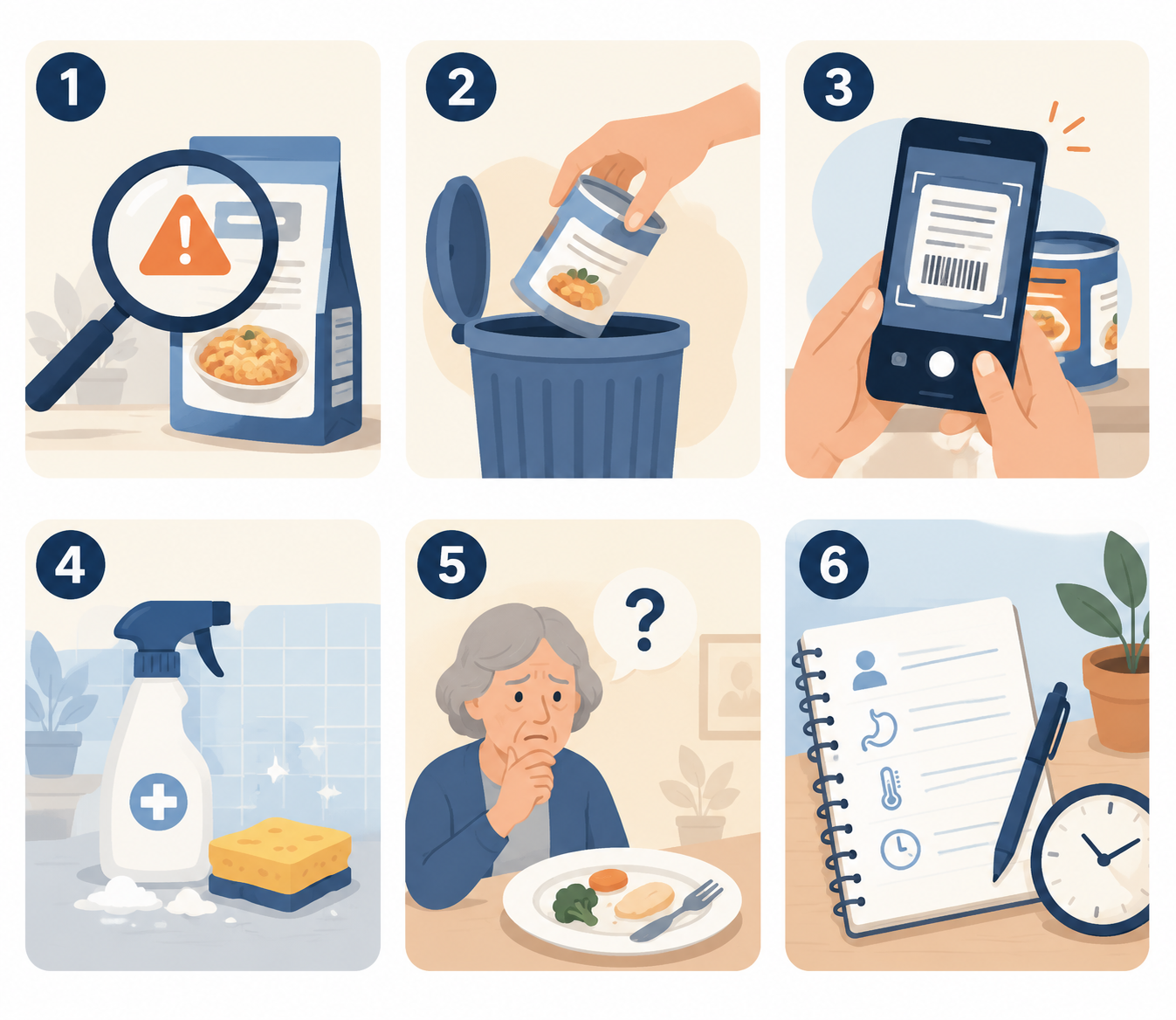
First 30 Minutes: Get the Food Out of Circulation
Pull up the official recall notice before throwing anything away. FoodSafety.gov’s core instructions are to check whether the product matches the recall, not eat it, clean anything it touched, and monitor for symptoms.[2] The FDA gives the same starting point: identify the recalled food by the brand, product name, package size, lot number, UPC, “best by” date, or other identifying details listed in the recall notice.[3]
Do this in order:
- Confirm the recall from an official source such as FoodSafety.gov, FDA, USDA, or the company recall page linked from one of those sources.
- Match the exact product details. Do not rely only on the front label; check lot codes, sell-by or use-by dates, package size, and store information if the recall names specific locations.
- Separate the product from other food immediately. Put it in a sealed bag or container so it cannot leak, spill, or be accidentally used.
- Follow the recall notice on whether to discard the product or return it. Some notices ask consumers to return the product for a refund; others say to throw it away.
- Take a photo of the label, lot code, receipt, and recall notice before disposal if there is any chance your parent ate it or may need to report an illness.
Opened packages deserve more caution than unopened ones because they may have touched hands, refrigerator shelves, cutting boards, plates, or other food. If the recalled item was deli meat, soft cheese, produce, frozen fruit, a meal kit ingredient, or anything stored loosely after opening, assume the surrounding area needs attention too. Do not scrape off part of the food, rinse it, cook it “just in case,” or offer it to a neighbor who is younger and “less at risk.”
If You Are Helping From Another Home
A long-distance recall check is awkward, but it can be done. Ask your parent or the person with them to put the package on a counter away from other food, turn on the kitchen light, and show you the label over video. Have them read the brand, product name, date, and lot code out loud while you compare it with the recall notice. If they are unsure, treat it as a possible match until someone can verify it in person.
If your parent has memory changes, low vision, hand tremors, or simply gets flustered by labels, do not ask them to keep checking the same package for twenty minutes. Call a nearby relative, neighbor, building staff member, home aide, or grocery delivery helper and give that person one job: confirm the code and remove the food from use.
Clean What the Recalled Food Touched
After the product is contained, clean the contact points: refrigerator drawer, freezer shelf, cabinet shelf, countertop, cutting board, utensils, sink, trash can lid, reusable grocery bag, and any plate or storage container used with the food. FoodSafety.gov gives a sanitizing ratio of 1 tablespoon of bleach per gallon of water for kitchen surfaces after a recalled product has contacted them.[2]
Use this sequence:
- Wash hands with soap and water before and after handling the product.
- Remove nearby foods that may have been touched by drips, crumbs, or packaging.
- Wash surfaces first with hot, soapy water to remove visible residue.
- Sanitize hard surfaces with the bleach solution if appropriate for that surface.
- Wash dish towels, sponges, or cloths used in the cleanup, or discard items that cannot be cleaned well.
The goal is not to make the kitchen look tidy. It is to prevent the recalled food from becoming a second exposure through a refrigerator handle, a sticky drawer, or a cutting board that gets used again at breakfast.
Find Out Whether Your Parent Ate Any
Once the food is out of reach, ask the exposure question plainly: “Did you eat any of this?” Then narrow it down without turning it into an interrogation. Older adults may not remember the brand, but they may remember the meal: turkey sandwich on Monday, frozen berries in oatmeal, salad from the recalled bag, cheese with crackers after dinner.
| What to write down | Why it matters |
|---|---|
| Food name and brand | Helps match the recall and explain the exposure to a clinician |
| Lot code, date, or package photo | Prevents guessing later if symptoms begin |
| Whether it was eaten | Separates a product-in-home problem from a possible exposure |
| Approximate date and time eaten | Sets the symptom monitoring window |
| Amount eaten, if known | Gives the doctor or nurse more context without implying a safe amount |
| Current symptoms and baseline conditions | Helps distinguish new illness from usual digestive or medication issues |
If the answer is no and the product was unopened, you still finish the disposal and cleaning steps. If the answer is yes, or if nobody is sure, start monitoring from the most likely exposure time. Uncertainty is common in real homes. The useful response is not panic; it is a written timeline.
Why the Threshold Is Lower After 65
Foodborne illness can be harder on older adults because the immune system weakens with age, stomach acid may decrease, and chronic conditions can reduce the body’s reserve during infection. FoodSafety.gov identifies adults 65 and older as a higher-risk group for foodborne illness and serious complications.[1]
The FDA says immune system decline begins around ages 50 to 60, and after age 75 many adults have a significantly weakened ability to fight foodborne infection.[4] USDA also describes adults 65 and older as an at-risk population because aging changes the immune system and other body defenses.[5]
Listeria is the clearest reason not to stop paying attention after one normal day. Adults 65 and older account for more than half of all Listeria infections and are 4 times more likely than other age groups to get Listeria infection.[5] A parent can look fine the night you throw away the food and still need monitoring later if the recalled item is linked to Listeria.
How Long to Watch for Symptoms
There is no single safe waiting period after a recalled food exposure. Depending on the germ involved, symptoms can begin as soon as 30 minutes or as late as 4 weeks after exposure, and FDA guidance for older adults specifically warns that timing varies by pathogen.[4]
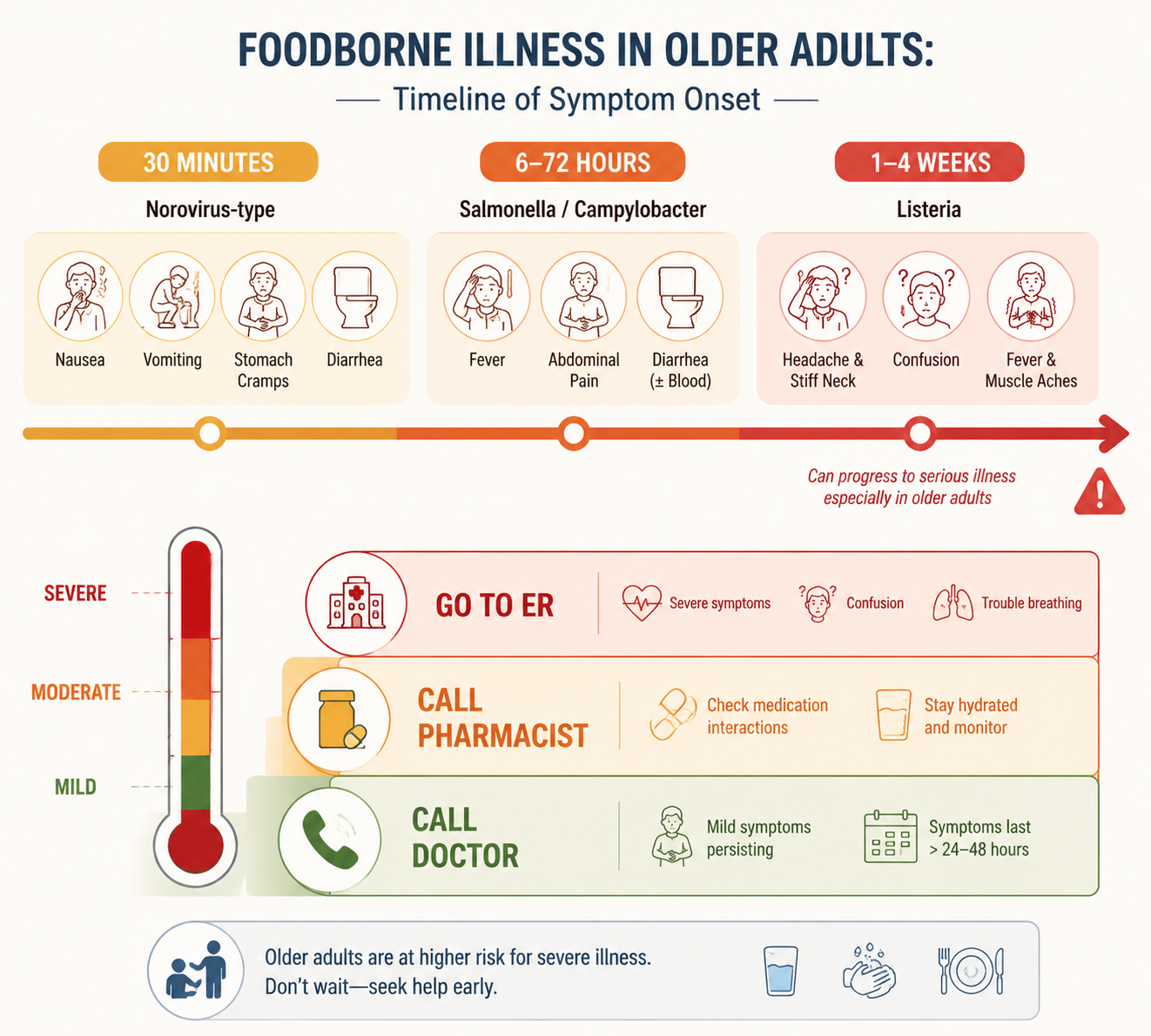
| Possible germ | Typical symptom timing | Caregiver takeaway |
|---|---|---|
| Norovirus | 12 to 48 hours | A fast stomach illness after a recalled food still belongs in the exposure log |
| Salmonella | 6 hours to 6 days | Do not stop watching after the first day |
| E. coli | Often 3 to 4 days | New diarrhea several days later can still be related |
| Listeria | 1 to 4 weeks | This is the long window that surprises families |
Track symptoms at least morning and evening during the relevant window, and more often if symptoms start. Write down temperature, diarrhea, vomiting, stomach pain, chills, weakness, dizziness, confusion, headache, stiff neck, muscle aches, and whether your parent is drinking and urinating normally. If your parent lives alone, arrange a daily check-in instead of assuming they will volunteer symptoms.
Symptoms That Should Prompt a Doctor Call
For an older adult who ate a recalled food, call their doctor, clinic nurse line, or local health department if they develop diarrhea, vomiting, fever, chills, worsening weakness, blood in the stool, significant abdominal pain, or symptoms that are not improving. AARP’s caregiver guidance on recalled food exposure emphasizes contacting a doctor when an older adult develops concerning symptoms, especially diarrhea, vomiting, fever, or signs of dehydration.[6]
Also call if the recalled product is linked to Listeria and your parent has fever, muscle aches, headache, stiff neck, confusion, loss of balance, or flu-like symptoms. The delayed Listeria window is exactly why the log should include dates, not just a yes-or-no note that your parent “seemed fine.”
When Urgent or Emergency Care Is Safer Than Waiting
Seek urgent medical advice promptly, and use emergency care when symptoms are severe or rapidly worsening. Red flags include repeated vomiting that prevents fluids, signs of dehydration, bloody diarrhea, confusion, fainting, severe weakness, high or persistent fever, severe abdominal pain, stiff neck, trouble breathing, chest pain, or any sudden change that would worry you even without the recall.
Do not let embarrassment about “overreacting” delay the call. The clinician can decide whether the symptom pattern fits watchful waiting, testing, fluids, medication changes, or a visit. Your job is to give a clear exposure timeline and say that the person is 65 or older.
Medication and Dehydration Checks
Foodborne illness is not only a stomach problem for many older adults. Diarrhea and vomiting can change fluid balance quickly, and common medications can complicate the picture. AARP notes that diuretics, ACE inhibitors, and NSAIDs are examples of medications that can worsen dehydration risk or make symptom assessment harder in older adults.[6]
Treat those as examples, not a complete medication map. If your parent takes blood pressure medicine, water pills, diabetes medication, kidney-related medication, anti-inflammatory pain relievers, blood thinners, or several prescriptions at once, call the pharmacist or doctor’s office when vomiting, diarrhea, poor intake, dizziness, or unusual weakness begins. Ask what symptoms should trigger holding, continuing, or adjusting any medication; do not make that decision from a recall article.
For hydration, watch behavior as much as numbers. A parent who says “I’m fine” but has dry mouth, dizziness on standing, new confusion, very dark urine, little urination, or cannot keep fluids down needs a lower threshold for medical advice. If they have heart failure, kidney disease, or fluid restrictions, ask the clinician how to manage fluids rather than pushing large amounts at home.
What to Restock After the Recall
Once the recalled food is gone, replace it with something your parent will actually eat and that fits safer-food guidance for older adults. CDC’s safer food choices for adults 65 and older include avoiding higher-risk foods such as unpasteurized milk or juice, raw or undercooked meat, raw sprouts, and certain deli or refrigerated ready-to-eat foods unless handled according to safety guidance.[7]
- If the recalled item was deli meat, choose a freshly heated option or a packaged alternative that can be heated until steaming, if appropriate for the food.
- If it was soft cheese, replace it with a pasteurized option and check the label before buying.
- If it was produce, buy a smaller amount that can be washed, stored, and used before it spoils.
- If your parent relies on prepared meals, choose replacements with clear dates and packaging that an aide or family member can check easily.
This is also the moment to remove look-alike packages from the freezer or pantry that could cause confusion later. If two adult children shop for the same parent, send one photo of the recalled label and one photo of the replacement so nobody accidentally buys the same product again.
A Note on Recall Fatigue
Food recalls are not rare background noise. An analysis of FDA and USDA data found that total U.S. food recalls rose 21.4% from 2021 to 2025, from 505 to 613 recalls per year.[8] That trend does not mean every recall will harm your parent, and it does not predict the risk from any single product. It does explain why families are increasingly asked to make quick decisions from notices that were not written for a tired caregiver standing in someone else’s kitchen.
For this incident, the practical endpoint is clear: the recalled food is no longer available to eat, the surfaces it touched are cleaned and sanitized, you know whether your parent may have eaten it, symptoms are being tracked for the right window, and you have a lower threshold for calling a clinician because the person exposed is elderly.
References
- People at Risk: Older Adults, FoodSafety.gov
- What Do You Do If You Have a Recalled Product?, FoodSafety.gov
- Food Recalls: What You Need to Know, FDA
- Food Safety for Older Adults, FDA
- Adults 65 and Older: An At-Risk Population, but Why?, USDA FSIS
- What Should You Do if You Eat a Recalled Food?, AARP
- Safer Food Choices for Adults 65 and Older, CDC
- States Most Impacted by Food Recalls (2026), Trace One, 2026
Questions to bring to a clinician or OT
This is not medical, legal, or a family's final decision — only a framework. Bring these questions to a clinician, occupational therapist, or your local Area Agency on Aging.
Find Local HelpRelated reading
Noticed something outdated or inaccurate on this page? Flag a correction. We review every report against CDC, NIA, and AARP HomeFit guidance before updating a page.