
Caregiver decision guide
Garlic Powder Recall: Steps to Protect an Elderly Parent
Learn the immediate steps to take if you find recalled Heavenly Spices Garlic Powder in an elderly parent's home, including how the Dollarama refund process works, why Bacillus cereus poses a higher risk for older adults, and clear guidelines for when to seek medical care.
Last reviewed: July 21, 2026.
If you found Heavenly Spices Garlic Powder in an elderly parent’s kitchen, start with the label, not with worry. The recalled product is Heavenly Spices Garlic Powder, 70 g, sold at Dollarama in Canada, with UPC 6 67888 50634 7 and code BB 2029 JAN 30 GP 30ZV PIT. The Canadian Food Inspection Agency listed the recall on July 15, 2026, as a Class 2 recall because of possible Bacillus cereus contamination.[1]
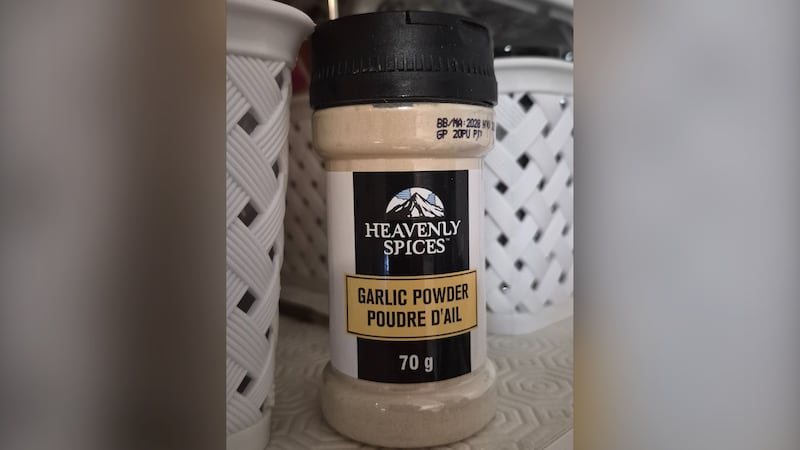
This is a Canadian recall, and the store process described here is Dollarama’s process. The caregiving response still matters more broadly because the organism involved, the cleaning steps, and the older-adult symptom concerns are not uniquely Canadian.
First, confirm the bottle and take it out of use
Put the bottle on the counter and check three things: brand, UPC, and code. Do not rely only on the words “garlic powder,” because another jar in the cabinet may not be part of this recall. The match you are looking for is:
- Product: Heavenly Spices Garlic Powder, 70 g
- UPC: 6 67888 50634 7
- Code: BB 2029 JAN 30 GP 30ZV PIT
- Retailer named in the recall context: Dollarama, Canada
If the identifiers match, remove it from the spice rack immediately. That means more than pushing it to the back of the shelf. Put it in a bag or set it apart where no one will season food with it while you are figuring out the refund.
If your parent used it recently, do not argue over whether the amount was “only a sprinkle.” Make a quick note of what meal it went into and about what time the food was eaten. That note is useful later if stomach symptoms start and someone needs to decide whether the timing fits Bacillus cereus illness.
Handle the refund without keeping the contaminated product around
Dollarama’s recall instructions are practical: throw away the product, email a photo to customer service, and receive a $2 e-gift card. If you need help, Dollarama lists 1-888-365-4266 as the phone number to call.[2]
Before throwing it away, take clear photos of the front label and the UPC/code area. Then bag the bottle and put it in the trash. For a parent who likes to keep receipts, containers, or “things the store might want back,” it may help to say plainly: the refund process does not require keeping the jar in the kitchen.
Clean the shelf, the counter, and anything the powder touched
The cleaning step is easy to skip because garlic powder looks dry and harmless. Do not skip it. Spice dust can sit on a shelf, inside a drawer organizer, on the threads of a jar lid, or on a measuring spoon that got dropped back into a utensil cup.
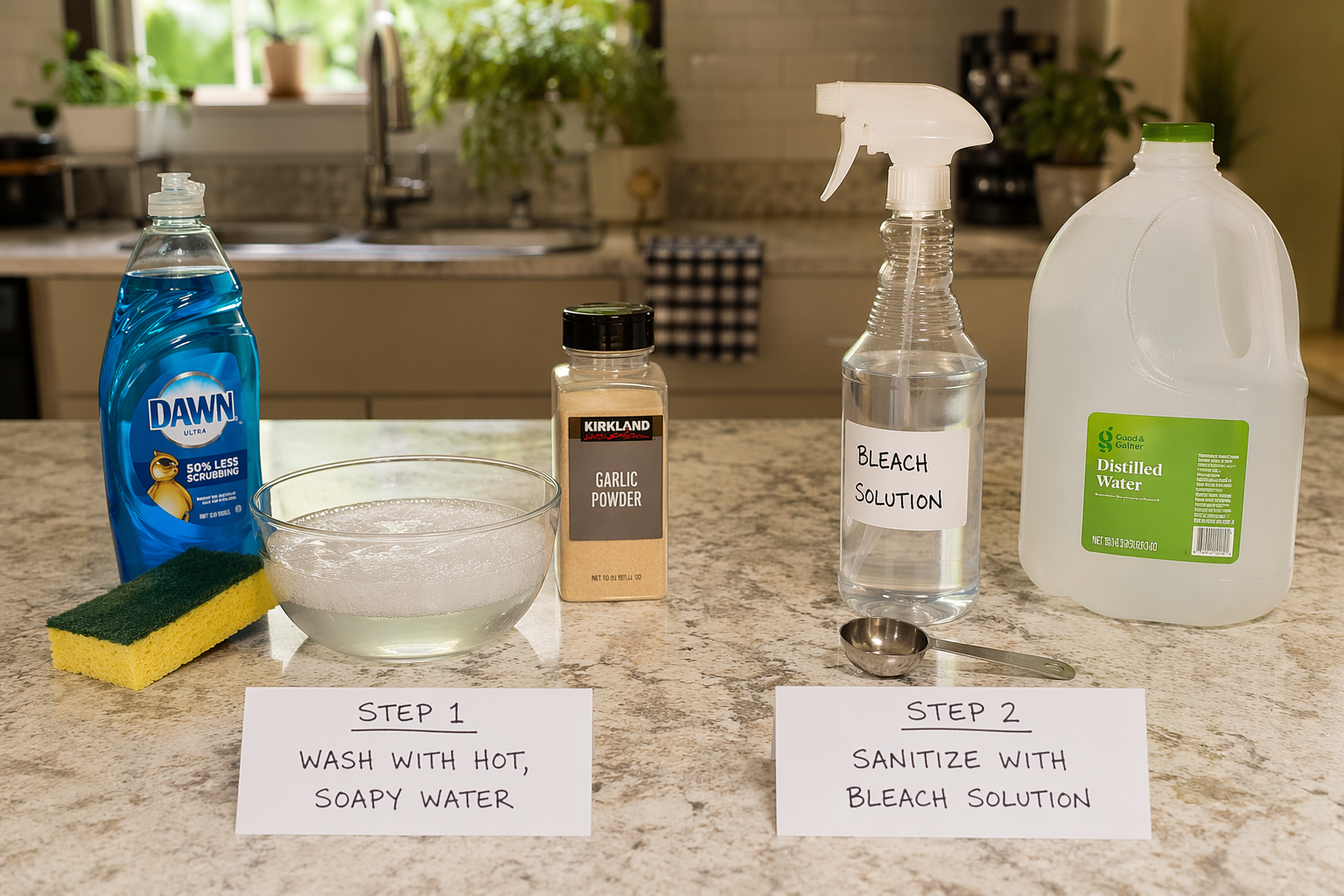
Use the basic food-safety order: clean first, then sanitize. FoodSafety.gov’s kitchen protocol is to wash surfaces with hot, soapy water and then sanitize with a bleach solution made from 1 tablespoon of bleach per gallon of water.[3]
- Wash your hands before and after handling the bottle.
- Remove nearby spice jars, drawer inserts, measuring spoons, and shelf liners that may have powder on them.
- Wipe the shelf, drawer, counter, and any nearby container surfaces with hot, soapy water.
- Apply the bleach solution of 1 tablespoon bleach per gallon of water to food-contact or likely contact surfaces.
- Let the area air-dry before putting clean items back.
If the bottle was stored above dishes, open bins, napkins, pill organizers, or a bread box, check those too. The goal is not to sterilize the whole apartment. It is to remove the product and any obvious spice dust from the places where food, hands, utensils, or medications may touch it.
Why an older parent deserves closer monitoring
A Class 2 recall can sound like an institutional way of saying “moderate.” That may be true at the population level, but it is not the whole caregiving question. The person in this kitchen may be 78, taking several medications, drinking less fluid than they should, or slow to mention diarrhea because they do not want anyone fussing.
The British Columbia Centre for Disease Control specifically notes that elderly people are more susceptible to the diarrhoeal syndrome caused by Bacillus cereus.[4] That one sentence changes the practical response. It gives a concrete reason to monitor an older adult more closely than the short recall notice may suggest.
Aging also changes the margin for error. Immune response can weaken with age, and reduced stomach acid can make it easier for some ingested pathogens to survive the first stage of digestion. Even when an illness is short-lived in a healthy adult, vomiting or diarrhea can push an older person toward dehydration, dizziness, confusion, or a fall faster than the family expects.
Watch the clock if the garlic powder may have been eaten
Bacillus cereus illness is commonly discussed in two timing patterns. The vomiting-type illness can begin about 0.5 to 5 hours after contaminated food is eaten, while the diarrhea-type illness can begin about 8 to 16 hours after exposure.[4][5]
| What to track | Why it matters |
|---|---|
| Time the food was eaten | It helps compare symptoms with the two Bacillus cereus windows. |
| Vomiting, nausea, or stomach cramps within about 0.5 to 5 hours | This fits the earlier emetic pattern described for Bacillus cereus illness. |
| Diarrhea or abdominal cramps within about 8 to 16 hours | This fits the later diarrhoeal pattern, the one BCCDC flags as more concerning for elderly people. |
| Fluids taken in and urination | This helps catch dehydration early in an older adult. |
| Dizziness, weakness, confusion, or a near fall | These may be the consequence that matters most at home, even if the stomach symptoms sound mild. |
If no one knows whether the spice was used, treat the discovery as a reason to remove and clean, not as proof of exposure. If your parent says they used it in soup yesterday and now has diarrhea today, the timing becomes part of the decision about whether to call a clinician.
When to seek medical care
For an elderly parent, the threshold should be lower than it might be for a younger adult. Seek medical attention if there is bloody diarrhea, signs of dehydration, a fever of 102°F or higher, or an inability to keep fluids down.[5][6]
Signs of dehydration can include very little urination, dry mouth, dizziness, unusual weakness, or confusion. If your parent lives alone, it is worth checking in again during the relevant symptom windows rather than assuming they will call if they feel worse.
This recall is not a reason to panic. It is also not a “toss it if you remember” pantry chore for an elderly parent’s home. Confirm the exact bottle, remove it, document it for the refund, clean the contact areas, and watch symptoms by the clock.
References
- Food recall warning - Heavenly Spices brand Garlic Powder recalled due to Bacillus cereus - Canadian Food Inspection Agency - July 15, 2026 - link
- Recall Notice: Heavenly Spices Garlic Powder - Dollarama - July 2026 - link
- Cleanliness Helps Prevent Foodborne Illness - FoodSafety.gov - link
- Bacillus cereus - British Columbia Centre for Disease Control - link
- Bacillus Cereus - Cleveland Clinic - link
- Food Poisoning: Symptoms, Treatment and Prevention - AARP - link
Questions to bring to a clinician or OT
This is not medical, legal, or a family's final decision — only a framework. Bring these questions to a clinician, occupational therapist, or your local Area Agency on Aging.
Find Local HelpRelated reading
Noticed something outdated or inaccurate on this page? Flag a correction. We review every report against CDC, NIA, and AARP HomeFit guidance before updating a page.