
Caregiver decision guide
Heat Wave Safety Tips for Seniors Taking These Medications
Many common medications seniors take — from blood pressure drugs to antidepressants — interfere with temperature regulation and make heat waves far more dangerous. Learn which drugs to watch for and how to create a medication-specific heat safety plan for your parent.
The first heat wave safety check for a senior who takes daily medication is not the forecast. It is the pill organizer.
A parent can be doing everything that sounds sensible — drinking water, wearing loose clothes, staying indoors — and still be at higher risk because a blood pressure pill, bladder medication, antidepressant, antipsychotic, or diuretic changes how the body handles heat. Some drugs reduce sweating. Some weaken thirst. Some affect blood flow to the skin. Some disturb salt and fluid balance. None of that means the medication is “bad,” and it certainly does not mean a caregiver should stop it. It means the medication list belongs inside the heat plan.

The CDC’s clinical guidance on heat and medications names several common drug classes that can interfere with thermoregulation: diuretics, beta blockers, ACE inhibitors, ARBs, calcium channel blockers, SSRIs, SNRIs, tricyclic antidepressants, antipsychotics, and anticholinergic medications, among others.[1] That is a long list, but for family caregivers it turns a vague instruction — “check medications” — into something usable.
Older adults already face more danger in extreme heat because aging can make it harder to adjust to sudden temperature changes, chronic illness is more common, and many take medications that affect the body’s response to heat.[2] From 2004 through 2018, adults 65 and older accounted for about 40% of heat-related deaths in the United States; the annual average number of heat-related deaths was 702.[3] Those numbers are not there to frighten anyone into second-guessing prescriptions. They are there because a heat plan made before symptoms start is safer than a rushed decision after confusion, dizziness, or fainting appears.
Why a Medication List Changes the Heat Plan
Most general heat wave safety tips for seniors are still right: keep the room cool, drink fluids if allowed, avoid outdoor exertion, wear light clothing, and check in often. The problem is that medications can change whether those tips are enough.
A parent on a diuretic may lose fluid and electrolytes faster. A parent on a beta blocker may have a harder time increasing blood flow to the skin. A parent taking an anticholinergic bladder medicine may sweat less. A parent taking an antipsychotic may not cool normally or may not communicate distress clearly. A parent with memory loss may not turn on the air conditioner, may insist they are “fine,” or may forget how long they have been sitting in a hot room.
Thirst is not a reliable alarm bell either. The National Institute on Aging notes that older adults may not feel thirsty even when their bodies need fluids.[4] That one fact changes the whole caregiver job. “Drink when you’re thirsty” is not much of a plan if thirst is late, weak, or absent.
The Medication Classes Caregivers Should Mark Before the Heat Arrives
Use generic drug names when you review the list with a pharmacist or prescriber. Many bottles show both a generic name and a label instruction, but they do not always make the drug class obvious. If you are not sure whether a medication belongs in one of these groups, ask. Guessing from memory is how mistakes get made.
| Medication group | Why heat matters | Caregiver action |
|---|---|---|
| Diuretics | Can contribute to fluid loss and electrolyte imbalance | Ask what dehydration signs, weight changes, blood pressure changes, and fluid limits apply |
| Beta blockers | Can impair cardiovascular response and heat dissipation | Ask what heart rate, dizziness, fatigue, or faintness should trigger a call |
| Antipsychotics | Can reduce sweating and interfere with temperature regulation | Increase check-ins, especially if the person cannot report symptoms clearly |
| Anticholinergics | Can block sweating and reduce cooling | Ask whether bladder, allergy, sleep, or nausea medicines have anticholinergic effects |
| ACE inhibitors, ARBs, calcium channel blockers | Can affect thirst, blood pressure, circulation, and fluid balance | Ask how to monitor hydration and blood pressure during heat |
| SSRIs and SNRIs | Can increase sweating, raising dehydration risk | Watch for excess sweating, low intake, weakness, or confusion |
| Tricyclic antidepressants | Can decrease sweating and add anticholinergic effects | Ask whether heat precautions should be stricter |
AARP’s medication heat-risk overview highlights similar groups and frames the issue in caregiver terms: common treatments for blood pressure, mood, allergies, bladder symptoms, and mental health can make it harder to tolerate heat.[5] The useful takeaway is not that these drugs should be avoided. It is that a parent taking them should not be treated like a low-risk adult who only needs a glass of water and a fan.
Diuretics: the water pill deserves special attention
Diuretics are often prescribed for conditions such as high blood pressure or heart failure. They help the body get rid of excess fluid, which can be medically necessary. During a heat wave, though, that same fluid-shifting effect can make dehydration and electrolyte imbalance easier to stumble into, especially if the person is sweating, eating poorly, or limiting fluids because of bathroom urgency.
This is where caregivers need a real instruction from the clinician, not folklore. Some older adults are told to restrict fluids because of heart, kidney, or other medical conditions. Others are encouraged to drink more. The safe question is not “Should I push water?” It is: “During a heat wave, how much fluid is appropriate for this person, and what symptoms mean we should call?”
Useful questions for the prescriber or pharmacist include: Should we watch daily weight? What blood pressure range is concerning? Are muscle cramps, new weakness, dizziness on standing, reduced urination, confusion, or faintness reasons to call the office? Are any labs being monitored that could be affected by heat, sweating, or fluid intake? Those are clinical questions; the caregiver’s job is to bring the medication list and ask them before the forecast turns dangerous.
Beta blockers: heat stress may not look dramatic at first
Beta blockers can blunt some cardiovascular responses. In ordinary language, the body may have a harder time doing the fast adjustment work that heat demands. The CDC includes beta blockers among medications that may increase heat-related risk through mechanisms such as impaired vasodilation and reduced ability to respond to heat stress.[1]
For caregivers, the trap is waiting for an obvious crisis. A parent may not say, “I’m overheating.” They may say they feel tired, weak, lightheaded, or “off.” They may sit very still. They may avoid moving because standing makes them feel strange. If the room is hot and the medication list includes a beta blocker, those softer signs deserve attention sooner.
Antipsychotics: cooling and communication can both be affected
Antipsychotic medications can reduce sweating and interfere with temperature regulation, according to CDC clinical guidance.[1] They also often appear in the lives of families already managing dementia, delirium risk, severe agitation, Parkinsonism-related issues, or complex psychiatric illness. That combination deserves extra caution because the person may not be able to notice, interpret, or report early heat symptoms reliably.
This is also a place to be careful with family conversations. Antipsychotics can carry serious risks and special sensitivities in some conditions, including Lewy body dementia. But the heat plan is not the moment for a caregiver to improvise medication changes. If your parent takes an antipsychotic and extreme heat is forecast, call the prescribing clinician and ask what monitoring, cooling, and emergency thresholds they want followed. For families dealing with that diagnosis specifically, the site’s guide to Understanding Lewy Body Dementia in Seniors is worth keeping next to the medication list.
Anticholinergics: the hidden sweat blockers
Anticholinergic effects show up in more places than many families expect: bladder medications, some antihistamines, some sleep aids, some nausea medicines, and some older antidepressants. The CDC notes that anticholinergic medications can block sweat glands.[1] That matters because sweating is one of the body’s main cooling tools.
The hard part is that families may not think of an over-the-counter allergy or sleep product as part of the “real” medication list. It is. Vitamins, supplements, patches, creams, eye drops, as-needed pills, and over-the-counter products all need to be written down when you ask about heat risk. If the broader medication list is a mess, start with a full reconciliation using the site’s Medication Management for Older Adults: A Caregiver’s Practical Guide, then add a heat-risk column for summer.
Blood pressure and heart medications beyond beta blockers
ACE inhibitors, ARBs, and calcium channel blockers also appear in CDC heat-medication guidance because they can affect thirst, blood pressure regulation, circulation, vasodilation, and fluid balance.[1] They do not all create the same risk in the same way, and the answer is not to lump every blood pressure medicine together as dangerous.
The practical move is to ask what “too low” looks like for this parent during heat: low blood pressure, dizziness when standing, faintness, unusual fatigue, confusion, or a fall. If the parent already checks blood pressure at home, ask whether heat-wave readings should be handled differently and when the office wants to be called.
Antidepressants: sweating can go in either direction
SSRIs and SNRIs can increase sweating, which may raise dehydration risk in hot weather. Tricyclic antidepressants can decrease sweating and may also have anticholinergic effects.[1] Those are different mechanisms with the same caregiver consequence: do not assume mood medications are irrelevant to heat safety.
A parent who sweats heavily may need closer fluid and electrolyte guidance. A parent who barely sweats despite a hot room may not be cooling well. In both cases, the medication should stay on the clinician’s side of the line. The caregiver can observe, document, cool the environment, and call for advice.
Heat Can Also Damage the Medication Itself
There is a second layer that is easy to miss when everyone is focused on the person: some medications and medical supplies may not tolerate heat well. Yale Climate Connections reported in April 2026 that heat can degrade insulin, inhalers can burst, epinephrine auto-injectors may malfunction, and medical devices such as oxygen concentrators need backup power plans.[6]
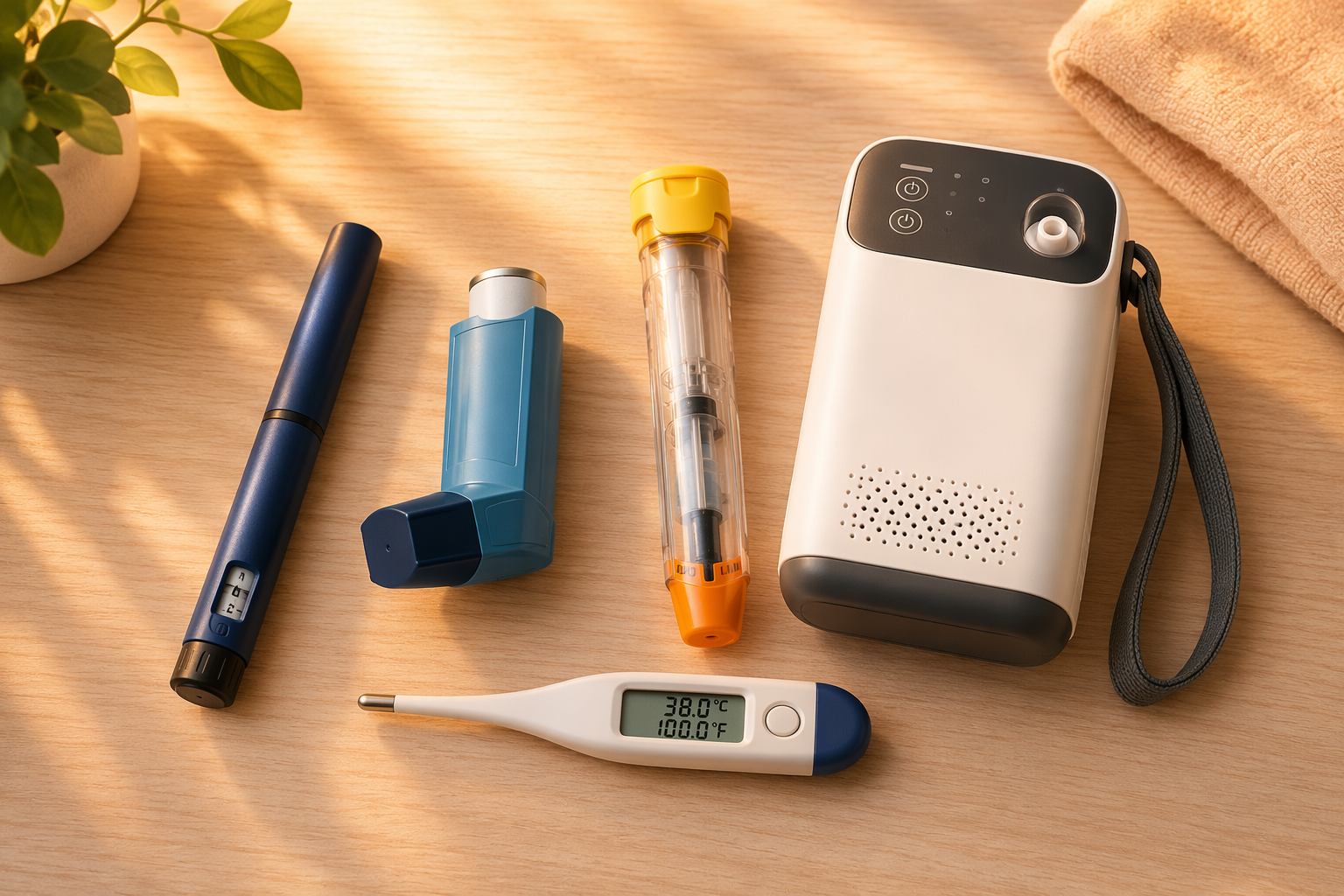
Do not guess at storage rules. Check the prescribing information, package insert, pharmacy label, or pharmacist instructions for each item. A bathroom cabinet, glove compartment, sunny windowsill, or hot delivery mailbox may be a poor storage location even if the medication looks unchanged. For refrigerated medications, ask what to do during a power outage before one happens.
A Caregiver Checklist Before the Next Heat Wave
This is the part to do on an ordinary day, not when the air conditioner has already failed.
- Gather every medication: prescriptions, over-the-counter products, supplements, patches, eye drops, inhalers, injections, as-needed pills, and refrigerated items.
- Mark possible heat-risk classes: diuretics, beta blockers, ACE inhibitors, ARBs, calcium channel blockers, antipsychotics, antidepressants, anticholinergics, bladder medications, antihistamines, and sleep aids.
- Ask the pharmacist to identify which items can affect sweating, thirst, blood pressure, fluid balance, electrolytes, alertness, or temperature regulation.
- Ask the prescriber what symptoms should trigger a same-day call, urgent care, or emergency care for this specific parent.
- Write down fluid guidance, especially if the parent has heart failure, kidney disease, swelling, low sodium, or any previous instruction to limit fluids.
- Check storage instructions for insulin, inhalers, epinephrine auto-injectors, refrigerated medications, test strips, oxygen equipment, and powered medical devices.
If your parent sees multiple clinicians, bring the same medication list to each visit. Heat risk can fall between specialties: the cardiology prescription affects fluids, the psychiatry prescription affects sweating, the bladder medication affects cooling, and the family caregiver is the one watching all of it happen in the same kitchen.
What to Watch During the Heat Wave
On hot days, the check-in should be more specific than “Are you okay?” Many older adults will answer yes because they do not want to be a bother, do not feel thirsty, or do not realize how hot the room has become.
- Look at the room temperature, not just the outdoor forecast.
- Ask what they have actually drunk and eaten today, not whether they “had some water.”
- Notice dizziness, faintness, unusual sleepiness, new confusion, weakness, headache, nausea, heavy sweating, very little sweating, or a fall.
- Check whether they are urinating much less than usual, if that is something they can report.
- Confirm that cooling equipment is actually on and set low enough to help.
- Make sure medications and supplies are not sitting in a hot car, mailbox, window, or room without cooling.
For a parent with memory impairment, mental illness, Parkinsonism, stroke effects, or hearing and vision problems, phone check-ins may not be enough. Someone may need to lay eyes on the room, the thermostat, the pill bottles, and the person’s behavior. If heat repeatedly pushes home care past what family can safely monitor, the site’s guide on How to Know When Senior Home Care Is No Longer Enough may help frame that larger decision.
Do Not Build the Plan Around a Fan
Fans are comforting, cheap, and sometimes useful. They are not a complete cooling plan for dangerous heat. The CDC says electric fans may provide comfort, but when temperatures are in the high 90s they may not prevent heat-related illness; the CDC also warns that fans should not be used as the primary cooling method when indoor air temperatures are above 90°F.[7]
That matters for the parent who refuses air conditioning because of the bill, turns it off at night, or believes a fan in a closed hot room is enough. A fan blowing hot air over an older adult whose sweating is reduced by medication is not a safe plan. The plan has to include a cooler place: working air conditioning, a cooled room in the home, a neighbor’s home, a library, a senior center, a cooling center, or another location the parent can actually get to.
Cost is not a small detail. Nearly 1 in 3 older adults — 14.8 million people — experienced energy insecurity in 2023, according to the Center for American Progress.[8] So “just run the AC” may sound simple from across town and feel impossible to the person opening the utility bill.
Cooling assistance may be available, but it varies. The National Council on Aging describes LIHEAP and state-specific programs that may help with air conditioners, utility bills, repairs, or cooling support.[9] The Center for American Progress notes that LIHEAP cooling programs are not available everywhere; its report says 26 states, Washington, D.C., and 3 territories offered cooling assistance through LIHEAP.[8] Before publishing a local resource list or promising help to a parent, verify what is active in your state or county in 2026.
The Phone Call to Make Before the Forecast Turns Red
A good heat-and-medication call is short, specific, and tied to the actual medication list. It does not ask the pharmacist or doctor to give a lecture on summer safety. It asks for the decisions a caregiver cannot safely make alone.
- “Which of these medications increase heat risk, and by what mechanism — sweating, thirst, blood pressure, fluid balance, electrolytes, alertness, or storage?”
- “Should my parent follow any specific fluid limit or minimum during a heat wave?”
- “What symptoms mean we call your office the same day?”
- “What symptoms mean urgent care or 911?”
- “Are there blood pressure, weight, heart rate, glucose, oxygen, or temperature readings we should track?”
- “Do any medications or devices need special storage, refrigeration, backup power, or replacement if overheated?”
Write the answers down in plain language and keep them where the pill organizer lives. If siblings, aides, neighbors, or facility staff help with care, share the same plan. The person who notices the warning sign may not be the person who made the phone call.
When the Plan Needs Emergency Thinking
Heat is one environmental emergency among several that caregivers increasingly have to translate into daily routines. If your parent also struggles with smoke, pollution, storms, or emergency alerts, it helps to keep those plans in the same place as the medication list. The site’s articles on How Air Quality Alerts Harm the Aging Brain and How to Explain Tornado Warnings to Elderly Parents fit that same practical category: warnings only help if the older adult can understand them and act on them in time.
For heat, the medication-specific rule is simple enough to keep: caregivers can identify risk, ask better questions, cool the environment, monitor symptoms, protect medication storage, and arrange help. Medication changes remain a clinician responsibility. Do not stop, skip, double, delay, or adjust a prescribed medication during a heat wave unless the prescriber tells you exactly to do so.
References
- Heat and Medications – Guidance for Clinicians — CDC
- Heat and Older Adults (Aged 65+) — CDC
- Heat-Related Deaths — United States, 2004–2018 — CDC MMWR
- Hot Weather Safety for Older Adults — National Institute on Aging
- 8 Types of Medications That Can Make It Harder to Handle the Heat — AARP
- These common medications may increase your risk during heat waves — Yale Climate Connections, April 2026
- About Heat and Your Health — CDC
- Protecting Older Adults From the Growing Threats of Extreme Heat — Center for American Progress
- Cooling Assistance Programs That Can Help You Pay for Air Conditioners and More — NCOA
Questions to bring to a clinician or OT
This is not medical, legal, or a family's final decision — only a framework. Bring these questions to a clinician, occupational therapist, or your local Area Agency on Aging.
Find Local HelpRelated reading
Noticed something outdated or inaccurate on this page? Flag a correction. We review every report against CDC, NIA, and AARP HomeFit guidance before updating a page.