
Caregiver decision guide
Hurricane Planning for Dementia Seniors in New Orleans
Hurricanes in New Orleans are dangerous for any older adult, but for seniors with dementia the standard evacuation checklist can lead to confusion, agitation, and wandering. This guide shows caregivers how to plan for the cognitive and emotional challenges of evacuation, from ID bracelets and comfort objects to vetting shelters and using the City-Assisted Evacuation program safely.
For a senior with dementia in New Orleans, storm preparation is not finished when the batteries, water, and canned food are in the bag. The hard part is what happens when the room changes, the routine breaks, the caregiver is rushing, and the person who usually follows a familiar path from chair to bathroom to bedroom is suddenly being asked to leave home.
That is why storm preparation for older New Orleans residents with dementia has to be built around more than evacuation routes. It has to protect memory cues, medication routines, identity, sleep, and the caregiver’s ability to keep the person calm in a crowded system. A plan that looks tidy on paper can still fail at the door if the person refuses to get into a vehicle, loses the medication bag, wanders from a shelter cot, or cannot explain who to call.
The stakes are not theoretical. A 2023 JAMA Network Open study found increased mortality among adults age 85 and older with Alzheimer’s disease and related dementias in the months after Hurricanes Harvey and Irma, including a reported 10.9% increase in the 3 to 6 months after Harvey and 6.2% after Irma.[1] Those numbers do not tell a caregiver exactly what will happen in New Orleans during the next storm. They do make one point plainly enough: older adults with dementia are vulnerable after the wind passes, not only while it is blowing.
New Orleans also has a large older population to plan around. NOLA Ready’s hazard mitigation profile, using 2018 census data, listed about 52,800 residents over age 65, or 13.5% of the city’s population, and more than 16,800 householders over 65 living alone.[2] Current numbers may differ, but the caregiving problem is familiar across neighborhoods: one adult child in Gentilly, one husband in Algiers, one niece in New Orleans East, one neighbor with the spare key, and not much time once evacuation instructions become urgent.
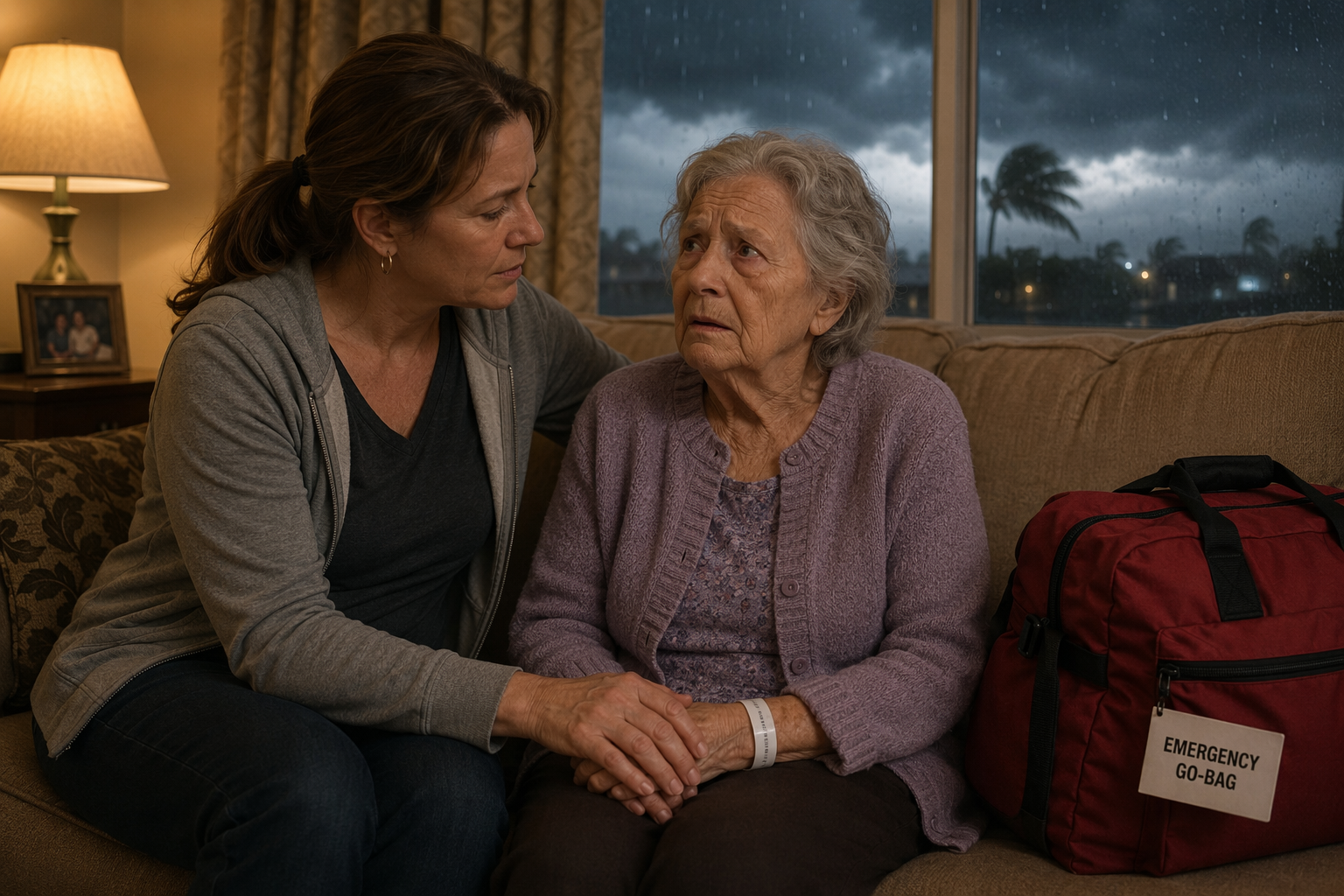
Start with the decision that controls every other decision
Before building the go-bag, decide where the senior can realistically ride out the evacuation period. For many people with dementia, the best hurricane shelter is not an official shelter at all. It is a familiar relative’s house outside the storm path, a friend’s home with a quiet bedroom, or a hotel room where the caregiver can keep the same blanket, same cup, same bedtime rhythm, and same bathroom path as much as possible.
NOLA Ready says shelters should be treated as a last option for elderly people and people with medical needs, and that staying with friends or family outside the storm path is strongly preferred.[3] That warning matters even more with dementia. A public shelter may be open, staffed, and necessary, and still be a difficult place for someone who misreads noise as threat, wakes at night, follows strangers, or becomes distressed when asked the same screening questions by unfamiliar people.
So the first branch is simple, even if the execution is not:
- If you have a workable private destination outside the storm path, plan around getting there early enough to avoid rushing the person.
- If you do not have transportation, register and prepare for City-Assisted Evacuation before the weather clock gets tight.
- If a public shelter may be the only option, treat it as a care environment you must vet, not just an address you can arrive at.
- If you are starting late, reduce the plan to identity, medications, documents, calming tools, and the next call you need to make.
If you may need City-Assisted Evacuation, do not wait for the last announcement
New Orleans’ City-Assisted Evacuation process is built around moving residents who cannot evacuate on their own. For a caregiver of someone with dementia, the important thing is not just knowing that the program exists. It is knowing where dementia care has to be inserted into the process.
NOLA Ready directs residents to create a Smart911 profile so 911 dispatchers can see key household information during an emergency, and it tells residents who need mobility assistance or paratransit pickup to call 311.[3] That call is not a small errand if the person you care for cannot stand in line, cannot tolerate heat, or cannot be safely left alone while you search for papers. Make the profile and the 311 plan part of hurricane season preparation, not something you hope to handle during a warning.
| Evacuation point | What the caregiver needs ready |
|---|---|
| Before a storm threatens | Smart911 profile, medication list, emergency contacts, diagnosis summary, transportation limits, pet plan |
| If city assistance may be needed | Call 311 for paratransit or mobility-limited pickup needs; confirm what the senior can and cannot tolerate |
| When leaving home | ID bracelet on the person, recent photo on the caregiver’s phone and in the document packet, one carry-on bag plus exempt medical devices |
| At the evacuation hub or pickup point | Short calming phrase, comfort object, snacks and fluids if allowed, supervision plan for wandering risk |
| At the shelter or host location | Medication routine, quiet sleeping plan, written behavior summary, caregiver presence expectations |
The City-Assisted Evacuation hub is the Smoothie King Center. NOLA Ready also says public transit begins winding down 42 hours before landfall and shuts down 18 hours before landfall.[3] Those time windows are unforgiving for dementia care. A person who needs two hours of coaxing, toileting, dressing, redirection, and rest breaks cannot be treated as if they will simply step outside when the bus is ready.
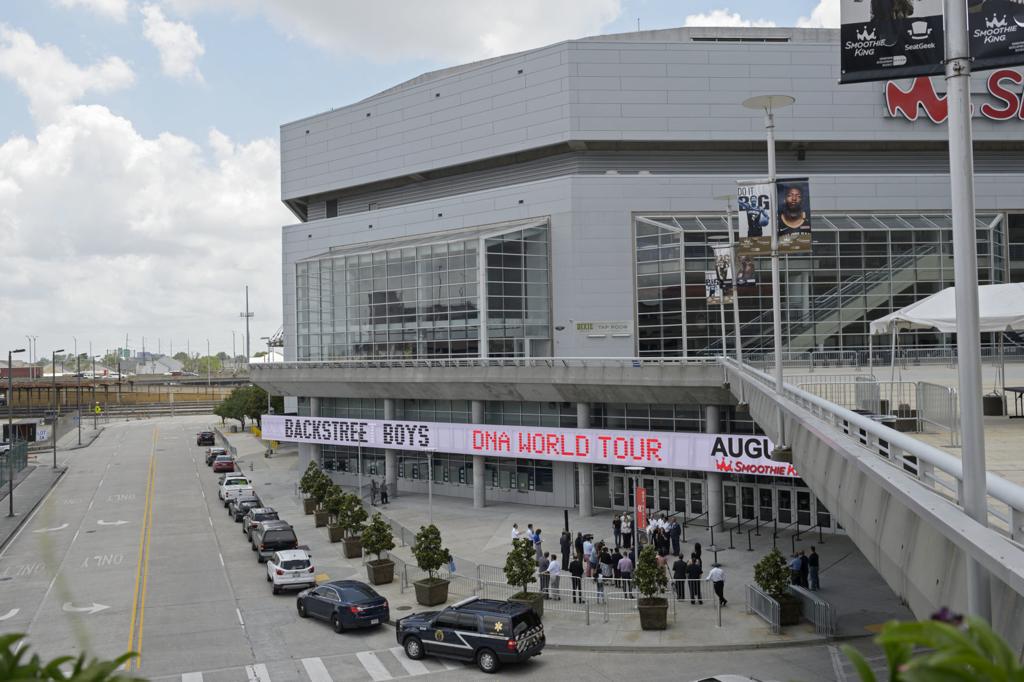
NOLA Ready’s carry-on rule is one bag per person, with medical devices exempted.[3] That limit is exactly where dementia planning gets practical. The bag cannot be packed as a general household supply closet. It has to carry what prevents panic and protects continuity: medications, documents, identification, continence supplies if needed, glasses, hearing aids and chargers, a familiar sweater, a small comfort object, and written instructions another adult could use if the caregiver is separated or exhausted.
Pets need the same early sorting. NOLA Ready says pets under 20 pounds in carriers may ride regular buses, while larger pets require a call to 311 for dedicated transport.[3] For some people with dementia, a pet is not an optional comfort. It may be the only living cue that keeps the person oriented. If the animal is coming, the animal’s transport plan needs to be settled before the senior sees a carrier, a leash, and a room full of bags and decides something is wrong.
The dementia go-bag is partly a behavior plan
A standard emergency kit asks whether you have supplies. A dementia kit asks whether a stranger could help your parent, spouse, or neighbor without making things worse. The Alzheimer’s Association recommends dementia-specific disaster preparation that includes an emergency kit with comfort items, an evacuation plan, legal and medical documents, calm communication, and clear repetitive reassurance during storms.[4]
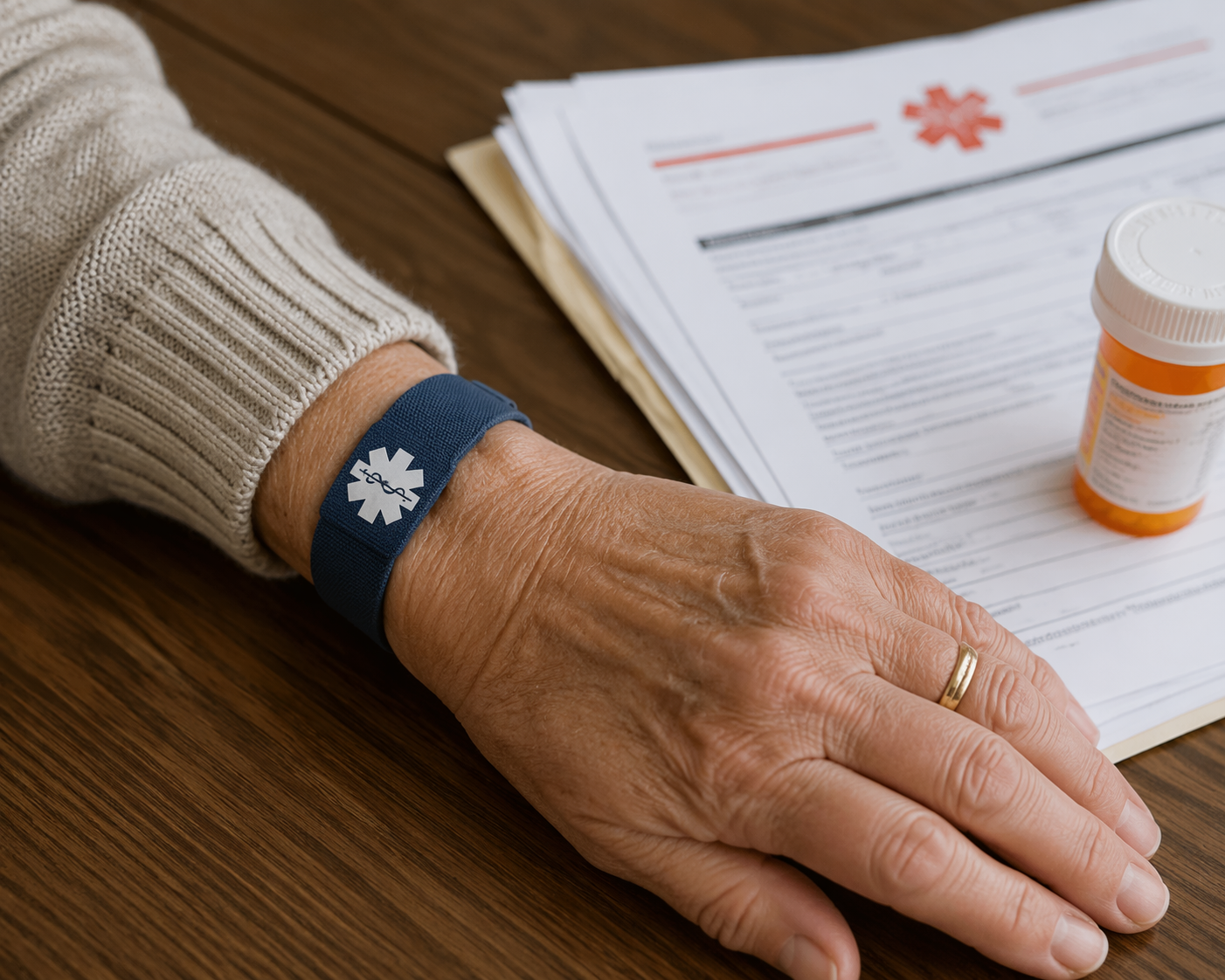
The most useful document is not always the longest one. A one-page behavior summary can prevent a bad handoff. Put the senior’s name at the top, then write what someone needs to know in the first three minutes: what name they answer to, what words frighten them, whether they may try to leave, whether they become combative when touched, what helps them settle, and who has legal authority to make medical decisions.
- Recent photo: Keep one printed copy in the document packet and one on every caregiver’s phone.
- Medical ID bracelet: Include the senior’s name, dementia diagnosis if appropriate, and emergency contact.
- Medication list: List drug names, doses, timing, prescribing clinicians, pharmacy, allergies, and what cannot be skipped.
- Behavior summary: Note wandering risk, agitation triggers, calming phrases, sleep patterns, toileting needs, and communication limits.
- Legal and medical documents: Include copies of insurance cards, ID, advance directives, power of attorney documents if available, and key diagnoses.
- Comfort items: Pack one or two objects that actually work: a rosary, cap, soft blanket, family photo, familiar music device, or worn sweater.
Do not bury the dementia information under general papers. Put it in a folder or envelope that can be handed to a nurse, bus worker, shelter volunteer, hotel clerk, or relative. If the senior uses a walker, wheelchair, oxygen equipment, CPAP, hearing aids, or incontinence supplies, label what belongs to them. A lost charger can become a medical problem. A lost pair of glasses can become a behavior problem.
If you are starting late
If the storm is already close and the full packet is not done, make the smallest useful version. Take a photo of the senior. Take photos of medication bottles. Write emergency contacts and the dementia diagnosis on one sheet of paper. Put an ID bracelet, temporary ID tag, or clearly labeled card on the person. Pack medications, glasses, hearing aids, continence supplies, and one comfort object before adding anything that can be replaced later.
Medication continuity needs its own owner
In many families, medication management lives in one person’s head. That is too fragile for an evacuation. Decide who is responsible for the medication bag, who carries the list, who can call the pharmacy, and who knows which pills affect sleep, agitation, blood pressure, diabetes, pain, or seizures. If the senior becomes more confused after a missed dose, the caregiver should not have to discover that in a shelter line.
Keep the medication routine as close to normal as the evacuation allows. If pills are usually taken with coffee in a blue mug, that detail may sound small until the person refuses them in a paper cup under fluorescent lights. Use the familiar cue when it is safe to do so. The goal is not to make evacuation feel normal. It is to remove avoidable surprises from an already unfamiliar day.
For controlled medications, refrigerated medications, oxygen, dialysis, wound care, or equipment that needs power, do not rely on a generic shelter assumption. Ask the destination, transport provider, clinician, or pharmacy what must be arranged before departure. If using City-Assisted Evacuation, medical devices are exempt from the one-bag carry-on limit, but the caregiver still needs them labeled, charged when possible, and physically kept with the senior.[3]
Communication is not explanation; it is reassurance on repeat
Many caregivers lose precious time trying to persuade a person with dementia with adult logic: the cone shifted, the parish issued instructions, the pumps may fail, the buses stop at a certain hour. The facts may be true. They may also be useless to someone who is frightened because the suitcase means abandonment or the rain means a childhood memory has returned.
Prepare a few phrases before the storm. They should be short, calm, and repeatable: “We’re going together.” “I have your medicine.” “The car is taking us to a safe place.” “Your bag is right here.” “I’ll stay with you.” The Alzheimer’s Association advises caregivers to remain calm and use clear, simple, repetitive communication during disasters.[4] That is not soft advice. It is operational advice. A calmer person boards faster, accepts help more easily, and is less likely to bolt from a noisy place.
Also prepare what not to say. Avoid arguing about whether the storm is serious. Avoid correcting every mistaken belief. Avoid announcing too many steps at once. If the person asks ten times where you are going, answer ten times in the same voice if you can. If you cannot, trade off with another caregiver before impatience becomes the loudest thing in the room.
Vet the shelter or host location for the behaviors you already know
A good destination for dementia care is not only outside the evacuation zone. It has to work for the person’s known behaviors. If your mother wanders at night, ask about locks, stairs, exits, and who sleeps nearby. If your husband becomes agitated by children, do not place him in the middle of a crowded family living room without a retreat. If your aunt cannot find the bathroom in a new place, tape a bright sign to the door and keep a night light on.
For a private host, ask direct questions early enough that people can answer honestly. Is there a quiet room? Can the caregiver stay in the same room? Are pets present? Are there guns, pools, stairs, loose rugs, or exits that need attention? Is there room for a walker, wheelchair, commode, oxygen equipment, or hospital bed supplies? Who else may be staying there? A generous offer can still be unsafe if the space is wrong.
For a public shelter or city-assisted destination, the questions are different. Ask whether the caregiver can remain with the senior. Ask how medications are handled. Ask what happens if the senior wanders, becomes agitated, refuses food, or cannot sleep. Ask whether there is any quieter area for someone with cognitive impairment. Ask what staff or volunteers should know at intake, and hand them the behavior summary before a problem starts.
This is not about demanding a perfect shelter. In a major storm, no one gets a perfect environment. It is about refusing to confuse “available” with “appropriate.” If the only available option is a shelter, the caregiver’s job becomes reducing the risks that shelter creates: separation, wandering, missed medication, overstimulation, poor sleep, and preventable panic.
During the storm period, protect routine where it still exists
Once evacuated, the caregiver’s work changes from planning to keeping the day from breaking apart. Meals, toileting, medication, sleep, and movement matter because they are the remaining structure. A senior with dementia may not understand the storm update, but they may understand the order of breakfast, pills, bathroom, chair, music, and nap.
Limit television if it increases agitation. Weather coverage can be useful for the caregiver and punishing for the person listening to sirens, maps, urgent voices, and repeated disaster footage. Use headphones, step into the hall, or check updates quietly if that keeps the room calmer. If the person is asking to “go home” while home is unsafe, answer the feeling first: “You miss your house. I know. We’re staying together tonight.”
Watch for small changes that become big ones: less urination, skipped meals, new sleepiness, new agitation, a fall, a pressure sore, or a sudden change after a missed medication. Disaster conditions make it easy to excuse everything as confusion. Sometimes it is dehydration, pain, infection, medication interruption, heat, constipation, or exhaustion.
Coming home can be another disorientation
The return trip deserves planning too. A person with dementia may expect home to look, smell, and function the way it did before leaving. If the refrigerator is empty, the power is out, furniture has shifted, tree limbs are down, or neighbors are gone, home may not feel like home. That can trigger the same fear as evacuation, only now the caregiver is tired and everyone else wants the ordeal to be over.
Before bringing the senior inside, one adult should check for heat, power, water, tripping hazards, spoiled food, broken glass, odors, and blocked pathways if that is possible. Put the familiar chair, blanket, cup, photos, and bathroom route back first. Restart the medication schedule. Keep the explanation simple. The senior does not need a full damage report; they need cues that tell the brain, as much as it can receive them, “this is your place and you are not alone.”
If confusion, agitation, sleep changes, weakness, or falls increase after the return, treat that as a health signal, not a character problem. The JAMA mortality findings after Harvey and Irma looked beyond the storm’s immediate landfall window, which is a useful warning for caregivers: recovery is part of the danger period for the oldest adults with dementia.[1]
The practical threshold
A good hurricane plan for a senior with dementia does not eliminate danger. It reduces the number of moments when a caregiver has to improvise with a frightened, disoriented person inside a crowded, time-limited system.
If the whole plan feels too large, start with the handoff points. Who calls 311 if city assistance is needed? Who updates Smart911? Who carries the medication bag? Who has the recent photo? Who can repeat the calming phrase without arguing? Who knows that a shelter is the last option, not the first plan? Those answers are not extras. For dementia care in a New Orleans hurricane, they are the plan.
References
Questions to bring to a clinician or OT
This is not medical, legal, or a family's final decision — only a framework. Bring these questions to a clinician, occupational therapist, or your local Area Agency on Aging.
Find Local HelpRelated reading
Noticed something outdated or inaccurate on this page? Flag a correction. We review every report against CDC, NIA, and AARP HomeFit guidance before updating a page.