
Caregiver decision guide
A Hurricane Preparedness Checklist for Seniors and Their Caregivers
A timeline-based hurricane preparedness checklist that addresses the specific risks seniors face—including chronic disease management, mobility limitations, power-dependent medical equipment, and social isolation—designed for family caregivers to follow before, during, and after the storm.
Generic hurricane lists assume everyone can grab supplies, leave fast, and improvise power. That breaks down for older adults who rely on medication timing, walkers, CPAP, oxygen, hearing aids, or someone else noticing a problem when the phone goes quiet. In Bell et al.'s survey of adults 50 to 80, 9% used medical equipment requiring electricity and 9% used mobility aids, and both needs were linked to lower emergency confidence; the study also excluded adults over 80, so the frailest seniors are likely even harder to capture in a neat checklist [1].
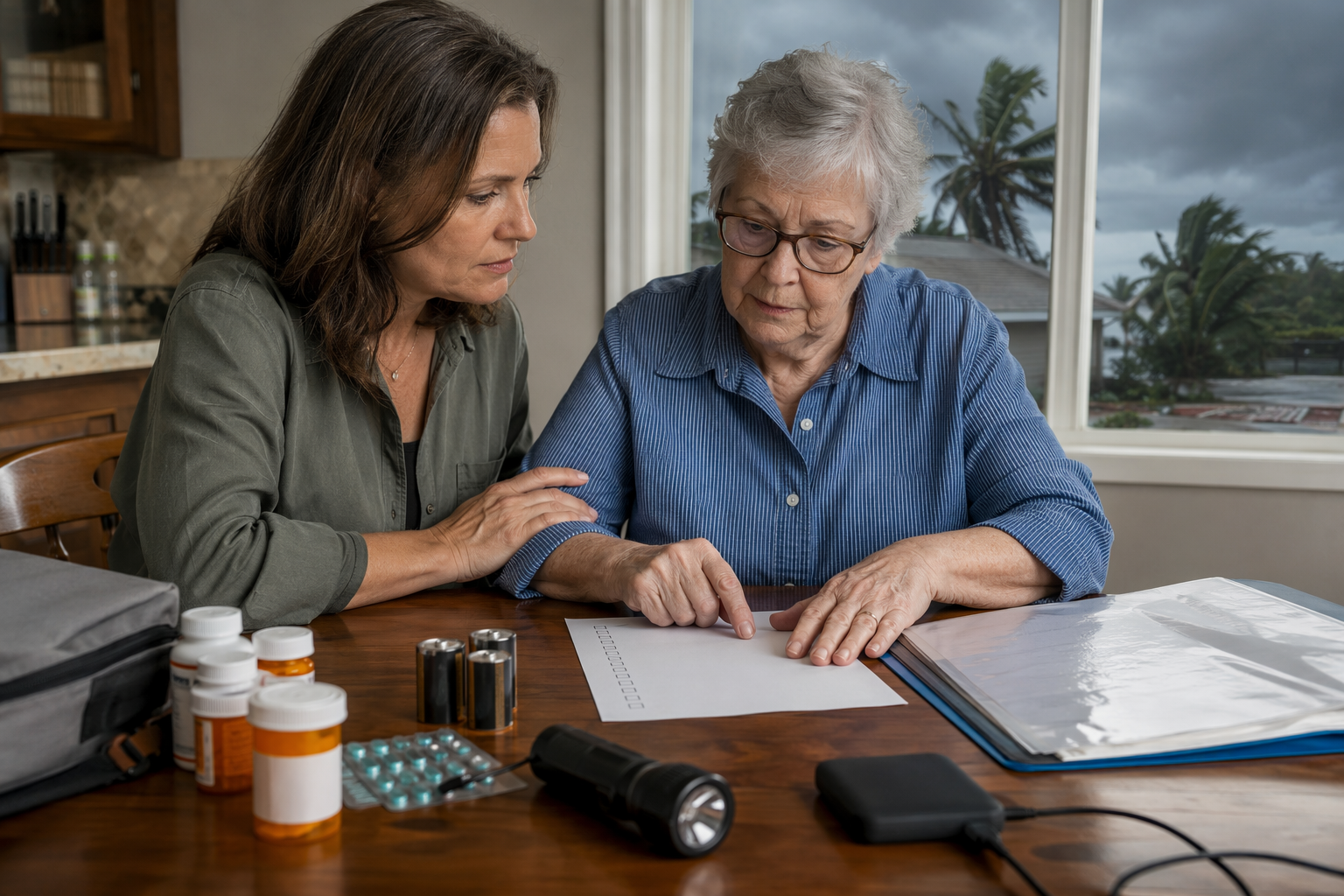
The timeline at a glance
- Before hurricane season: lock down medications, backup power, documents, shelter options, and the people who will help.
- When a watch is issued: pack the senior-specific go-bag, decide whether to evacuate, and activate the communication plan.
- During the storm: keep devices powered, medications usable, and the older adult reachable.
- After the storm: focus on heat, dehydration, refill delays, and fraud.
Before hurricane season: fix the weak points first
Start with the two things that usually fail first: refills and power. The Red Cross recommends at least 30 days of medications [2]. Treat that as the target, not a promise, because refill timing still depends on the prescriber, the pharmacy, the insurer, and state rules. The work now is to learn what can actually be filled before the season turns.
Ready.gov tells older adults and caregivers to keep medical information, contact lists, and critical documents together; the CDC's hurricane guidance adds the basics that disappear fast in a storm, like charging plans, medication access, and evacuation planning [3][4].
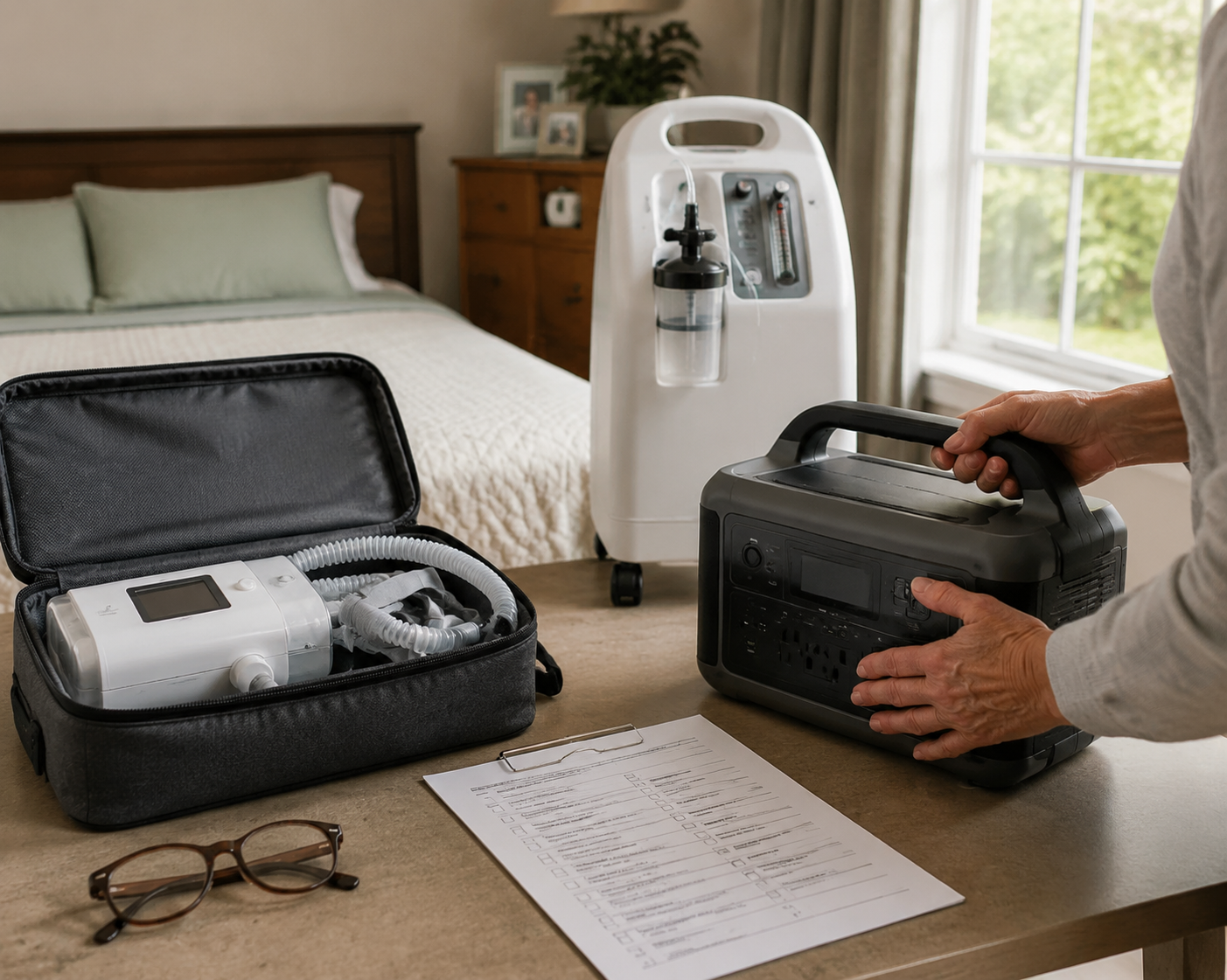
- Make one paper folder with the current medication list, dosage schedule, allergies, prescriber numbers, pharmacy name, Medicare or Medicaid cards, insurance cards, advance directives, and a copy of ID. Keep a second copy with the person who will help if you are not there [3][4].
- Ask the prescriber and pharmacy now about emergency refills, disaster overrides, and what happens if the usual refill window blocks a 30-day supply [2].
- For CPAP, oxygen, electric beds, scooters, or lift devices, write down the model, battery type, runtime, and charging method. If there is no battery backup, decide what the manual fallback is before the lights go out [3][4].
- If a special-needs shelter might be needed, call the county emergency management office and ask about pre-registration, what medical support is available, and what the shelter will not do. Florida's guidance says these shelters can support oxygen concentrators and CPAP and provide basic monitoring, but they are not hospitals, capacity is limited, and rules vary by county [5].
- Name one out-of-area contact and one local backup, then tell them exactly when you will check in. In Bell et al., adults living alone had lower odds of having a 7-day food and water supply (adjusted OR 0.74, 95% CI 0.57-0.96), so do not assume independence will cover the gap [1].
When a watch is issued: move from planning to packing
This is the handoff point. If the parent uses a walker, oxygen, CPAP, hearing aids, or anything that becomes hard to replace once roads close, do not wait for the cone to look worse. The AARP/FEMA account of the Camp Fire noted that only 6 of 85 fatalities were under age 50, which is a blunt reminder that mobility and response time are life-or-death factors, not convenience issues [6].
- Pack the go-bag for the person, not the storm: current medications, a printed med list, glasses, hearing aid batteries, incontinence supplies, chargers, cords, a power bank, snacks, water, and a change of clothes.
- If the older adult depends on a powered mobility device, add the manual backup if there is one, plus the charger and any transfer aid you actually use.
- Print the destination address, caregiver names, and the route plan, then send them to the out-of-state contact and the local backup.
- Confirm the evacuation choice now. Leave early if roads, stairs, or power loss will make the stay unsafe; if a special-needs shelter is the plan, call before you go and confirm admission rules [5].
During the storm: keep power, temperature, and access under control
Once the storm is on top of you, the job gets smaller: keep the device running, keep the medication usable, and keep the older adult from overheating or getting stranded. Follow the instructions for CPAP, oxygen, and other devices; if the power drops, switch to the battery or generator setup you already tested, not the one you are inventing in the dark [4].
- Keep the medication schedule and the most critical prescriptions within reach. If a medicine has to stay refrigerated, keep the door closed and follow the pharmacist's temperature instructions if power is out.
- Do not assume a backup battery will last all night. Check it against the runtime you wrote down before the storm.
- If the house gets hot, move the older adult to the coolest safe room, hydrate as directed, and watch for confusion, dizziness, or shortness of breath [4].
After the storm: restore the basics before you chase the cleanup
The first problems after landfall are usually not dramatic. They are heat, dehydration, missed medications, damaged labels, and a pharmacy line that is longer than anyone expected. Refill the medicine first, then replace anything that was soaked or lost, and only then deal with the rest of the house [4].
- Call the pharmacy and prescriber as soon as the phones work; ask whether an emergency refill, transfer, or replacement prescription is possible.
- Check for heat stress and dehydration, especially if the power is still out or the older adult lives alone.
- Throw out medications that were exposed to unsafe temperatures unless a pharmacist tells you otherwise.
- Before paying anyone who shows up with a repair pitch, verify the company and do not rush a signature; after storms, older adults are easy targets when they are tired and trying to get their home back together [7].
References
- Bell et al. (2020), Predictors of Emergency Preparedness among Older Adults in the United States, PMC
- American Red Cross, Emergency Preparedness for Older Adults, American Red Cross
- Ready.gov, Older Adults, Ready.gov
- CDC, Preparing for Hurricanes or Other Tropical Storms, CDC
- Florida Department of Health, Special Needs Shelters, Florida Department of Health
- AARP/FEMA, Older Adults Need a Disaster Plan, AARP
- NCOA, What Older Adults Can Do If Disaster Strikes, NCOA
Questions to bring to a clinician or OT
This is not medical, legal, or a family's final decision — only a framework. Bring these questions to a clinician, occupational therapist, or your local Area Agency on Aging.
Find Local HelpRelated reading
Noticed something outdated or inaccurate on this page? Flag a correction. We review every report against CDC, NIA, and AARP HomeFit guidance before updating a page.