
Caregiver decision guide
Is Your Parent's Medicaid at Risk in the Payment Pause Legal Battle?
Federal payment pauses and court battles over Medicaid have raised alarm for families of older adults. This guide explains what's actually happening, whether your loved one's care is at risk, and what steps you can take now.
What families need to know first
As of July 22, 2026, the short answer is that most individual care has kept going. If your parent has a Medicaid-funded aide, nursing home bed, or other long-running service, there is no broad shutdown in place. But the pressure is real, and it matters because Medicaid is the primary payer for more than 60% of nursing home residents, so payment shocks land where families least want them: on staffing, admissions, and day-to-day continuity [1].
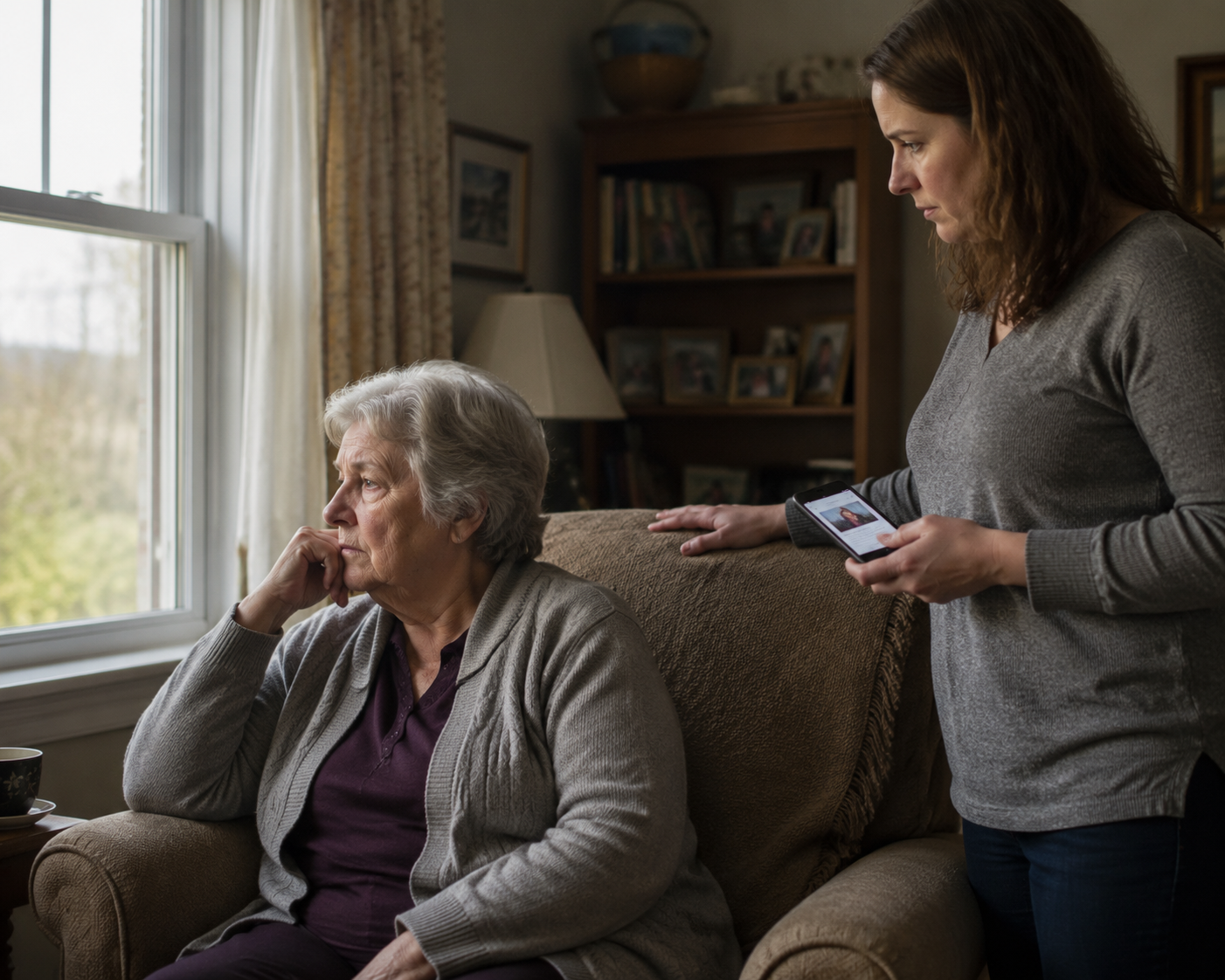
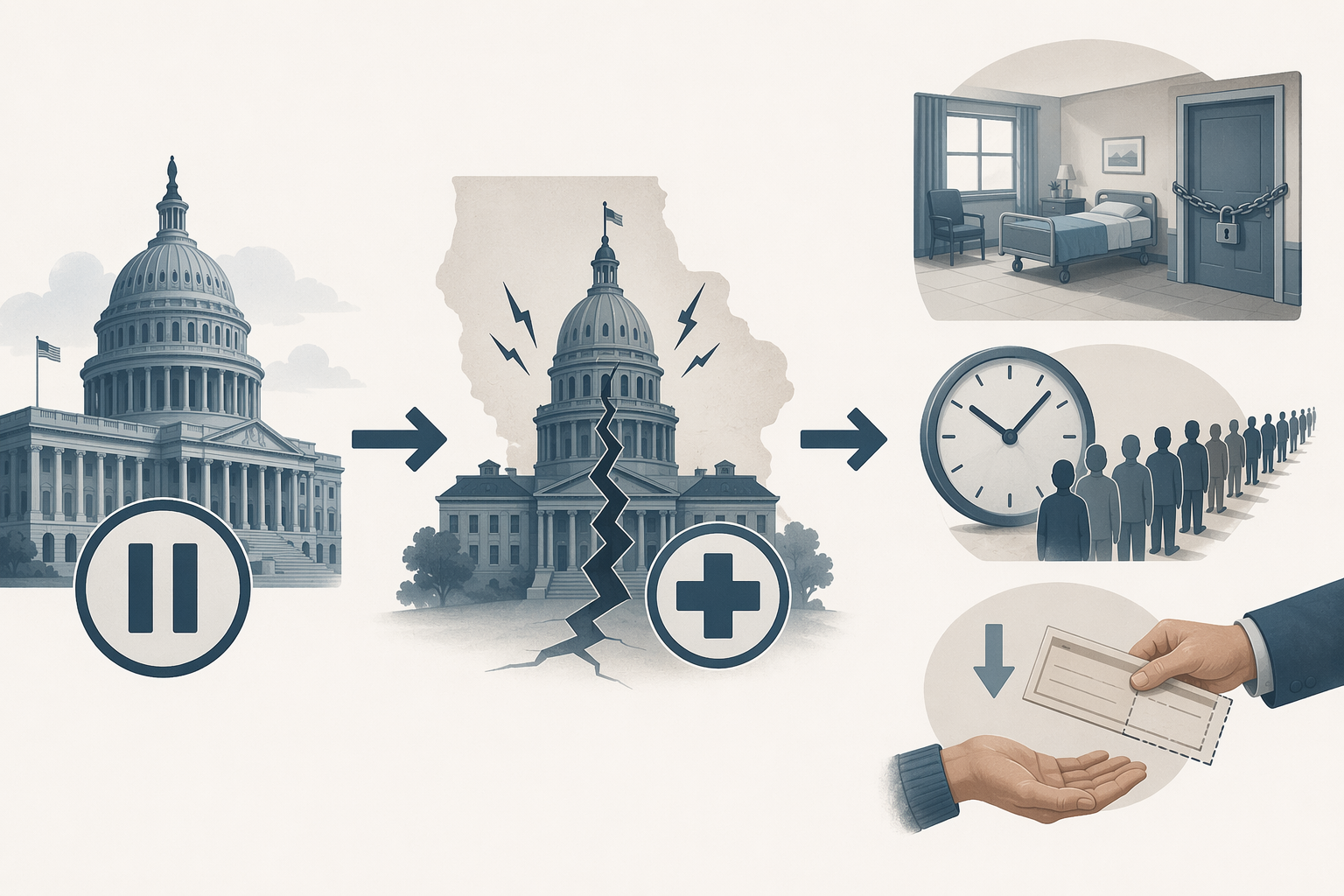
That is why the headlines feel more alarming than the experience for many families. The real danger is usually slower: an agency hesitates to hire, a facility stops taking new residents, a county expects a state fix that has not arrived, or wages get trimmed to absorb a shortfall. Those changes do not always look like a crisis on day one, but they are the first places older adults feel the strain.
Why Minnesota and California matter most
Minnesota shows how the Medicaid payment-pause legal battle for older adults can move from Washington into a real family worry. In February 2026, CMS halted $259 million in Medicaid payments to Minnesota, and then a second $91.2 million deferral followed in the same dispute [2][4]. The state said its error rate was 2%, far below the national average of 6% when the federal action landed [4]. Minnesota sued [3], but a district court declined to issue a preliminary injunction in April. In May, the parties agreed to a 120-day stay that runs into September 2026, leaving about 1.2 million Minnesota Medicaid beneficiaries in the middle of a dispute that has not been fully resolved [3][4].
California shows the provider side of the same problem at larger scale. CMS deferred $1.1 billion in federal Medicaid payments, plus another $200 million in administrative claims, in what California called the largest such action ever [5]. The money targeted In-Home Supportive Services, a program that serves about 900,000 older adults and people with disabilities [5]. California argues that the program's 17.5% caseload growth from 2023 to 2025 is evidence that more people are getting care at home, where costs are roughly $30,000 a year instead of the four-to-five-times-higher cost of skilled nursing [5]. That is the policy argument. The family-side question is narrower: if providers have to wait for money that was expected in the budget, who carries the gap first?
Washington is a useful comparison because it shows that not every cut comes from the same mechanism. There, senior living groups sued over $44.9 million in Medicaid funding cuts tied to a postponed, data-based rate adjustment, and providers say the loss is unconstitutional [6]. About 28% of assisted living residents in Washington rely on Medicaid [6]. That is not a federal payment pause in the Minnesota or California sense. It is a state budget and rate-setting problem. Families may see the difference in the details, but they often feel the same result: tighter staffing, more admissions friction, and less room for error.
Where the strain shows up first
The first warning signs are usually operational, not dramatic. A nursing home may stop taking Medicaid admissions for a stretch. A home-care agency may limit new cases or reduce hours. A county office may slow authorizations because it expects a state budget fix that never quite arrives. Those are not abstract policy effects; they are the places where an adult child notices that a parent is waiting longer for help that used to come on schedule.
Family caregivers can also get squeezed directly. In Idaho, Indiana, Missouri, Colorado, and Maryland, states are proposing or implementing wage cuts for family caregivers as they absorb Medicaid funding pressure [7]. For a household already relying on a modest payment to keep a parent out of a facility, that is not a small accounting change. It can determine whether the caregiver can keep going without dipping into savings, skipping work, or quitting altogether.
The broader federal funding-freeze litigation matters because it explains how this pattern started. The Office of Management and Budget's January 2025 freeze was blocked by temporary restraining orders, and the First Circuit largely upheld that order on March 16, 2026 [8][9]. That fight is not the same thing as the Medicaid payment pauses, but it is part of the same legal climate: an executive branch trying to hold back money that Congress had already put in motion, and states pushing back when the delay reaches programs for older adults.
This is also why the 2027 Medicaid cliff cannot be kept separate in families' minds, even though it is a different event. The One Big Beautiful Bill Act's roughly $1 trillion in Medicaid cuts begins on January 1, 2027 [10]. That is a separate legislative track, not the same thing as the payment-pause lawsuits. But both pressures point in the same direction: states may face enough strain that HCBS, nursing home rates, and caregiver pay are the first budget lines to get squeezed.
What to watch now
If a parent is already receiving care, the most useful check is simple: watch behavior, not just headlines. Ask whether the facility is still admitting Medicaid residents, whether aide schedules are being cut, whether there are unexplained delays in authorizations or payments, and whether the administrator can explain how long current reserves will last. A stable answer today does not guarantee a stable answer in the next budget cycle, but it does tell you whether the strain has reached your family yet.
The better reading of this moment is not collapse and not calm. Most older adults on Medicaid have kept receiving care, yet the legal and financial pressure is real enough to create closures, longer waitlists, and wage cuts before it creates a headline-sized break. That is the part worth watching closely.
References
- KFF, “5 Key Facts About Nursing Facilities and Medicaid”
- Reuters, “US halts some Medicaid payments to Minnesota,” February 25, 2026
- NPR, “Minnesota sues Trump administration over halting of Medicaid funding,” March 5, 2026
- Georgetown Center for Children and Families, “CMS Weaponizes Fraud Against Medicaid in Minnesota: Another Deferral, Another Cease-Fire,” May 12, 2026
- CalMatters, “Trump officials hit California with largest ever freeze on Medicaid funds,” May 2026
- McKnight's Senior Living, “Washington senior living groups sue over $44.9 million in unconstitutional Medicaid funding cuts,” June 2026
- STAT News, “As states absorb Medicaid funding cuts, family caregivers face financial ruin,” July 13, 2026
- Brennan Center, “The Court Fight to Stop the Federal Funding Freeze”
- HealthCare Dive, “Judge halts Trump freeze on grants as states report Medicaid portal disruptions”
- KFF, STAT News, and CNBC, “What Medicaid big beautiful bill changes mean for family caregivers”
Questions to bring to a clinician or OT
This is not medical, legal, or a family's final decision — only a framework. Bring these questions to a clinician, occupational therapist, or your local Area Agency on Aging.
Find Local HelpRelated reading
Noticed something outdated or inaccurate on this page? Flag a correction. We review every report against CDC, NIA, and AARP HomeFit guidance before updating a page.