
Caregiver decision guide
A Room-by-Room Fire Evacuation Plan for Aging Parents
Standard fire escape plans assume able-bodied occupants who can hear alarms and move quickly. This guide shows how to create a limitation-aware evacuation plan for an aging parent — with room-by-room steps, mobility-aid-friendly exits, adaptive alarms, and a printable caregiver checklist.
Why the usual plan breaks
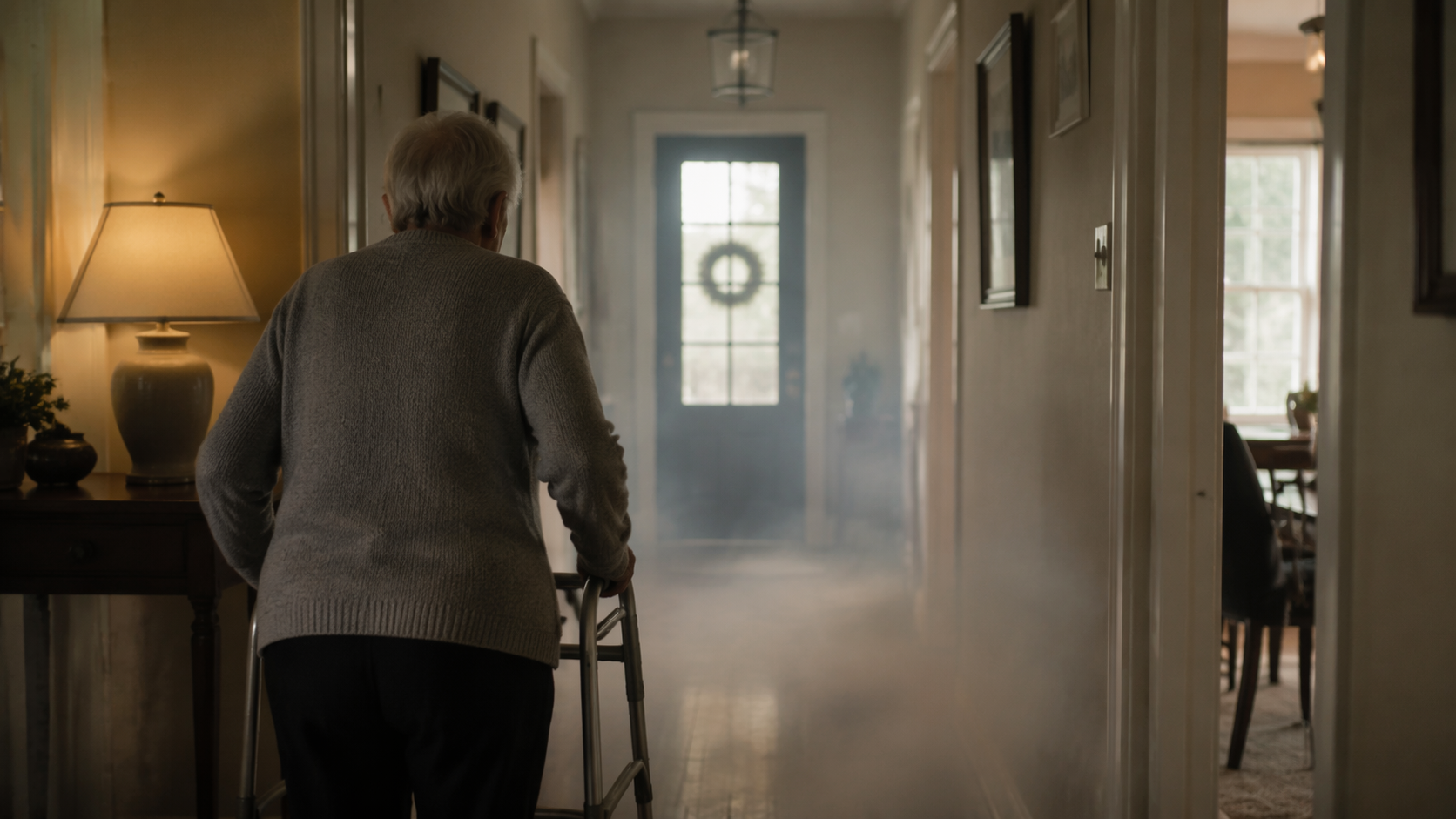
Frailty, not where the fire starts, is what decides whether an older adult dies in a home fire [1]. That is the part standard escape advice skips. A generic "two ways out" plan assumes the person can hear, stand, turn, unlock, and move fast enough to use either route. Once a walker catches on a threshold or the bedroom exit is a stair, the plan is already written for someone else.
USFA's numbers show why that matters. Adults 65+ have 2.5x greater fire-death risk than the general population, adults 85+ have 3.4x the risk, and the older-adult fire death rate rose 26% from 2014 to 2023 [2]. USFA also warns that, once a working smoke alarm sounds, residents may have less than 2 minutes to escape [3].
Map the person before the house
Before you walk the home, write down the limitations that actually change evacuation: walker, wheelchair, poor hearing, low vision, shortness of breath, dementia, slow transfers, oxygen tubing, nighttime confusion, or some mix of them. The goal is not to label the parent; it is to see which exits and tasks are realistic without help. If your parent needs both hands to stand, a route that requires carrying anything extra is not a route.
- Mobility: Can the parent stand, turn, and sit again without using both hands? Can they manage the walker, cane, or wheelchair without getting stuck at a turn or threshold?
- Hearing and vision: Can the alarm be detected from bed, with glasses off, hearing aids out, or a bedroom door closed?
- Cognition: Will the parent follow one-step directions under stress, or do they freeze, search for medications, or keep trying to finish a task?
- Medical equipment: What has to leave with the parent right away: meds, oxygen, inhalers, chargers, glasses, hearing aids, dentures?
- Sleep and movement pattern: Which room is the parent actually in when asleep, and which hallway or door is the first bottleneck on the way out?
- Backup help: Who is expected to help, who is reachable at night, and who can open the second exit if the first one fails?
Walk the house room by room
Now test the home as if the alarm has already sounded. Do it in the order the parent would actually move: bedroom to hall, hall to exit, exit to outside. Stop calling a route "available" if it fails under real conditions.
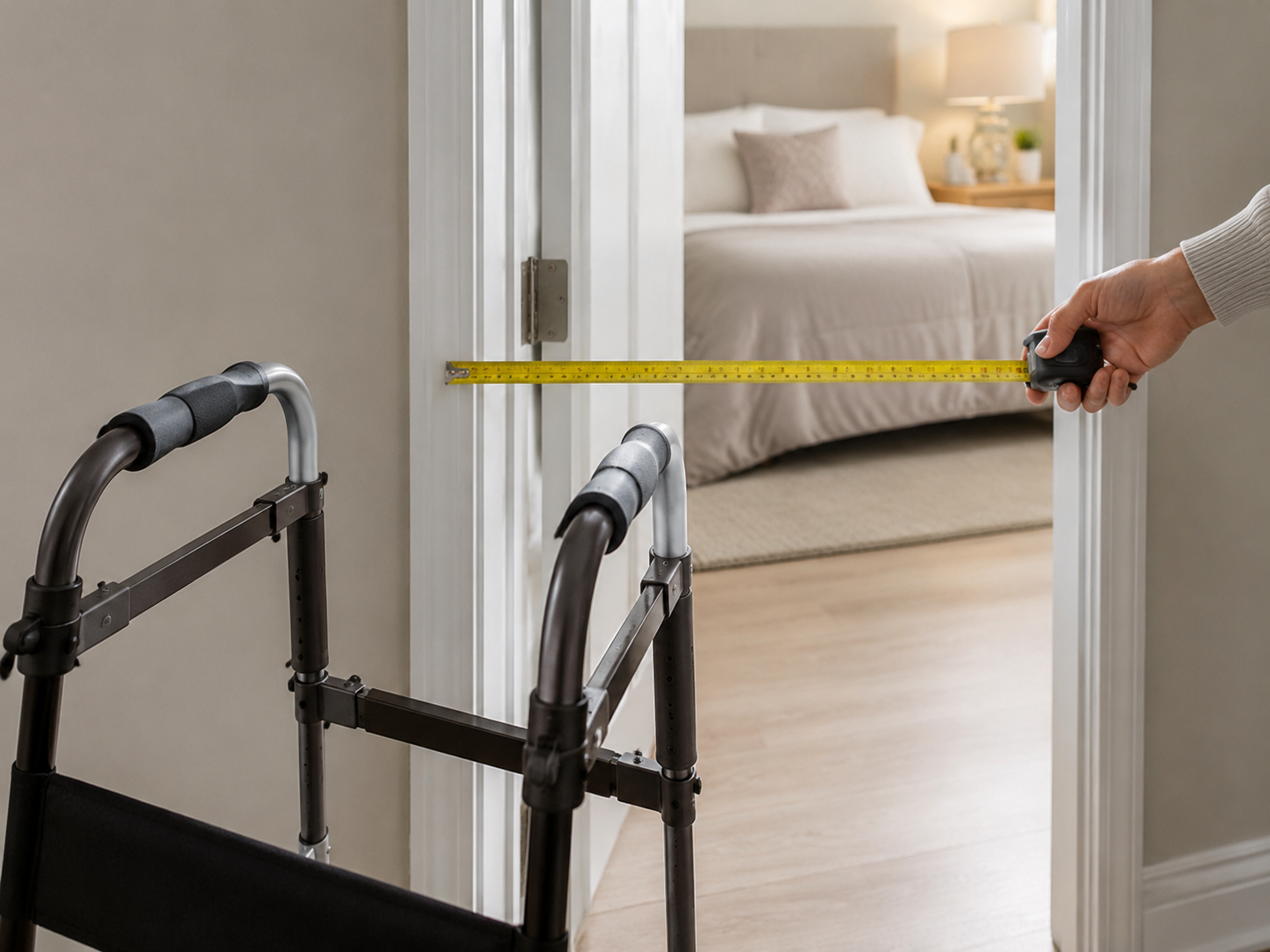
- Bedroom: Start here. Can the parent get out of bed, reach shoes, glasses, and hearing aids, and reach the door without squeezing between furniture? If the walker or wheelchair does not clear the bedroom doorway cleanly, that doorway is a failure, not an inconvenience. Remove the bottleneck, change the furniture layout, or consider moving sleeping arrangements to a room with a usable exit.
- Bathroom: Treat this as a delay point, not a refuge. Do not let the plan depend on the parent finishing in the bathroom and then navigating back through steam, wet floors, or a lock they cannot manage while panicked.
- Kitchen: Keep it out of the evacuation path if you can. Hot appliances, cords, trash bins, and narrow turns are all ways to slow a person who already moves slowly. If cooking is a regular part of the evening, make sure the parent knows that escaping comes first; the stove can wait.
- Living area: Check for low tables, throw rugs, pet gates, and oxygen tubing that catch walker wheels or feet. The quickest path to the door should also be the path the parent uses every day.
- Hallways: Measure the narrow points, not just the open stretch. Thresholds, tight turns, stacked laundry, and decorative furniture can turn a hallway into the place where the plan dies.
- Stairs: If the only way out requires stairs and the parent cannot manage them quickly and safely, do not pretend the plan still works. Change the sleeping location, create a ground-floor route, or arrange help that is actually committed and reachable.
- Entryways and exterior exits: Test the latch, deadbolt, storm door, step-down, ramp, and lighting. A door that opens only if someone twists, lifts, and steps over a threshold while holding the rail is not the same thing as an exit. The outside meeting spot should be close enough that the parent can reach it without being asked to keep walking through fear.
Make the alarms match the person
A standard beeping smoke alarm is only useful if the parent can hear it, understand it, and act on it. If hearing is limited, add visual and tactile alerts such as a strobe light or bed shaker, and place them where the alarm can be perceived from bed, not where a brochure says they belong. If cognition is the issue, the signal needs to lead to one simple action, not a speech.
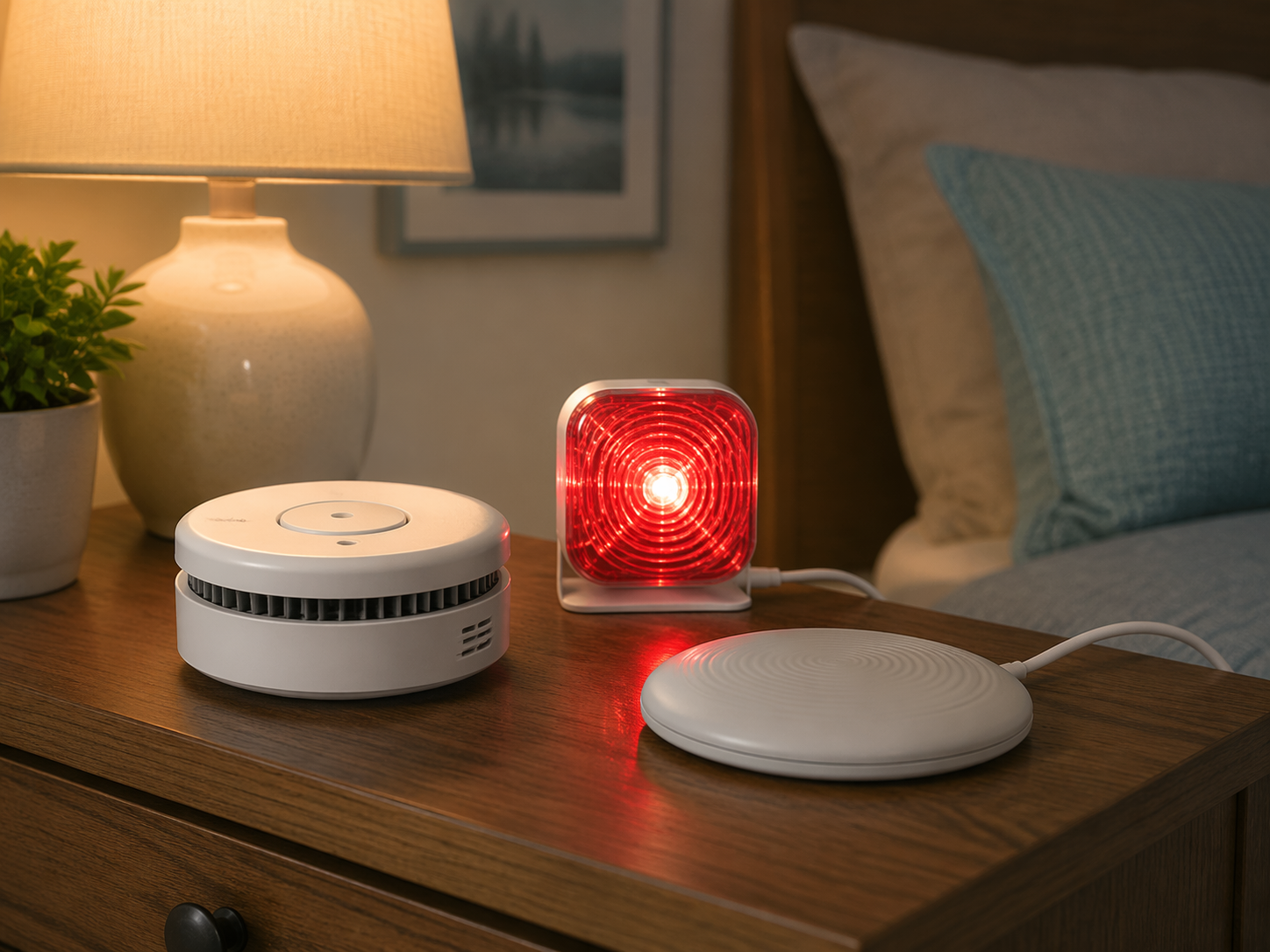
- Test the alarm from the bed. Close the bedroom door, remove hearing aids if the parent sleeps without them, and make sure the alert still gets through.
- Use one helper phrase. Pick a short command such as "out" or "go" so the helper is not improvising under stress.
- Replace batteries and test monthly. The parent does not need a better intention; they need a device that works when the alarm actually sounds.
- Keep the exit cue visible. A large, plain note by the bed is more useful than a long set of instructions once panic starts.
Build the exit kit around evacuation
The Red Cross recommends maintaining a 30-day supply of medication for emergencies [4], but the fire version of the kit needs a more immediate question: what has to leave the house in the first 30 seconds? The answer is usually smaller than people think, and more personal.
- Put the essentials in one grabbable place. Current meds list, daily meds, inhalers, glasses, hearing aids, dentures, phone, charger, keys, ID, and a power bank should not be scattered across three rooms.
- If oxygen or another device is in use, plan for backup power. VA caregiver guidance stresses emergency planning for medical devices that depend on electricity [5]. Do not assume the parent can think through that in the middle of a fire.
- Stage the kit where the parent can reach it. If it lives in a closet across the hall, it is too far away.
- Do not ask the parent to search for it. The point is to reduce decisions, not add one more errand to a burning house.
Make the plan executable by the first person who arrives
Name who does what: who wakes the parent, who grabs the kit, who calls 911, who meets firefighters, who checks the neighbor, who keeps a second exit clear. If a neighbor is part of the plan, they need the same instructions every time. If the parent resists being managed, keep the wording plain and the routine respectful; this is about getting out, not taking over.
Time the route from bed to outside. If your parent cannot clear the route within the short escape window USFA describes after an alarm sounds, the answer is not reassurance. The answer is to change the route, the room layout, the alarm setup, or the sleeping arrangement until the test passes [3].
Printable caregiver checklist
- The bedroom door and main exit fit the walker or wheelchair without lifting.
- At least one exit works without stairs.
- The alarm can be heard, seen, or felt from bed.
- The exit kit is staged where the parent can reach it fast.
- Meds, glasses, hearing aids, phone, charger, ID, and keys are accounted for.
- If oxygen or another powered device is used, backup power is planned.
- Helper roles are written down and phone numbers are posted.
- The route has been drilled with the actual mobility aid.
- Any failed doorway, threshold, stair, or lock has a fix date.
- The plan is rechecked after any new walker, hearing aid, medication change, or room move.
References
- NIST study suggests frailty makes elderly more likely to die in home fires — NIST — 2017 — https://www.nist.gov/news-events/news/2017/08/nist-study-suggests-frailty-makes-elderly-more-likely-die-home-fires
- Older Adult Fire Death Risk (2014-2023) — USFA — https://www.usfa.fema.gov/statistics/deaths-injuries/older-adults.html
- Home Fire Escape Plans — USFA — https://www.usfa.fema.gov/prevention/home-fires/prepare-for-fire/home-fire-escape-plans/
- Older Adults Emergency Preparedness — American Red Cross — https://www.redcross.org/get-help/how-to-prepare-for-emergencies/older-adults.html
- Emergency Preparedness — VA Caregiver Support — https://www.caregiver.va.gov/Emergency_Preparedness.asp
Questions to bring to a clinician or OT
This is not medical, legal, or a family's final decision — only a framework. Bring these questions to a clinician, occupational therapist, or your local Area Agency on Aging.
Find Local HelpRelated reading
Noticed something outdated or inaccurate on this page? Flag a correction. We review every report against CDC, NIA, and AARP HomeFit guidance before updating a page.