
Caregiver decision guide
How to Safeguard Your Older Parent in the Middle East Crisis
A step-by-step crisis checklist for family caregivers whose aging parent is currently in or planning travel to the Middle East during the July 2026 conflict — covering immediate safety confirmation, medication continuity, evacuation decision-making, and the gaps in Medicare overseas coverage.
Last reviewed: July 21, 2026. The country details in this guide can change faster than a family group text can settle down. Before acting on any country-specific decision, verify live advisories at travel.state.gov and check the operating status of your parent's airline, airport, and local transport.
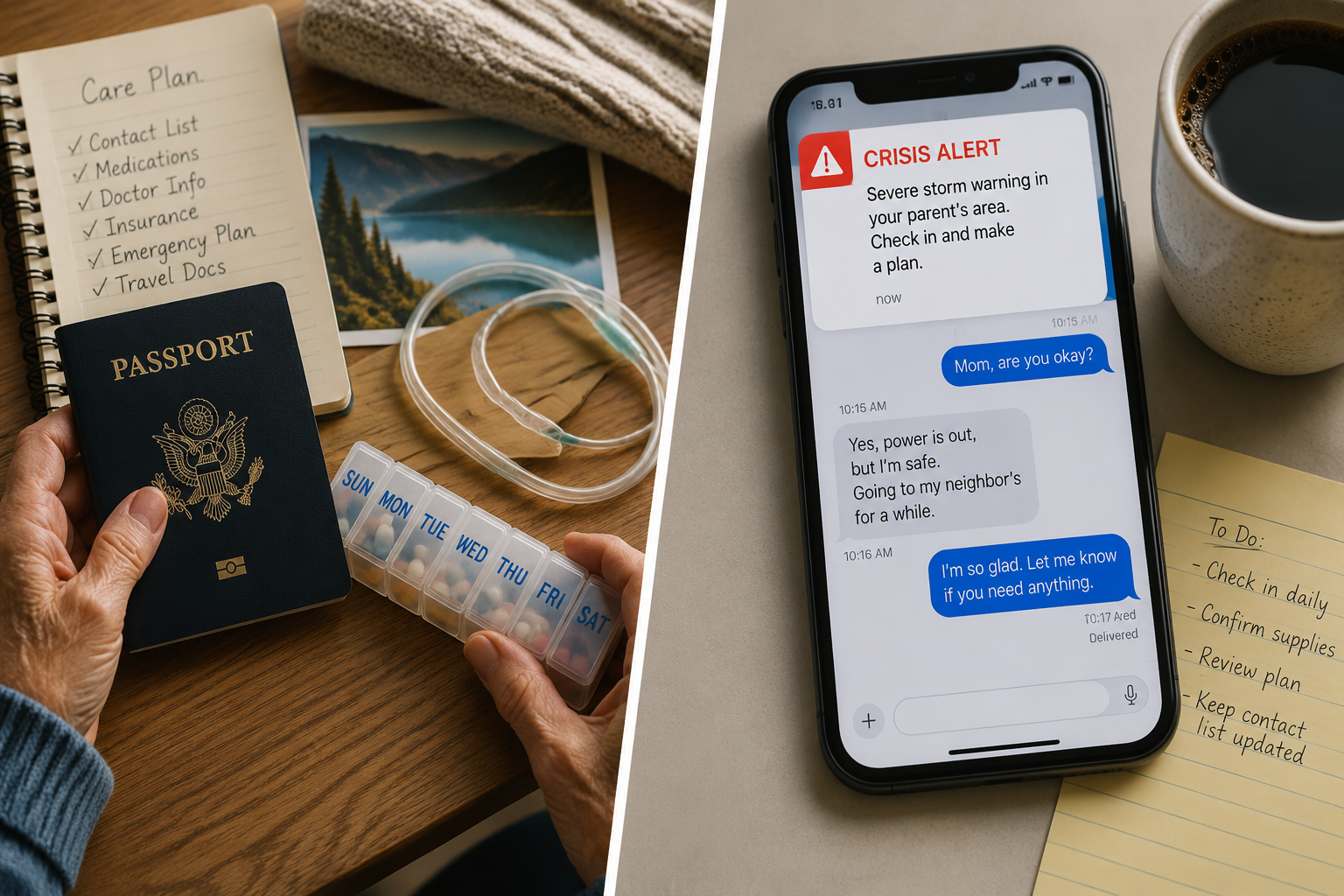
If your older parent is in the Middle East right now, the first question is not whether the headlines sound worse than yesterday. It is whether someone has physically confirmed where they are, whether they can be reached if the phone network or power gets unreliable, whether their medications are with them, and whether they can realistically move if the safest option becomes leaving.
That urgency is not abstract. As of July 20, 2026, Bahrain and Kuwait had briefly suspended air traffic during active interception activity, Kuwait International Airport remained under significant disruption, and multiple international airlines had extended suspensions in the region.[1] The State Department posture reported earlier this year urged U.S. citizens to "DEPART NOW" from 16 countries, including Bahrain, Egypt, Iran, Iraq, Israel, Jordan, Kuwait, Lebanon, Oman, Qatar, Saudi Arabia, Syria, the UAE, and Yemen.[2] Separately, non-emergency personnel and family members were ordered out of several U.S. embassy locations, reducing what families should expect from consular help in a fast-moving problem.[3]
The First Calls to Make
| When | What to do | What you need to know before you move on |
|---|---|---|
| Next hour | Reach your parent or someone physically near them. | Exact location, current safety, phone battery, medication access, passport access, and whether they can leave the building if needed. |
| Next hour | Identify one local backup person. | Name, phone number, relationship, distance from your parent, and whether that person can check in physically. |
| Today | Stabilize medications, documents, devices, and money. | How many days of medicine are in hand, whether prescriptions are in carry-on, where mobility aids or medical devices are, and how payment will work if cards fail. |
| Today | Update official communication channels. | STEP enrollment status, nearest embassy or consulate channel, airline alerts, hotel contact, and local emergency numbers. |
| Before any travel continues | Decide whether to depart, delay, cancel, or shelter in place. | Base the decision on health profile, mobility, local support, confirmed transport, and insurance or Medicare limits, not only on ticket availability. |
If you are the adult child doing this from another state or another country, write the answers down in one shared note. Do not rely on memory while you are also calling airlines, siblings, pharmacies, doctors, and hotel desks. A messy note is fine. A missing medication list at 2 a.m. is not.
Confirm Safety as a Physical Fact, Not a Vibe
Start by getting your parent on the phone or video if possible. Ask for their exact location: hotel name, apartment address, room number, neighborhood, and the nearest major landmark. Then ask what they can see and hear around them. A calm voice is good, but it is not the same as knowing whether they are near an airport shutdown, a road closure, a shelter area, or a building with an elevator that may not be dependable.
- Ask them to send a current location pin and a photo of the front page of their passport.
- Confirm the passport is physically with them, not in checked luggage, a hotel safe they cannot access, or another relative's bag.
- Ask how much phone battery they have, where the charger and power bank are, and whether they can receive SMS as well as app messages.
- Have them name one person nearby who can physically check on them if the call drops.
- Ask whether they can walk down stairs, stand in a long line, sit without support, carry a small bag, and manage a restroom without assistance.
That last question can feel intrusive. Ask it anyway, respectfully. Evacuation advice that assumes a traveler can sprint through a terminal, sleep on a floor, or stand outside a border crossing for hours is not senior travel safety; it is wishful thinking with a boarding pass attached.
If your parent is staying with a spouse, adult child, friend, faith community, or long-term expatriate network, do not treat that support as a footnote. Get names and phone numbers. Ask who has a car, who knows local hospitals, who speaks the local language if your parent does not, and who has actually seen your parent today. A long-term resident may reasonably choose to stay because their home, partner, doctor, and community are there. Your job is to make that choice informed, not to flatten it into panic.
Medication Continuity Is the Older-Adult Difference
For many older travelers, disruption becomes dangerous when pills, oxygen, insulin, blood pressure monitoring, dialysis schedules, or cardiac follow-up get interrupted. Nearly 9 in 10 older adults take at least one medication regularly, according to NCOA's summary of CDC National Center for Health Statistics data from 2024.[4] That turns an airport closure into a health-continuity problem very quickly.
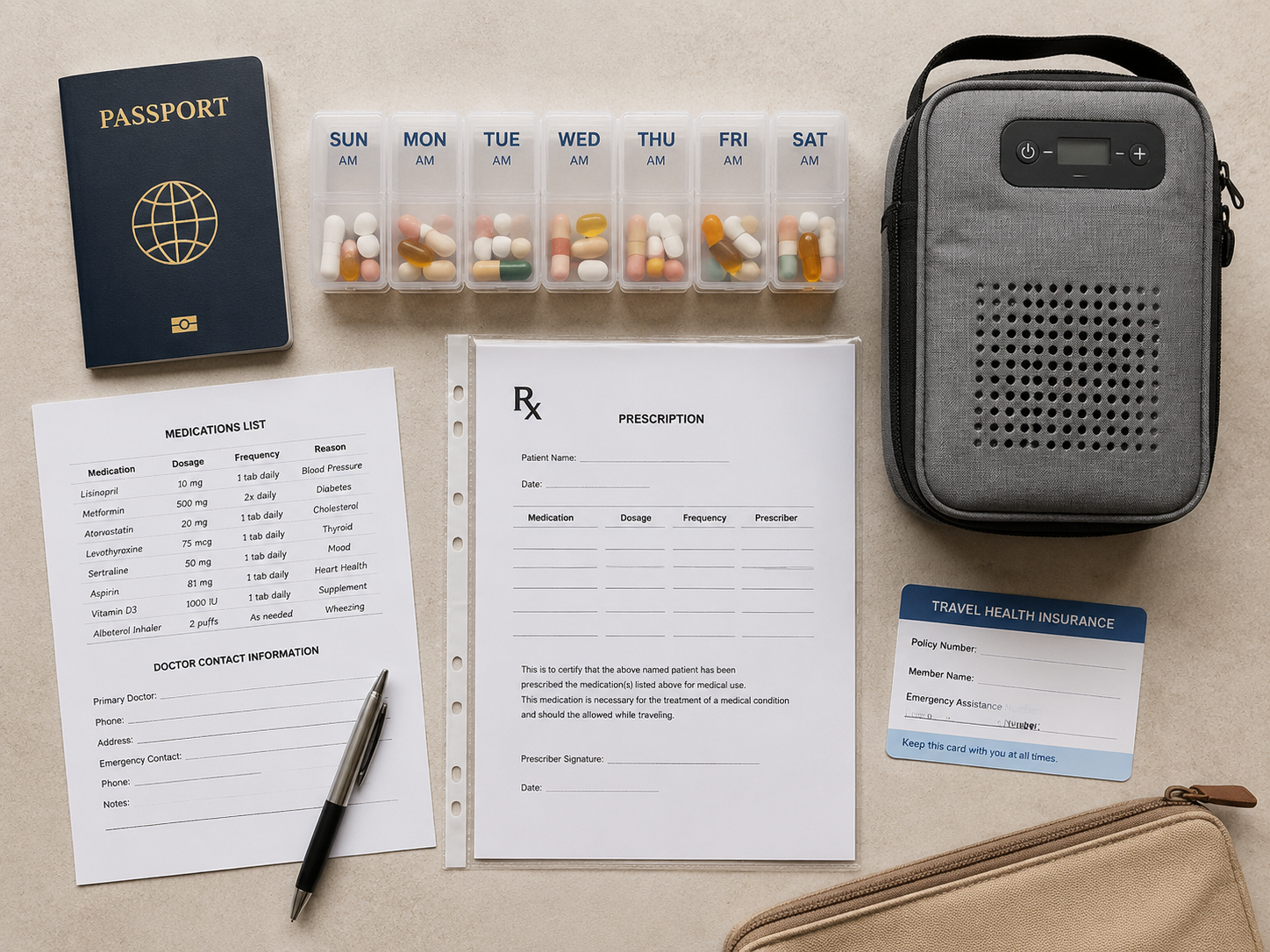
Ask your parent to put every medication in one carry-on bag now. Not later, not after checkout, not after the airline rebooks them. Checked bags are the wrong place for heart medication, anticoagulants, diabetes supplies, inhalers, seizure medication, or anything that cannot be skipped safely.
- Count the actual remaining doses, not the number of bottles.
- Photograph each prescription label and the full medication list, including generic names, doses, timing, and prescribing doctor.
- Separate one small emergency set from the main supply in case a bag is misplaced.
- Keep medical devices, chargers, adapters, hearing-aid batteries, glasses, and mobility-aid parts with the traveler.
- If oxygen, refrigerated medication, or powered equipment is involved, call the airline, hotel, local support person, and insurer before assuming travel is workable.
The usual CDC advice is to schedule a pre-travel health consultation 4 to 6 weeks before a trip, which is sensible for ordinary planning and not much comfort when your parent is already abroad during an active crisis.[5] In that case, shift from ideal preparation to continuity: What condition becomes dangerous first if care is interrupted? Which medication cannot be missed? Which doctor back home can respond quickly? Which local clinic or hospital would they use if leaving is delayed?
For a parent with stable health and strong local support, sheltering in place for a short period may be safer than chasing a rumor about a flight. For a parent with unstable cardiac symptoms, low medication supply, oxygen dependence, limited mobility, or cognitive impairment, waiting may carry its own risk. The right answer depends less on the map and more on what happens to that specific body if the pharmacy, airport, elevator, caregiver, or phone stops being available.
Documents, Devices, and Money Need Backups Before Movement
Once you know your parent is safe and their medications are in hand, build the small packet that makes the next call easier. It should exist in three places: with your parent, with you, and with the local backup person if your parent agrees. Use photos or scans if there is no printer.
- Passport identification page, visa or residency document, and entry stamp if available.
- Medication list, diagnosis list, allergies, doctor contact information, and pharmacy contact information.
- Travel insurance card, medical evacuation policy information, and the insurer's emergency assistance number.
- Airline confirmation numbers, hotel or host address, and local transportation contacts.
- Emergency contacts in the region and at home, including one person authorized to make medical or travel decisions if applicable.
Money is part of safety. Ask what cards they have, whether they know the PINs, whether they have some local cash, and whether a trusted person nearby can pay for a taxi, hotel night, or medication refill if a card is blocked. Families often plan the flight and forget the three hours when an older parent is standing at a counter with a dead phone and no working payment method.
Use STEP and Official Channels, but Do Not Outsource the Plan
Enroll your parent in the State Department's Smart Traveler Enrollment Program, or update the existing trip if the location, dates, phone number, or email address have changed. STEP is designed to help U.S. citizens receive safety information and help the embassy contact them in an emergency.[6] It is useful. It is not a private evacuation concierge.
Reduced embassy staffing matters because it changes the family's expectations. If non-emergency personnel and family members have already been ordered out of multiple embassy posts, consular assistance may be slower, narrower, or harder to reach during the same window when many families are calling.[3] Keep the nearest embassy or consulate contact information in the shared note, but keep working the practical problem yourself: airline status, safe transport, medications, local support, and a realistic place for your parent to sleep.
For a deeper explanation of advisory levels and what they mean for older travelers, use How State Department travel advisories affect older adults. In this crisis checklist, the shorter version is enough: official advisories set the baseline, but your parent's health profile determines how urgent the next step is.
Depart, Delay, Cancel, or Shelter in Place
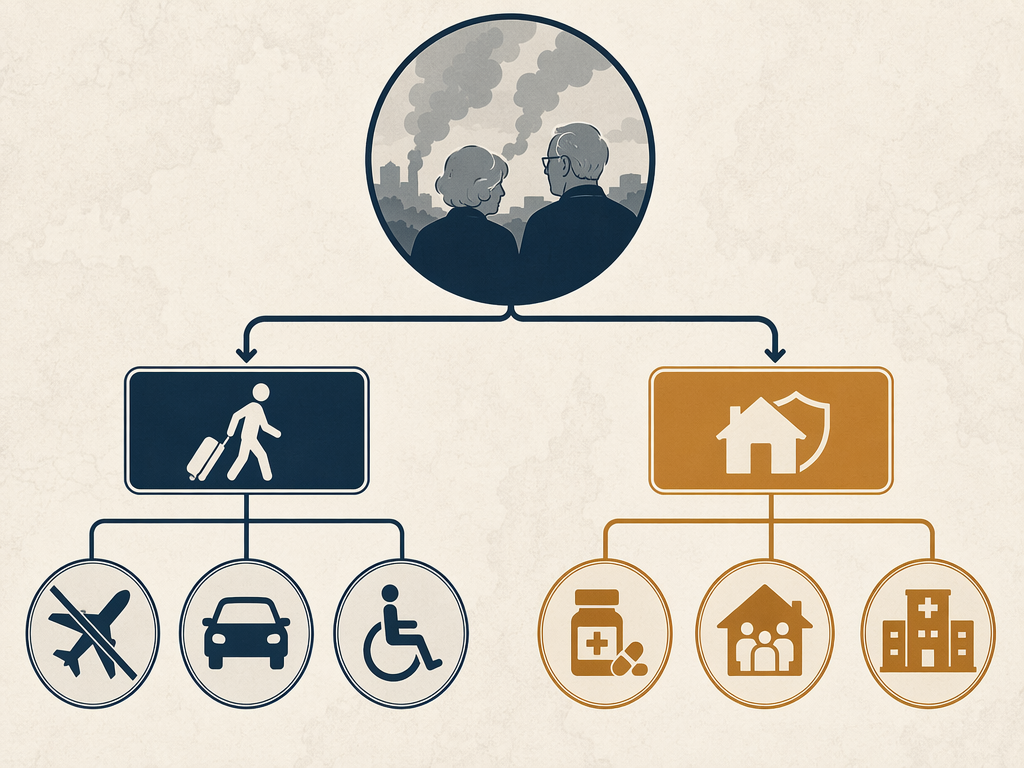
A ticket is not a plan. In the July 2026 conditions described in current mobility updates, airspace and airline decisions can change abruptly.[1] For an older parent, the leave-or-stay decision needs a health and mobility screen before anyone grabs the first available itinerary.
| Decision | More reasonable when | Red flags |
|---|---|---|
| Depart now | There is confirmed transport, medications are packed in carry-on, the parent can physically manage the route, and the destination has medical support. | Unconfirmed flight, checked medication bag, no wheelchair confirmation, long layover without support, or unclear entry requirements. |
| Delay briefly | The current location is safe, medication supply is adequate, local support is present, and the airline or airport disruption is likely to strand them in a worse place. | Declining health, low medication supply, no local backup person, or pressure to wait without any new information source. |
| Cancel planned travel | The parent has not yet departed and the trip is discretionary, especially if chronic conditions, mobility limits, or insurance gaps make disruption hard to absorb. | Nonrefundable costs are driving the decision more than health and safety. |
| Shelter in place | The parent is a resident or long-term visitor with housing, medications, local contacts, and access to care. | Isolation, inaccessible building, dependence on powered equipment without backup, or no way to reach a clinic. |
If departure is on the table, check the whole route, not just the first flight. Ask whether the airport is operating, whether the airline is still flying that route, whether wheelchair assistance is confirmed, whether a connection could strand your parent in a third country, and whether the parent has enough medication to cover delays on both sides of the trip. If a land border is being discussed, slow down and verify who will drive, how long the route may take, where bathrooms and rest stops are available, and whether your parent can tolerate the journey.
If sheltering in place is the better option, make it active sheltering, not passive waiting. Confirm a check-in schedule, a local backup person, medication supply, device charging, nearby medical care, cash, food, water, and a trigger for revisiting the decision. A trigger might be medication dropping below a set number of days, the local support person leaving, worsening symptoms, loss of power needed for medical equipment, or a new official advisory.
Medicare and Travel Insurance: Verify Before You Need Them
Do not assume ordinary U.S. health coverage follows your parent abroad. CDC Travelers' Health states plainly that Medicare does not cover health care outside the United States, except in limited circumstances.[5] For a family managing an older parent's crisis travel, that means an overseas fall, cardiac symptom, infection, medication emergency, or evacuation need may become both a medical problem and a payment problem.
If your parent has travel medical or evacuation coverage, call the insurer's emergency assistance line and ask specific questions. Does the policy cover the country they are in today? Are war, civil unrest, terrorism, government advisories, or airline suspensions excluded? Who decides whether evacuation is medically necessary? Does evacuation mean transport to the nearest adequate facility or all the way home? Are preexisting conditions covered? Is a doctor's order required before moving?
Be careful with reassuring benefit limits in brochures. A large evacuation maximum does not help if the triggering event is excluded, the assistance company will not authorize the move, or the policy only pays after the family advances costs. Get the answer in writing if possible, even if that means an email from the insurer while you are still on hold with the airline.
If the Trip Has Not Started Yet
For a parent who is still at home with travel booked, the safest work may be canceling before the crisis turns into a medical logistics problem. Review the current advisory, airline waiver, hotel terms, travel insurance language, and the reason for the trip. A discretionary vacation is not the same as travel to reach a spouse, settle a household, attend an essential family event, or return to a long-term residence.
If they still plan to go, treat the trip as a crisis plan from the start: medications in carry-on, documents scanned, STEP completed, local support confirmed, coverage verified, and mobility assistance arranged directly with the airline. For broader preparation outside this immediate advisory context, see Senior Travel Safety Tips Every Caregiver Should Know.
The Standard That Helps
You cannot control regional military decisions, airline suspensions, airport closures, or embassy staffing. You can narrow the risks that most often hurt an older traveler in the aftermath: no one has seen them, the pills are in the wrong bag, the phone is dying, the wheelchair request is assumed rather than confirmed, the policy excludes the problem, or the family waits for a perfect answer while the practical options get worse.
If the next action does not help you verify safety, preserve health continuity, or make a realistic leave-or-stay decision, it can wait. The calls that answer those three questions should come first.
References
- Latest Information on Middle East Crisis, Fragomen, July 20, 2026.
- US urges citizens to immediately depart over dozen Middle Eastern countries, Reuters, March 2, 2026.
- Crisis Advisory FAQ, Newland Chase, March 2026.
- Safe Travel Tips for Older Adults, National Council on Aging.
- Older Adults and Healthy Travel, CDC Travelers' Health.
- Smart Traveler Enrollment Program, Travel.State.Gov.
Questions to bring to a clinician or OT
This is not medical, legal, or a family's final decision — only a framework. Bring these questions to a clinician, occupational therapist, or your local Area Agency on Aging.
Find Local HelpRelated reading
Noticed something outdated or inaccurate on this page? Flag a correction. We review every report against CDC, NIA, and AARP HomeFit guidance before updating a page.