
How to stop government payments when a senior dies
Learn which government agencies you must contact to stop Social Security, pension, VA, and other benefit payments when a senior dies, and what happens if you don't act promptly.
If your parent has died and a benefit payment just landed in the bank account, do not assume it is safe to spend because “the government will know.” Some systems do receive death reports, but preventing payments to deceased seniors still depends on separate notifications, program-by-program confirmation, and careful handling of deposits that arrive after death.
Start with Social Security, because it is the payment most families see first and the one most likely to create confusion. Social Security benefits are paid one month behind: a payment received in May covers April. A payment for the month of death or any later month must be returned to the Social Security Administration, even if it arrives by direct deposit before the family has finished making calls.[1][2]

The first call: Social Security
The SSA says a death should be reported as soon as possible. The funeral home will often offer to report the death if the family gives the deceased person’s Social Security number, but that should not be the end of the task. Let the funeral home file the report if it offers, then confirm directly with SSA that the death was recorded and that any payment issue has been addressed.[1]
SSA’s national number is 1-800-772-1213. A family member, executor, or other responsible person can call to report the death, ask whether a recent payment must be returned, and ask what happens next for a surviving spouse or dependent who may be eligible for benefits.[1]
The month-of-death rule is the part worth slowing down for. If a parent dies in April, the payment received in April usually covers March and may be payable. The payment received in May covers April, the month of death, and must be returned. If the payment comes by direct deposit, SSA says the bank should be asked to return it. If it comes by paper check, do not cash it; return it to SSA.[1][2]
- Ask whether the funeral home has already reported the death to SSA.
- Call SSA at 1-800-772-1213 to confirm the report is in the system.
- Identify the date and amount of the last Social Security payment.
- Ask whether the payment is payable or must be returned.
- Keep a note of the call date, the instructions given, and any confirmation number or letter.
This is also the moment to separate “stopping the deceased person’s benefit” from “claiming a survivor benefit.” A surviving spouse may need a different benefit review, and that is not solved by returning one improper payment. If the surviving spouse depended on the deceased person’s income, treat the SSA call as both a stop-payment task and a benefit-change task. For broader planning after one spouse dies, see how to coordinate financial planning as a senior couple.
Do not treat one report as a master switch
USAGov’s death-reporting checklist is useful because it does not pretend that one notice reaches every office. It separates Social Security, Medicare, Veterans Affairs, the Office of Personnel Management, state Medicaid programs, state motor vehicle agencies, and the credit bureaus.[3]
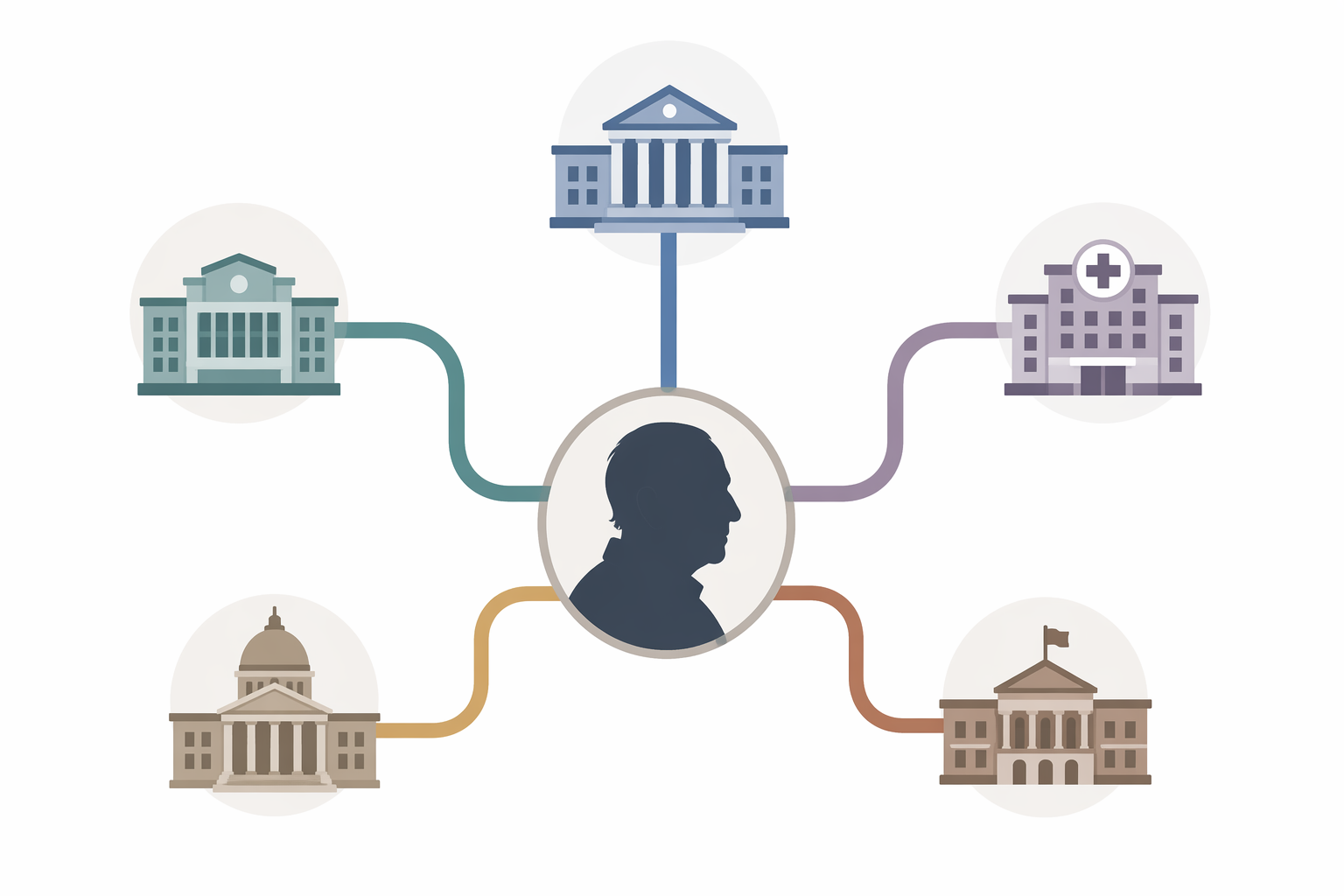
The working rule is simple enough to put on the front of the folder: every organization that paid your parent, insured your parent, licensed your parent, or held a financial record for your parent may need its own notice. Some agencies exchange information. Some do not. Even when they do, the family still needs confirmation before assuming payments have stopped.
| Program or record | What to do first | What not to assume |
|---|---|---|
| Social Security | Report or confirm the death with SSA at 1-800-772-1213. | Do not assume a funeral home report was completed without confirmation. |
| Medicare | SSA usually reports the death to Medicare, but verify the Medicare record. | Do not assume Medicare status is updated just because one SSA call was made. |
| VA benefits | Report the death separately to VA at 800-827-1000. | Do not assume SSA notification stops VA compensation, pension, or education benefits. |
| Federal employee annuity | Report the death to OPM through its death-reporting process or by phone at 888-767-6738. | Do not assume a federal annuity stops through SSA. |
| Private pension or employer plan | Contact the plan administrator directly and ask what death certificate and forms are required. | Do not assume survivor benefits or refunds are automatic. |
| State Medicaid | Contact the state Medicaid office and ask about death notification and estate recovery rules. | Do not assume every state follows the same process. |
| Credit bureaus | Notify at least one major bureau so the file can be flagged. | Do not confuse identity-theft prevention with stopping benefit payments. |
Medicare may hear from SSA, but still verify it
Medicare.gov says the Social Security Administration reports a death to Medicare. That is helpful, but it is not a reason to ignore the Medicare record if your family is already gathering confirmations. Medicare also tells people to contact Social Security to report a death if the person had Medicare.[4]
For many families, the practical Medicare question is not a monthly payment in the same way Social Security is. It is whether coverage records, Medicare Advantage or Part D plan records, and any related bills are being updated. If envelopes keep arriving from a Medicare plan after SSA says the death has been reported, call the plan directly and ask what it needs to close the account.
VA benefits require a separate report
If your parent received VA disability compensation, VA pension, education benefits, or other VA payments, make a separate VA notification. The VA instructs families to report a veteran’s death by calling 800-827-1000. The VA page also lists documents families may need, including the veteran’s full name, Social Security number or VA claim number, date of birth, date of death, and a death certificate or other proof of death when requested.[5]
This separate call matters because VA benefits are not merely another version of Social Security. They have their own eligibility rules, payment systems, and possible survivor benefits. If you are still sorting out what your parent received from VA, start by identifying the benefit name on bank deposits, award letters, or VA correspondence. For background on common VA disability benefit issues, see how to claim veterans disability benefits for seniors.
Federal annuities go through OPM
For a retired federal employee or federal survivor annuitant, contact the U.S. Office of Personnel Management. OPM has its own “Report of Death” process for annuity benefits and lists 888-767-6738 as the retirement information office phone number.[6]
Federal annuity paperwork can affect more than one person. The deceased retiree’s annuity may need to stop, while a surviving spouse’s annuity may need to begin or change. Do not try to infer the answer from the deposit amount alone. Report the death, ask what forms are required, and keep copies of whatever OPM sends back.
Private pensions and employer retirement plans have to be contacted directly
There is no single automatic death notification system for private pensions, union pensions, employer retirement plans, or annuity contracts. The executor or family member handling the estate should contact each plan administrator directly, usually with a certified death certificate and identifying information for the deceased participant.
This is one of the places where generic advice can do damage. A pension might stop at death, continue at a reduced survivor amount, provide a lump-sum refund, or depend on an election the retiree made years earlier. The plan document and the retiree’s election control the answer. If your parent was still alive when this planning could have been done, the cleaner version of this task belongs in a retirement folder; for that earlier-stage work, see helping aging parents with retirement planning in 2026.
- Look for deposits labeled with pension, retirement, annuity, union, or former-employer names.
- Find the most recent annual statement, benefit election letter, or plan contact sheet.
- Ask the administrator whether future payments should be held, returned, or reissued to a survivor.
- Ask whether the plan needs an original certified death certificate or will accept a copy.
- Request written confirmation of any stopped payment, survivor benefit, refund, or repayment instruction.
Medicaid is state-specific, especially after death
USAGov includes state Medicaid offices in its death-notification checklist, but the details are not national. Medicaid is administered through states, and estate recovery rules vary by state. Contact the state Medicaid agency directly if your parent received Medicaid-covered nursing home care, home and community-based services, or other Medicaid assistance.[3]
The important question is not only whether a benefit payment should stop. It may also be whether the state has a claim against the estate. Do not rely on a neighbor’s experience in another state, and do not treat a bank deposit or lack of deposit as the answer. Ask the state Medicaid office what death notice it requires, whether estate recovery applies, and where written correspondence should be sent.
For families still trying to understand how Medicaid fit into a parent’s care costs, what will pay for senior home healthcare in 2026 gives the broader payment context. The post-death task, though, is state contact and written confirmation.
What happens if overpayments are not returned
At the family level, the consequence is usually not abstract. It is a letter asking for money back, a bank account that has to be corrected, or an estate distribution that cannot be finalized because someone has to determine whether a payment belonged to the deceased person, the surviving spouse, or the government.
At the government level, agencies are under pressure to prevent and recover improper payments. GAO reported that the federal government made an estimated $162 billion in improper payments in fiscal year 2024 and that cumulative improper payment estimates totaled about $2.8 trillion since fiscal year 2003.[7]
Those figures do not mean every stray deposit after a death is fraud, and they do not tell you how common your exact situation is. They do explain why agencies are formal about repayment and documentation. If a payment is questionable, hold it aside, call the paying agency, and get the instruction in writing or in a dated call note before the estate spends or distributes the money.
Build the notification file before the calls blur together
The administrative work goes better if one person keeps a single folder, even if several relatives make calls. This does not have to be elegant. It needs to be complete enough that, three months later, nobody has to reconstruct which office was called during a lunch break.
- Certified death certificates, plus a note of which offices received originals.
- The deceased person’s Social Security number, Medicare number, VA claim number if applicable, and pension or annuity identifiers.
- Recent bank statements showing benefit deposits and payment dates.
- Call notes with date, agency, phone number, representative name if given, and instructions.
- Copies of letters, returned-check correspondence, online confirmations, and repayment receipts.
If your family is still before the death rather than after it, this is the same folder that should hold beneficiary information, end-of-life contacts, and account lists. For that earlier preparation, see a caregiver’s roadmap to end-of-life care planning for seniors.
Credit bureaus are a separate identity-theft task
Notifying a credit bureau will not stop Social Security, VA, pension, or Medicaid activity. It serves a different purpose: reducing the risk that someone opens credit in the deceased person’s name. USAGov advises contacting the credit bureaus after a death and explains that a death certificate may be needed.[3]
At minimum, notify one of the three major credit bureaus — Equifax, Experian, or TransUnion — and ask how the deceased person’s file will be flagged. Keep the confirmation with the estate file. If mail arrives for a new card, loan, or collection account that nobody recognizes, treat it as a separate fraud issue rather than as routine estate correspondence.
A practical order for the first week
You do not have to solve every estate question before the funeral flowers are gone. You do need to stop avoidable overpayments, preserve money that may have to be returned, and create a paper trail before accounts are closed or funds are distributed.
- Confirm Social Security reporting and ask about any payment received for the month of death or later.
- Tell the bank not to spend, transfer, or distribute questionable benefit deposits until the paying agency gives instructions.
- Verify Medicare status and contact any Medicare Advantage, Part D, or supplemental plan that keeps sending bills or notices.
- Report separately to VA if your parent received VA benefits.
- Report to OPM if your parent was a federal retiree or federal annuitant.
- Contact every private pension, employer retirement plan, union plan, or annuity company that made deposits.
- Contact the state Medicaid office if Medicaid paid for care or coverage.
- Notify a major credit bureau and keep the confirmation.
This article is educational guidance, not legal, tax, or benefits advice. If the estate is insolvent, a sibling is disputing account access, a surviving spouse’s income will change substantially, or Medicaid estate recovery may apply, bring the agency letters and payment records to a qualified professional before distributing estate funds.
References
- When someone dies, Social Security Administration
- Social Security: Returning Payments After Death, AARP
- How to report a death to government agencies, USAGov
- Report a death, Medicare.gov
- How to report the death of a Veteran to VA, U.S. Department of Veterans Affairs
- Report of Death, U.S. Office of Personnel Management
- The Federal Government Made an Estimated $162 Billion in Improper Payments Last Fiscal Year, U.S. Government Accountability Office
Where this decision comes from
Suggest a correction
We keep this content strictly product-neutral and reviewed against CDC STEADI, NIA, and AARP HomeFit guidance. If something here looks outdated, unclear, or inaccurate, tell us — this page does not carry open public comments, because it touches medical urgency, cost, or capacity-adjacent decisions where a discussion thread is a trust liability rather than a trust asset.
See the correction process on our editorial standards page →